
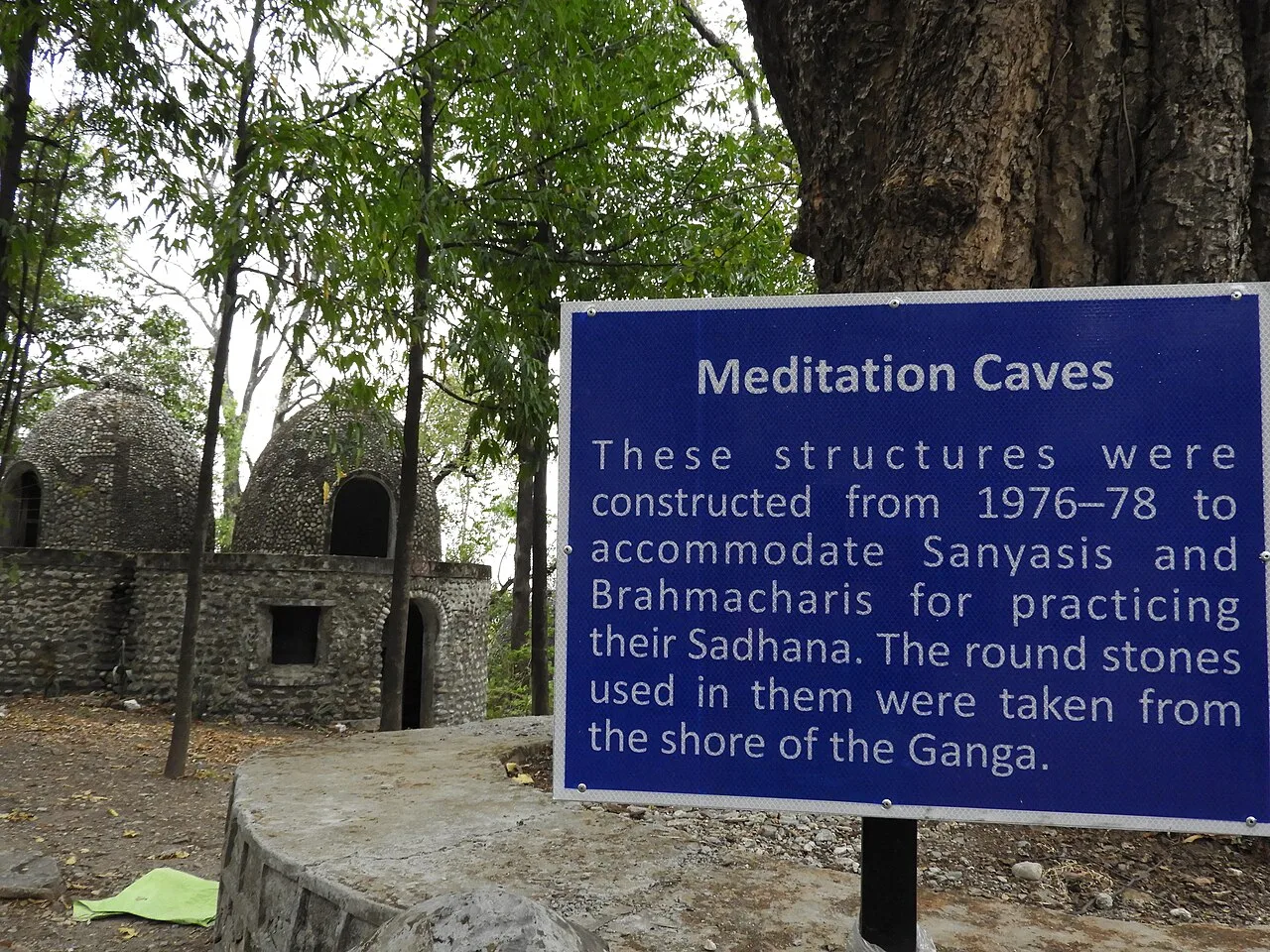
Beatles Ashram
Also called Chaurasi Kutia, this former meditation centre near Rishikesh is known for the Beatles’ 1968 visit. People come to see the site and its Beatles-era history.
Key facts · verified by Ghumoopedia editors
- Type of place
- Temple / pilgrimage site
- Best time to visit
- March to June and September to November; December to February for snow in the hills; July to September only for the Valley of Flowers
- Nearest railway station
- Yog Nagari Rishikesh · about 3 km (straight line)
- Verified
- 21 Nov 2026
Plan a trip from Beatles Ashram — a day-by-day route through places nearby.
Known as Chaurasi Kutia as well as Beatles Ashram, the complex stands in Uttarakhand’s Pauri Garhwal district, across the Ganges from Rishikesh’s Muni Ki Reti neighbourhood. It occupies the river’s eastern side amid the Himalayan foothills. During the 1960s and 1970s, the site served as the International Academy of Meditation, a training centre for Maharishi Mahesh Yogi’s pupils. He devised the Transcendental Meditation technique, which students learned there. The Beatles’ presence brought the place international notice between February and April 1968. The English group came to practise meditation, with fellow visitors Donovan, Mia Farrow and Mike Love among those at the ashram. The stay proved an especially fruitful spell for songwriting: the band created most of the songs for its self-titled double record, commonly known as the White Album, there. The complex stood empty after being abandoned in the 1990s, and in 2003 it passed back to the local forestry department. Though neglected and reclaimed by jungle, it became a draw for Beatles enthusiasts. Authorities opened the grounds to the public in December 2015, and the site is now called Beatles Ashram. An exhibition in February 2018 commemorated 50 years since the Beatles first came to Rishikesh. Uttarakhand, the Devbhumi or land of the gods, spans the Garhwal and Kumaon Himalaya: the Char Dham shrines and Panch Prayag confluences, Haridwar and Rishikesh on the Ganga, colonial hill stations such as Mussoorie, Nainital and Ranikhet, Corbett and Rajaji tiger reserves, the alpine Valley of Flowers, and Garhwali, Kumaoni, Jaunsari and Bhotiya communities with their folk songs, temple fairs and Aipan art. The plains around Haridwar and Udham Singh Nagar are hot from April to June; hill towns stay mild in summer and cold in winter, with snow above about 2,000 m from December to February. The monsoon (July to September) brings heavy rain, landslides and frequent road closures. High shrines such as Kedarnath and Badrinath open only from about late April or May until around Diwali. The usual best time to visit is March to June and September to November; December to February for snow in the hills; July to September only for the Valley of Flowers. Timings, fees and access arrangements must be confirmed locally. For official information, see Uttarakhand Tourism at https://uttarakhandtourism.gov.in.
Why it matters
Beatles Ashram, also called Chaurasi Kutia, is a former meditation centre on the eastern bank of the Ganges near Rishikesh, in Pauri Garhwal district. Its international profile comes from the Beatles’ stay in 1968, when the band studied Transcendental Meditation and wrote many songs associated with the White Album. The site also reflects the wider history of meditation teaching and international interest in Indian spiritual traditions during the 1960s. It is now a visitor attraction known for its forest setting, meditation huts and painted walls. Uttarakhand’s Forest Department opened it to the public in 2015. It is not known as a UNESCO World Heritage Site or an Archaeological Survey of India-protected monument.
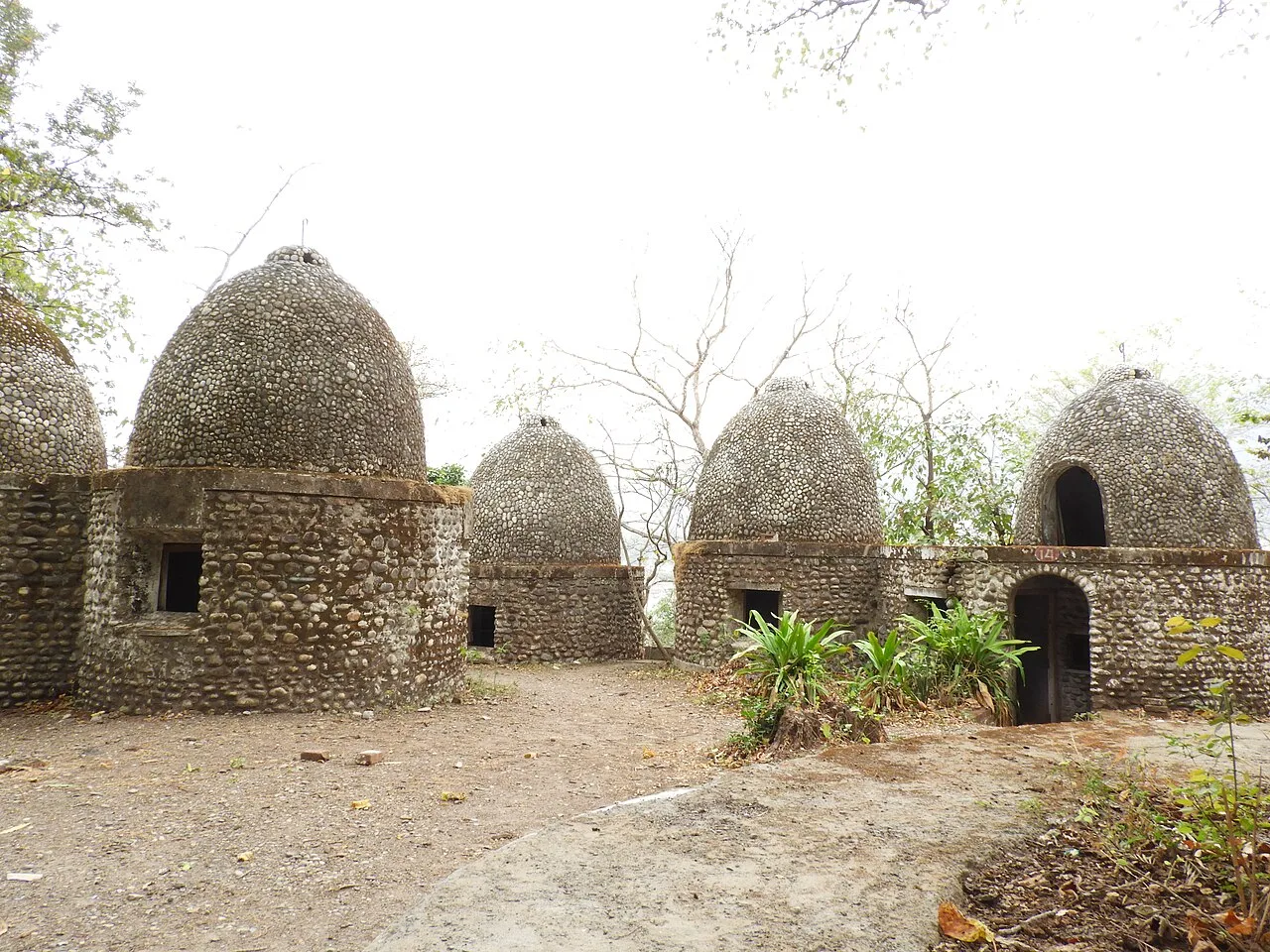
The site was developed as the International Academy of Meditation, associated with Maharishi Mahesh Yogi and his teaching of Transcendental Meditation. It served as a training and retreat centre for students during the 1960s and 1970s. Its best-known period began in February 1968, when the Beatles arrived to study meditation. Donovan, Mia Farrow and Mike Love were among other well-known visitors. The Beatles stayed until April; during this period they composed many songs, several of which appeared on their 1968 self-titled double album, commonly called the White Album. The centre declined and was abandoned in the 1990s. The land reverted to the local forestry department in 2003. After years of neglect, when vegetation spread through the compound, it became a destination for Beatles fans and other visitors. Uttarakhand’s Forest Department officially opened the site to the public in December 2015. In February 2018, an exhibition marked the 50th anniversary of the Beatles’ arrival. The name Chaurasi Kutia refers to the complex’s meditation huts; Beatles Ashram is the later popular name. The site’s present character combines remnants of the former retreat with forest growth and visitor-made or commissioned art.
Origin stories & folklore
No widely established origin legend specific to Chaurasi Kutia is documented in the same way as stories attached to older temples and pilgrimage sites. Its best-known account is historical: the Beatles and other visitors came to study meditation at Maharishi Mahesh Yogi’s centre in 1968. The wider Rishikesh area is regarded by many Hindus as spiritually significant because of the Ganges and its association with pilgrimage, prayer and ascetic practice. These broader beliefs should not be mistaken for a distinct legend about the ashram itself. Visitors may encounter spiritual imagery and stories in the area, but local accounts can vary; ask residents or guides how they understand them rather than treating a single version as definitive.
Architecture & design
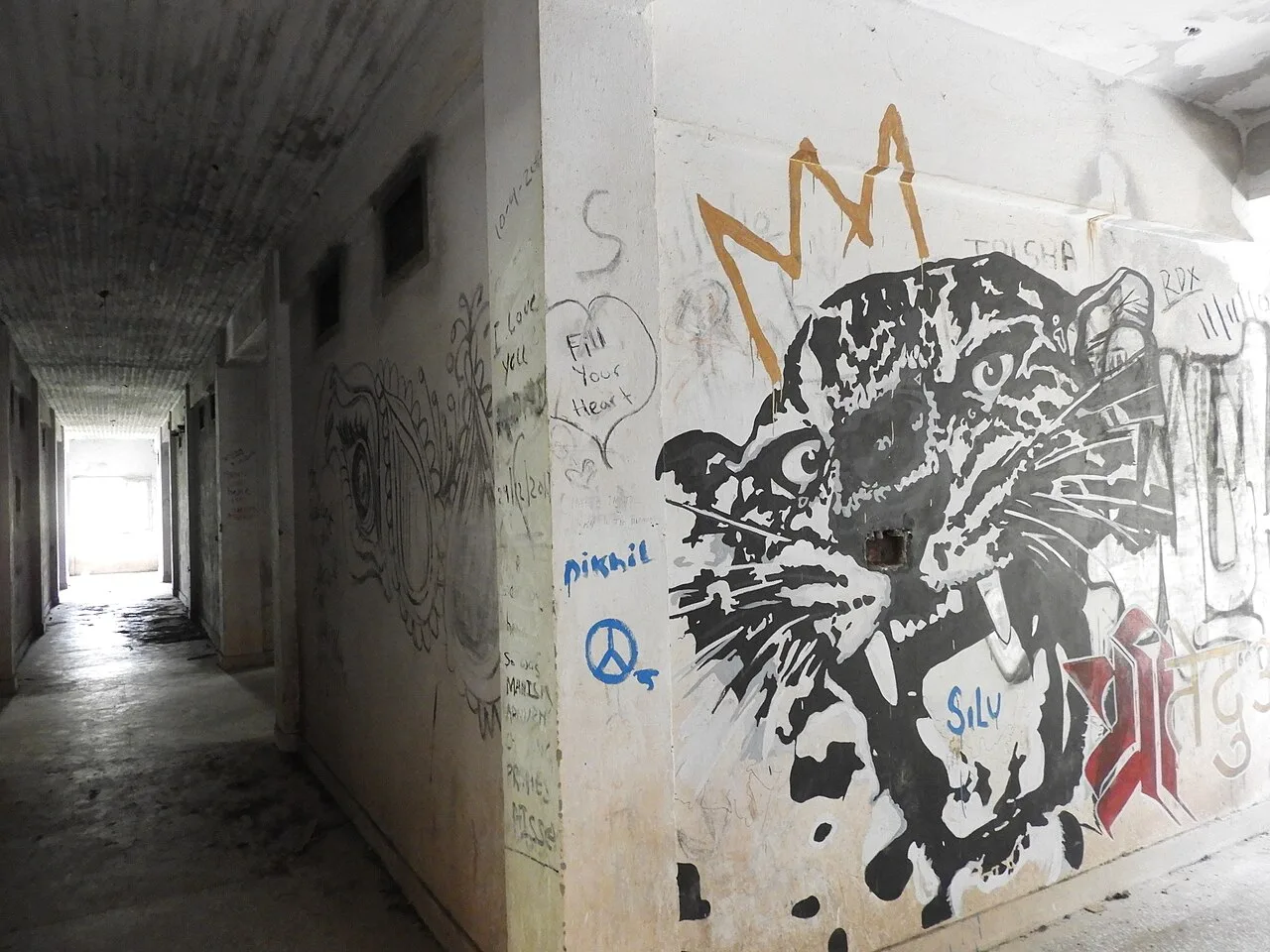
Chaurasi Kutia is a compound of retreat buildings set among trees on the Ganges-side foothills. Its characteristic features are small meditation huts, along with larger structures that served communal or administrative purposes. The huts are compact, enclosed spaces intended for individual practice; some have rounded or domed profiles, giving the complex an unusual silhouette. Concrete and masonry are visible in the surviving buildings, though surfaces and condition differ across the site. Paths connect the structures through a leafy setting, and many walls now carry murals, graffiti and Beatles-related imagery. These paintings are a notable part of the visitor experience but are not all original features of the meditation centre. The design is functional rather than that of a conventional Hindu temple: visitors should not expect a central sanctum, formal tower or extensive ritual sculpture. Vegetation, weathering and the gradual deterioration of unused buildings are part of the site’s present appearance.
Important objects & sculptures
There is no principal deity image or renowned collection of ancient sculptures at Beatles Ashram. Visitors commonly look for the small meditation huts, the remains of larger retreat buildings and the painted walls. Murals and graffiti include Beatles references, spiritual motifs and images inspired by the forest and local landscape; their condition and visibility can change over time. Some artwork may be later additions rather than part of the ashram’s original use. The complex’s buildings are themselves its most distinctive surviving features. Displays or commemorative material connected with the Beatles’ visit have been presented at the site, but visitors should not assume that a particular exhibition or object is permanently on view. Treat structures and artwork as part of a fragile heritage site: do not carve, mark or remove anything.
Religious significance
Beatles Ashram is a former meditation centre, not a temple dedicated to a particular deity, and it is not generally a destination for prescribed temple worship. Its religious and spiritual association is with meditation, especially Transcendental Meditation as taught by Maharishi Mahesh Yogi. For practitioners, the site recalls a period when students from India and abroad came here for instruction and retreat. More broadly, Rishikesh and the Ganges are sacred to many Hindus, and nearby ashrams and ghats host prayer, yoga and other spiritual practices. Visitors should distinguish those living traditions from the Beatles Ashram’s own history. There is no single required ritual for visiting; quiet reflection is appropriate, while worship or ceremonies at neighbouring religious sites should be approached respectfully and according to local guidance.
Use Beatles Ashram as a base to understand local life: walk through the market, look for local crafts such as Kumaoni Aipan art, ringaal bamboo craft, Pashmina and woollen shawls, copperware from Almora, Bal Mithai and local pulses and honey and ask your host about nearby viewpoints and short excursions. Always ask before photographing people, homes or ceremonies. A comfortable itinerary is one main visit in the morning, a local meal at midday and a short nearby stop before an afternoon return. In the mountains, mornings are clearest; clouds often roll in by noon, so start early for Himalayan views. Use the district list on this site to find other places in Pauri Garhwal, but check the route and its condition before combining stops. If a festival is on — such as the Kumbh and Ardh Kumbh at Haridwar, the Kanwar Yatra in July, Ganga Dussehra, the Nanda Devi Raj Jat, Phool Dei and Harela, or the Uttarayani fair at Bageshwar — roads and stays can be busy, and the experience can be unforgettable. Leave no litter: the Himalayan valleys have little waste collection, so carry a refillable bottle and bring your rubbish back down.
Suggested itineraries
Half day: From Rishikesh, allow about 30–45 minutes for the approach; spend 1.5–2 hours walking the main paths, huts and painted walls; return to town for a meal or riverside walk. Full day: Visit the ashram in the morning for 2–3 hours; have lunch in Rishikesh; spend the afternoon at a nearby ghat or ashram and explore the town’s riverside area before returning. Gentler option: Arrange a vehicle as close to the permitted entrance as possible, explore only the easiest short section at a relaxed pace, and rest in Rishikesh rather than attempting the full compound.
The site’s present culture brings together local residents, Indian and international visitors, Beatles fans, yoga students and people interested in meditation. Its walls have become a changing canvas of music-related and spiritual imagery, though artwork and visitor access can vary. In Rishikesh and the surrounding Garhwal region, Hindi is widely used, and Garhwali is also spoken; English is common in many visitor-facing settings. Yoga, devotional music and Ganga-side ceremonies are part of the broader town’s cultural life, not activities unique to the ashram. Dress is generally practical and modest, especially when combining a visit with nearby religious places. Ask before photographing people, homes, classes or ceremonies, and avoid treating local spiritual practice as a performance.
Festivals & events
No major annual festival is specifically established as a Beatles Ashram celebration. Nearby Rishikesh and the wider Ganga corridor observe events such as Ganga Dussehra, usually in late spring or early summer, and the Kanwar Yatra during the monsoon period. Hindu festivals including Diwali and Holi are also marked in the region. These events can bring heavier traffic, busy roads and fuller accommodation, particularly along routes used by pilgrims. The ashram’s 2018 exhibition marked the 50th anniversary of the Beatles’ arrival, but that was a commemorative event rather than a recurring festival. Confirm locally whether an event affects access or visitor arrangements.
Local food in Uttarakhand includes kafuli (spinach curry), phaanu and chainsoo (lentil dishes), aloo ke gutke, bhatt ki churkani, mandua (finger-millet) rotis, jhangora kheer, singori and bal mithai from Almora, with rhododendron (buransh) squash in spring. Ask what is fresh that day; many small eateries cook a limited daily menu. Hill food is simple and warming, with plenty of vegetarian options; in pilgrim towns many eateries serve only vegetarian food without onion or garlic, and alcohol and meat are banned in places such as Haridwar, Rishikesh and the Char Dham towns. Remote sites may have no restaurant at all. Carry water and snacks, eat a proper breakfast before long drives, and ask your accommodation for a packed lunch if you are heading out early. Try a home-cooked or local thali meal when you can — it is often the best food on the route. Choose busy, clean places, drink sealed or filtered water, and carry your packaging back with you.
Shopping & local experiences
Rishikesh markets offer practical travel items, religious books, yoga-related goods, clothing, small handicrafts and souvenirs; selection and provenance vary. Beatles-themed keepsakes may be sold by local vendors, but check quality and whether items are locally made. Cafés and shops also offer regional snacks and sweets, while Uttarakhand products such as honey or pulses may be available depending on the seller. Aipan art and some Kumaoni crafts come from elsewhere in the state rather than being specific to Rishikesh. Buy thoughtfully, avoid products made from wildlife or protected materials, and carry reusable bags.
March to June and September to November; December to February for snow in the hills; July to September only for the Valley of Flowers
The nearest principal railway station by straight-line distance is Yog Nagari Rishikesh, roughly 3 km away. The nearest operating airport by straight-line distance is Jolly Grant Airport, Dehradun, roughly 16 km away. These figures are calculated from map coordinates — actual road distance is longer, and mountain roads mean even short distances can take hours. Haridwar, Rishikesh (Yog Nagari Rishikesh) and Dehradun stations and Dehradun's Jolly Grant Airport are the gateways to Garhwal; Kathgodam station and Pantnagar Airport serve Kumaon; Ramnagar station serves Corbett. Beyond these, travel is by road. From Haridwar, Rishikesh, Dehradun or Kathgodam, take a Uttarakhand Roadways (UTC) or GMOU bus, a shared jeep or a reserved taxi; in the hills, shared jeeps leave early from town taxi stands and fill up fast, while a reserved taxi gives flexibility for temples and viewpoints. Mountain roads close at night in many areas, so plan to arrive before dark. When comparing train, bus and flight, count the complete door-to-door time: a flight saves the most time only if the onward road transfer is short, while an overnight train can save a hotel night. For the Garhwal hills, an overnight train to Haridwar, Rishikesh or Dehradun (or a flight to Jolly Grant Airport, Dehradun) is the usual start; for Kumaon, trains run to Kathgodam and flights to Pantnagar. The road journey into the mountains takes most of a day, so do not plan sightseeing on arrival. Book your return before you leave, because seats fill quickly on weekends, festivals and holidays. Current train numbers, timings, return services and fares are not listed here; check IRCTC and NTES for trains and the airline's own schedule for flights. No permit is needed for most of Uttarakhand, but Char Dham pilgrims (Yamunotri, Gangotri, Kedarnath and Badrinath) and Hemkund Sahib pilgrims must register online with Uttarakhand Tourism before travelling, and areas near the Tibet border such as Adi Kailash, Om Parvat, Niti and Nelong valleys need an Inner Line Permit.
Confirm onward and return timings on IRCTC / NTES, the state bus operator or your airline before travel. A dash means current timings or fares have not been verified.
Getting around
Rishikesh is the practical base for reaching the site. From town, visitors can use a local taxi or auto-rickshaw to get as close as the current access arrangements allow, then continue on foot to the entrance. Walking routes and the usable approach can vary, so check locally before relying on a particular gate or crossing. The complex itself is best explored on foot; expect paths and uneven ground rather than internal vehicle transport. Local buses and shared vehicles serve parts of Rishikesh, but may not stop at the entrance. Ask about parking before driving, and avoid assuming that a boat crossing is available or suitable.
Hours, tickets & permissions
The site is managed as a public visitor attraction, and entry conditions may include a ticket or other access requirements. Rules, fees, permitted areas and camera conditions can change, and some sections may be closed for conservation or safety. There is no dependable current schedule provided here. Confirm opening arrangements and any charges with the Uttarakhand Forest Department or the site’s managing authority before setting out. Carry identification if requested by the current entry rules, and follow notices at the gate.
Facilities
Facilities inside the forested site may be limited. Toilets, drinking water, food and seating should not be assumed to be available throughout the compound; check at the entrance and carry water. Rishikesh has a wider choice of cafés, restaurants, shops, cash machines and accommodation. Parking, signs, information boards and guide availability can vary, so confirm locally. A guide may help explain the Beatles’ stay and the meditation centre’s history, but do not assume one is provided by the site. Take rubbish back with you if suitable bins are not available.
Accessibility
The visit involves walking through a wooded compound with uneven paths, slopes, steps and potentially rough or slippery surfaces. The distance covered depends on which buildings and paths are open. Shade is available under trees in places, but coverage is not continuous. Wheelchair users and visitors with strollers may find movement difficult; do not assume accessible ramps or smooth routes. Older visitors or anyone with limited mobility may prefer a short visit near the entrance, sturdy footwear and a companion. During or after rain, paths can be muddy. Check current conditions and access arrangements before travelling, and allow time for rests.
No permit is needed for most of Uttarakhand, but Char Dham pilgrims (Yamunotri, Gangotri, Kedarnath and Badrinath) and Hemkund Sahib pilgrims must register online with Uttarakhand Tourism before travelling, and areas near the Tibet border such as Adi Kailash, Om Parvat, Niti and Nelong valleys need an Inner Line Permit. Carry a photo ID at all times and save the emergency number 112 and your accommodation's contact offline. Mountain roads are narrow and prone to landslides, especially from July to September; travel in daylight, use experienced local drivers, check the state disaster authority's road updates and keep a spare day in your plan for closures. Char Dham pilgrims must register online with Uttarakhand Tourism before travelling. Watch your belongings in crowds and on public transport, and follow posted instructions.
Visitor rules
Follow notices and staff instructions, and keep to areas open to visitors. Wear practical footwear for uneven paths and dress respectfully, particularly if visiting nearby religious sites. Do not enter unstable or restricted buildings, climb on structures, damage murals, carve names or remove objects. Avoid loud music and disruptive behaviour. Carry litter out and limit single-use plastic. Photography may be subject to current site rules; ask before photographing people or any activity nearby. Do not assume that drones, commercial shoots or tripods are permitted. Keep a respectful distance from local ceremonies and private spaces.
Photography
Soft morning light can suit photographs of the huts, forest paths and painted walls, while light changes beneath the trees. Take care not to block paths or disturb other visitors. Personal photography may be allowed, but rules can change; check notices or ask staff, especially for commercial use or equipment. Drone use should not be assumed to be permitted, given the forest setting and possible wildlife, safety and regulatory restrictions. Ask before photographing residents, workers, meditation activity or ceremonies. Avoid entering closed or unsafe structures for a better angle, and do not touch or mark the artwork.
Choose a stay by the full journey to Beatles Ashram, not just the district name. GMVN (Garhwal Mandal Vikas Nigam) and KMVN (Kumaon Mandal Vikas Nigam) run tourist rest houses across the hills, alongside homestays registered under the state's homestay scheme and small hotels; in pilgrim towns, dharamshalas and temple committee guesthouses are common. In summer, check air-conditioning; in the monsoon, check that the property is accessible if roads flood. Book in advance for weekends, festivals and the peak season (March to June and September to November; December to February for snow in the hills; July to September only for the Valley of Flowers). Confirm the exact location, meals included, check-in time and cancellation terms in writing. Avoid sending money to unverified contacts or touts at stations. Carry some cash, as card and digital payments can be unreliable in remote areas.
In Rishikesh, visitors can combine the site with the Ganga-side areas around Ram Jhula and the town’s ghats. Parmarth Niketan is a well-known ashram on the river, and Muni Ki Reti lies across the Ganges. Triveni Ghat is another established riverside stop in Rishikesh. These places have their own access and religious customs, so check local conditions and behave respectfully. The town also has yoga centres, cafés and markets. Routes and bridge access can change, so confirm the best way to link stops before planning a tight schedule.
For couples, Beatles Ashram rewards a slow pace: arrive early for soft light and fewer crowds, share a local meal and keep the evening free. Sunrise over the Himalaya from a ridge-top homestay, a forest walk or an evening by a quiet lake makes the trip memorable. Public displays of affection can be frowned upon in conservative communities and at religious sites, so be discreet. Keep a buffer in your itinerary, because weather and road conditions can delay plans.
Q: How much time should I allow for Beatles Ashram? A: Allow roughly two to three hours for a relaxed visit, including walking between the huts and murals; the time depends on access and your pace. Q: When is a good season to visit? A: March to June and September to November are generally comfortable periods in the region. Monsoon rain can make paths slippery and affect travel, so check conditions. Q: Is entry free, and do I need a permit? A: Entry requirements and charges can change. Check current rules with the managing authority before visiting; do not assume admission is free. Q: Can children and older visitors explore the site? A: Children can visit with supervision, but paths may be uneven. Older visitors or people with limited mobility may prefer a shorter route and should check access conditions. Q: Where should I stay nearby? A: Rishikesh has a range of guesthouses, hotels and ashram accommodation. Choose a place based on your transport needs and confirm its current booking and visitor policies.
Be the first to share photos, stories, advice or a helpful contact for Beatles Ashram.
Loading…