
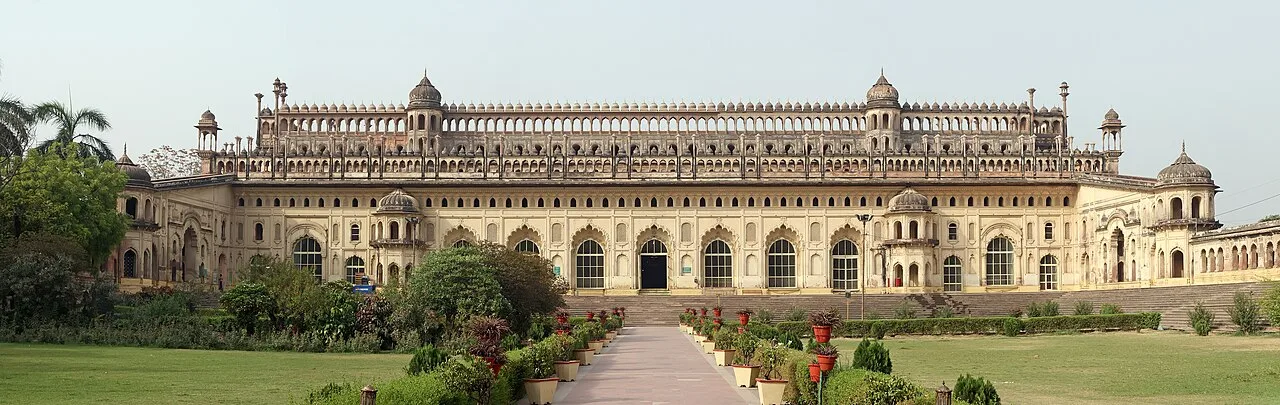
Bara Imambara
Bara Imambara, also known as the Asafi Imambara, is a religious complex in Lucknow. Visitors come to see its imambara and mosque and its status as a nationally important monument.
Key facts · verified by Ghumoopedia editors
- Type of place
- Temple / pilgrimage site
- Best time to visit
- October to March
- Nearest railway station
- Lucknow Charbagh · about 4 km (straight line)
- Verified
- 21 Nov 2026
Plan a trip from Bara Imambara — a day-by-day route through places nearby.
In Lucknow district, Uttar Pradesh, Bara Imambara is a complex comprising an imambara and a mosque. The site is also called the Asafi Imambara. Asaf-ud-Daula, Nawab of Awadh, commissioned its construction in 1784. By size, it ranks second among the world’s imambaras, after the Nizamat Imambara. Bara Imambara is designated a Monument of National Importance, and the Archaeological Survey of India administers it. Its religious character, historical association and official recognition make it a place visitors can explore as part of Lucknow’s heritage. Uttar Pradesh is India's great heritage heartland: the Taj Mahal, Agra Fort and Fatehpur Sikri of the Mughals; Varanasi's ghats on the Ganga; the Krishna towns of Mathura and Vrindavan; Ayodhya, Prayagraj's Triveni Sangam; the Buddhist circuit of Sarnath, Kushinagar and Shravasti; Lucknow's Nawabi monuments and food; and the terai forests of Dudhwa and Pilibhit. Summers from April to June are very hot (often 43–47°C), the monsoon from July to September is humid with heavy showers, and winter from December to January is cold, with dense morning fog that regularly delays trains and flights by hours. The usual best time to visit is October to March. Timings, fees and access arrangements must be confirmed locally. For official information, see Uttar Pradesh Tourism at https://uptourism.gov.in.
Why it matters
Bara Imambara, also called the Asafi Imambara, is an important Shia Muslim religious complex and a defining landmark of Lucknow’s Nawabi heritage. It was commissioned by Asaf-ud-Daula, Nawab of Awadh, and is associated with Muharram observances and communal prayer. The complex includes an imambara, a mosque and a stepwell. The Archaeological Survey of India (ASI) identifies it as a Monument of National Importance and administers the protected site. Its great vaulted hall and the maze-like passages above it have made the building a notable subject of architectural interest. It is a place of worship as well as a historic monument, so visitors should be attentive to religious activity and site rules.
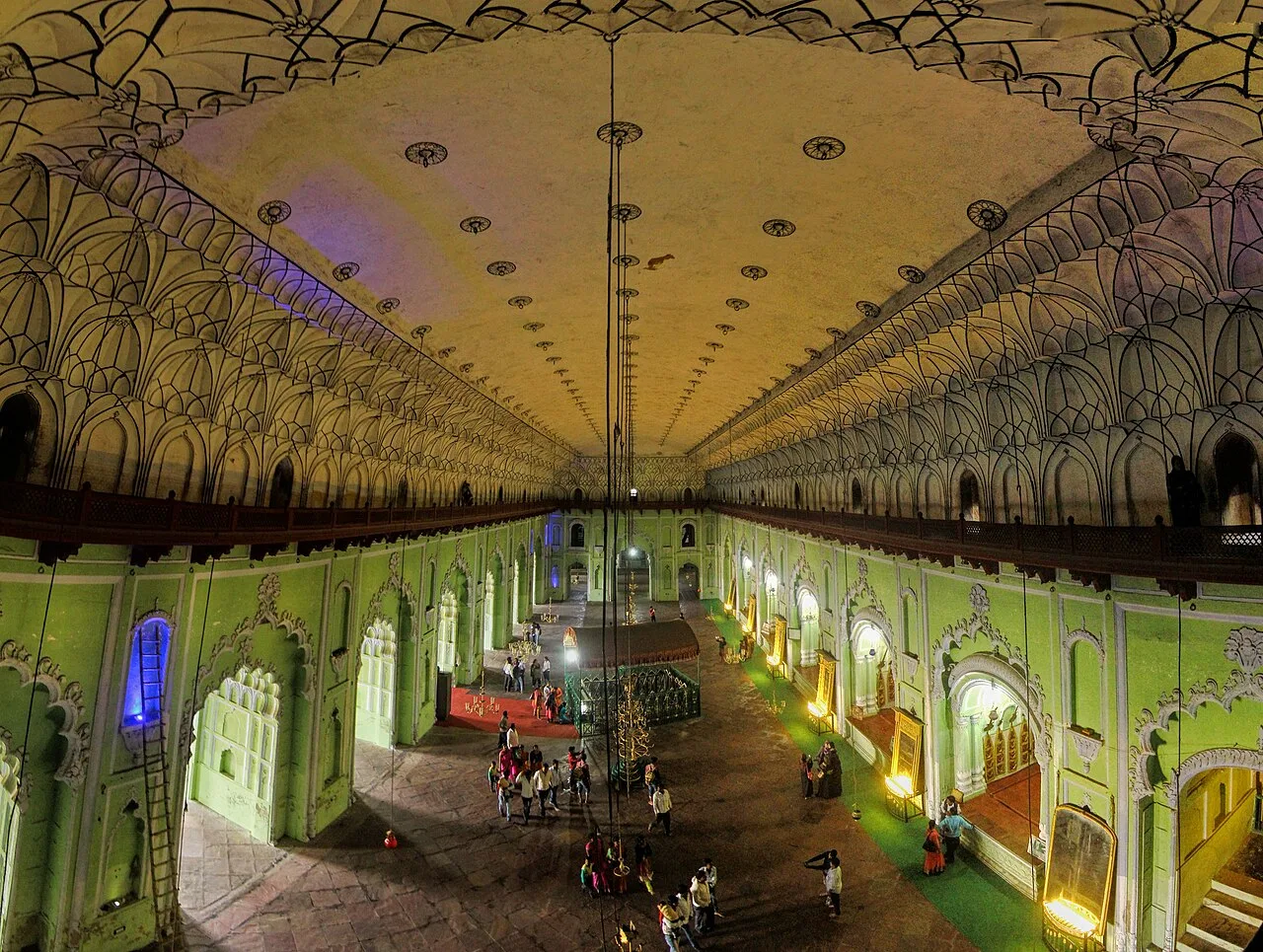
Asaf-ud-Daula, the Nawab of Awadh, commissioned Bara Imambara in 1784. Its construction is associated with a severe famine in Awadh: the building project provided work and relief to people affected by hardship. The architect is commonly identified as Kifayatullah, though accounts of the project and its designers vary. The complex was created for Shia religious gatherings, especially observances connected with Muharram, and also includes the Asafi Mosque and a baoli, or stepwell. It became one of the best-known monuments of Nawabi Lucknow, a city whose courtly culture flourished under the rulers of Awadh. The building and its surroundings have experienced changing uses, repairs and conservation over the centuries. Today, the Archaeological Survey of India administers the monument and undertakes its protection. Visitors may find some areas restricted or temporarily unavailable during conservation work or religious use. Interpretive displays and local guides can help explain the complex’s history, but details of access and facilities can change, so check current arrangements before visiting.
Origin stories & folklore
According to a well-known local story, the famine-era building project was managed so that workers could earn a livelihood by day, while nobles were employed at night to dismantle some of the day’s work. The tale is often told as an example of Asaf-ud-Daula’s concern for people facing hardship, though versions differ and it should be treated as tradition rather than a fully verified account. The maze-like upper passages have also inspired stories about hidden routes and deliberate confusion of intruders. Such tales add to the monument’s appeal, but visitors should not assume that every passage leads to a secret exit or that popular stories are established historical fact.
Architecture & design
The complex combines an imambara, a mosque and a stepwell within a substantial masonry ensemble. Its most striking space is the central vaulted hall, whose broad span is achieved without rows of internal supporting columns. The building is generally associated with Awadhi and Indo-Islamic architectural traditions. Lakhauri brick and lime mortar or plaster are characteristic materials of the period. Above and around the main hall, connected corridors and passages form the maze commonly called the Bhul Bhulaiya; changes in level and repeated openings can make the route confusing. The Asafi Mosque is a distinct part of the complex, with prayer spaces and traditional mosque features. The design balances monumental scale with relatively restrained surface decoration, directing attention to the hall’s volume and structure. Follow marked visitor routes, as some passages may be closed or accessible only with an authorised guide.
Important objects & sculptures
Look for the tomb and cenotaph associated with Asaf-ud-Daula in the central hall, along with the hall’s decorative details and hanging fixtures. The building’s ornamental plasterwork, arch profiles and surviving calligraphic or inscriptional elements reward close attention, though preservation and lighting can affect what is visible. In the mosque, the prayer niche and related architectural details reflect its continuing religious function. The complex is not a museum collection of idols or sculptures; its significance lies chiefly in its architecture, religious use and historic associations. Displays, if present, may change, so ask site staff or an authorised guide about current interpretation rather than expecting particular objects to be on view.
Religious significance
Bara Imambara is a Shia Muslim imambara, a place associated with religious gatherings and remembrance, especially during Muharram, which commemorates the martyrdom of Imam Husayn and his companions at Karbala. The complex also contains the Asafi Mosque, where Muslim prayer may take place. The imambara’s meaning is therefore both devotional and communal, not simply architectural. Religious observances and access arrangements can vary by occasion; visitors should follow staff directions and avoid interrupting prayer or ceremonies. People of different backgrounds visit the monument, but it is respectful to treat active worship areas as sacred spaces, dress modestly and ask before photographing worshippers or religious activity.
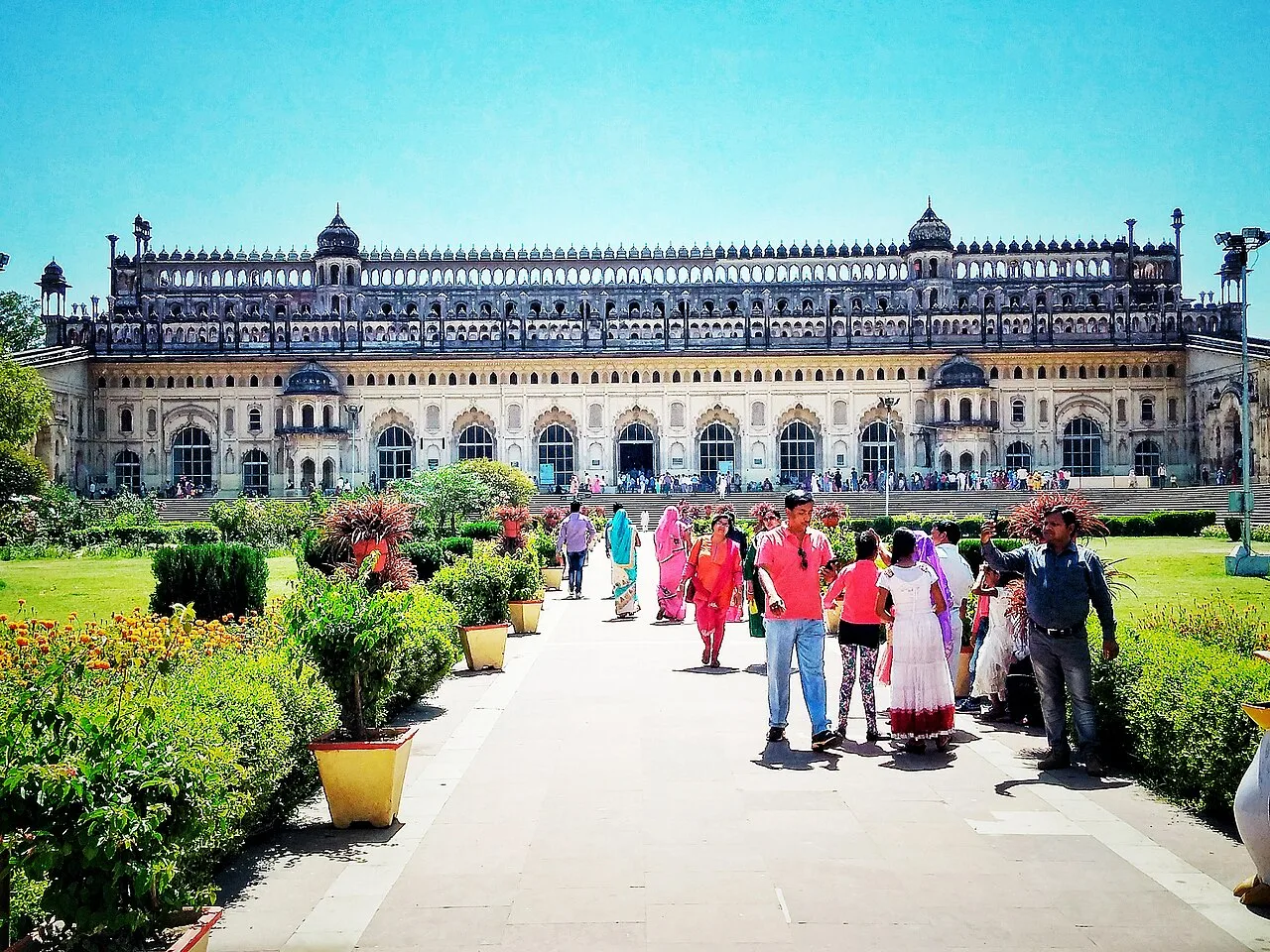
Explore Bara Imambara slowly and read the interpretation boards, use the official audio guide where available or hire an authorised guide to understand its history. Check opening days, ticket counters and camera rules in advance; many monuments and museums close on one weekday and on some public holidays. Early morning gives softer light, cooler air and smaller crowds. A comfortable itinerary is one main visit in the morning, a local meal at midday and a short nearby stop before an afternoon return. Use the district list on this site to find other places in Lucknow, but check the route and its condition before combining stops. If a festival is on — such as Dev Deepawali on the Varanasi ghats, Holi in Mathura, Vrindavan and Barsana, the Magh Mela or Kumbh at Prayagraj, Deepotsav in Ayodhya or the Taj Mahotsav in Agra — roads and stays can be busy, and the experience can be unforgettable. Leave no litter: many sites are protected by the communities around them.
Suggested itineraries
Half day: Spend 2–3 hours exploring the imambara and its permitted passages, then walk to Rumi Darwaza and pause for a nearby meal. Full day: Allow 2–3 hours at Bara Imambara, visit Rumi Darwaza and Chota Imambara, take a midday meal, then explore the British Residency or another Lucknow heritage site. Gentler option: Visit the main hall and one accessible viewing area at an unhurried pace, taking seated breaks; skip the maze and other stair-heavy sections.
The monument sits within Lucknow’s wider Awadhi culture, shaped by Urdu and Hindi literary traditions, courtly history, food and religious life. Shia communities in the city maintain Muharram customs that may include gatherings and recitations of marsiya and noha, forms of lament associated with Karbala. These observances are especially visible during the Muharram season, though practices differ among communities and families. Visitors may encounter a mix of worshippers, local residents, guides and heritage travellers. Modest dress and considerate conduct are appreciated, particularly around prayer and commemorative gatherings. Cultural activity at the complex varies, so do not expect performances or ceremonies on an ordinary visit.
Festivals & events
Muharram is the most closely associated observance, with remembrance gatherings and devotional activities in Lucknow’s Shia community. Activity may be especially significant around Ashura, but arrangements and access at the monument can vary. Ramadan and Eid are also important in the city’s Muslim religious calendar, with prayer and community gatherings at mosques. These occasions can bring larger crowds, altered access or additional security measures. Visitors planning a heritage visit during a major religious observance should check locally, dress respectfully and allow extra time for movement through the old city. The monument is not guaranteed to host a public festival or procession on any particular day.
Local food in Uttar Pradesh includes Lucknow's Awadhi kebabs (galouti and kakori), biryani and sheermal, Agra's petha and bedai-jalebi breakfasts, Mathura's peda and Vrindavan's rabri, Varanasi's kachori-sabzi, tamatar chaat, winter malaiyyo, thick kulhad lassi and Banarasi paan. Ask what is fresh that day; many small eateries cook a limited daily menu. Street food is excellent but rich; choose busy stalls where food is cooked fresh in front of you. In Mathura, Vrindavan and Ayodhya, meat and alcohol are not served near the temples. Remote sites may have no restaurant at all. Carry water and snacks, eat a proper breakfast before long drives, and ask your accommodation for a packed lunch if you are heading out early. Try a home-cooked or local thali meal when you can — it is often the best food on the route. Choose clean places, drink sealed or filtered water, and carry your packaging back with you.
Shopping & local experiences
Look for Lucknow’s recognised crafts and food rather than expecting a large shopping area within the monument. Nearby markets may offer chikankari embroidery, traditional clothing, small souvenirs and locally made items; compare quality and ask about materials before buying. The old city is also known for Awadhi cuisine, sweets and snacks, available at eateries around the wider area. Choose packaged food or reusable containers where practical, and avoid purchasing objects presented as historic fragments or removed from heritage sites. Market conditions and stall locations can change, so ask locally for current options.
October to March
The nearest principal railway station by straight-line distance is Lucknow Charbagh, roughly 4 km away. The nearest operating airport by straight-line distance is Chaudhary Charan Singh International Airport, Lucknow, roughly 12 km away. These figures are calculated from map coordinates — actual road distance is longer. Agra, Mathura, Lucknow, Kanpur, Prayagraj, Varanasi, Gorakhpur and Jhansi are the main rail hubs; Lucknow and Varanasi have the busiest airports, and western UP is also served from Delhi. For the final leg, UPSRTC buses (including air-conditioned Janrath and Volvo services), private coaches on the expressways, shared autos, e-rickshaws and cycle-rickshaws in the old cities link district towns. In the old cities of Varanasi, Mathura and Lucknow, lanes are too narrow for cars — the last stretch is on foot or by cycle-rickshaw. When comparing train, bus and flight, count the complete door-to-door time: a flight saves the most time only if the onward road transfer is short, while an overnight train can save a hotel night. In December and January, fog can delay trains and flights for hours — keep a buffer before onward connections. The Yamuna, Agra–Lucknow and Purvanchal expressways make road travel fast between the big cities. Book your return before you leave, because seats fill quickly on weekends, festivals and holidays. Current train numbers, timings, return services and fares are not listed here; check IRCTC and NTES for trains and the airline's own schedule for flights. No permit is needed to visit Uttar Pradesh. The Taj Mahal is closed to visitors every Friday, and monument tickets for the Taj, Agra Fort and Fatehpur Sikri are cheaper when bought online on the ASI portal. Jungle safaris in Dudhwa, Pilibhit and Katarniaghat must be booked through the UP forest department's official ecotourism booking, and the parks close for the monsoon, roughly mid-June to mid-November.
Confirm onward and return timings on IRCTC / NTES, the state bus operator or your airline before travel. A dash means current timings or fares have not been verified.
Getting around
Autos and e-rickshaws are useful for reaching the old-city area, while taxis and app-based cabs can usually bring visitors near the complex; vehicle access may be limited in narrow or busy lanes. Local buses serve parts of Lucknow, but the final approach may be easier by auto or on foot. Walking is practical between Bara Imambara, Rumi Darwaza and nearby historic sites, though pavements and crossings can be uneven or crowded. Check locally for available parking, as spaces near the monument may be limited. Allow extra time during religious gatherings, weekends and busy tourist periods.
Hours, tickets & permissions
Entry may require a ticket, and access to particular parts of the complex can be subject to separate rules, conservation work or religious use. Camera permissions or charges may also vary. Dress modestly, follow any footwear instructions for prayer spaces, and carry identification if requested by site staff. Confirm current opening days, entry arrangements, fees and camera rules with the Archaeological Survey of India or at the site before setting out. Public holidays and special observances may affect access.
Facilities
Facilities at the monument and in the surrounding area can vary. Toilets and drinking-water options may be available on or near the visitor route; check locally and consider carrying water in a reusable bottle. Food stalls, cafés and restaurants are found in the wider old-city area, rather than necessarily inside the complex. Guides may be available, but choose an authorised guide or use an official audio guide if offered. Parking and seating can be limited, and ATMs are more readily found in nearby commercial areas. Confirm current facilities with site staff before relying on them.
Accessibility
Expect substantial walking, changes in level, steps and potentially narrow passages. The maze section involves stairs and can be confusing, so it may not suit visitors with limited mobility, vertigo or difficulty navigating enclosed spaces. Do not assume that ramps, lifts or step-free routes are available; ask staff about current access before visiting. The main hall may be easier to appreciate than the upper passages, but surfaces and entry routes can still be uneven. Shade and places to rest may be limited. Wheelchair users, stroller users and older visitors may prefer a short visit focused on the main areas, with a companion if helpful.
No permit is needed to visit Uttar Pradesh. The Taj Mahal is closed to visitors every Friday, and monument tickets for the Taj, Agra Fort and Fatehpur Sikri are cheaper when bought online on the ASI portal. Jungle safaris in Dudhwa, Pilibhit and Katarniaghat must be booked through the UP forest department's official ecotourism booking, and the parks close for the monsoon, roughly mid-June to mid-November. Carry a photo ID at all times and save the emergency number 112 and your accommodation's contact offline. Summer heat is a serious risk — carry water, cover your head and avoid midday sightseeing. Crowds at ghats, temples and festivals can be overwhelming; agree a meeting point with your group. Watch your belongings in crowds and on public transport, and follow posted instructions.
Visitor rules
Follow ASI signs, staff instructions and any barriers; some areas may be closed for worship, safety or conservation. Dress modestly and observe footwear rules where prayer spaces require them. Keep voices low during religious activity, do not touch or climb on historic fabric, and avoid blocking passageways. Dispose of litter responsibly and avoid bringing single-use plastic where site rules prohibit it. Photography may be restricted in certain places, and permissions can differ by equipment or activity. Do not enter closed corridors or attempt to explore the maze without following the authorised visitor route.
Photography
Early morning often offers softer light and a quieter setting for exterior views, while the large hall can be dim and may require patience for clear photographs. Views of the arches and main hall are especially rewarding; follow designated routes and do not enter closed spaces for a better angle. Photography rules can vary inside the complex, so check signs and current guidance before using a camera. Ask permission before photographing worshippers, ceremonies or staff. Drones should not be flown without the required permissions; protected monuments and crowded urban areas can have strict restrictions.
Choose a stay by the full journey to Bara Imambara, not just the district name. Agra, Lucknow and Varanasi have the widest choice; in Varanasi, a riverside guesthouse puts you on the ghats but involves walking through narrow lanes with luggage, while pilgrim towns have dharamshalas and ashram stays. In summer, check air-conditioning and backup power; in the monsoon, check that the property is accessible if roads flood. Book in advance for weekends, festivals and the peak season (October to March). Confirm the exact location, meals included, check-in time and cancellation terms in writing. Avoid sending money to unverified contacts or touts at stations. Carry some cash, as card and digital payments can be unreliable in remote areas.
Within Lucknow, Rumi Darwaza stands close to Bara Imambara and is a natural short walk when routes are open. Chota Imambara, also known as Hussainabad Imambara, and the Hussainabad Clock Tower are other notable historic sights in the same part of the city. The British Residency offers a different perspective on Lucknow’s history and can be added if time and transport allow. Confirm current access and travel conditions before combining sites, especially during religious observances or busy periods. These attractions are in Lucknow; allow for city traffic and crowded old-city lanes.
For couples, Bara Imambara rewards a slow pace: arrive early for soft light and fewer crowds, share a local meal and keep the evening free. Sunrise at the Taj Mahal, an evening boat during the Varanasi aarti or a Nawabi dinner in old Lucknow makes the trip memorable. Public displays of affection can be frowned upon in conservative communities and at religious sites, so be discreet. Keep a buffer in your itinerary, because weather and road conditions can delay plans.
Q: How much time should I allow for a visit? A: Allow a few hours to see the main complex at a relaxed pace; exploring stair-heavy passages takes additional effort. Q: When is the best season to visit? A: October to March is generally more comfortable in Lucknow; summer heat and monsoon rain can make walking less pleasant. Q: Is there an entry fee? A: Entry arrangements and fees may apply and can change. Confirm the current rules with the ASI or at the site. Q: Is the monument suitable for children and elderly visitors? A: The main hall may suit many visitors, but the maze has steps and narrow passages. Choose the route according to mobility and comfort. Q: Where can I stay nearby? A: Lucknow has accommodation across the city, including areas with access to the old city. Choose based on transport needs and check current availability.
Be the first to share photos, stories, advice or a helpful contact for Bara Imambara.
Loading…