
Balaramapuram
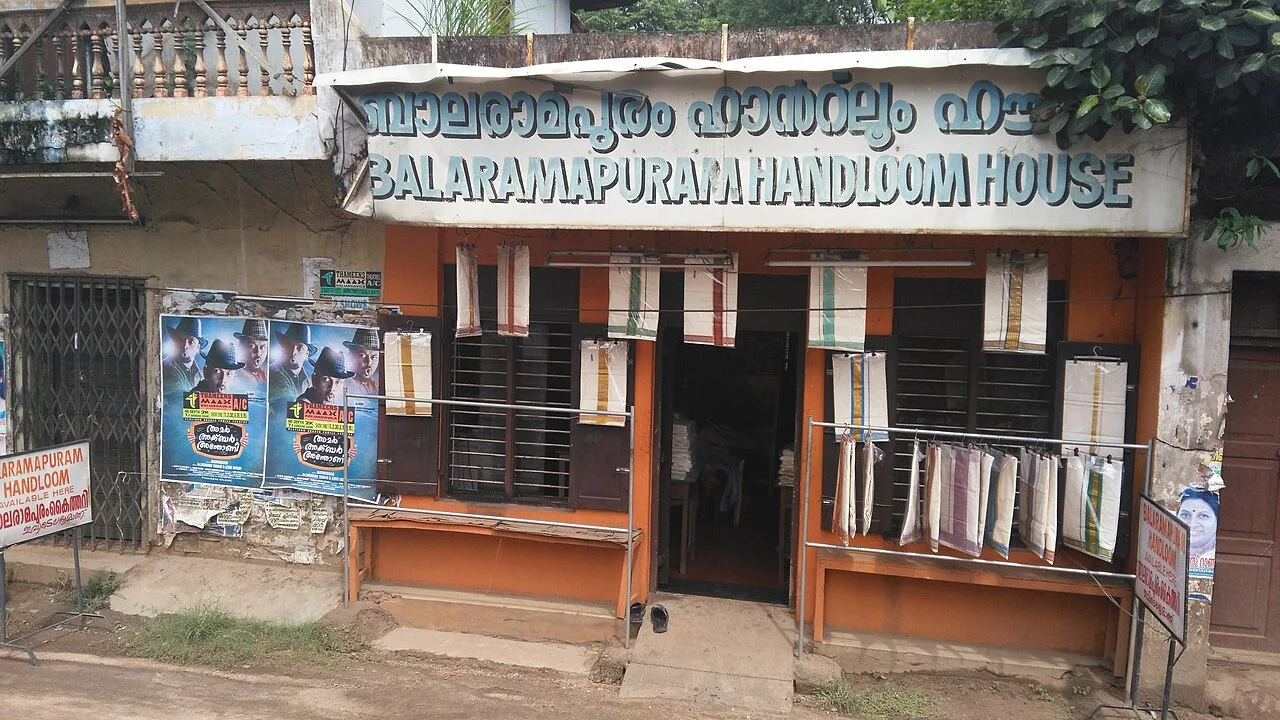
Balaramapuram is a panchayat within Thiruvananthapuram, Kerala’s capital. Visitors may find traditional handloom production, varied shops, meat and seafood dishes, and several religious communities.
Key facts · verified by Ghumoopedia editors
- Type of place
- Community & living culture
- Best time to visit
- September to March; June to August for monsoon Ayurveda and green landscapes
- Nearest railway station
- Thiruvananthapuram Central · about 20 km (straight line)
- Nearest airport
- Trivandrum International Airport · about 20 km (straight line)
- Verified
- 21 Nov 2026
Plan a trip from Balaramapuram — a day-by-day route through places nearby.
Balaramapuram is part of the city of Thiruvananthapuram and is its most urbanised panchayat. The settlement is a centre for making traditional Balaramapuram handlooms, including varieties worn in modern styles across Kerala. Its markets and businesses deal in clothing, groceries, furniture, electronics and metal goods. Food associated with Balaramapuram includes dishes made with mutton, chicken, oysters and fish. Several religious communities are present, and St. Sebastian’s Church is a Christian church in the area. Kerala packs a lot into a narrow strip: the backwaters and houseboats of Alappuzha and Kumarakom, the tea hills of Munnar and the spice forests of Thekkady, the beaches of Kovalam, Varkala and Bekal, the colonial and Jewish heritage of Fort Kochi, and living art forms — Kathakali, Theyyam, Mohiniyattam and temple festivals with caparisoned elephants. Kerala is warm and humid at sea level all year. The southwest monsoon from June to September brings very heavy rain, and the northeast monsoon adds showers in October and November; the hill stations of Munnar, Wayanad and Vagamon are cool year-round and cold on winter nights. The usual best time to visit is September to March; June to August for monsoon Ayurveda and green landscapes. For official information, see Kerala Tourism at https://www.keralatourism.org.
Why it matters
Balaramapuram is a local centre within the Thiruvananthapuram area, best known for its handloom weaving tradition. Its cotton textiles, including sari varieties worn in contemporary styles across Kerala, connect household livelihoods and regional identity with a craft that remains in production. The Balaramapuram Sarees and Fine Cotton Fabrics have Geographical Indication (GI) recognition in India, identifying their association with this weaving centre; this is a craft designation, not a claim that every textile sold locally is handmade or GI-certified. The locality is also an active trading centre for clothing, groceries, furniture, electronics and other goods. Visitors encounter a working community and commercial town rather than a single monument or managed heritage site. Its importance is therefore primarily cultural, economic and regional.
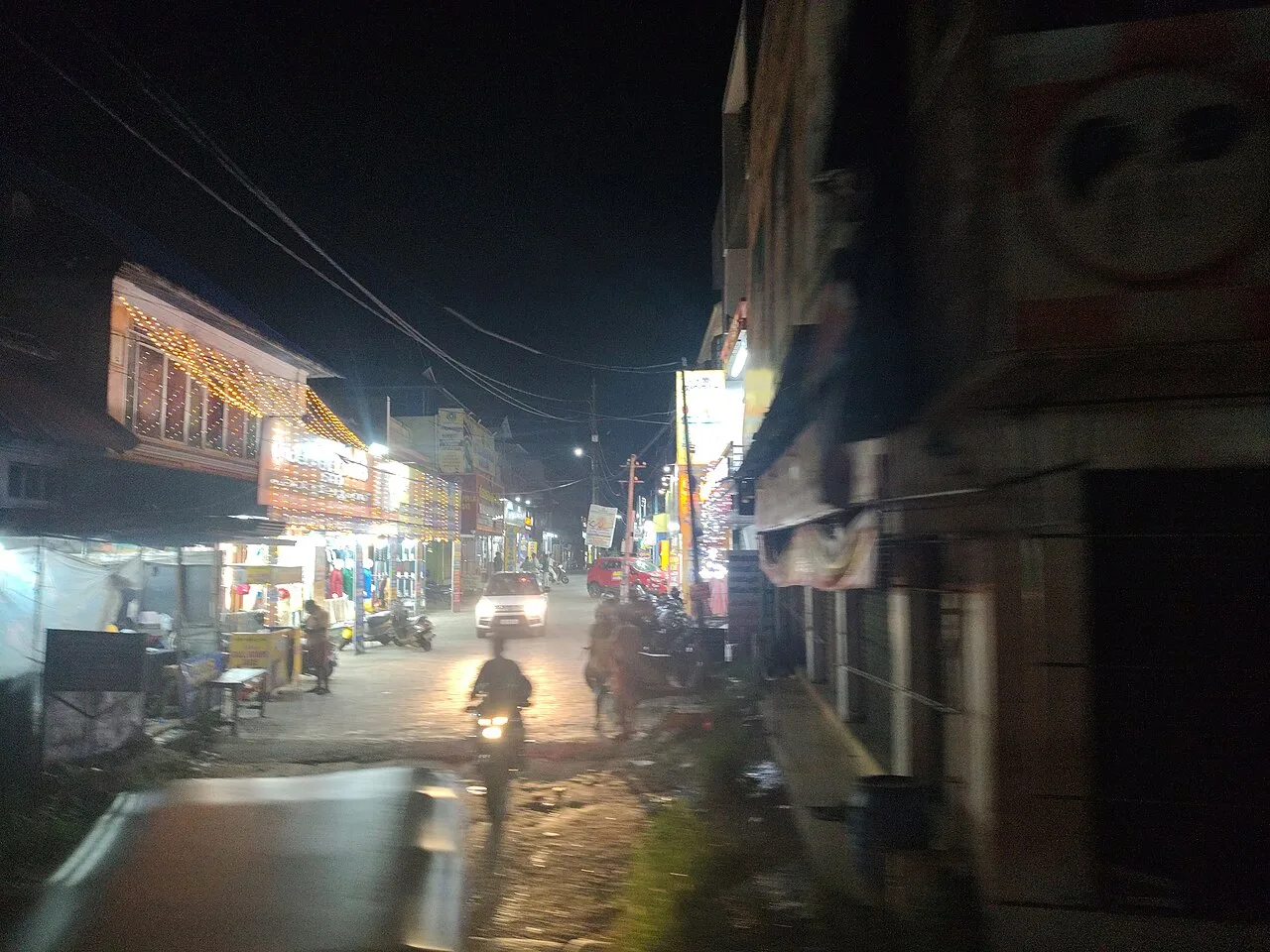
Balaramapuram’s best-known history is tied to the handloom industry and the Travancore region. Accounts of the craft commonly associate its development with royal patronage during the reign of Maharaja Balarama Varma in the early nineteenth century, when skilled weaving families are said to have been settled in the area. Some accounts connect these families with Tamil-speaking weaving communities, though details of migration and early organisation are not uniform across sources. The practice developed around handwoven cotton textiles, including fine fabrics and saris with distinctive borders. Weaving knowledge has been sustained through families, workshops and cooperative institutions, adapting as clothing preferences and markets changed. Handloom production now exists alongside power-loom textiles and wider retail trade, so the presence of a local shop alone does not establish how a particular item was made. The craft’s regional identity has received formal recognition through the Indian Geographical Indications system for Balaramapuram Sarees and Fine Cotton Fabrics. The locality has also urbanised and expanded as part of the Thiruvananthapuram area. It is not known primarily as a restored historic complex; its textile heritage is encountered in working production spaces and community institutions.
Origin stories & folklore
There is no single widely documented supernatural legend that can be confidently presented as the origin of Balaramapuram. Local and craft accounts more often preserve a history of royal patronage and the settlement of skilled weavers than a mythic founding story. These accounts are part of the community’s memory, but details about the earliest families and circumstances can vary. Visitors may hear local explanations of how the weaving tradition began; treat them as oral history or family tradition unless independently documented. Ask permission before recording personal stories, and avoid presenting one household’s account as the only version shared by the community.
The heart of a visit to Balaramapuram is meeting the weavers at work. Watch the stages that come before the loom — dyeing, warping and, in ikat villages, tying and resist-dyeing the yarn so the pattern appears as it is woven — and then the steady rhythm of the loom itself. A single sari can take days or weeks. Many households and cooperative societies welcome visitors who show genuine interest, but this is a working village, not a museum: ask before entering a home or workshop, keep visits short during busy hours, and accept that some families may be away at fairs or markets. Buying directly from the maker or a registered cooperative is the best way to support the craft. Where a product carries a Geographical Indication (GI) tag or a handloom mark, ask for it; prices for handmade work reflect the time and skill involved, so bargain gently, if at all. Some workshops offer short hands-on sessions — ask locally rather than expecting a fixed schedule.
Suggested itineraries
Half day: Ask a handloom workshop or cooperative about a visit; observe yarn preparation and weaving if available; browse local textile shops; pause for a meal nearby. Full day: Begin with a pre-arranged workshop visit; learn about the textile-making stages; have lunch locally; explore the market and compare handloom products; spend the later part of the day at a nearby Thiruvananthapuram attraction. Gentler option: Arrange a vehicle between one workshop and a nearby shop, keep walking to a minimum, and take breaks in shaded or indoor spaces.
Handloom weaving remains the defining living tradition: visitors may encounter yarn preparation, dyeing, warping and the measured work of the loom, depending on what a workshop is producing. Balaramapuram cotton textiles are worn in both customary and contemporary settings. Malayalam is widely used in Kerala, and Tamil may also be heard among residents and craft families. The locality is religiously diverse, with Christian, Hindu and other communities shaping everyday life. Onam and Vishu are observed in the broader region, alongside church feasts and temple celebrations. These are community occasions rather than performances staged for visitors; customs and access vary by household and institution.
Local communities
Weaving households and craft workers are central to Balaramapuram’s identity, alongside traders, shopkeepers, service workers and residents employed in the wider Thiruvananthapuram area. Local accounts connect the weaving tradition with Chaliyar or Shaliyar communities and with families who migrated from Tamil-speaking regions; identities and family histories should not be assumed for any individual. Cooperative societies and independent producers form part of the textile economy, while shops serve a broader market in clothing, groceries, furniture and other goods. The locality includes multiple religious communities, including Christians associated with St. Sebastian’s Church. Ask before entering homes or workplaces, as these are private and working spaces.
Festivals & events
Onam, usually celebrated in the Malayalam month of Chingam, and Vishu in the spring are widely observed across Kerala and may be marked by households and shops in the area. Local temple festivals and church feasts, including celebrations associated with St. Sebastian’s Church, take place according to each institution’s calendar; confirm locally rather than relying on a fixed visitor schedule. During larger religious or seasonal events, nearby roads and market areas may be busier, and parking can be harder to find. Visitors are welcome to observe public celebrations respectfully, but some services or spaces may be intended for worshippers.
Village food in Kerala is home cooking: appam with stew, puttu with kadala curry, idiyappam, the vegetarian sadya served on a banana leaf, Kerala parotta with beef or chicken fry, Malabar biryani and pathiri in the north, karimeen pollichathu (pearl-spot fish in banana leaf), toddy-shop fish curry, banana chips and many kinds of payasam. Balaramapuram itself may have only tea stalls and small eateries, so ask your host or guide where to eat, or arrange a home-cooked meal in advance — it is often the highlight of a village visit. Carry water and a snack if you plan to spend the whole day, and eat your main meal in the nearest town if no local option is open.
Shopping & local experiences
Look for Balaramapuram handloom cotton saris and other fine cotton fabrics through a maker, cooperative or established local textile seller. Ask how an item was produced and, where relevant, whether it carries a GI tag or handloom mark; not all goods sold in the locality are necessarily handwoven there. Handmade work reflects time and skill, so bargain gently, if at all. The town also has general markets for clothing, groceries and household goods. Local eateries offer Kerala meals and, according to the main guide, mutton, chicken, oyster and fish dishes; ask about ingredients and availability.
Balaramapuram is an urbanising settlement in the lowland landscape of southern Kerala, not a forest or wildlife destination. The surroundings are shaped by homes, shops, roads, gardens and cultivated plots, with tropical vegetation typical of the region. The wider Thiruvananthapuram district includes coast, wetlands and wooded uplands, but these habitats are not within the handloom locality itself. Kerala’s warm, humid climate supports greenery through much of the year; heavy southwest-monsoon rain is usual from June to September, with further showers possible in October and November. Local trees and garden plants may attract common urban birds, but wildlife sightings are incidental and should never be expected. Take care on wet streets and avoid entering private land to seek nature views.
September to March; June to August for monsoon Ayurveda and green landscapes
The nearest principal railway station by straight-line distance is Thiruvananthapuram Central, roughly 20 km away. The nearest operating airport by straight-line distance is Trivandrum International Airport, roughly 20 km away. These figures are calculated from map coordinates — actual road distance is longer. Thiruvananthapuram, Kollam, Kottayam, Ernakulam, Thrissur, Shoranur, Kozhikode and Kannur are the main rail stops along the coast line; Kochi, Thiruvananthapuram, Kozhikode and Kannur have international airports. Balaramapuram is a village, so the last stretch is by road: KSRTC buses (from ordinary to air-conditioned Swift services), fast private buses, metered autos, app cabs and the Water Transport Department's public ferries in the backwaters reach the nearest town, and from there a shared auto, local bus or reserved taxi covers the final few kilometres. Village roads can be narrow and unpaved; a taxi hired for the day from the nearest town is the simplest way to combine Balaramapuram with nearby sights and get back before dark. When comparing train, bus and flight, count the complete door-to-door time: a flight saves the most time only if the onward road transfer is short, while an overnight train can save a hotel night. Book your return before you leave, because seats fill quickly on weekends, festivals and holidays. Current train numbers, timings, return services and fares are not listed here; check IRCTC and NTES for trains and the airline's own schedule for flights. No permit is needed to visit Kerala. Several major temples, including Sree Padmanabhaswamy in Thiruvananthapuram and Guruvayur, admit only Hindus and enforce a strict dress code — men wear a mundu (dhoti) and remove shirts, women wear a saree or long skirt. Forest activities in Periyar, Eravikulam, Silent Valley, Parambikulam and Thattekad must be booked with the Kerala Forest Department, and Eravikulam National Park usually closes in February and March for the Nilgiri tahr calving season.
Confirm onward and return timings on IRCTC / NTES, the state bus operator or your airline before travel. A dash means current timings or fares have not been verified.
Getting around
Local buses connect Balaramapuram with the wider Thiruvananthapuram area, while autos and taxis can help with short trips between the bus stop, markets and workshops. App-based cab availability may vary. The locality is spread across busy roads and commercial streets, so walking is practical for short visits but requires attention to traffic and uneven edges. Ask a workshop for directions before travelling, as production spaces may not be obvious from the main road. Parking is limited or variable near busy shops; check locally and avoid blocking entrances. Boats are not a usual means of getting around Balaramapuram itself.
Hours, tickets & permissions
Balaramapuram is an inhabited locality, not a ticketed attraction with one general entrance or visitor schedule. Shops, cooperatives, workshops and places of worship set their own access arrangements; some workshops welcome visitors only by prior enquiry and may be closed when workers are away or busy. There is no general permit requirement for walking through public streets, but private premises and religious interiors may have their own rules. Confirm current opening arrangements and any fees directly with the managing institution or workshop before setting out.
Facilities
As a working town and trade centre, Balaramapuram usually has food shops, eateries, grocery stores and other everyday services. Public toilets, drinking-water points, visitor information and formal guides are not guaranteed at workshops, so check locally and plan accordingly. ATMs and pharmacies may be available in the wider commercial area, but do not rely on every facility being open when you arrive. Parking conditions vary, especially near busy shopping streets. Workshop visits are best arranged directly with a producer or cooperative, which can clarify whether someone is available to speak with visitors.
Accessibility
Balaramapuram is a built-up locality with road traffic, uneven pavements and occasional steps at shops or workshops. A visit may involve standing near a loom or walking through a compact working space; access varies by building, and wheelchair-friendly entrances cannot be assumed. Strollers may be difficult to manoeuvre on crowded or uneven streets. Shade is intermittent outdoors, while indoor workshop conditions can be warm. Older visitors and people with limited mobility may find a pre-arranged visit, vehicle drop-off and one carefully chosen workshop more comfortable than a long market walk. Contact the venue in advance to discuss access needs.
No permit is needed to visit Kerala. Several major temples, including Sree Padmanabhaswamy in Thiruvananthapuram and Guruvayur, admit only Hindus and enforce a strict dress code — men wear a mundu (dhoti) and remove shirts, women wear a saree or long skirt. Forest activities in Periyar, Eravikulam, Silent Valley, Parambikulam and Thattekad must be booked with the Kerala Forest Department, and Eravikulam National Park usually closes in February and March for the Nilgiri tahr calving season. Carry a photo ID, some cash (card and UPI acceptance varies in villages) and a charged phone with offline maps; save the emergency number 112 and your host's contact. Heat in summer and heavy rain in the monsoon are the main weather risks; carry water, avoid midday sun and allow extra time when village roads flood. Respect local customs: dress modestly, remove footwear where asked, and always ask before photographing people, homes or rituals.
Visitor rules
Ask permission before entering a home, workshop or cooperative work area, and follow the host’s instructions about where to stand. Keep visits brief if workers are busy, do not touch yarn, looms or unfinished textiles without consent, and dress respectfully at religious sites. Remove footwear where requested. Do not litter; carry plastic waste out if no bin is available. Keep voices low during worship and avoid restricted areas. There is no single set of visitor rules for the locality, so follow signs and the directions of workshop staff or religious authorities.
Photography
Photographs of streets and shopfronts may be possible, but ask before photographing workers, customers, private homes or the inside of a workshop. Some hosts may prefer that visitors do not photograph particular stages or designs. Early or late daylight can give softer light on streets and building fronts; indoors, ask before using flash, which may disturb workers. Religious ceremonies and interiors may have their own restrictions. Drone use can be subject to aviation, safety and local permissions; do not fly one without confirming the rules and obtaining any required approvals.
Most visitors see Balaramapuram on a day trip from the nearest town, which has the widest choice of hotels. A few villages have homestays or heritage stays; otherwise base yourself in the district town and hire a taxi for the day. Confirm the booking and the exact location before you travel, because village addresses can be hard to find.
For a wider Thiruvananthapuram itinerary, consider the city’s Padmanabhaswamy Temple, Napier Museum and nearby museum grounds, subject to each place’s entry rules. The coastal areas of Kovalam and Vizhinjam offer a different setting from Balaramapuram’s markets and workshops. Poovar is another destination in the district, while Neyyar Wildlife Sanctuary provides a contrasting natural landscape farther inland. These places are separate outings rather than attractions within walking distance of the weaving area. Check current travel conditions and opening arrangements before combining them in one day.
For couples, Balaramapuram is a chance to slow down: spend an unhurried morning with the makers, choose a piece together directly from the family that made it, share a home-cooked meal and keep the afternoon free. Stay in a nearby homestay or heritage property to make it a quiet overnight escape.
Q: How much time should I allow for a visit? A: A half day can cover one arranged workshop visit and a browse through local shops; allow longer if combining it with other parts of Thiruvananthapuram. Q: When is a good season to visit? A: September to March is generally more comfortable for travel in Kerala. June to August is very wet, so allow for heavy rain and changing road conditions. Q: Is there an entry ticket for Balaramapuram? A: There is no general ticket for the locality. Individual workshops, cooperatives and religious sites set their own access arrangements; confirm before visiting. Q: Is the visit suitable for children and older visitors? A: It can be, especially with a short, pre-arranged workshop visit. Watch children around working looms and traffic; uneven streets and limited step-free access may challenge some visitors. Q: Where can I stay nearby? A: Visitors can look for accommodation in the wider Thiruvananthapuram area, including the city and coastal areas such as Kovalam. Choose based on transport needs and confirm availability directly.
Be the first to share photos, stories, advice or a helpful contact for Balaramapuram.
Loading…