
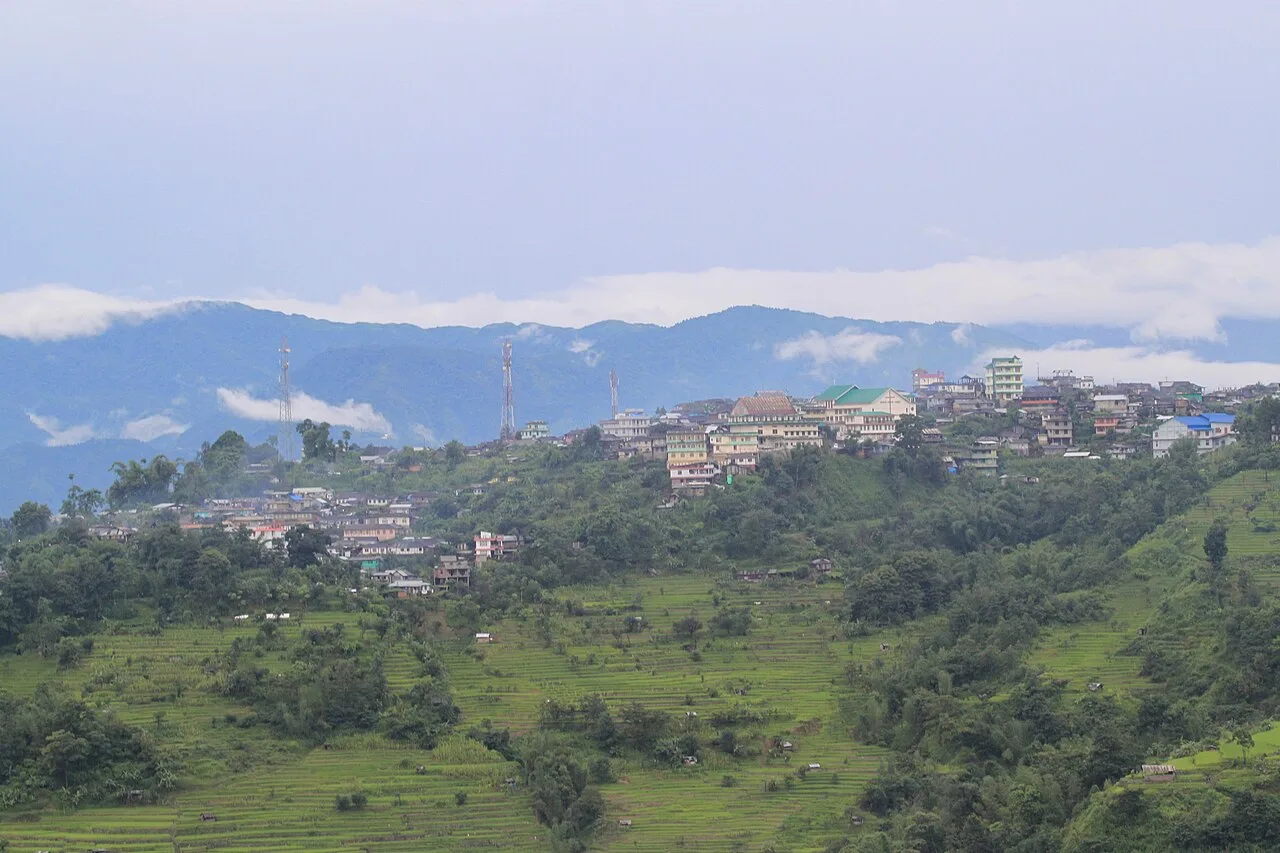
Kigwema
Kigwema is a settlement in southern Nagaland, within Kohima District. Visitors locating the village can use its position south of Kohima, the state capital, as a reference.
Key facts · verified by Ghumoopedia editors
- Type of place
- Community & living culture
- Best time to visit
- October to May; early December for the Hornbill Festival
- Nearest railway station
- Dimapur · about 50 km (straight line)
- Nearest airport
- Dimapur Airport · about 45 km (straight line)
- Verified
- 21 Nov 2026
Plan a trip from Kigwema — a day-by-day route through places nearby.
Kigwema lies in the southern part of Nagaland. Administratively, it comes under Jakhama Circle, which is within Kohima District. The village is 15 km (9.3 mi) south of Kohima. Kohima is Nagaland’s capital, providing a reference point for Kigwema’s location. Its state, district and circle identify its place in Nagaland, while its distance and direction from Kohima give a more specific location. Nagaland’s many Naga tribes each have their own language, festivals and village councils. The Hornbill Festival at Kisama is held in early December, and the state enforces liquor prohibition. Kohima and the hill districts are cool, with cold winter nights; Dimapur in the plains is warmer and humid. The monsoon brings heavy rain from June to September. The usual best time to visit is October to May; early December for the Hornbill Festival. For official information, see Nagaland Tourism at https://tourism.nagaland.gov.in.
Why it matters
Kigwema is an inhabited village in Jakhama Circle, Kohima District, in the southern part of Nagaland. Its importance for visitors is chiefly local: it offers an opportunity to encounter everyday village life and Angami Naga culture through arrangements made with residents. Kigwema is also near Kisama Heritage Village, the venue of Nagaland’s annual Hornbill Festival, making it a useful base or stop for visitors exploring the area. The festival is held at Kisama, not in Kigwema itself.
Kigwema is an established Angami Naga village. As with many Naga villages, its history is best understood through community memory, family and clan histories, customary institutions and the land around the settlement. Oral accounts may explain how particular lineages arrived or how village boundaries and fields were formed; these accounts can differ and should be heard from local residents rather than treated as a single definitive version. Village life has changed over time through wider political, religious, educational and economic shifts in Nagaland. Christianity is now part of the social life of many residents, alongside customary practices and community responsibilities. Roads, schooling, wage work and contact with Kohima have also shaped contemporary life. Kigwema falls within present-day Kohima District and Jakhama Circle, but these administrative labels do not replace the village’s own customary identities and governance. Visitors interested in local history can ask a host whether a community museum, heritage display or knowledgeable guide is available; access and interpretation should be arranged locally.
Origin stories & folklore
No single origin legend for Kigwema is consistently documented in reliable public sources. As in other villages in the region, local oral histories may preserve accounts of ancestral journeys, settlement, clan relationships and the meaning of particular places. Such narratives belong to the people who share them, and versions can vary between families and speakers. They should not be presented as verified historical fact or repeated without permission. Visitors interested in folklore can ask a local host whether there are stories suitable for sharing with guests. Some accounts may be personal, sacred or not intended for public circulation. Do not enter a grove, shrine or other culturally significant place simply because it appears on a map or is mentioned in a story; ask first and follow the community’s guidance.
Spend time in Kigwema at the community's pace: walk the village lanes with a local guide or host, learn about traditional houses, farming, weaving and food, and visit any community museum or heritage centre. Ask your host which places are open to visitors — some sacred groves, shrines and ceremonies are not — and follow their lead. Buying textiles, baskets or other handmade goods directly from the makers, staying in a community homestay and eating locally cooked meals are the best ways for your visit to benefit the village.
Suggested itineraries
Half day: Arrange a local host; take an easy village-lane walk (about 1–2 hours); visit a community heritage space or meet a maker if available (about 1 hour); finish with a locally prepared meal. Full day: Begin with a hosted village walk (about 2 hours); spend time learning about farming, houses or crafts by invitation (about 1–2 hours); have lunch locally; visit Kisama Heritage Village or another nearby stop (about 2 hours), allowing extra travel time. Gentler option: Arrange a vehicle close to the places your host recommends, make one short, level-as-possible stop at a time, and take breaks indoors; check surfaces and access in advance.
Kigwema is an Angami Naga village where culture is part of everyday community life, not only a visitor display. Angami languages, including Tenyidie, are used alongside English and Nagamese, though language preferences vary by person. Local hosts may be able to discuss traditional houses, farming, weaving, food and changing village life. Dress, music, dance and ceremonial practices can be connected to specific occasions and community contexts; do not assume that a performance is available on demand. Christian practice is also prominent in contemporary life. Ask before joining an activity, photographing people or entering a home, and accept that some customs or places are not open to visitors.
Local communities
Kigwema is an Angami Naga community in Kohima District. Residents’ livelihoods may include farming, public and private employment, small businesses, education, crafts and work connected with nearby Kohima or tourism. Household activities and income sources differ, so visitors should not assume that every family farms or makes crafts. Village councils and customary community structures remain important in local affairs, alongside formal government administration. Homestays, guided walks and purchases made directly from local makers can support residents when offered by them. Ask before visiting homes or community spaces, and respect a host’s guidance about what is appropriate to share.
Festivals & events
The Hornbill Festival is held at Kisama Heritage Village near Kigwema in early December. It brings performances, food and cultural presentations from across Nagaland and can make nearby roads and visitor services busier than usual. The Angami festival Sekrenyi is generally observed in February; whether Kigwema has public events for visitors varies by community and year. Festival practices are living traditions, not guaranteed tourist shows, so confirm locally before planning around an event. During major gatherings, allow extra time for road travel, follow venue instructions and avoid entering ceremonies or restricted areas without an invitation.
Village food in Nagaland is home cooking: smoked pork with bamboo shoot, axone (fermented soybean), galho rice porridge, king chilli (raja mircha) relishes and seasonal greens. Kigwema itself may have only tea stalls and small eateries, so ask your host or guide where to eat, or arrange a home-cooked meal in advance — it is often the highlight of a village visit. Carry water and a snack if you plan to spend the whole day, and eat your main meal in the nearest town if no local option is open.
Shopping & local experiences
Ask locally about textiles, baskets and other handmade goods, and buy directly from makers when they are selling and welcome visitors. Craft availability is not guaranteed in every household, and it is considerate to ask before visiting a workshop or taking photographs. A homestay may offer locally cooked meals or explain ingredients and food traditions; arrange this in advance rather than expecting a restaurant in the village. Kohima has a broader choice of shops and markets. Bargain respectfully, pay makers fairly and avoid buying cultural objects if their origin or permission to sell is unclear.
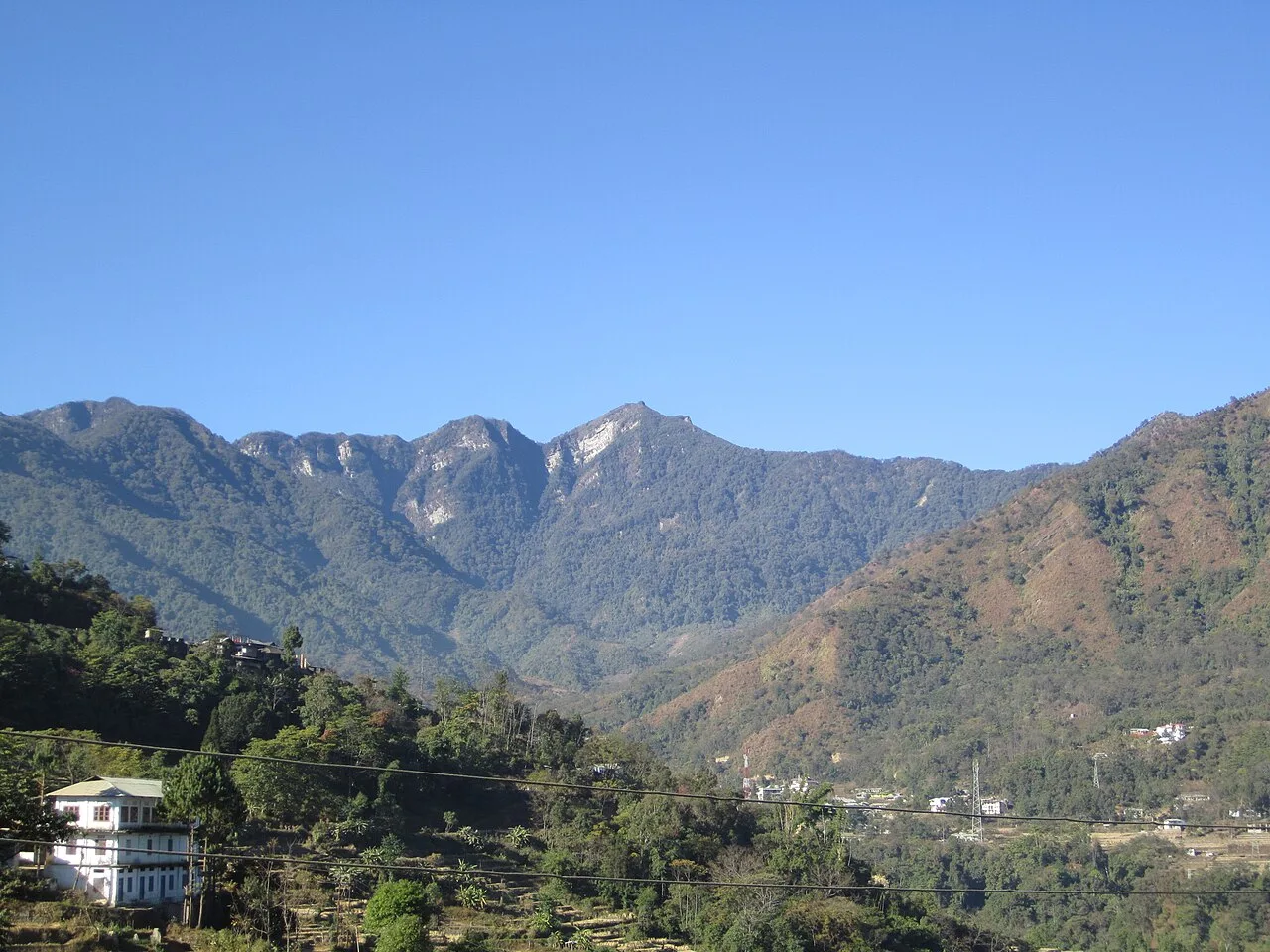
Kigwema lies in Nagaland’s southern hill country, where settlement, cultivated land and wooded slopes form a changing landscape. The wider Kohima area has steep terrain, seasonal streams and forested patches, but specific water sources and paths in or around the village should be checked with a local host. The monsoon, usually from June to September, brings heavy rain; paths can become muddy and visibility may change. Cooler conditions are common in the hills, with cold winter nights. Birds and other wildlife may be present in surrounding habitats, but sightings are never assured. Stay on agreed routes, do not disturb wildlife or collect plants, and ask before entering farmland, forest or community-managed land.
October to May; early December for the Hornbill Festival
The nearest principal railway station by straight-line distance is Dimapur, roughly 50 km away. The nearest operating airport by straight-line distance is Dimapur Airport, roughly 45 km away. These figures are calculated from map coordinates — actual road distance is longer, and hill roads mean even short distances can take hours. undefined Kigwema is a village, so the last stretch is by road: Nagaland State Transport (NST) and shared taxis from Dimapur and Kohima reach the nearest town, and from there a shared auto, local bus or reserved taxi covers the final few kilometres. Village roads can be narrow and unpaved; a taxi hired for the day from the nearest town is the simplest way to combine Kigwema with nearby sights and get back before dark. When comparing train, bus and flight, count the complete door-to-door time: a flight saves the most time only if the onward road transfer is short, while an overnight train can save a hotel night. Book your return before you leave, because seats fill quickly on weekends, festivals and holidays. Current train numbers, timings, return services and fares are not listed here; check IRCTC and NTES for trains and the airline's own schedule for flights. Indian visitors who are not residents of Nagaland need an Inner Line Permit, available online through Nagaland’s official ILP portal. Foreign nationals must check the current Protected Area Permit and registration requirements.
Confirm onward and return timings on IRCTC / NTES, the state bus operator or your airline before travel. A dash means current timings or fares have not been verified.
Getting around
Travel within Kigwema is mainly on foot or by road. Village lanes can be narrow and uneven, so a vehicle may not reach every home or meeting place. Shared autos, local buses or taxis may serve parts of the area, but availability and drop-off points should be checked locally. A taxi arranged from Kohima or another nearby town can be useful for reaching the village and combining it with nearby stops; agree the return plan with the driver before leaving. Parking space may be limited. Walk with a local host when possible, especially if unfamiliar with lanes or private paths.
Hours, tickets & permissions
Kigwema is a living village rather than a single ticketed attraction, and there may be no general visitor entry system. Access to a homestay, heritage space, community museum, workshop or other place depends on local arrangements and whether the host is available. Some sites or activities may have their own permissions, charges or restrictions, which can change. Confirm current access, hours and fees with your host, the relevant community representative or the managing authority before setting out. Do not assume that a public road means every lane, home or community space is open to visitors.
Facilities
Facilities vary by household and location. A homestay or host may provide meals, drinking water and toilet access, but confirm what is available before arrival. Public toilets, rubbish bins, visitor information and formal guides may not be consistently available in the village. Kohima has a wider range of shops, food outlets, accommodation and cash services; do not rely on finding an ATM or card payment in Kigwema. Ask locally about parking and any community heritage space. Carry essential medicines, water and a way to manage rubbish, and avoid assuming that visitor facilities will be open.
Accessibility
Kigwema is a hill village, and walking routes may include slopes, irregular surfaces, steps and narrow lanes. Distances on a map do not indicate how strenuous a walk will be. Shade and places to rest can be limited outdoors, though a host may be able to arrange pauses or a vehicle drop-off nearby. Wheelchair and stroller access cannot be assumed, and there may be no ramps or accessible toilets at community spaces. Older visitors or anyone with limited mobility should discuss the route and surfaces with a host in advance, plan short visits, and avoid walking in heavy rain or after dark.
Indian visitors who are not residents of Nagaland need an Inner Line Permit, available online through Nagaland’s official ILP portal. Foreign nationals must check the current Protected Area Permit and registration requirements. Carry a photo ID, some cash (card and UPI acceptance varies in villages) and a charged phone with offline maps; save the emergency number 112 and your host's contact. Weather changes quickly in the hills; carry warm layers and rain gear, avoid travelling after dark on mountain roads and allow for altitude if you come from the plains. Respect local customs: dress modestly, remove footwear where asked, and always ask before photographing people, homes or rituals.
Visitor rules
Treat Kigwema as a home community, not an open-air attraction. Dress modestly, wear sturdy footwear and ask before entering homes, fields, community buildings, groves or shrines. Follow a host’s instructions about restricted areas and ceremonies. Ask permission before photographing people, interiors, worship or cultural activities. Take rubbish away or use bins where provided, and do not damage plants, crops or property. Nagaland enforces prohibition on liquor; do not bring or consume alcohol in disregard of state law. Be considerate of residents’ privacy and keep noise low.
Photography
Soft morning or late-afternoon light can suit village lanes and the surrounding hills, but the best viewpoint depends on local access and weather. Photograph public scenes only where permitted; always ask before taking portraits, entering a home or recording a ceremony, worship or workshop. A host can identify places where photography is welcome and areas where it is not. Avoid blocking lanes or photographing children without a guardian’s permission. Drone use may be restricted by aviation rules or local sensitivities, so check applicable requirements and obtain permission before flying; do not assume it is allowed.
Most visitors see Kigwema on a day trip from the nearest town, which has the widest choice of hotels. Community homestays, where available, are the best way to experience village life — book through a known operator or the village's own contact, confirm what is included, and expect simple rooms and shared meals. Confirm the booking and the exact location before you travel, because village addresses can be hard to find.
Kisama Heritage Village, near Kigwema, is the best-known nearby cultural stop and hosts the Hornbill Festival in early December. Kohima offers the Kohima War Cemetery and the Nagaland State Museum for visitors interested in the region’s wartime history and cultural collections; check current access before travelling. Jakhama and Phesama are nearby villages, though visits should be arranged respectfully and are not formal attractions by default. Dzüko Valley is a wider-area trekking destination approached by routes from the Kohima region; access, trail conditions and local arrangements should be confirmed before making it part of a trip. Hill roads can make short map distances slow to cover.
For couples, Kigwema is a chance to slow down: walk the lanes in the soft morning light, share a home-cooked meal and keep the afternoon free. Stay in a nearby homestay or heritage property to make it a quiet overnight escape.
Q: How much time should I allow for Kigwema? A: A half day can suit a hosted walk and meal; allow longer if you want to visit a heritage space or combine the village with Kisama. Q: When is a good season to visit? A: October to May is generally a practical period for travel in the hills. Early December is busy near Kisama during the Hornbill Festival, while the monsoon brings heavy rain. Q: Is there an entry ticket or permit for the village? A: Kigwema is a living village, not one ticketed site. Arrange visits with a host and confirm any separate rules or charges for specific places. Q: Is Kigwema suitable for children or older visitors? A: It can be, with a short, locally planned visit, but slopes and uneven lanes may be challenging. Check the route and rest options in advance. Q: Where can I stay nearby? A: Ask about community homestays in or around Kigwema and check accommodation options in Kohima; confirm availability and arrangements before travelling.
Be the first to share photos, stories, advice or a helpful contact for Kigwema.
Loading…