
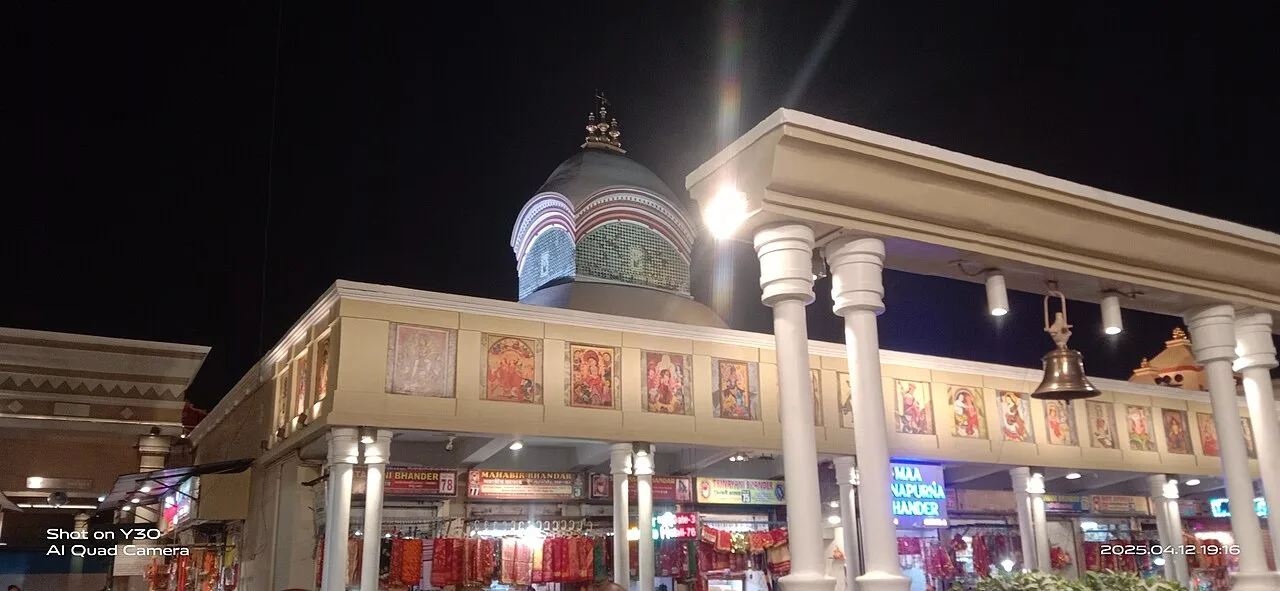
Kalighat Temple
Kalighat Temple is a Hindu shrine in Kolkata devoted to Kali, revered in tantric and Kalikula traditions. People visit to worship at this Shakti Pitha, particularly during major religious observances.
Key facts · verified by Ghumoopedia editors
- Type of place
- Temple / pilgrimage site
- Best time to visit
- October to March for the plains and coast; March to May and October to December for the Darjeeling hills
- Nearest railway station
- Sealdah · about 5 km (straight line)
- Verified
- 21 Nov 2026
Plan a trip from Kalighat Temple — a day-by-day route through places nearby.
Situated in Kalighat, Kolkata, in West Bengal’s Kolkata district, this Hindu shrine honours Kali. Hindu tantric tradition counts her among the ten Mahavidyas; in Kalikula worship, she is the supreme deity. The Devi Bhagavata Purana, Kalika Purana and Shakti Peetha Stotram describe Kalighat as one of India’s 51 Shakti Pithas. They recount that Sati’s right toes fell here after Vishnu’s Sudarshan Chakra divided her body. In this account, the act was intended to quiet Mahadev’s anger during his cosmic dance. Considered among Eastern India’s oldest and most important places of worship, the temple is also one of four Adi Shaktipeeth. It receives hundreds of thousands of devotees over the year, particularly for Kali Puja, New Year, Poila Baisakh, Snana Yatra, Durga Puja and the many Amavasyas. West Bengal stretches from the Himalayan tea gardens of Darjeeling to the mangrove delta of the Sundarbans, with Kolkata's colonial architecture, the terracotta temples of Bishnupur, Tagore's Santiniketan and the Nawabi heritage of Murshidabad. The plains are hot and humid from March to June, receive heavy monsoon rain from June to September and are pleasant from November to February; the Darjeeling hills are cool year-round and cold in winter, and the coast and Sundarbans can be hit by cyclones in May and October–November. The usual best time to visit is October to March for the plains and coast; March to May and October to December for the Darjeeling hills. Timings, fees and access arrangements must be confirmed locally. For official information, see West Bengal Tourism at https://wbtourism.gov.in.
Why it matters
Kalighat Kali Temple is an important Hindu pilgrimage site in Kolkata, dedicated to Kali and revered in Shakta traditions. It is counted among the 51 Shakti Peethas in many accounts and is also described as one of four Adi Shaktipeeth in some traditions; these classifications vary between religious sources. The shrine draws worshippers from West Bengal and elsewhere in India throughout the year, with especially large gatherings during Kali Puja and other sacred occasions. Its significance is religious and cultural rather than a claim of UNESCO recognition: the designation of Shakti Peetha is a religious one, not in itself a heritage-protection status. The surrounding Kalighat neighbourhood has grown around the temple and its pilgrimage activity.
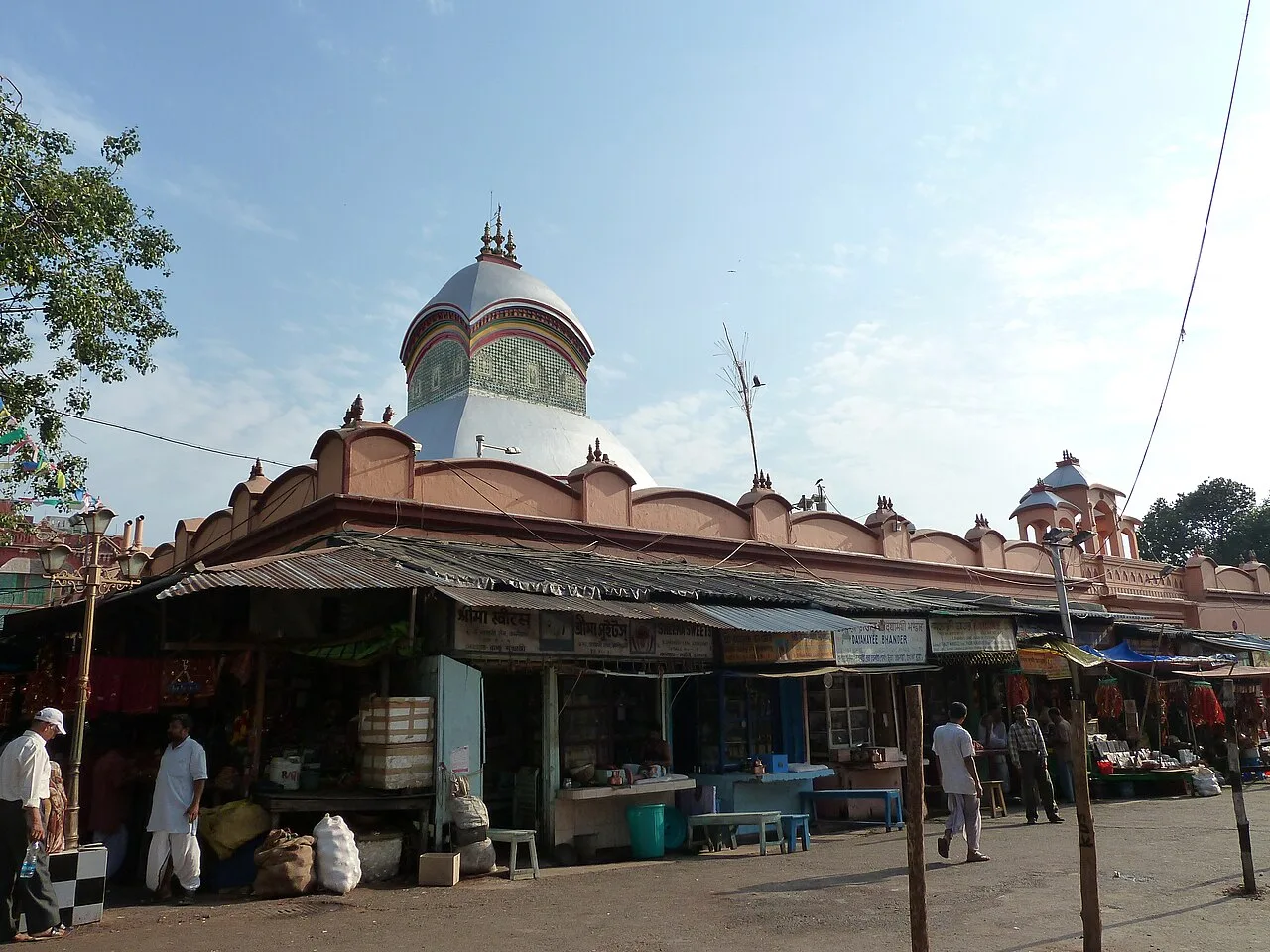
Worship at Kalighat is traditionally considered much older than the present temple building. Local accounts connect the shrine to the Adi Ganga, a historic channel of the Ganges, and to the growth of pilgrimage and settlement in this part of Kolkata. The current temple is commonly dated to the late eighteenth and early nineteenth centuries, with completion often given as 1809. Accounts associate its construction with the Sabarna Roy Chowdhury family; some specifically credit Santosh Roy and his successors, though details differ among sources. As Kolkata expanded during the colonial period, Kalighat developed into a major urban pilgrimage centre, with markets and service streets surrounding the shrine. The temple has been maintained and altered over time to support worship and manage the needs of visitors. Its continued religious life is sustained by temple authorities, priests and the wider community of devotees. Public accounts do not always distinguish clearly between the history of worship at the site and the history of the present structure, so early dates and founding stories are best treated with care.
Origin stories & folklore
According to the Shakti Peetha tradition related in texts including the Devi Bhagavata Purana and Kalika Purana, Sati's body was divided by Vishnu's Sudarshan Chakra to calm Shiva's grief and cosmic dance. Many accounts identify the toes of Sati's right foot as having fallen at Kalighat, making the place sacred to devotees of the Goddess. Versions of the story and the body part associated with individual Peethas can vary between traditions. Local lore also connects the shrine's origins to a discovered image or sacred presence near the river channel, but such accounts are matters of religious belief rather than verifiable history. Worshippers may understand the temple as a place where Kali's protective and powerful presence is especially accessible.
Architecture & design
The present shrine reflects Bengali temple-building traditions and has been developed for active worship rather than as a museum monument. Its central sanctum houses the principal image of Kali, with adjoining spaces used for offerings, prayer and ritual activity. A worship hall and subsidiary shrines form part of the wider temple precinct. The compact layout is shaped by the dense urban neighbourhood around it, where approach lanes, stalls and gathering areas lead visitors toward the sacred interior. The building has a prominent tower above the shrine and ornamented surfaces characteristic of regional Hindu temple design, though the appearance of individual areas may be affected by later repairs and additions. The temple precinct is generally busy, and movement through it is guided by worship routines and crowd arrangements. Visitors should follow signs and staff directions rather than assume every courtyard or shrine is open to general access.
Important objects & sculptures
The principal focus is the image of Kali in the sanctum, traditionally shown with three eyes, a protruding tongue and multiple arms. The image is richly adorned for worship, so its appearance can change with clothing, jewellery and ritual decoration. Devotees may also notice representations associated with Shiva and other forms of the Goddess in the temple precinct. Smaller shrines and ritual objects are part of the living place of worship, not a formal collection arranged for visitors. Offerings such as flowers and other devotional items are brought by worshippers. The view of the main image can be brief or partially restricted when crowds are heavy, and visitors should not try to move ahead or linger in ways that interrupt darshan.
Religious significance
The temple is dedicated to Kali, a central goddess in Hindu Shakta worship. The supplied tradition describes her as one of the ten Mahavidyas and as the supreme deity in the Kalikula stream of worship. For devotees, Kalighat is both a Shakti Peetha associated with Sati and a living place to seek the Goddess's protection, blessings and strength. Worship may include darshan, prayers, offerings and the participation of priests in established rites. Ritual forms and access to particular areas can differ according to the occasion and temple arrangements. Visitors who are not participating in worship are welcome to observe respectfully where permitted, keeping space for devotees and following the instructions of temple staff.
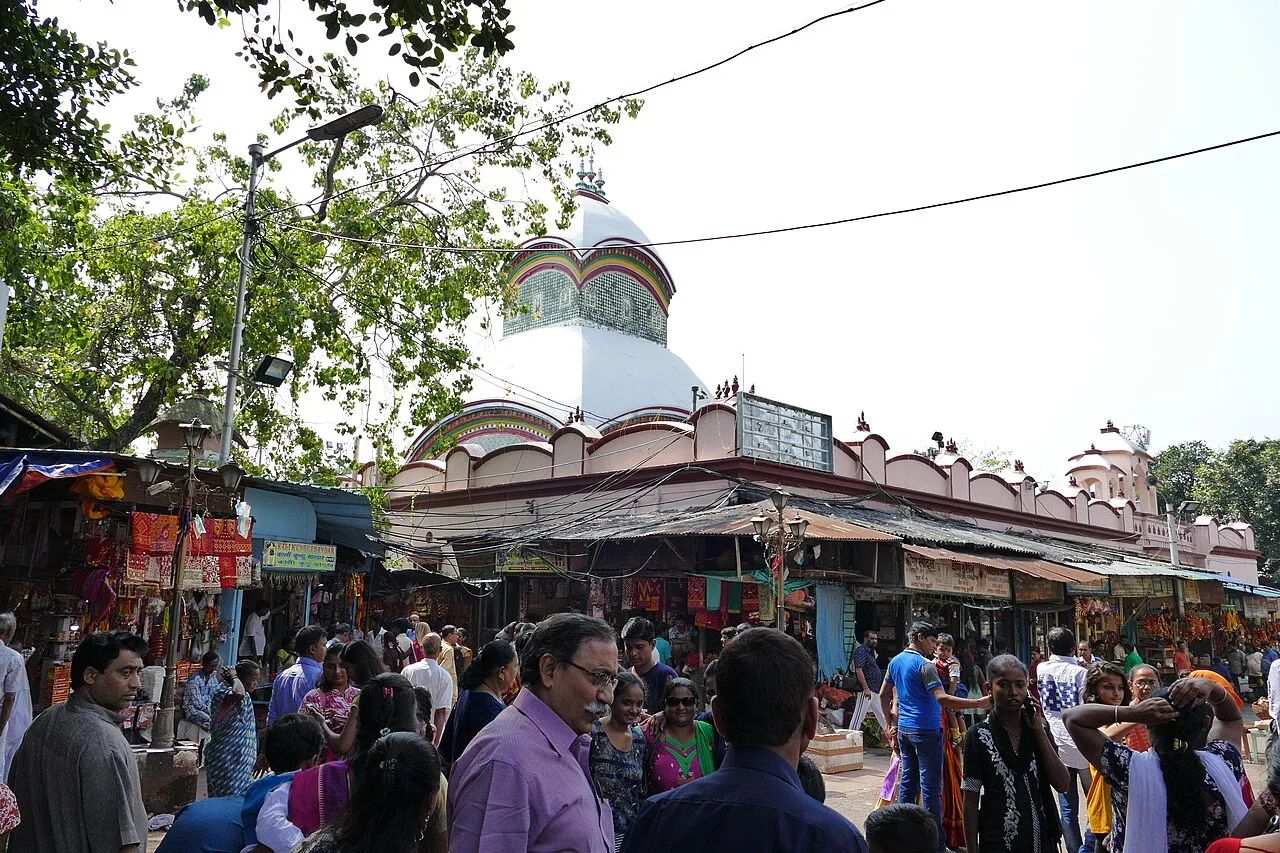
Visit Kalighat Temple with time to observe daily prayers and rituals respectfully. Follow the posted rules on footwear, photography, phones, head covering and dress, and avoid interrupting worshippers; popular temples may have separate queues, dress codes or mobile-phone deposit counters. Ask caretakers which areas are open to visitors, and beware of unofficial 'guides' or agents offering quick darshan for a fee. A comfortable itinerary is one main visit in the morning, a local meal at midday and a short nearby stop before an afternoon return. Use the district list on this site to find other places in Kolkata, but check the route and its condition before combining stops. If a festival is on — such as Durga Puja, Kali Puja or the Poush Mela at Santiniketan — roads and stays can be busy, and the experience can be unforgettable. Leave no litter: many sites are protected by the communities around them.
Suggested itineraries
Half day: Arrive in the Kalighat area, allow time for the temple visit and darshan, take a meal nearby, then make a short walk through the surrounding lanes; allow roughly three to four hours, more during festivals. Full day: Visit Kalighat in the morning, pause for a local meal, then spend the afternoon at Rabindra Sarobar or continue to the Victoria Memorial and Maidan area; allow time for city traffic and rest between stops. Gentler option: Choose a quieter period, arrange a nearby drop-off, keep the visit brief, and rest at a nearby café or accessible public venue rather than adding several stops.
Kalighat remains part of Kolkata's everyday religious life, not only a destination for major festivals. Bengali is widely heard in the neighbourhood, alongside Hindi and other languages used by visitors and local traders. Devotional calls, bells and prayer sounds accompany the movement of worshippers and the work of flower and offering sellers. Many devotees arrive in traditional clothing, though modest everyday dress is also common. Customs around offerings and darshan are learned by observing others or asking temple staff; visitors should avoid treating worship as a performance. The busy lanes around the shrine combine religious activity with ordinary city commerce, and local food and sweet shops serve both residents and pilgrims.
Festivals & events
Kali Puja, usually in October or November, is among the busiest occasions at Kalighat, with increased worship and heavy crowds. The temple also sees heightened activity around Durga Puja in autumn, Poila Baisakh in April, Snana Yatra around May or June, and New Year observances. Amavasya, the new-moon day, is significant in Kali worship and brings recurring devotional gatherings. The Bengali festival calendar and lunar dates change from year to year. During major observances, queues, traffic and waiting times can increase substantially; visitors seeking a quieter visit should check the local calendar and current arrangements before travelling.
Local food in West Bengal includes macher jhol (fish curry), shorshe ilish (hilsa in mustard), kosha mangsho, luchi with alur dom, kathi rolls and phuchka in Kolkata, mishti doi, rosogolla and sandesh; in the Darjeeling hills, momos, thukpa, shaphaley and first-flush Darjeeling tea. Ask what is fresh that day; many small eateries cook a limited daily menu. Vegetarian travellers eat well across the state, and most towns also have fish and meat dishes. Remote sites may have no restaurant at all. Carry water and snacks, eat a proper breakfast before long drives, and ask your accommodation for a packed lunch if you are heading out early. If prasad or langar is offered, accept it according to local custom. Choose busy, clean places, drink sealed or filtered water, and carry your packaging back with you.
Shopping & local experiences
Around the temple, visitors can find flowers, devotional offerings, religious images and small souvenirs sold by local vendors. Ask about the item and its use before buying, and do not assume a seller is officially connected to the temple. Kolkata's wider markets offer Bengali textiles, handicrafts and everyday goods; Gariahat and New Market are well-known shopping areas, though they require separate travel. Nearby food stalls and sweet shops are a chance to try local snacks and Bengali sweets. Keep valuables secure in crowded lanes and carry reusable bags where practical.
October to March for the plains and coast; March to May and October to December for the Darjeeling hills
The nearest principal railway station by straight-line distance is Sealdah, roughly 5 km away. The nearest operating airport by straight-line distance is Netaji Subhas Chandra Bose International Airport, Kolkata, roughly 20 km away. These figures are calculated from map coordinates — actual road distance is longer. Howrah, Sealdah and Kolkata stations and Kolkata airport serve the south; New Jalpaiguri station and Bagdogra airport near Siliguri are the gateways to the Darjeeling hills and the Dooars. Within Kolkata, the Metro is the quickest way across the city, supplemented by app cabs, yellow taxis, buses and ferries across the Hooghly. When comparing train, bus and flight, count the complete door-to-door time: a flight saves the most time only if the onward road transfer is short, while an overnight train can save a hotel night. Book your return before you leave, because seats fill quickly on weekends, festivals and holidays. Current train numbers, timings, return services and fares are not listed here; check IRCTC and NTES for trains and the airline's own schedule for flights. No permit is needed for Indian citizens to visit West Bengal. Entry to the Sundarbans Tiger Reserve needs a forest permit, usually arranged through a registered boat operator or the forest office at Sajnekhali or Canning; trekking in Singalila National Park (Sandakphu) needs an entry permit and a registered guide from Maneybhanjan. Durga Puja in October brings huge crowds to Kolkata, so book transport and stays well ahead.
Confirm onward and return timings on IRCTC / NTES, the state bus operator or your airline before travel. A dash means current timings or fares have not been verified.
Getting around
Within Kolkata, the Metro is often a practical way to reach the Kalighat area; Kalighat and Jatin Das Park stations serve the neighbourhood, with the final approach made on foot or by local transport. App-based cabs, yellow taxis, buses and auto-rickshaws also operate in the city, though traffic and road restrictions can affect drop-off points. The lanes closest to the temple are busy, so expect to walk part of the way. Parking near the shrine may be limited or inconvenient; check locally and avoid blocking residential or market access. Kolkata's ferries are useful elsewhere along the Hooghly, but are not a direct way to reach the temple entrance.
Hours, tickets & permissions
Opening arrangements can vary with daily worship, festivals, crowd management and temple operations. Visitors may encounter separate queues or access rules for worshippers, and some areas may be restricted. Do not assume that photography, mobile phones or all forms of offering are permitted. Ticketing, camera fees, identification checks and other entry requirements can change or apply under special arrangements. Confirm current hours, fees and rules with the temple's managing authority or on-site staff before setting out; local notices are the most useful guide on the day.
Facilities
The surrounding neighbourhood usually has small food shops, tea stalls, flower and offering sellers, and other everyday services. Public toilets, drinking-water points, seating and vehicle parking may be available nearby, but provision and condition can vary; check locally rather than relying on a particular facility. ATMs and pharmacies can generally be found in the wider urban area. The temple may have staff or caretakers who can direct visitors, but do not assume an official guide service is available. Be cautious of unsolicited offers to arrange expedited darshan or special access for a fee.
Accessibility
The approach passes through dense, often crowded streets and market lanes. Surfaces can be uneven, and queues may involve prolonged standing and close movement; shade and places to rest are not guaranteed throughout the route. Steps or level changes may occur within the precinct, and wheelchair or stroller access to the sanctum should not be assumed. Visitors with limited mobility, older people and families with small children may find quieter periods easier, but should confirm current access arrangements with temple staff. Consider travelling with a companion and keeping the visit flexible, especially during festivals or busy worship periods.
No permit is needed for Indian citizens to visit West Bengal. Entry to the Sundarbans Tiger Reserve needs a forest permit, usually arranged through a registered boat operator or the forest office at Sajnekhali or Canning; trekking in Singalila National Park (Sandakphu) needs an entry permit and a registered guide from Maneybhanjan. Durga Puja in October brings huge crowds to Kolkata, so book transport and stays well ahead. Carry a photo ID at all times and save the emergency number 112 and your accommodation's contact offline. Heat in summer and heavy rain in the monsoon are the main weather risks; carry water, avoid midday sun and allow extra time when roads flood. Watch your belongings in crowds and on public transport, and follow posted instructions.
Visitor rules
Dress modestly and follow any posted clothing or entry instructions. Remove footwear where directed and use only the designated area. Keep voices low, do not push through queues, and leave space for worshippers and ritual work. Ask before entering any area marked restricted, and follow staff directions about phones, bags and offerings. Photography may be limited or prohibited in parts of the temple; do not assume permission. Avoid littering, single-use plastic where restricted, or touching sacred objects without invitation. Decline unsolicited offers of paid quick access and use official channels for any required donations or services.
Photography
Photography rules can vary by area and occasion, and photography inside the shrine or during rituals may be prohibited. Check signs and ask temple staff before taking out a camera or phone. Where photography is allowed, be discreet and avoid photographing worshippers, priests or children without consent. The lanes and temple exterior are easiest to photograph in softer daylight, but crowd conditions may limit clear views. Do not use a flash near worship or sacred objects. Drone use around a busy urban temple should not be attempted without clear legal permission and approval from the relevant authorities.
Choose a stay by the full journey to Kalighat Temple, not just the district name. Kolkata offers the widest choice; on the coast, Digha and Mandarmani have many hotels, and the Sundarbans have eco-resorts and boat stays near Pakhiralay and Bali island. In summer, check air-conditioning; in the monsoon, check that the property is accessible if roads flood. Book in advance for weekends, festivals and the peak season (October to March for the plains and coast; March to May and October to December for the Darjeeling hills). Confirm the exact location, meals included, check-in time and cancellation terms in writing. Avoid sending money to unverified contacts or touts at stations. Carry some cash, as card and digital payments can be unreliable in remote areas.
Within Kolkata, Rabindra Sarobar offers a quieter green space, while the Victoria Memorial and Maidan make a separate city-centre outing. The Indian Museum and St. Paul's Cathedral are other established Kolkata landmarks that can be combined if you have time for city travel. The Adi Ganga and the surrounding Kalighat neighbourhood are relevant to the area's religious and urban history. These stops are not all within easy walking distance of the temple, so check routes and traffic before planning several in one day. During festivals, allow extra time for travel and crowded roads.
For couples, Kalighat Temple rewards a slow pace: arrive early for soft light and fewer crowds, share a local meal and keep the evening free. A toy-train ride in the Darjeeling hills, a boat on the Hooghly at sunset or an evening of adda over tea in Kolkata makes the trip memorable. Public displays of affection can be frowned upon in conservative communities and at religious sites, so be discreet. Keep a buffer in your itinerary, because weather and road conditions can delay plans.
Q: How much time should I allow for a visit? A: A few hours is usually a reasonable plan, including the approach, queues and time for darshan. Major festival days can take longer. Q: When is a good season to visit? A: October to March is generally pleasant for Kolkata. Kali Puja and other festivals are meaningful but especially crowded. Q: Is entry ticketed, and do I need to arrange anything in advance? A: Entry and queue arrangements can change. Confirm current requirements, fees and any special access rules with the temple authority before visiting. Q: Can children or older visitors come? A: Yes, but dense crowds, standing queues and uneven approaches can be tiring. Choose a quieter period and plan for rests and assistance. Q: Where should I stay nearby? A: Kolkata has accommodation across several neighbourhoods. Choose a location with convenient transport, and check the route to Kalighat and festival-period availability before booking.
Be the first to share photos, stories, advice or a helpful contact for Kalighat Temple.
Loading…