
Kumortuli
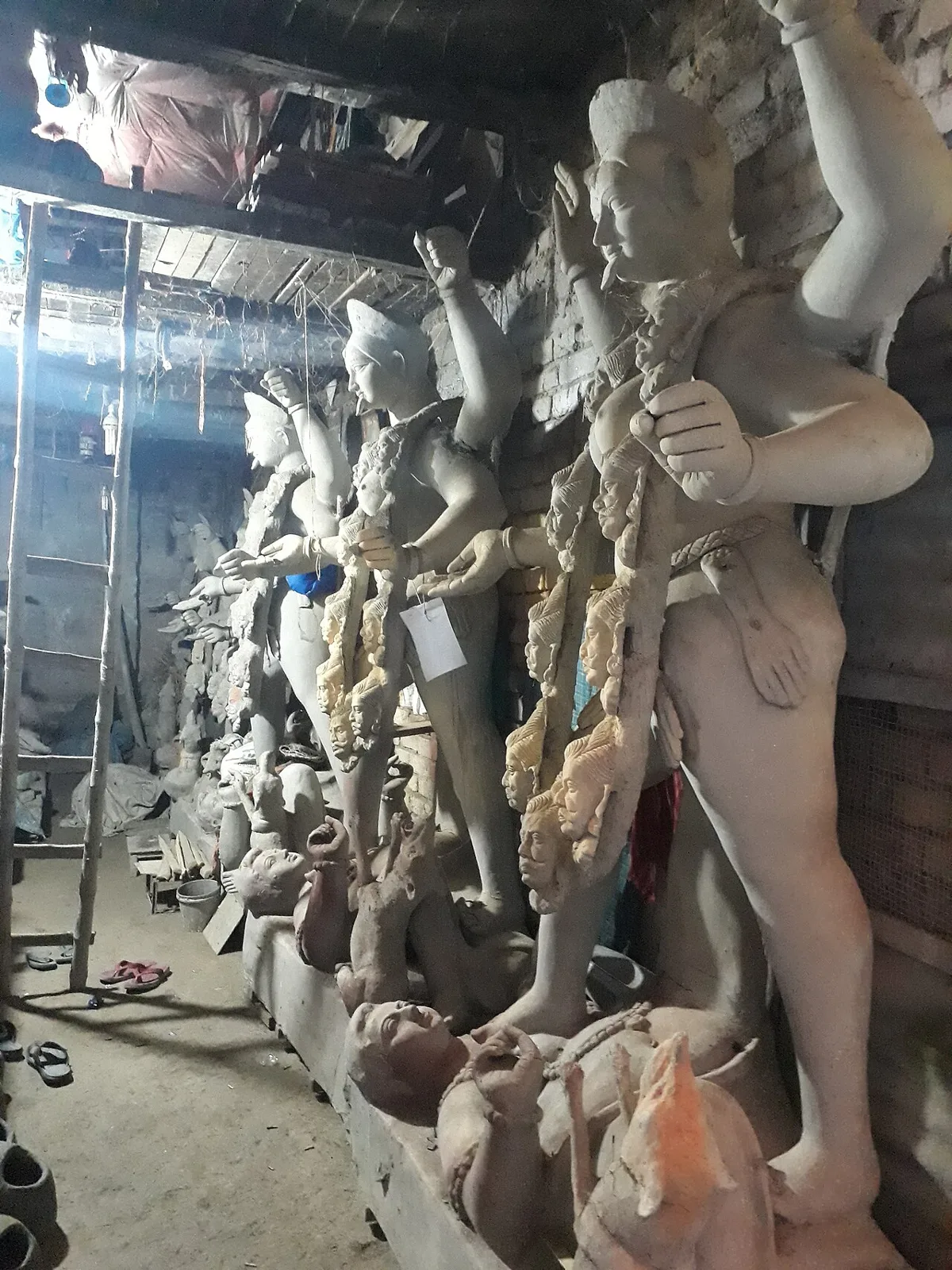
Kumortuli is a North Kolkata neighbourhood centred on potters and clay sculpture. Visitors come to see festival idols being made, a craft whose products are also regularly exported.
Key facts · verified by Ghumoopedia editors
- Type of place
- Community & living culture
- Best time to visit
- October to March for the plains and coast; March to May and October to December for the Darjeeling hills
- Nearest railway station
- Kolkata (Chitpur) · about 5 km (straight line)
- Verified
- 21 Nov 2026
Plan a trip from Kumortuli — a day-by-day route through places nearby.
Kumortuli is within Kolkata district, in West Bengal, and forms part of the city’s northern area. Potters’ work is central to the neighbourhood’s identity, and Kolkata is known for its skill in sculpting. Artisans shape clay into idols for a range of festivals. The figures made here reflect the area’s specialised craft and connect its work with festival celebrations. Kumortuli’s output is not confined to local use: its clay idols are also exported on a regular basis. Visitors interested in sculpture and festival figures come to see this work being carried out. West Bengal stretches from the Himalayan tea gardens of Darjeeling to the mangrove delta of the Sundarbans, with Kolkata's colonial architecture, the terracotta temples of Bishnupur, Tagore's Santiniketan and the Nawabi heritage of Murshidabad. The plains are hot and humid from March to June, receive heavy monsoon rain from June to September and are pleasant from November to February; the Darjeeling hills are cool year-round and cold in winter, and the coast and Sundarbans can be hit by cyclones in May and October–November. The usual best time to visit is October to March for the plains and coast; March to May and October to December for the Darjeeling hills. Timings, fees and access arrangements must be confirmed locally. For official information, see West Bengal Tourism at https://wbtourism.gov.in.
Why it matters
Kumortuli, also spelt Kumartuli, is a historic potters’ quarter in North Kolkata, known for workshops that make clay images for festivals and for customers beyond India. Its artisans are an important part of the city’s Durga Puja preparations, turning a working neighbourhood into a place where visitors can observe a living craft. UNESCO inscribed Durga Puja in Kolkata on its Representative List of the Intangible Cultural Heritage of Humanity in 2021; this recognition concerns the festival, not Kumortuli as a protected site. Kumortuli is not known to be an ASI-protected monument. Its significance lies chiefly in its artisan community, seasonal production and continuing role in Kolkata’s cultural life.
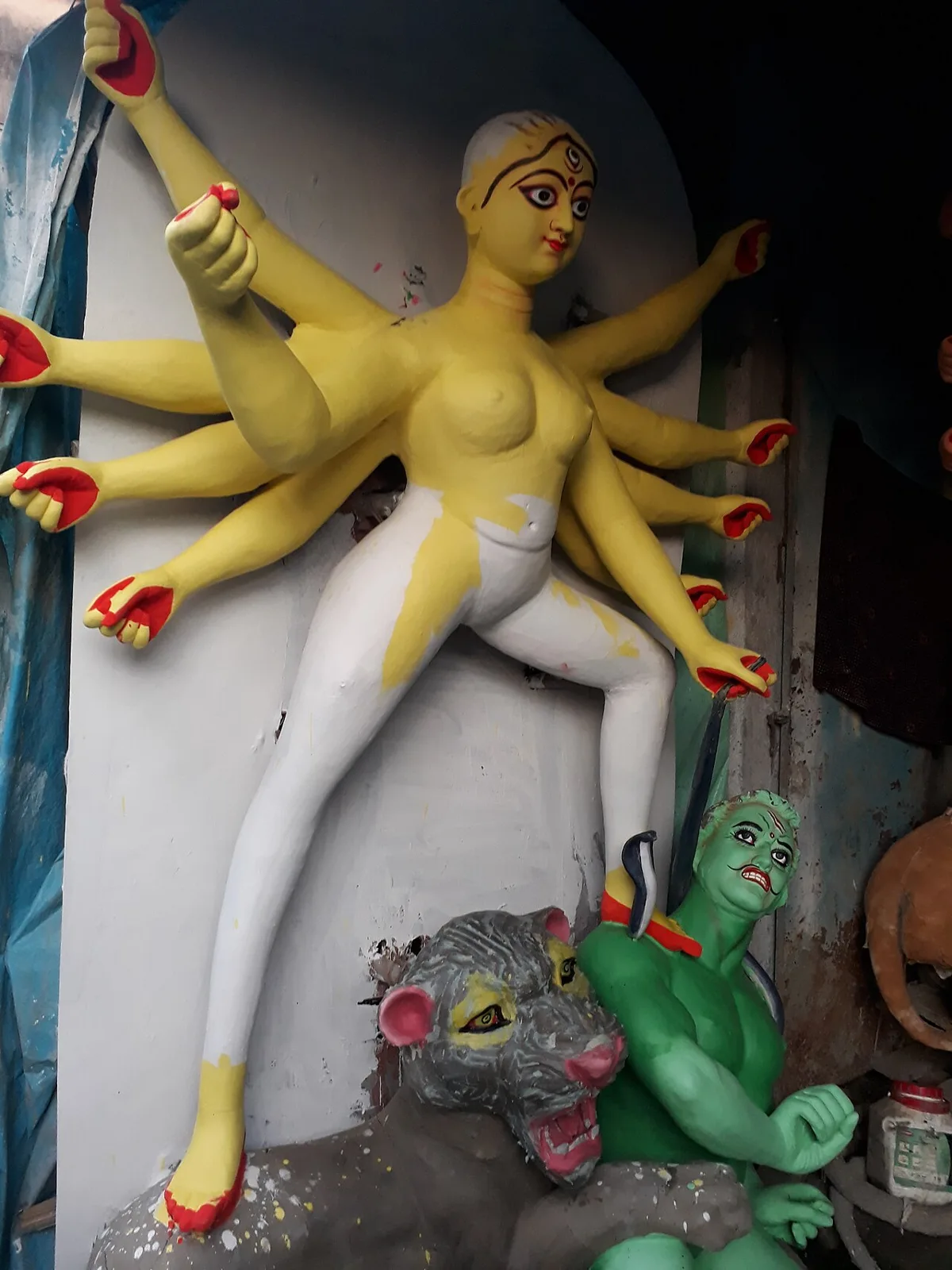
Kumortuli grew as Kolkata developed into a major settlement under British rule. Historical accounts associate the quarter with the organisation of city neighbourhoods by occupation and with potters moving from rural Bengal to serve the needs of the growing urban population. Some accounts particularly connect artisan migration with the Krishnanagar region, although the details and dates of individual families’ arrival are not uniform. The name refers to a locality of potters, and generations of makers established workshops there. Their work came to be closely associated with images for household and community worship, especially Durga Puja. As public, community-organised pujas expanded, demand for larger and more elaborate images increased alongside commissions for homes and temples. The craft has adapted to changing materials, designs, transport and markets; Kumortuli-made images are also sent to other parts of India and abroad. Production remains hands-on: artisans shape a framework, build it up with straw and clay, then finish and decorate the image. The quarter is still an active residential and working area rather than a preserved museum. Workshop conditions and buildings have changed over time, but the concentration of image-makers continues to connect the neighbourhood with Kolkata’s festival calendar.
Origin stories & folklore
Local traditions around Durga Puja include beliefs about the clay used to form the goddess’s image. One widely repeated account says that a small amount of soil from the threshold of a sex worker’s home is included in the mixture, sometimes explained through ideas of social inclusion or the transfer of virtue. Accounts and interpretations vary, and visitors should not treat this belief as a universal practice or ask residents to disclose private ritual details. Other stories link the arrival of particular artisans or the growth of a workshop to family memory rather than to a single recorded founding event. These narratives are part of the wider cultural setting of image-making; they are not verified historical explanations for Kumortuli’s origins.
Use Kumortuli as a base to understand local life: walk through the market, look for local crafts and ask your host about nearby viewpoints and short excursions. Always ask before photographing people, homes or ceremonies. A comfortable itinerary is one main visit in the morning, a local meal at midday and a short nearby stop before an afternoon return. Use the district list on this site to find other places in Kolkata, but check the route and its condition before combining stops. If a festival is on — such as Durga Puja, Kali Puja or the Poush Mela at Santiniketan — roads and stays can be busy, and the experience can be unforgettable. Leave no litter: many sites are protected by the communities around them.
Suggested itineraries
Half day: Walk the public lanes (30–45 minutes); visit a workshop by prior permission and observe image-making (45–90 minutes); take a meal nearby. Full day: Begin with a permitted workshop visit (1–2 hours); explore the surrounding lanes respectfully (45 minutes); have lunch; continue to Bagbazar and the Hooghly-side area, then visit Jorasanko Thakur Bari if access and energy allow. Gentler option: Arrange a taxi drop-off near an accessible main-road entrance, limit the visit to one confirmed workshop and a short, unhurried lane walk, and take breaks at a nearby café or restaurant.
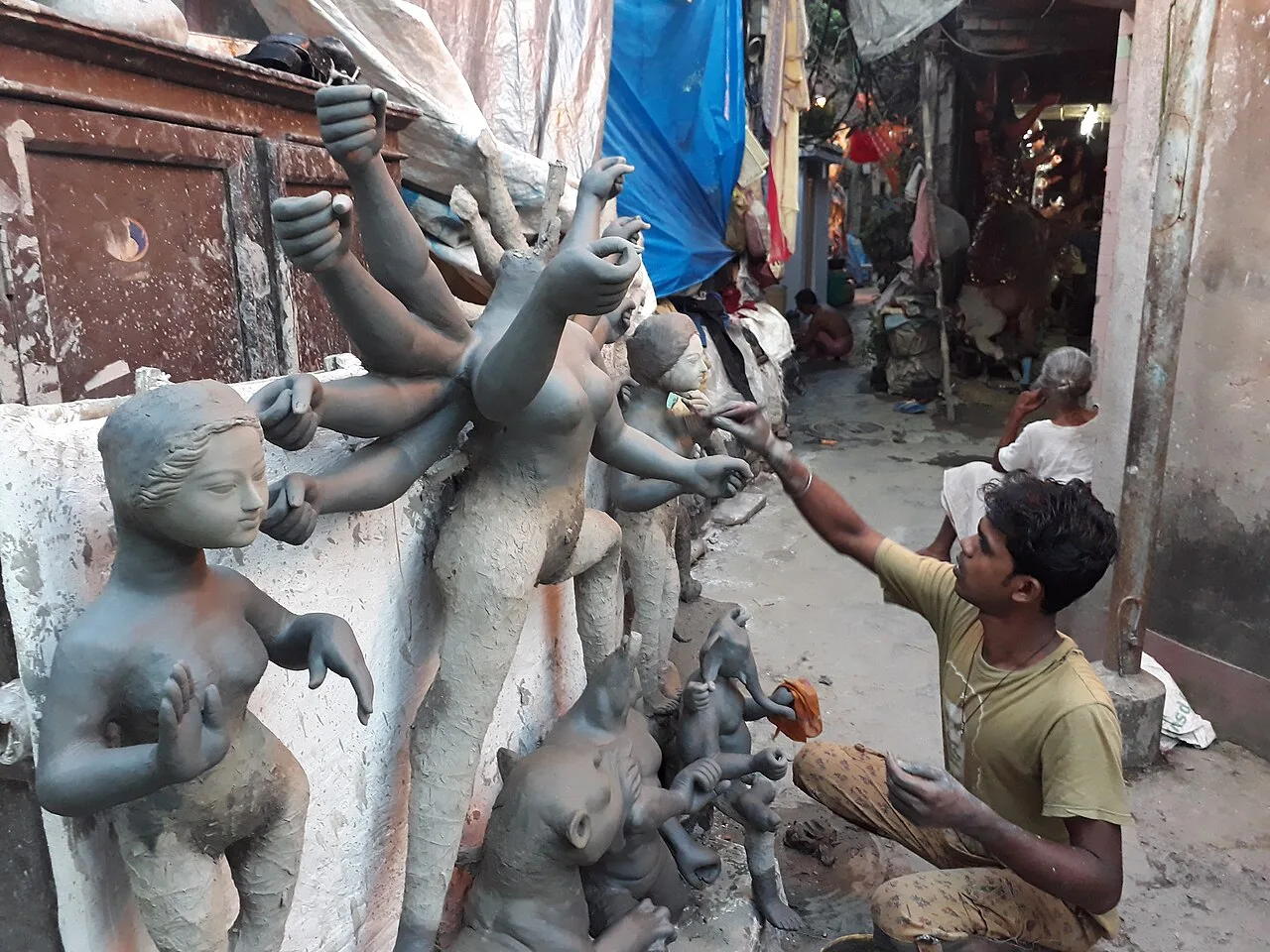
Kumortuli’s culture is visible in the daily work of its studios: artisans prepare clay, shape figures, paint details and assemble images for seasonal worship. Bengali is widely used in the neighbourhood, alongside other languages heard in a large city. The work follows a festival calendar, but commissions and preparation can extend across much of the year. Families and workshop teams often pass on practical skills through experience and apprenticeship. The surrounding streets remain a place of ordinary urban life as well as craft production, so visitors may encounter deliveries, work in progress and residents going about their day. Ask before entering a studio or interrupting a maker.
Local communities
The neighbourhood is associated especially with Kumor or potter artisan families, including makers often identified by the surname or community name Pal; not every worker shares the same background. Idol production also involves people who build frames, prepare clay, paint, decorate, make ornaments and handle transport or sales. Many livelihoods are linked to seasonal orders, while some workshops serve customers throughout the year. Residents, shopkeepers and other workers share narrow streets with the studios. Treat the quarter as a lived-in community, not a performance space, and avoid assuming that every resident is available to explain the craft or be photographed.
Festivals & events
Durga Puja is the season most closely associated with Kumortuli, with workshop activity building in the months before the autumn festival and visitor numbers often rising as images near completion. Kali Puja and Lakshmi Puja, generally observed in autumn, and Saraswati Puja, usually in winter, also generate orders. Some artisans make images for Jagaddhatri Puja and other local observances. Busy production periods can mean crowded lanes, vehicle movements and restricted access to working areas. Festival dates shift each year according to the Hindu calendar, so check locally before planning a visit.
Local food in West Bengal includes macher jhol (fish curry), shorshe ilish (hilsa in mustard), kosha mangsho, luchi with alur dom, kathi rolls and phuchka in Kolkata, mishti doi, rosogolla and sandesh; in the Darjeeling hills, momos, thukpa, shaphaley and first-flush Darjeeling tea. Ask what is fresh that day; many small eateries cook a limited daily menu. Vegetarian travellers eat well across the state, and most towns also have fish and meat dishes. Remote sites may have no restaurant at all. Carry water and snacks, eat a proper breakfast before long drives, and ask your accommodation for a packed lunch if you are heading out early. Try a home-cooked or local thali meal when you can — it is often the best food on the route. Choose busy, clean places, drink sealed or filtered water, and carry your packaging back with you.
Shopping & local experiences
Look for small craft items, decorative clay figures and festival-related pieces from local makers, while recognising that many images are made to order and may not be available as souvenirs. Ask the artisan or shopkeeper before handling or buying work, and check how a fragile item can be packed for travel. The surrounding North Kolkata area has neighbourhood shops and food stalls, though Kumortuli is primarily a place of production rather than a formal shopping market. A respectful visit and a purchase directly from a maker, when offered, can support local livelihoods.
Kumortuli is a dense urban neighbourhood, not a nature reserve. Its character comes from close-set homes, narrow lanes, workshops and the changing sight of clay images at different stages of making. The Hooghly River and its ghats are part of the wider North Kolkata setting, though the riverfront is not a natural habitat within the workshops themselves. Street trees and small pockets of greenery may be encountered nearby, but shade is inconsistent. Common urban birds may be seen or heard, as in other parts of Kolkata; sightings vary and should not be expected. The neighbourhood can feel hot and humid, particularly before and during the monsoon. Keep to public routes and do not enter private courtyards or riverfront areas without permission.
October to March for the plains and coast; March to May and October to December for the Darjeeling hills
The nearest principal railway station by straight-line distance is Kolkata (Chitpur), roughly 5 km away. The nearest operating airport by straight-line distance is Netaji Subhas Chandra Bose International Airport, Kolkata, roughly 10 km away. These figures are calculated from map coordinates — actual road distance is longer. Howrah, Sealdah and Kolkata stations and Kolkata airport serve the south; New Jalpaiguri station and Bagdogra airport near Siliguri are the gateways to the Darjeeling hills and the Dooars. Within Kolkata, the Metro is the quickest way across the city, supplemented by app cabs, yellow taxis, buses and ferries across the Hooghly. When comparing train, bus and flight, count the complete door-to-door time: a flight saves the most time only if the onward road transfer is short, while an overnight train can save a hotel night. Book your return before you leave, because seats fill quickly on weekends, festivals and holidays. Current train numbers, timings, return services and fares are not listed here; check IRCTC and NTES for trains and the airline's own schedule for flights. No permit is needed for Indian citizens to visit West Bengal. Entry to the Sundarbans Tiger Reserve needs a forest permit, usually arranged through a registered boat operator or the forest office at Sajnekhali or Canning; trekking in Singalila National Park (Sandakphu) needs an entry permit and a registered guide from Maneybhanjan. Durga Puja in October brings huge crowds to Kolkata, so book transport and stays well ahead.
Confirm onward and return timings on IRCTC / NTES, the state bus operator or your airline before travel. A dash means current timings or fares have not been verified.
Getting around
Within Kolkata, taxis, app-based cabs and local buses can bring visitors to the North Kolkata area; the Metro is useful for crossing the city, with the Sovabazar-Sutanuti station serving the wider area. The last part of a journey may be easiest on foot, as lanes can be narrow and busy. Auto-rickshaw routes and availability vary, so confirm the drop-off point locally. Nearby ferry services may help with some Hooghly crossings, but routes should be checked before relying on them. Parking can be difficult close to the workshops; consider being dropped at a suitable main road and walking in.
Hours, tickets & permissions
Kumortuli is a neighbourhood rather than a single ticketed attraction, so there is no general entry ticket for walking its public streets. Individual workshops are working premises and may be closed, busy or accessible only with the maker’s permission. Special events or festival arrangements can limit access, and photography or filming may be subject to separate permission. Confirm current access arrangements, any applicable fees and the best time to visit with a local host or workshop before setting out; check locally for current hours and rules. Do not assume that a visible studio is open to visitors.
Facilities
Facilities inside Kumortuli are those of a working neighbourhood, not a visitor centre. Food shops and small eateries can usually be found in the wider area, while public toilets, drinking-water points and seating may not be easy to locate within the lanes; check locally. ATMs and broader services are available elsewhere in North Kolkata. Parking is limited near narrow workshop streets. Guided visits may be arranged through local hosts or tour operators, but availability and workshop access should be confirmed in advance. Carry drinking water and keep belongings secure without blocking work areas.
Accessibility
The lanes are narrow, uneven in places and shared by pedestrians, handcarts, motorcycles and deliveries. Workshop floors may have thresholds, clutter or steps, and there is no general assurance of ramps or accessible toilets. Walking distances within the quarter can be adjusted, but congestion and limited seating may make a long visit tiring. Wheelchair and stroller access is therefore difficult and should be assessed route by route with a local contact before travelling. Older visitors may prefer a short visit, comfortable footwear, a companion and rest breaks. Heat, humidity and festival crowds can add to the strain.
No permit is needed for Indian citizens to visit West Bengal. Entry to the Sundarbans Tiger Reserve needs a forest permit, usually arranged through a registered boat operator or the forest office at Sajnekhali or Canning; trekking in Singalila National Park (Sandakphu) needs an entry permit and a registered guide from Maneybhanjan. Durga Puja in October brings huge crowds to Kolkata, so book transport and stays well ahead. Carry a photo ID at all times and save the emergency number 112 and your accommodation's contact offline. Heat in summer and heavy rain in the monsoon are the main weather risks; carry water, avoid midday sun and allow extra time when roads flood. Watch your belongings in crowds and on public transport, and follow posted instructions.
Visitor rules
Kumortuli is a residential and working quarter, so keep voices low and leave space for artisans, residents and deliveries. Ask before entering any workshop, touching clay or unfinished images, or photographing people and work. Follow any request to avoid a room, image or restricted area. Wear practical clothing and closed, comfortable footwear for uneven lanes; there is no special dress code for the public streets. Use bins where available, avoid single-use litter and do not block doorways. During busy festival periods, follow local directions and do not interfere with rituals or production.
Photography
Soft morning light can be pleasant for street scenes, while workshop interiors may be dim and crowded; there is no single viewpoint that captures the whole quarter. Photograph only from public areas unless invited inside. Always ask before photographing artisans, residents, homes, unfinished images or ceremonies, and accept a refusal without argument. Avoid flash if it distracts people at work. Drone use over a dense residential neighbourhood can raise safety, privacy and regulatory concerns; do not fly without all required permissions. Be especially considerate during worship and festival preparations.
Choose a stay by the full journey to Kumortuli, not just the district name. Kolkata offers the widest choice; on the coast, Digha and Mandarmani have many hotels, and the Sundarbans have eco-resorts and boat stays near Pakhiralay and Bali island. In summer, check air-conditioning; in the monsoon, check that the property is accessible if roads flood. Book in advance for weekends, festivals and the peak season (October to March for the plains and coast; March to May and October to December for the Darjeeling hills). Confirm the exact location, meals included, check-in time and cancellation terms in writing. Avoid sending money to unverified contacts or touts at stations. Carry some cash, as card and digital payments can be unreliable in remote areas.
Bagbazar and its Hooghly-side ghats offer a nearby look at North Kolkata’s riverfront and neighbourhood life. Jorasanko Thakur Bari, the ancestral home associated with Rabindranath Tagore, is another notable city visit; confirm access arrangements before going. College Street, known for bookshops and the historic university area, can be combined with a wider North Kolkata outing. The Marble Palace is also in North Kolkata, but visitor access may require advance arrangements, so check before planning around it. Traffic and access conditions can make several stops in one day tiring; choose a route locally rather than assuming they are all an easy walk.
For couples, Kumortuli rewards a slow pace: arrive early for soft light and fewer crowds, share a local meal and keep the evening free. A toy-train ride in the Darjeeling hills, a boat on the Hooghly at sunset or an evening of adda over tea in Kolkata makes the trip memorable. Public displays of affection can be frowned upon in conservative communities and at religious sites, so be discreet. Keep a buffer in your itinerary, because weather and road conditions can delay plans.
Q: How much time should I allow for Kumortuli? A: Allow a few hours for a relaxed visit, including a permitted workshop stop; a brief lane walk is possible if time is limited. Q: When is the best season to visit? A: The months before autumn Durga Puja are especially active, but lanes may be crowded. Cooler months are generally more comfortable for walking. Q: Is there an entry ticket? A: There is no general ticket for the public neighbourhood streets. Individual workshops may require permission or have their own arrangements; confirm in advance. Q: Is Kumortuli suitable for children or elderly visitors? A: It can be interesting for both, but narrow, uneven and busy lanes require care. Keep children close and plan a short visit with rest breaks for older visitors. Q: Where can I stay nearby? A: Kolkata has accommodation across the city. Choose a North Kolkata or central location that suits your transport plans, and confirm the route to Kumortuli before booking.
Be the first to share photos, stories, advice or a helpful contact for Kumortuli.
Loading…