
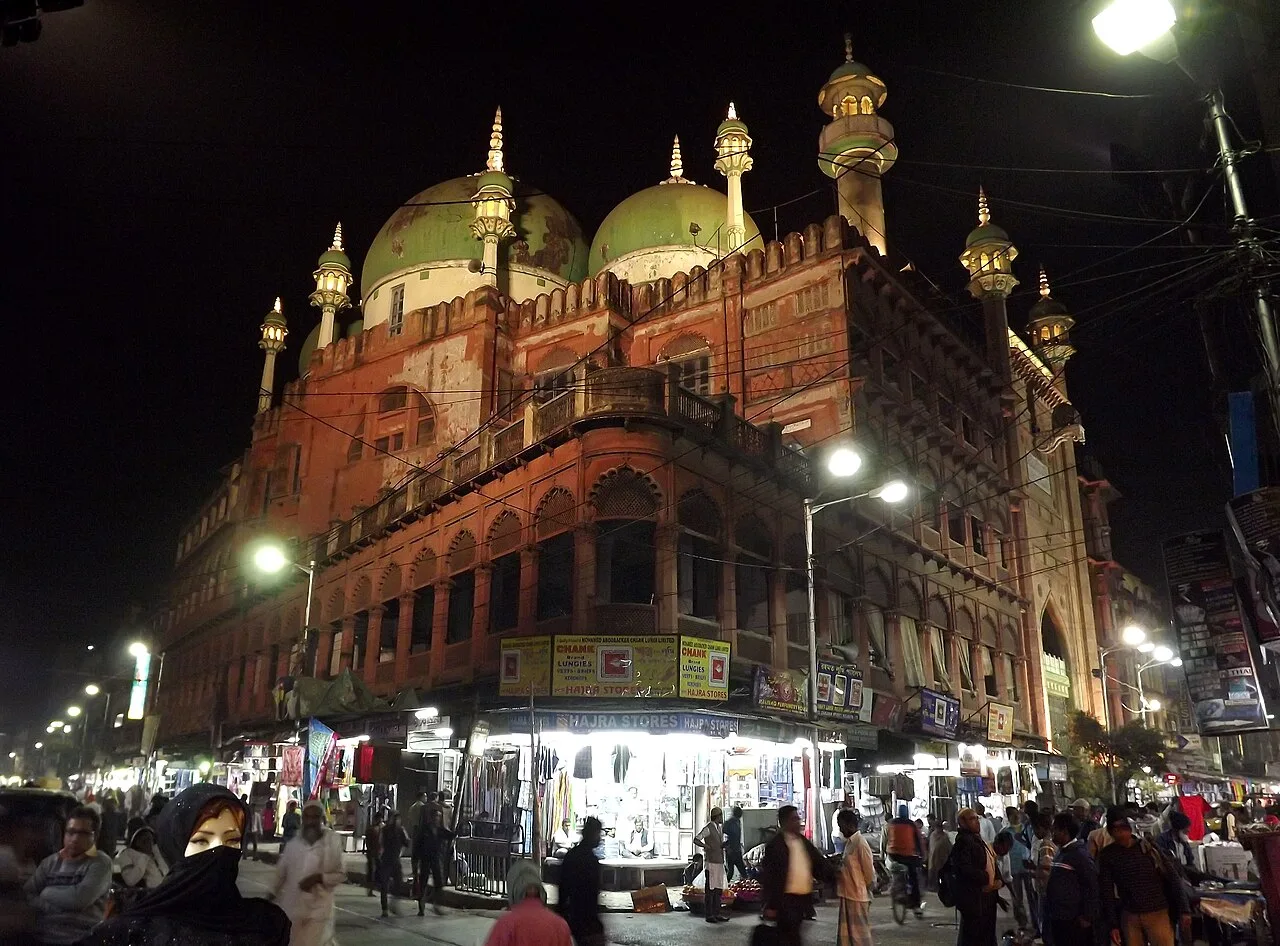
Nakhoda Mosque
Nakhoda Mosque is a Sunni place of worship in central Kolkata, known as the city’s principal mosque and associated with the Hanafi school.
Key facts · verified by Ghumoopedia editors
- Type of place
- Temple / pilgrimage site
- Best time to visit
- October to March for the plains and coast; March to May and October to December for the Darjeeling hills
- Nearest railway station
- Howrah Junction · about 5 km (straight line)
- Verified
- 21 Nov 2026
Plan a trip from Nakhoda Mosque — a day-by-day route through places nearby.
Nakhoda Mosque is in Kolkata, West Bengal, serving the city’s Sunni community. Its location is in Chitpur, within the Burrabazar business district of central Kolkata, where Zakaria Street meets Rabindra Sarani. The mosque was completed in 1926 and is recognised as Kolkata’s principal mosque. It follows the Hanafi school. Visitors may come to worship or to see a major centre of Sunni religious life in the city; its location also places it within the busy commercial area of Burrabazar. West Bengal stretches from the Himalayan tea gardens of Darjeeling to the mangrove delta of the Sundarbans, with Kolkata's colonial architecture, the terracotta temples of Bishnupur, Tagore's Santiniketan and the Nawabi heritage of Murshidabad. The plains are hot and humid from March to June, receive heavy monsoon rain from June to September and are pleasant from November to February; the Darjeeling hills are cool year-round and cold in winter, and the coast and Sundarbans can be hit by cyclones in May and October–November. The usual best time to visit is October to March for the plains and coast; March to May and October to December for the Darjeeling hills. Timings, fees and access arrangements must be confirmed locally. For official information, see West Bengal Tourism at https://wbtourism.gov.in.
Why it matters
Nakhoda Masjid is one of Kolkata’s principal Sunni mosques and an important place of worship for the city’s Muslim community. Situated in the Chitpur area of the Burrabazar business district, it also gives visitors a sense of the neighbourhood’s long-standing commercial and cultural life. The mosque follows the Hanafi school, and serves worshippers from Kolkata and beyond. Its scale and prominent position at the meeting of Zakaria Street and Rabindra Sarani make it a notable landmark in central Kolkata. No UNESCO or Archaeological Survey of India designation is confirmed here; visitors should not assume that such a status applies.
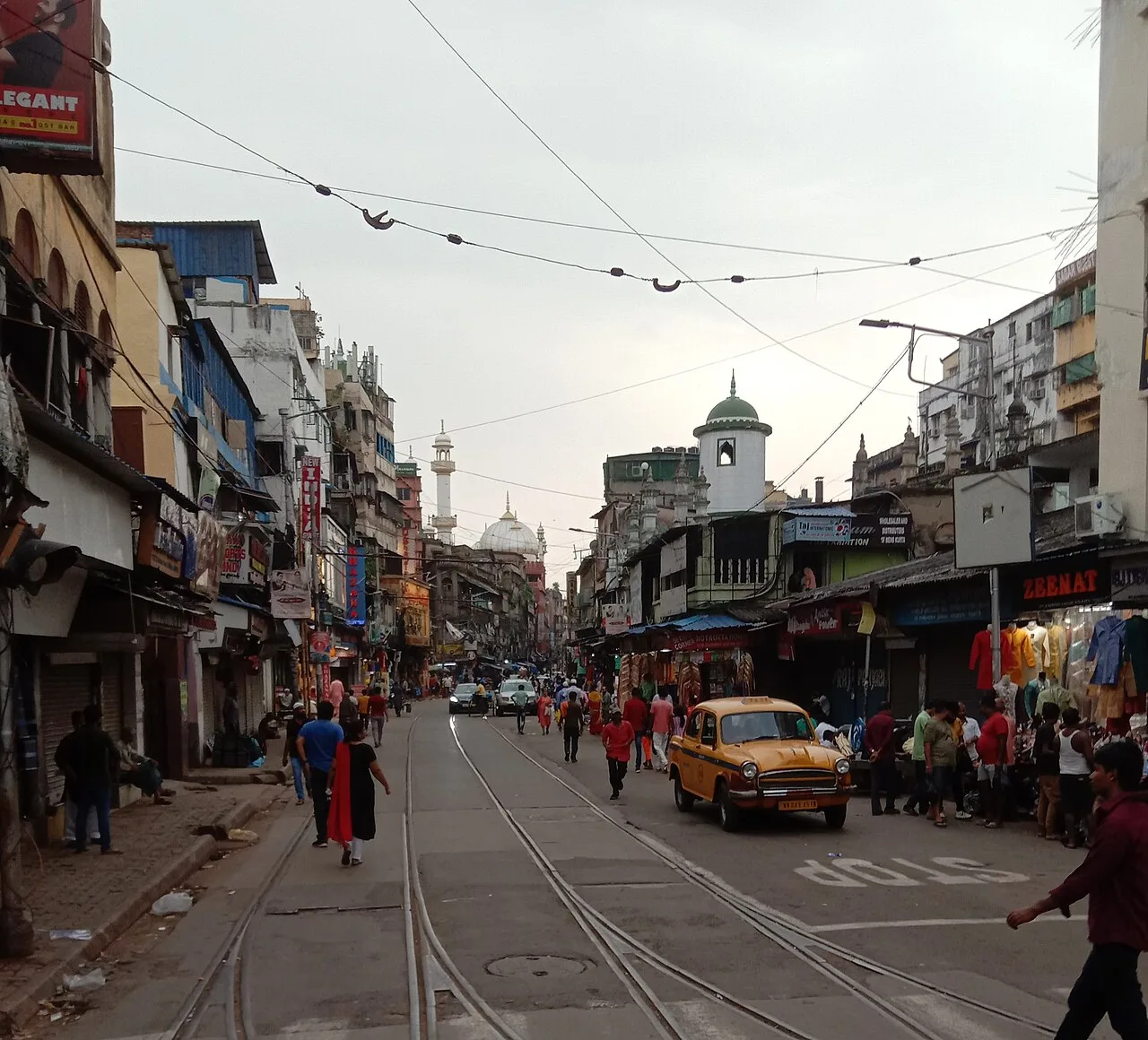
Nakhoda Masjid was built by members of the Kutchi Memon community, a Muslim community with roots in Kutch. The project is associated with the patron Abdur Rahim Osman, a prominent community benefactor. The mosque was completed in 1926, when Kolkata was a major commercial centre under British rule and the surrounding Burrabazar area was already a busy trading district. Its name, Nakhoda, is commonly associated with a ship’s captain or mariner, a term that reflects the community’s links with trade and seafaring. The mosque became a major congregation site for Kolkata’s Sunni Muslims and is affiliated with the Hanafi school. Its position at the junction of Zakaria Street and Rabindra Sarani has kept it closely connected to the daily life of the surrounding neighbourhood. It remains an active place of worship, rather than solely a historic monument.
Origin stories & folklore
No widely documented founding legend is established for Nakhoda Masjid. The name itself is often explained through the word “nakhoda,” commonly used for a ship’s captain or mariner; this is a linguistic explanation, not a supernatural origin story. Local accounts may connect the name with the trading and seafaring background of the Kutchi Memon community, but such explanations should be understood as community tradition rather than a proven account of the mosque’s construction. The best-supported history is that the mosque was built by the community and completed in 1926. Visitors can ask local caretakers about oral histories while treating differing accounts respectfully.
Architecture & design
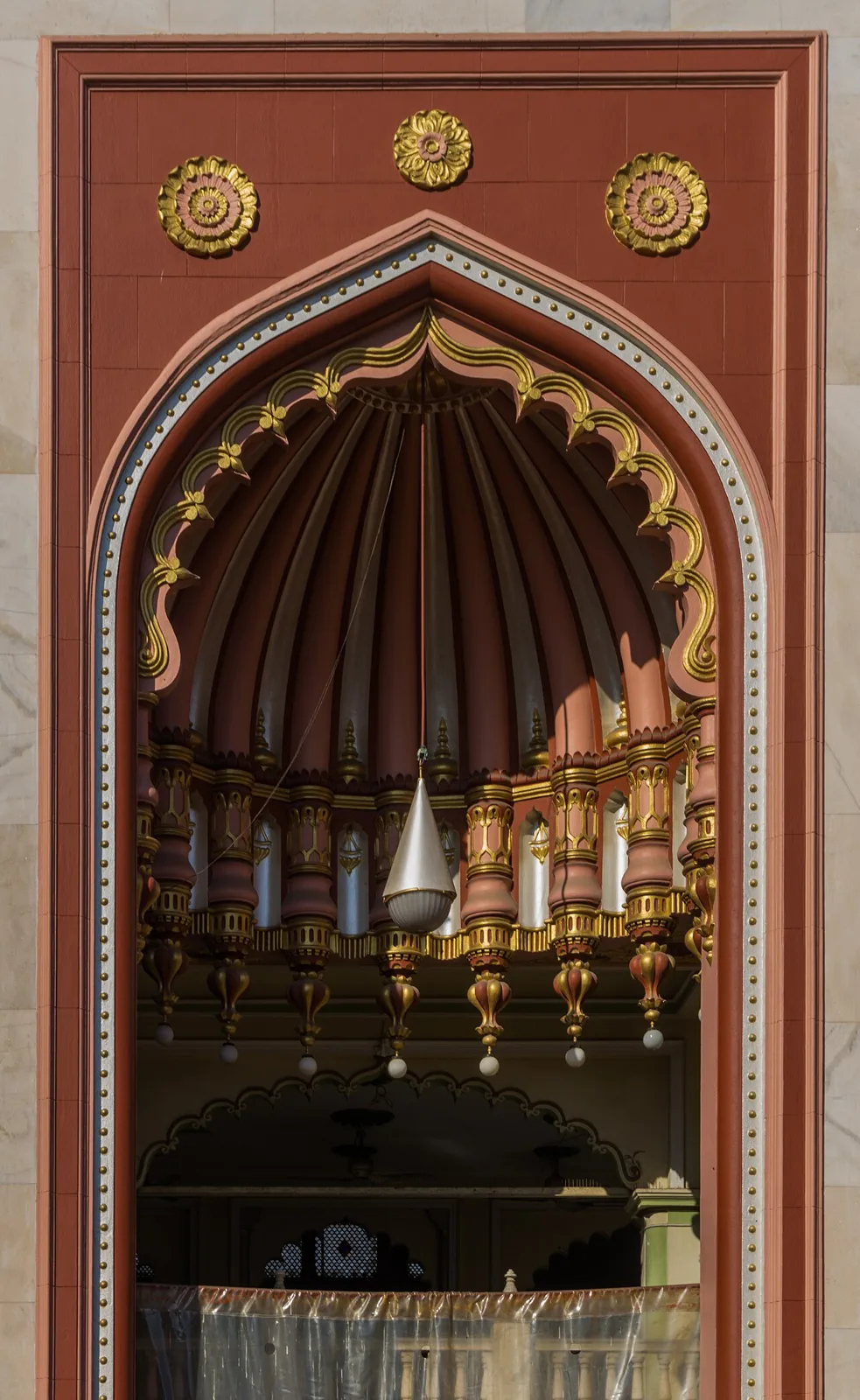
The mosque is a large, active congregational building whose design draws on Mughal architectural vocabulary. Its exterior is noted for red-toned stonework and a monumental entrance; published descriptions commonly compare the gateway’s form with the Buland Darwaza at Fatehpur Sikri. The composition includes a prominent domed prayer space and tall minarets, with smaller decorative elements contributing to its skyline. Inside, the prayer hall is arranged for communal worship, with the mihrab indicating the direction of prayer and the minbar serving as the pulpit. As in many mosques, the layout prioritises a clear prayer area rather than rows of fixed seating. The scale and ornament make the building conspicuous amid the dense commercial streets around it. Details of materials and access to particular interior areas can vary with maintenance and prayer arrangements, so visitors should follow the caretakers’ guidance.
Important objects & sculptures
Nakhoda Masjid is principally a living place of worship, not a museum with a public collection. Visitors may notice the architectural gateway, domes, minarets and the interior prayer arrangement. In the prayer hall, the mihrab marks the direction of Mecca, while the minbar is used for sermons. Decorative calligraphy and patterned surfaces may be present, but their specific inscriptions and access to them should not be assumed without on-site confirmation. The mosque’s most notable features are its architecture and continuing religious use rather than individual portable objects. Do not touch religious fittings or enter areas set aside for worship unless invited by a caretaker.
Religious significance
Nakhoda Masjid is a Sunni mosque affiliated with the Hanafi school. It is an active place for daily prayers, congregational worship and religious observances. Worshippers gather here for Friday prayers and for major occasions in the Islamic calendar, including Ramadan and Eid. The mosque’s role is both spiritual and communal: it provides a setting for prayer and brings together people from the surrounding neighbourhood and wider Kolkata. Visitors who are not there to worship should remain quiet, avoid interrupting prayers and ask caretakers which spaces may be entered. Practices and access arrangements can differ during services and religious occasions, so follow local guidance rather than assuming all areas are open.
Visit Nakhoda Mosque with time to observe daily prayers and rituals respectfully. Dress modestly with arms and legs covered; at many dargahs and mosques both men and women cover their heads — follow the caretakers' guidance. Ask caretakers which areas are open to visitors, and beware of unofficial 'guides' or agents offering quick darshan for a fee. A comfortable itinerary is one main visit in the morning, a local meal at midday and a short nearby stop before an afternoon return. Use the district list on this site to find other places in Kolkata, but check the route and its condition before combining stops. If a festival is on — such as Durga Puja, Kali Puja or the Poush Mela at Santiniketan — roads and stays can be busy, and the experience can be unforgettable. Leave no litter: many sites are protected by the communities around them.
Suggested itineraries
Half day: Nakhoda Masjid visit and respectful exterior viewing (about 1–1.5 hours); walk through nearby Burrabazar and Zakaria Street (about 1 hour); take a meal or tea break nearby (about 1 hour). Full day: Nakhoda Masjid (about 1–1.5 hours); explore Burrabazar and the nearby Armenian Church (about 1–2 hours); visit Jorasanko Thakur Bari (about 1.5–2 hours); finish around the Howrah Bridge and Mullick Ghat Flower Market (about 1–2 hours), allowing for traffic and opening checks. Gentler option: Arrange a cab drop-off as close as local traffic permits, spend time viewing the mosque from an accessible public vantage point, and choose one nearby stop rather than combining several crowded market lanes.
The mosque stands amid the multilingual, trading neighbourhood of Burrabazar, where Bengali, Hindi, Urdu and other languages may be heard. Its congregation reflects Kolkata’s diverse Muslim communities, including people connected with the city’s long history of commerce and migration. Modest dress and respectful conduct are appropriate; visitors should follow caretakers’ directions on head covering and footwear. Religious recitation and sermons are part of worship, not performances for tourists, so give them privacy. The surrounding streets are also known for busy markets and food businesses, creating a lively urban setting. Customs can differ among individuals and families, so observe respectfully and ask before photographing people.
Festivals & events
Ramadan brings a heightened devotional atmosphere, with evening meals and activity in the wider neighbourhood; the exact level of activity varies each year. Eid al-Fitr, at the end of Ramadan, and Eid al-Adha are important occasions for worshippers and may draw large congregations. Friday prayers are also a regular busy period. Muharram is observed by Muslim communities in Kolkata, though specific events should not be assumed to take place at this mosque. Nearby parts of the city become especially crowded during Durga Puja and Kali Puja, usually in autumn. For any major observance, expect heavier foot traffic and check local access arrangements before visiting.
Local food in West Bengal includes macher jhol (fish curry), shorshe ilish (hilsa in mustard), kosha mangsho, luchi with alur dom, kathi rolls and phuchka in Kolkata, mishti doi, rosogolla and sandesh; in the Darjeeling hills, momos, thukpa, shaphaley and first-flush Darjeeling tea. Ask what is fresh that day; many small eateries cook a limited daily menu. Vegetarian travellers eat well across the state, and most towns also have fish and meat dishes. Remote sites may have no restaurant at all. Carry water and snacks, eat a proper breakfast before long drives, and ask your accommodation for a packed lunch if you are heading out early. If prasad or langar is offered, accept it according to local custom. Choose busy, clean places, drink sealed or filtered water, and carry your packaging back with you.
Shopping & local experiences
Burrabazar is a major trading area, with shops selling textiles, household goods, accessories and everyday merchandise. Zakaria Street and neighbouring lanes have food businesses and small shops; explore respectfully and keep clear of prayer entrances. Kolkata sweets and savoury snacks are widely available in the city, though individual menus and opening arrangements vary. Bargaining may be customary in some market stalls but not in all shops. Buy only what you can carry comfortably through crowded streets, keep belongings secure and avoid purchasing objects presented as religious relics without reliable provenance.
October to March for the plains and coast; March to May and October to December for the Darjeeling hills
The nearest principal railway station by straight-line distance is Howrah Junction, roughly 5 km away. The nearest operating airport by straight-line distance is Netaji Subhas Chandra Bose International Airport, Kolkata, roughly 15 km away. These figures are calculated from map coordinates — actual road distance is longer. Howrah, Sealdah and Kolkata stations and Kolkata airport serve the south; New Jalpaiguri station and Bagdogra airport near Siliguri are the gateways to the Darjeeling hills and the Dooars. Within Kolkata, the Metro is the quickest way across the city, supplemented by app cabs, yellow taxis, buses and ferries across the Hooghly. When comparing train, bus and flight, count the complete door-to-door time: a flight saves the most time only if the onward road transfer is short, while an overnight train can save a hotel night. Book your return before you leave, because seats fill quickly on weekends, festivals and holidays. Current train numbers, timings, return services and fares are not listed here; check IRCTC and NTES for trains and the airline's own schedule for flights. No permit is needed for Indian citizens to visit West Bengal. Entry to the Sundarbans Tiger Reserve needs a forest permit, usually arranged through a registered boat operator or the forest office at Sajnekhali or Canning; trekking in Singalila National Park (Sandakphu) needs an entry permit and a registered guide from Maneybhanjan. Durga Puja in October brings huge crowds to Kolkata, so book transport and stays well ahead.
Confirm onward and return timings on IRCTC / NTES, the state bus operator or your airline before travel. A dash means current timings or fares have not been verified.
Getting around
The mosque is at the intersection of Zakaria Street and Rabindra Sarani in the Chitpur area of central Kolkata. App-based cabs and yellow taxis can reach the neighbourhood, but traffic and narrow, crowded streets may make the final approach slow. Local buses and the Metro serve parts of central and north Kolkata; check a current map for the most suitable stop and walk the last stretch if needed. Walking is practical for nearby sights, though pavements and market lanes can be congested. Parking close to the mosque may be limited, so avoid relying on a private car for a door-to-door drop-off.
Hours, tickets & permissions
Entry arrangements depend on prayer schedules, religious observances and the areas the mosque management has opened to visitors. Non-worshippers should ask a caretaker before entering the prayer hall or other interior spaces, and should be prepared to wait during prayers. Dress modestly; head covering and footwear guidance may apply. Do not assume that every entrance or area is open to visitors. Tickets, permits, camera rules and any applicable fees should be confirmed with the managing authority locally. Check current visiting hours and access conditions before setting out, especially on Fridays and festival days.
Facilities
Facilities within the mosque are primarily intended for worshippers; visitor access to ablution areas, toilets or other spaces should be checked with caretakers. Food shops and small eateries are usually available in the surrounding commercial streets, and drinking water may be obtainable locally, but carry water if needed. ATMs and general services can be found in the wider Burrabazar area. Parking near the mosque is likely to be difficult in busy periods. Guided visits are not guaranteed; ask mosque management for information and avoid unsolicited offers. Check locally for current facilities and any temporary restrictions.
Accessibility
The mosque is set in a dense, busy commercial neighbourhood where uneven pavements, crowded lanes and traffic can make the approach challenging. The entrance and interior may involve steps, and no wheelchair ramp or lift access is confirmed here. Prayer areas may require removing footwear, and access can be restricted during worship. Strollers may be difficult to manoeuvre through crowded market streets. Older visitors or anyone with limited mobility may find a shorter visit and a nearby drop-off helpful, though vehicle access can be constrained. There is little reason to expect continuous shade on the approach; plan rest stops and ask locally about accessible entry before travelling.
No permit is needed for Indian citizens to visit West Bengal. Entry to the Sundarbans Tiger Reserve needs a forest permit, usually arranged through a registered boat operator or the forest office at Sajnekhali or Canning; trekking in Singalila National Park (Sandakphu) needs an entry permit and a registered guide from Maneybhanjan. Durga Puja in October brings huge crowds to Kolkata, so book transport and stays well ahead. Carry a photo ID at all times and save the emergency number 112 and your accommodation's contact offline. Heat in summer and heavy rain in the monsoon are the main weather risks; carry water, avoid midday sun and allow extra time when roads flood. Watch your belongings in crowds and on public transport, and follow posted instructions.
Visitor rules
Dress modestly, covering arms and legs, and follow caretakers’ instructions about head coverings and footwear. Remove shoes where directed and keep noise low, especially during prayers. Do not enter restricted areas or interrupt worship; ask before approaching the prayer hall. Photography may be limited inside, and photographing worshippers without consent is inappropriate. Avoid touching religious fittings or leaving litter, including plastic and food packaging. The mosque is an active religious site, so visitor conduct and access rules may change during services or festivals; comply with notices and staff guidance.
Photography
The mosque’s exterior and gateway are most comfortable to view in softer daylight, while the surrounding streets can be busy throughout the day. Photograph from public areas without blocking entrances or disrupting worship. Permission may be needed for interior photography, and restrictions can apply during prayers; ask a caretaker first. Do not photograph worshippers, especially during prayer, without consent. Drones are not appropriate without all required permissions and should not be flown over a crowded religious site. Be considerate of local residents and businesses when choosing a viewpoint.
Choose a stay by the full journey to Nakhoda Mosque, not just the district name. Kolkata offers the widest choice; on the coast, Digha and Mandarmani have many hotels, and the Sundarbans have eco-resorts and boat stays near Pakhiralay and Bali island. In summer, check air-conditioning; in the monsoon, check that the property is accessible if roads flood. Book in advance for weekends, festivals and the peak season (October to March for the plains and coast; March to May and October to December for the Darjeeling hills). Confirm the exact location, meals included, check-in time and cancellation terms in writing. Avoid sending money to unverified contacts or touts at stations. Carry some cash, as card and digital payments can be unreliable in remote areas.
In the surrounding central and north Kolkata area, visitors can consider the Armenian Church of the Holy Nazareth and the historic streets of Burrabazar. Jorasanko Thakur Bari, associated with the Tagore family, is another Kolkata heritage stop; confirm visitor access before going. Howrah Bridge and the Mullick Ghat Flower Market offer views of the Hooghly and a busy market scene, subject to crowd conditions. Marble Palace is also in north Kolkata, but access arrangements should be checked in advance. These places are spread across busy streets, so allow time for traffic rather than treating them as a short walk from the mosque.
For couples, Nakhoda Mosque rewards a slow pace: arrive early for soft light and fewer crowds, share a local meal and keep the evening free. A toy-train ride in the Darjeeling hills, a boat on the Hooghly at sunset or an evening of adda over tea in Kolkata makes the trip memorable. Public displays of affection can be frowned upon in conservative communities and at religious sites, so be discreet. Keep a buffer in your itinerary, because weather and road conditions can delay plans.
Q: How much time should I allow for a visit? A: About one to one and a half hours is a reasonable allowance for a respectful visit, depending on access and prayer activity. Q: When is a good season to visit? A: October to March is generally more comfortable for Kolkata’s plains, though the mosque can be visited year-round; check conditions during monsoon and festival periods. Q: Can non-Muslims enter the mosque? A: Visitor access may be possible in permitted areas, but it is not guaranteed. Ask a caretaker and follow worship-time restrictions. Q: Is the visit suitable for children and elderly visitors? A: It can be, but the crowded streets, possible steps and footwear requirements may be difficult. Keep children close and consider a shorter visit for anyone with limited mobility. Q: Where can I stay nearby? A: Kolkata has accommodation options in central areas such as Esplanade and around the city centre. Choose based on your onward transport and confirm current access and travel conditions.
Be the first to share photos, stories, advice or a helpful contact for Nakhoda Mosque.
Loading…