
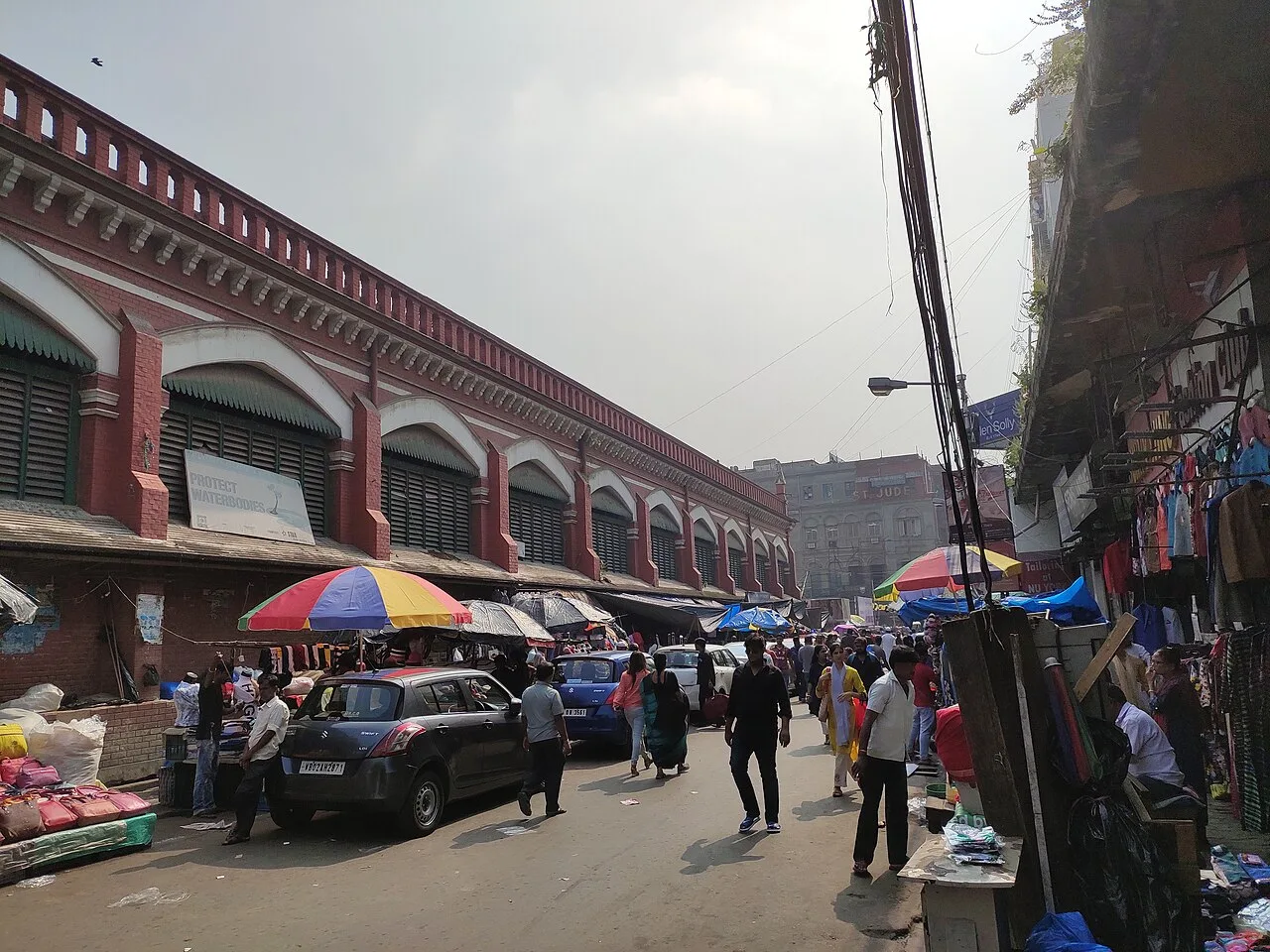
New Market
New Market is a shopping complex on Lindsay Street in Dharmatala, Kolkata, formally named Sir Stuart Hogg Market. People visit both the enclosed marketplace and the wider shopping area known by its name.
Key facts · verified by Ghumoopedia editors
- Type of place
- Food / craft destination
- Best time to visit
- October to March for the plains and coast; March to May and October to December for the Darjeeling hills
- Nearest railway station
- Sealdah · about 5 km (straight line)
- Verified
- 21 Nov 2026
Plan a trip from New Market — a day-by-day route through places nearby.
In Kolkata district, West Bengal, New Market stands on Lindsay Street in Dharmatala. Its formal name is Sir Stuart Hogg Market, and it is a market complex. The name has a narrower and a broader local meaning. It can refer to the original enclosed marketplace; in everyday use, it commonly includes the surrounding shopping area too. So New Market may mean the enclosed market itself or the larger retail area associated with it. Both usages refer to the complex and shopping area in Kolkata. West Bengal stretches from the Himalayan tea gardens of Darjeeling to the mangrove delta of the Sundarbans, with Kolkata's colonial architecture, the terracotta temples of Bishnupur, Tagore's Santiniketan and the Nawabi heritage of Murshidabad. The plains are hot and humid from March to June, receive heavy monsoon rain from June to September and are pleasant from November to February; the Darjeeling hills are cool year-round and cold in winter, and the coast and Sundarbans can be hit by cyclones in May and October–November. The usual best time to visit is October to March for the plains and coast; March to May and October to December for the Darjeeling hills. Timings, fees and access arrangements must be confirmed locally. For official information, see West Bengal Tourism at https://wbtourism.gov.in.
Why it matters
New Market, formally Sir Stuart Hogg Market, is a long-established shopping and food destination on Lindsay Street in Dharmatala, central Kolkata. The name commonly refers both to the original enclosed market and to the wider cluster of shops around it. Its range of everyday goods, specialty food shops, clothing and household wares makes it part of the city’s daily commercial life as well as a destination for visitors. The market is a landmark of Kolkata’s colonial-era urban history, but no UNESCO or Archaeological Survey of India recognition is asserted here. Its importance is chiefly local and regional: generations of residents, traders and shoppers have used this busy central marketplace, which also offers a glimpse of Kolkata’s varied retail traditions.
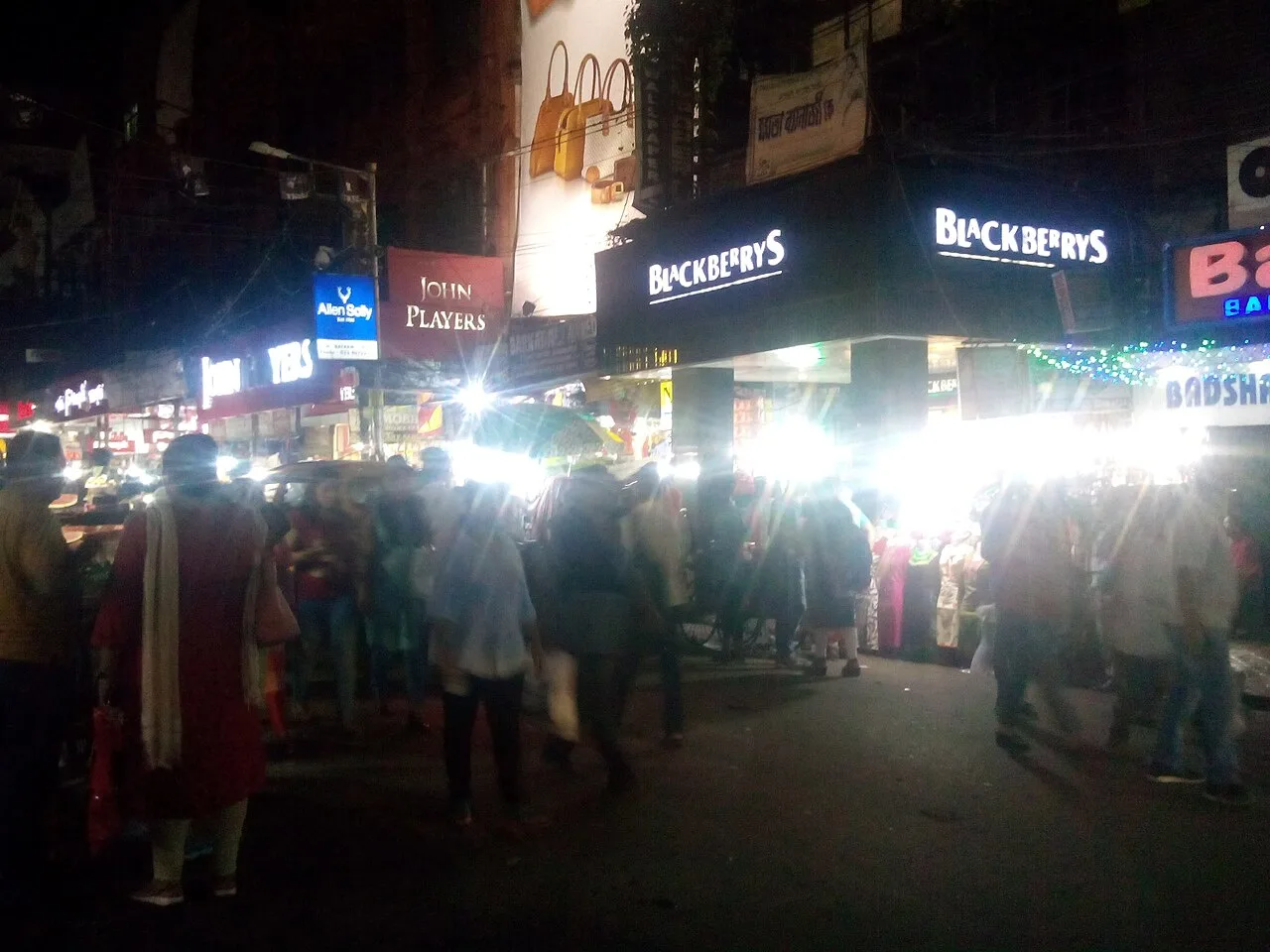
New Market was built in the nineteenth century as Kolkata—then Calcutta—expanded under British rule. It opened in 1874, and its design is credited to architect Richard Roskell Bayne. The municipality developed it as an enclosed market serving the city’s European residents, at a time when much local trade took place in open bazaars. The market was named Sir Stuart Hogg Market after Stuart Hogg, a senior municipal official associated with the city’s administration. In common use, “New Market” became the name for the original building and the surrounding shopping area; after independence, the shorter name remained widely used. The complex grew and changed as the city’s population and retail needs changed, with shops selling food, clothing, household goods and other wares. A major fire in 1985 damaged sections of the market, which were subsequently rebuilt. Later additions and changing shop layouts have contributed to the dense, layered complex visitors encounter today. The market remains a working commercial place rather than a preserved period interior, and its history is visible alongside the ongoing activity of its traders.
Use New Market as a base to understand local life: walk through the market, look for local crafts and ask your host about nearby viewpoints and short excursions. Always ask before photographing people, homes or ceremonies. A comfortable itinerary is one main visit in the morning, a local meal at midday and a short nearby stop before an afternoon return. Use the district list on this site to find other places in Kolkata, but check the route and its condition before combining stops. If a festival is on — such as Durga Puja, Kali Puja or the Poush Mela at Santiniketan — roads and stays can be busy, and the experience can be unforgettable. Leave no litter: many sites are protected by the communities around them.
Suggested itineraries
Half day: Explore the market’s food and general-goods sections (1.5–2 hours), pause for a local meal or snack nearby (about 1 hour), then walk through the surrounding Dharmatala streets (30–45 minutes). Full day: Visit New Market in the morning (2–3 hours), have lunch nearby (about 1 hour), then explore the Indian Museum or Maidan and continue towards Park Street or Victoria Memorial (allow 2–3 hours, plus travel). Gentler option: Choose a short visit to a few accessible shops, take seated breaks at a nearby café, and use a taxi or app cab for the onward trip.
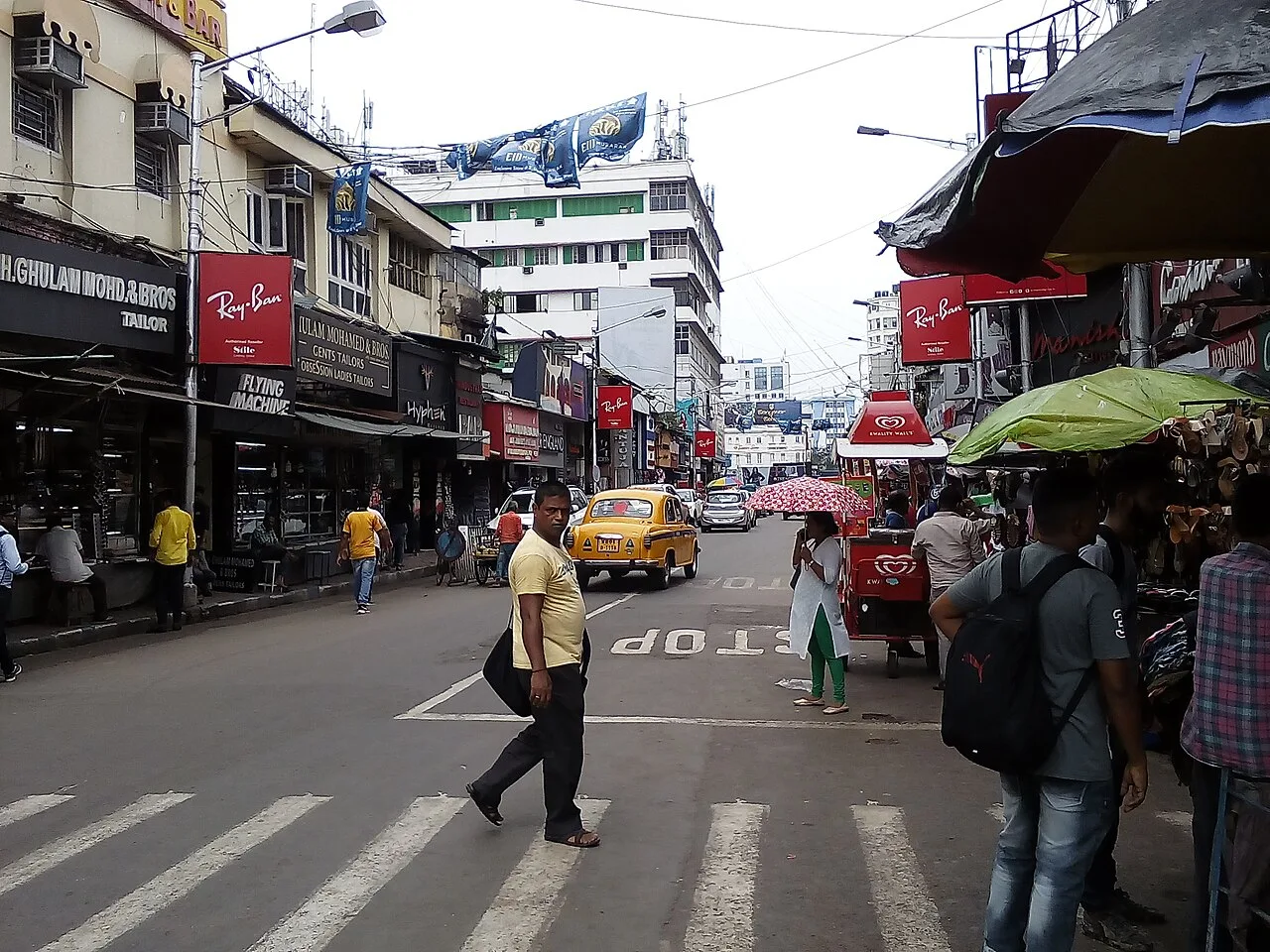
New Market’s culture is shaped by shopping, bargaining, food and the daily exchange between traders and customers. Bengali, Hindi and English are commonly heard, alongside other languages used by Kolkata’s diverse residents and visitors. Shops range from food sellers and bakeries to clothing, leather and household-goods businesses, giving the market a varied character rather than a single specialty. Visitors may see customers buying ingredients for home cooking, festive clothing or gifts. Polite bargaining is part of many transactions, though prices and practices vary by shop. The surrounding Dharmatala area is also known for street food and busy commercial streets. Ask before photographing shopkeepers, workers or customers, especially during private or religious observances.
Local communities
The market connects shop owners, stallholders, employees, wholesalers, delivery workers and customers from across Kolkata and beyond. Traders earn livelihoods through food retail, clothing, footwear, leather goods, household supplies and other small businesses. The wider area also supports porters, transport workers, street vendors and nearby eateries. Bengali-speaking residents form part of the market’s everyday customer base, while traders and visitors bring many languages and regional backgrounds. These livelihoods depend on a crowded, active trading environment, so leave clear passageways, handle goods carefully and ask permission before taking close-up photographs of people or their work.
Festivals & events
Durga Puja, usually in autumn, brings strong demand for clothing, gifts and food across Kolkata, and the market area can become especially crowded. Kali Puja and Diwali, generally around the same season, also affect shopping activity. Eid brings seasonal food and clothing purchases, while Christmas contributes to festive shopping in central Kolkata and nearby Park Street. These are citywide celebrations rather than festivals hosted by the market itself. Expect busier roads, fuller shops and slower movement during major festival periods; check local conditions before planning a visit.
Local food in West Bengal includes macher jhol (fish curry), shorshe ilish (hilsa in mustard), kosha mangsho, luchi with alur dom, kathi rolls and phuchka in Kolkata, mishti doi, rosogolla and sandesh; in the Darjeeling hills, momos, thukpa, shaphaley and first-flush Darjeeling tea. Ask what is fresh that day; many small eateries cook a limited daily menu. Vegetarian travellers eat well across the state, and most towns also have fish and meat dishes. Remote sites may have no restaurant at all. Carry water and snacks, eat a proper breakfast before long drives, and ask your accommodation for a packed lunch if you are heading out early. Try a home-cooked or local thali meal when you can — it is often the best food on the route. Choose busy, clean places, drink sealed or filtered water, and carry your packaging back with you.
Shopping & local experiences
New Market’s shops offer clothing, footwear, leather goods, household items, food ingredients, flowers and gifts, with selection varying between stalls and sections. Look for Bengali and other regional food products, sweets, bakery goods and ingredients for home cooking; nearby eateries provide a chance to sample Kolkata snacks and meals. The market is also known for long-established specialty shops, including Nahoum’s bakery. Ask about materials, sizes and exchange policies before buying, and compare goods between shops. Keep purchases compact if you plan to continue exploring on foot.
October to March for the plains and coast; March to May and October to December for the Darjeeling hills
The nearest principal railway station by straight-line distance is Sealdah, roughly 5 km away. The nearest operating airport by straight-line distance is Netaji Subhas Chandra Bose International Airport, Kolkata, roughly 15 km away. These figures are calculated from map coordinates — actual road distance is longer. Howrah, Sealdah and Kolkata stations and Kolkata airport serve the south; New Jalpaiguri station and Bagdogra airport near Siliguri are the gateways to the Darjeeling hills and the Dooars. Within Kolkata, the Metro is the quickest way across the city, supplemented by app cabs, yellow taxis, buses and ferries across the Hooghly. When comparing train, bus and flight, count the complete door-to-door time: a flight saves the most time only if the onward road transfer is short, while an overnight train can save a hotel night. Book your return before you leave, because seats fill quickly on weekends, festivals and holidays. Current train numbers, timings, return services and fares are not listed here; check IRCTC and NTES for trains and the airline's own schedule for flights. No permit is needed for Indian citizens to visit West Bengal. Entry to the Sundarbans Tiger Reserve needs a forest permit, usually arranged through a registered boat operator or the forest office at Sajnekhali or Canning; trekking in Singalila National Park (Sandakphu) needs an entry permit and a registered guide from Maneybhanjan. Durga Puja in October brings huge crowds to Kolkata, so book transport and stays well ahead.
Confirm onward and return timings on IRCTC / NTES, the state bus operator or your airline before travel. A dash means current timings or fares have not been verified.
Getting around
The Esplanade area is served by Kolkata Metro and by city buses, and the market can be reached on foot from nearby central streets. Yellow taxis and app-based cabs can drop visitors in the vicinity, though traffic and restricted stopping space may make the final approach slow. Auto-rickshaws operate on local routes, but routes and availability vary. Walking is often the simplest way to explore the market itself; expect crowded pavements and narrow aisles. Parking around central Dharmatala can be limited, so check locally rather than relying on a nearby parking space. Use marked crossings and allow extra time in busy periods.
Hours, tickets & permissions
The market is a public commercial complex, and access rules can vary between its sections and individual shops. Some businesses may close on particular days or observe different schedules, while busy periods can affect entry and movement. Do not assume that every shop is open whenever the surrounding market is active. There is no general visitor ticket information stated here. Confirm current opening arrangements, any applicable fees, photography restrictions or other rules with the market’s managing authority or locally before travelling.
Facilities
The market and surrounding streets usually have food shops, cafés, restaurants, banks or ATMs, and other everyday services, but availability can vary. Public toilets may be available in or near the complex; check locally for their location and condition. Drinking water and seating are not guaranteed throughout the market, so plan breaks at a nearby café or restaurant. There is no single visitor information or guide service that should be assumed. Parking is limited in this busy central area. Keep valuables secure and ask shop staff where to find facilities.
Accessibility
The market is a dense, busy commercial complex with narrow aisles, uneven or changing floor surfaces and frequent obstacles from goods and shoppers. Some entrances or internal sections may involve steps; do not assume ramps, lifts or accessible toilets are available. Crowds can make movement difficult for wheelchair users, stroller users and anyone who needs more space or time. Pavements outside may also be uneven or obstructed. Shade is limited inside crowded shopping passages, and breaks may be needed. Elderly visitors or people with reduced mobility may find a brief visit to selected shops more manageable than attempting the whole complex; check access conditions locally.
No permit is needed for Indian citizens to visit West Bengal. Entry to the Sundarbans Tiger Reserve needs a forest permit, usually arranged through a registered boat operator or the forest office at Sajnekhali or Canning; trekking in Singalila National Park (Sandakphu) needs an entry permit and a registered guide from Maneybhanjan. Durga Puja in October brings huge crowds to Kolkata, so book transport and stays well ahead. Carry a photo ID at all times and save the emergency number 112 and your accommodation's contact offline. Heat in summer and heavy rain in the monsoon are the main weather risks; carry water, avoid midday sun and allow extra time when roads flood. Watch your belongings in crowds and on public transport, and follow posted instructions.
Photography
Morning or late-afternoon light can suit street scenes around the market, while interiors may be dim and crowded. There is no single viewpoint that captures the whole complex; look for a clear public vantage without blocking entrances or shoppers. Ask shopkeepers before photographing stalls, goods or workers, and always seek consent before photographing people. Avoid photographing private activities or religious observances without permission. Commercial photography may be subject to separate rules, so check locally. Do not fly a drone over this dense urban area without confirming applicable aviation rules and permissions.
Choose a stay by the full journey to New Market, not just the district name. Kolkata offers the widest choice; on the coast, Digha and Mandarmani have many hotels, and the Sundarbans have eco-resorts and boat stays near Pakhiralay and Bali island. In summer, check air-conditioning; in the monsoon, check that the property is accessible if roads flood. Book in advance for weekends, festivals and the peak season (October to March for the plains and coast; March to May and October to December for the Darjeeling hills). Confirm the exact location, meals included, check-in time and cancellation terms in writing. Avoid sending money to unverified contacts or touts at stations. Carry some cash, as card and digital payments can be unreliable in remote areas.
Within central Kolkata, visitors can combine New Market with the Indian Museum, Maidan, Park Street or the Victoria Memorial, allowing for travel and time to explore each. St Paul’s Cathedral is another established city landmark, while the Esplanade area offers access to central transport and shopping streets. These attractions are in the wider city rather than part of the market. Traffic and crowds can make short map distances take longer on the ground, so choose one or two stops rather than overloading a half-day visit. Check each attraction’s current access arrangements separately.
For couples, New Market rewards a slow pace: arrive early for soft light and fewer crowds, share a local meal and keep the evening free. A toy-train ride in the Darjeeling hills, a boat on the Hooghly at sunset or an evening of adda over tea in Kolkata makes the trip memorable. Public displays of affection can be frowned upon in conservative communities and at religious sites, so be discreet. Keep a buffer in your itinerary, because weather and road conditions can delay plans.
Q: How much time should I allow for New Market? A: Allow a few hours to browse several sections and have a meal; a shorter visit can focus on selected shops. Q: When is a good season to visit? A: October to March is generally more comfortable for Kolkata, though festival periods can be especially crowded. Q: Is there an entry ticket? A: New Market is a working shopping complex; confirm any current access rules or fees with the managing authority. Q: Is it suitable for children and elderly visitors? A: It can be busy and difficult to navigate, so use close supervision, take breaks and consider a brief, focused visit. Q: Can I stay near the market? A: Central Kolkata has accommodation options in and around Dharmatala and Park Street; check current availability and access before booking.
Be the first to share photos, stories, advice or a helpful contact for New Market.
Loading…