
Prinsep Ghat
Prinsep Ghat is a historic river landing and memorial on Kolkata’s Hooghly riverfront. Visitors come to walk by the water, take boat rides and enjoy the nearby gardens and food stalls.
Key facts · verified by Ghumoopedia editors
- Type of place
- Temple / pilgrimage site
- Best time to visit
- October to March for the plains and coast; March to May and October to December for the Darjeeling hills
- Nearest railway station
- Howrah Junction · about 5 km (straight line)
- Verified
- 21 Nov 2026
Plan a trip from Prinsep Ghat — a day-by-day route through places nearby.
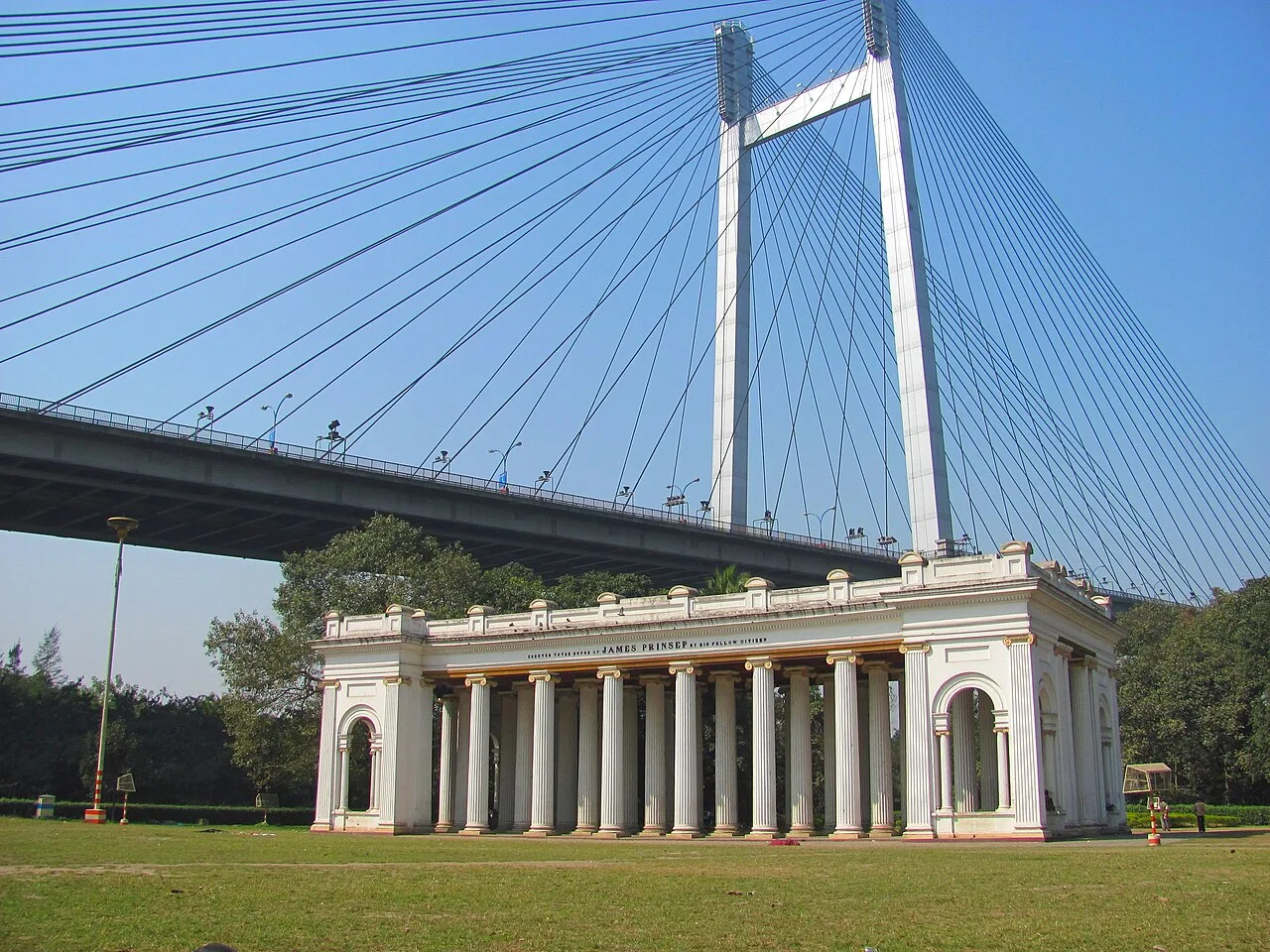
Prinsep Ghat is a riverside landing on Kolkata’s bank of the Hooghly, established in 1841 under Company rule. Its memorial honours James Prinsep, an Anglo-Indian scholar and antiquary. The Palladian-style porch was designed by W. Fitzgerald and completed in 1843. Positioned between the Water Gate and St George’s Gate of Vijay Durg, the structure has Greek and Gothic decorative details. INTACH, the Indian National Trust for Art and Cultural Heritage, carried out an initial restoration in 1993. West Bengal’s public works department undertook further work in November 2001, and the monument has been maintained since. In its early years, British royal parties used the jetty to board vessels or come ashore. Today, the ghat is among Kolkata’s longstanding leisure areas. On weekend evenings, visitors can take boats on the Hooghly, walk beside the water or buy food from nearby stalls. A landscaped riverfront route extending for two kilometres between Prinsep Ghat and Babughat, also called Baje Kadamtala Ghat, opened on 24 May 2012. It includes illuminated gardens, paths, fountains and renovated ghats. A song for the 2005 Bollywood film Parineeta was filmed on the ghats. Prinsep Ghat railway station is named for the site and serves the Kolkata Circular Railway, operated by Eastern Railway; its station code is PPGT. Nearby, the Kolkata Port Trust’s Man-O-War jetty commemorates the port’s role in the Second World War. The Indian Navy is its principal user. West Bengal stretches from the Himalayan tea gardens of Darjeeling to the mangrove delta of the Sundarbans, with Kolkata's colonial architecture, the terracotta temples of Bishnupur, Tagore's Santiniketan and the Nawabi heritage of Murshidabad. The plains are hot and humid from March to June, receive heavy monsoon rain from June to September and are pleasant from November to February; the Darjeeling hills are cool year-round and cold in winter, and the coast and Sundarbans can be hit by cyclones in May and October–November. The usual best time to visit is October to March for the plains and coast; March to May and October to December for the Darjeeling hills. Timings, fees and access arrangements must be confirmed locally. For official information, see West Bengal Tourism at https://wbtourism.gov.in.
Why it matters
Prinsep Ghat is a historic riverside landmark on the Kolkata bank of the Hooghly, valued for its memorial architecture, river views and role in the city’s public life. Built during the Company Raj, it commemorates James Prinsep, a scholar and antiquary associated with the study of Indian inscriptions and coinage. The ghat also recalls a period when British royal entourages used its jetty for embarkation and disembarkation. Today, it is a popular place for walking, boating and evening visits, and forms part of a landscaped riverfront linking it with Babughat. It is a local heritage and recreation site; no UNESCO or Archaeological Survey of India designation is asserted here.
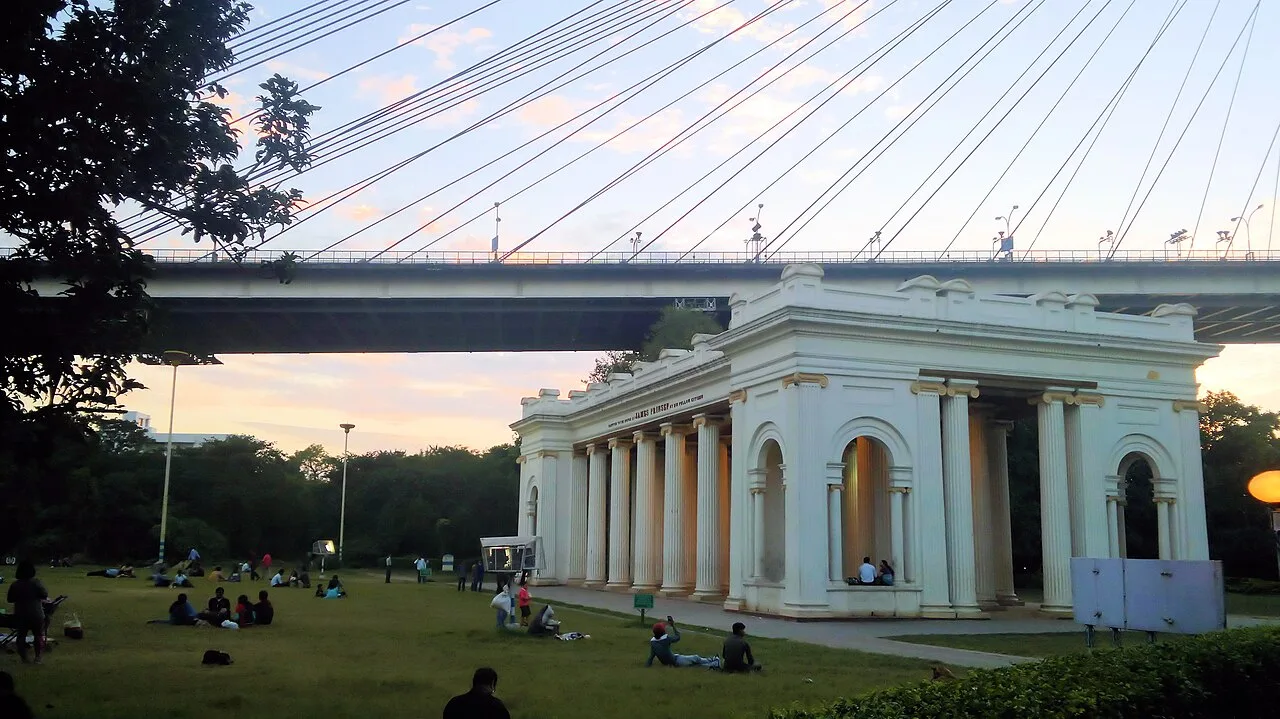
The ghat was built in 1841 during the Company Raj on the Kolkata bank of the Hooghly River. Its memorial honours James Prinsep, an Anglo-Indian scholar and antiquary known for his work on Indian inscriptions and numismatics. The Palladian-style porch was designed by W. Fitzgerald and constructed in 1843. In the early years, the jetty served British royal entourages arriving in or departing from the city, giving the riverside structure a ceremonial as well as practical role. Prinsep Ghat later became one of Kolkata’s established public recreation spots. Visitors came to walk beside the river, take boats and enjoy the open waterfront. The memorial was first restored by INTACH, the Indian National Trust for Art and Cultural Heritage, in 1993; the state Public Works Department undertook further restoration in November 2001. A landscaped and illuminated riverfront stretch connecting Prinsep Ghat with Babughat was inaugurated in 2012, improving the area for public recreation. A nearby station on the Kolkata Circular Railway takes its name from the ghat. The adjacent Man-O-War jetty, associated with the Kolkata Port Trust and the port’s Second World War role, is used mainly by the Indian Navy and is distinct from the public ghat.
Origin stories & folklore
No widely established origin legend or sacred founding story is associated with Prinsep Ghat. Its documented history is that of a colonial-era river landing and memorial rather than a site founded through a religious or legendary event. The Hooghly has deep cultural and spiritual importance across Bengal, and visitors may encounter personal beliefs or stories connected with the river, but these should not be presented as a specific Prinsep Ghat tradition without reliable local evidence. The memorial’s name and purpose are linked to James Prinsep and the ghat’s recorded history, not to a known folklore narrative.
Architecture & design
The principal memorial is a Palladian-style porch, designed by W. Fitzgerald and built in 1843 in memory of James Prinsep. Its balanced composition and classical form distinguish it from the functional steps and landing areas of the ghat. The memorial is described as having Greek and Gothic decorative inlays, bringing together architectural references that were common in colonial-era public monuments. The riverside setting is integral to the design: the structure faces the Hooghly and is approached through open public space along the bank. The broader site includes the ghat edge, pathways and landscaped riverfront. The improved stretch toward Babughat has gardens, fountains and pedestrian routes, though the condition of individual features can vary. The ghat’s steps and river access reflect its historic use as a landing place, while the memorial porch serves as its visual focal point. It is best understood as a civic riverside monument, not a temple complex.
Important objects & sculptures
The main feature to look for is the memorial porch dedicated to James Prinsep. Notice its Palladian proportions and the Greek- and Gothic-inspired inlays reported on the monument; these details are more central to the visit than any collection of portable objects. Prinsep is remembered for scholarship involving inscriptions and coinage, but the ghat itself is not a museum displaying his research materials. There are no principal temple idols or ritual objects to seek out here. Visitors can also observe the relationship between the memorial, the river landing and the Hooghly-facing public space. Interpretation boards, where present, may offer useful context; check locally for their availability and condition.
Religious significance
Prinsep Ghat is not a temple or established pilgrimage site, and it is not dedicated to a particular deity. Its primary identity is as a historic memorial and public riverfront. The Hooghly is sacred to many Hindus, and people may approach the river with personal devotional feelings or participate in river-related customs elsewhere along its banks. Such broader reverence for the river should be distinguished from formal worship at Prinsep Ghat itself. Visitors should not expect a regular temple ritual or priestly service here. Treat anyone using the river or waterfront for personal prayer respectfully, and follow any local restrictions around the water’s edge.
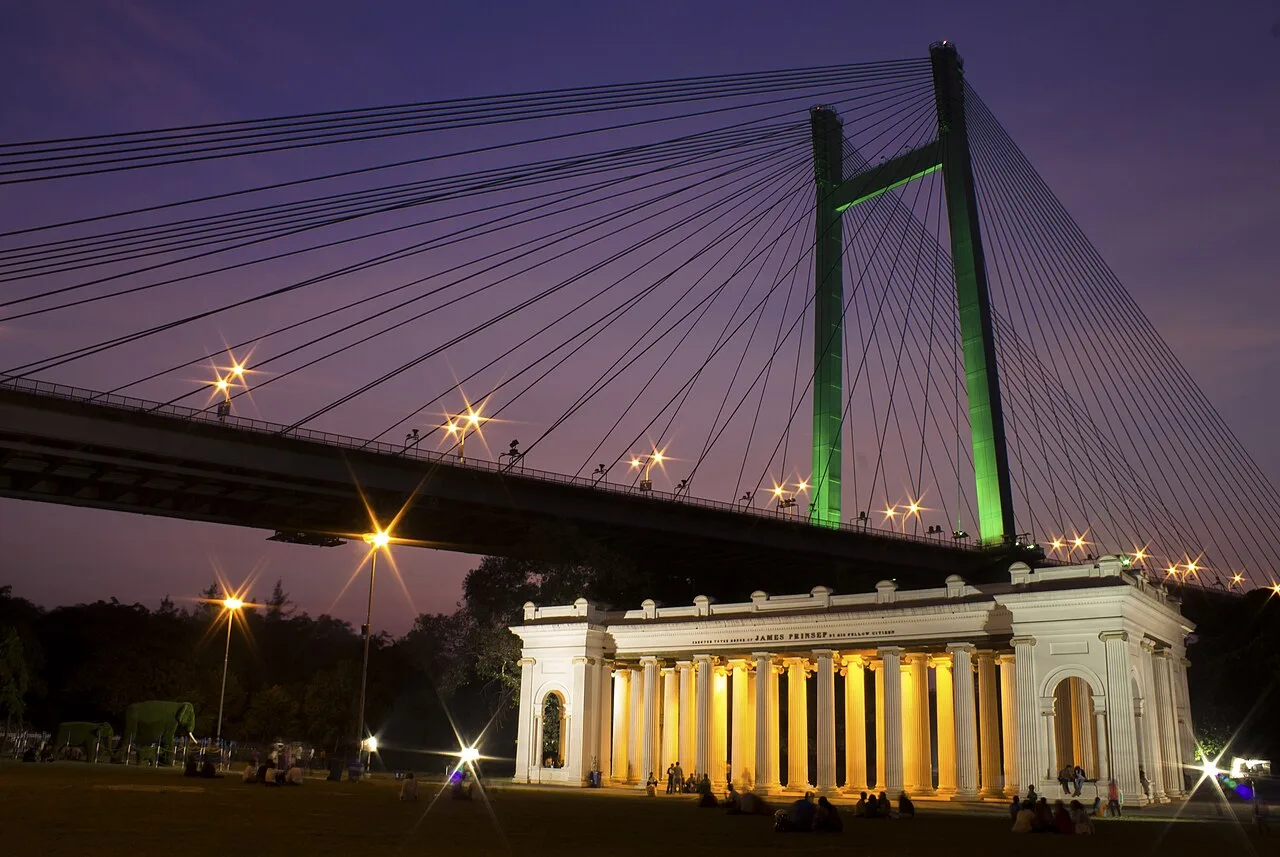
Explore Prinsep Ghat slowly and read the interpretation boards, use the official audio guide where available or hire an authorised guide to understand its history. Check opening days, ticket counters and camera rules in advance; many monuments and museums close on one weekday and on some public holidays. Early morning gives softer light, cooler air and smaller crowds. A comfortable itinerary is one main visit in the morning, a local meal at midday and a short nearby stop before an afternoon return. Use the district list on this site to find other places in Kolkata, but check the route and its condition before combining stops. If a festival is on — such as Durga Puja, Kali Puja or the Poush Mela at Santiniketan — roads and stays can be busy, and the experience can be unforgettable. Leave no litter: many sites are protected by the communities around them.
Suggested itineraries
Half day: Spend about 1–2 hours viewing the memorial and walking the riverfront; take a boat ride if operating; pause for a local snack before leaving. Full day: Begin with Prinsep Ghat and its riverfront; continue toward Babughat; have lunch nearby; visit the Victoria Memorial or Indian Museum; finish with an evening meal in central Kolkata. Gentler option: View the memorial from nearby paths, take frequent seated breaks and keep the visit to the accessible sections; confirm surface conditions and assistance locally.
The ghat is part of everyday Kolkata life as much as it is a historic monument. Residents and visitors come to walk beside the river, meet friends, take boat rides where available and enjoy food from nearby stalls. Bengali is widely spoken in the city, alongside Hindi and English. The atmosphere is generally informal rather than ceremonial, with family outings and evening social activity common. Durga Puja and other city festivals shape Kolkata’s wider cultural calendar, though Prinsep Ghat is not itself known as a principal festival venue. The setting also appears in popular culture: a song from the 2005 film Parineeta was shot at the ghat.
Festivals & events
Durga Puja, usually celebrated in autumn, is Kolkata’s major citywide festival and brings decorated neighbourhood pandals, cultural programmes and heavy crowds to many parts of the city. Kali Puja, generally around the autumn festival season, is also widely observed in Kolkata. These celebrations are not specific to Prinsep Ghat, but they can affect road traffic, public transport and accommodation across the city. The ghat may attract more visitors during holiday periods and pleasant-weather weekends. Check local announcements before visiting during major festivals, and allow extra time for travel; do not assume that a formal fair or religious programme is being held at the site.
Local food in West Bengal includes macher jhol (fish curry), shorshe ilish (hilsa in mustard), kosha mangsho, luchi with alur dom, kathi rolls and phuchka in Kolkata, mishti doi, rosogolla and sandesh; in the Darjeeling hills, momos, thukpa, shaphaley and first-flush Darjeeling tea. Ask what is fresh that day; many small eateries cook a limited daily menu. Vegetarian travellers eat well across the state, and most towns also have fish and meat dishes. Remote sites may have no restaurant at all. Carry water and snacks, eat a proper breakfast before long drives, and ask your accommodation for a packed lunch if you are heading out early. Try a home-cooked or local thali meal when you can — it is often the best food on the route. Choose busy, clean places, drink sealed or filtered water, and carry your packaging back with you.
Shopping & local experiences
Prinsep Ghat is better suited to a walk and river visit than to dedicated souvenir shopping. Small stalls may sell snacks and refreshments, with availability changing by day and season. For books, crafts, textiles or Kolkata-themed keepsakes, look at established shops and markets elsewhere in the city rather than expecting a large market at the ghat. Food options in the surrounding urban area range from casual Bengali dishes to broader city fare. Choose clean, busy food stalls, carry reusable water where practical and dispose of packaging responsibly.
October to March for the plains and coast; March to May and October to December for the Darjeeling hills
The nearest principal railway station by straight-line distance is Howrah Junction, roughly 5 km away. The nearest operating airport by straight-line distance is Netaji Subhas Chandra Bose International Airport, Kolkata, roughly 15 km away. These figures are calculated from map coordinates — actual road distance is longer. Howrah, Sealdah and Kolkata stations and Kolkata airport serve the south; New Jalpaiguri station and Bagdogra airport near Siliguri are the gateways to the Darjeeling hills and the Dooars. Within Kolkata, the Metro is the quickest way across the city, supplemented by app cabs, yellow taxis, buses and ferries across the Hooghly. When comparing train, bus and flight, count the complete door-to-door time: a flight saves the most time only if the onward road transfer is short, while an overnight train can save a hotel night. Book your return before you leave, because seats fill quickly on weekends, festivals and holidays. Current train numbers, timings, return services and fares are not listed here; check IRCTC and NTES for trains and the airline's own schedule for flights. No permit is needed for Indian citizens to visit West Bengal. Entry to the Sundarbans Tiger Reserve needs a forest permit, usually arranged through a registered boat operator or the forest office at Sajnekhali or Canning; trekking in Singalila National Park (Sandakphu) needs an entry permit and a registered guide from Maneybhanjan. Durga Puja in October brings huge crowds to Kolkata, so book transport and stays well ahead.
Confirm onward and return timings on IRCTC / NTES, the state bus operator or your airline before travel. A dash means current timings or fares have not been verified.
Getting around
Within Kolkata, app-based cabs, yellow taxis, buses and the Metro can help you reach the riverfront; the best option depends on your starting point and current traffic. Prinsep Ghat railway station, on the Kolkata Circular Railway, is named for the site, though visitors should check current service information before relying on it. From the arrival point, expect some walking along the riverfront. Local boats may operate for river trips, but availability and boarding arrangements should be checked on the day. Parking conditions can vary, especially on weekends and during events, so consider being dropped nearby rather than assuming a convenient space.
Hours, tickets & permissions
Access arrangements can differ between the public riverfront, the memorial area and any boating or event services. Ticketing, permits, camera restrictions or temporary closures may apply to particular activities, but requirements can change. No fixed entry hours or fees are stated here. Before setting out, confirm current opening arrangements and any charges with the relevant local or managing authority. If you are joining a boat ride or an organised visit, check its separate access conditions. Public holidays, maintenance work and special events may also affect access.
Facilities
Food stalls and small refreshments are usually available around the riverfront, though selection and operating days vary. Toilets, drinking water, seating and waste bins may be available in or near the wider public area; check locally for their location and condition. Boating may be offered, but services are not guaranteed. Nearby parts of Kolkata have restaurants, shops, ATMs and other visitor services. Parking can be limited or busy. Guided interpretation may be available through authorised guides or posted information, but do not assume that a staffed visitor centre or formal guide desk operates at the ghat.
Accessibility
The site involves outdoor walking along a riverside public space, with some uneven surfaces and steps near the ghat edge. Routes and surfaces may vary between the memorial, paths and landing areas; the river steps can be difficult or unsafe for visitors with limited mobility. Do not assume that ramps, lifts or continuous step-free access are available. Wheelchair and stroller suitability depends on the chosen route and current surface condition. Shade may be limited in exposed sections, so plan breaks and carry water. Older visitors may find a shorter visit focused on the memorial and nearby seating more comfortable; confirm access conditions locally.
No permit is needed for Indian citizens to visit West Bengal. Entry to the Sundarbans Tiger Reserve needs a forest permit, usually arranged through a registered boat operator or the forest office at Sajnekhali or Canning; trekking in Singalila National Park (Sandakphu) needs an entry permit and a registered guide from Maneybhanjan. Durga Puja in October brings huge crowds to Kolkata, so book transport and stays well ahead. Carry a photo ID at all times and save the emergency number 112 and your accommodation's contact offline. Heat in summer and heavy rain in the monsoon are the main weather risks; carry water, avoid midday sun and allow extra time when roads flood. Watch your belongings in crowds and on public transport, and follow posted instructions.
Visitor rules
Follow signs and instructions from site staff or local authorities, and stay out of restricted port, naval and river-access areas. Wear comfortable clothing and secure footwear for walking; there is no temple dress code, but modest attire is considerate in public. Keep away from unstable edges and do not enter the water unless using an authorised service. Avoid littering, and use bins where available; reduce single-use plastic. Behave considerately around other visitors and residents. Photography rules may differ for the memorial, boats and restricted facilities, so ask or check posted notices before taking pictures.
Photography
The memorial and riverfront are appealing in soft morning or late-afternoon light, while the Hooghly provides open views from the public paths. A slow walk can reveal different angles of the porch and river landing. Handheld photography is generally part of ordinary sightseeing, but check signs for restrictions and ask before photographing people closely, especially during private prayer or family activities. Do not assume that commercial shoots, tripods or drones are permitted. Drone use can be restricted around sensitive infrastructure and should be avoided unless explicit permission has been obtained from the relevant authorities.
Choose a stay by the full journey to Prinsep Ghat, not just the district name. Kolkata offers the widest choice; on the coast, Digha and Mandarmani have many hotels, and the Sundarbans have eco-resorts and boat stays near Pakhiralay and Bali island. In summer, check air-conditioning; in the monsoon, check that the property is accessible if roads flood. Book in advance for weekends, festivals and the peak season (October to March for the plains and coast; March to May and October to December for the Darjeeling hills). Confirm the exact location, meals included, check-in time and cancellation terms in writing. Avoid sending money to unverified contacts or touts at stations. Carry some cash, as card and digital payments can be unreliable in remote areas.
Within Kolkata, visitors can combine the riverfront with the Victoria Memorial, the Indian Museum, St Paul’s Cathedral, Eden Gardens and the historic central-city area around B.B.D. Bagh. Babughat lies along the landscaped riverfront route and can be included in a riverside walk. The nearby Man-O-War jetty is associated with the Kolkata Port Trust and is mainly used by the Indian Navy, so it should not be treated as an unrestricted visitor attraction. Fort William is also in the wider area, but access is restricted; do not plan an entry visit without confirmed permission. Check routes and current access before combining stops.
For couples, Prinsep Ghat rewards a slow pace: arrive early for soft light and fewer crowds, share a local meal and keep the evening free. A toy-train ride in the Darjeeling hills, a boat on the Hooghly at sunset or an evening of adda over tea in Kolkata makes the trip memorable. Public displays of affection can be frowned upon in conservative communities and at religious sites, so be discreet. Keep a buffer in your itinerary, because weather and road conditions can delay plans.
Q: How much time should I allow for a visit? A: Allow a couple of hours for the memorial, a riverside walk and a possible boat trip; add time if combining it with nearby attractions. Q: When is a good season to visit? A: October to March is generally pleasant for Kolkata’s plains. Warm, humid or rainy conditions can affect comfort at other times. Q: Is there an entry ticket? A: Prinsep Ghat is a public riverfront, but charges or access rules may apply to particular activities or areas. Confirm locally before visiting. Q: Is the ghat suitable for children and elderly visitors? A: Families can enjoy the open riverfront, but supervise children near the water. Uneven paths and steps may make parts difficult for elderly visitors or anyone with limited mobility. Q: Where can I stay nearby? A: Kolkata has accommodation across central and other neighbourhoods. Choose based on your wider itinerary and check current transport links and access before booking.
Be the first to share photos, stories, advice or a helpful contact for Prinsep Ghat.
Loading…