
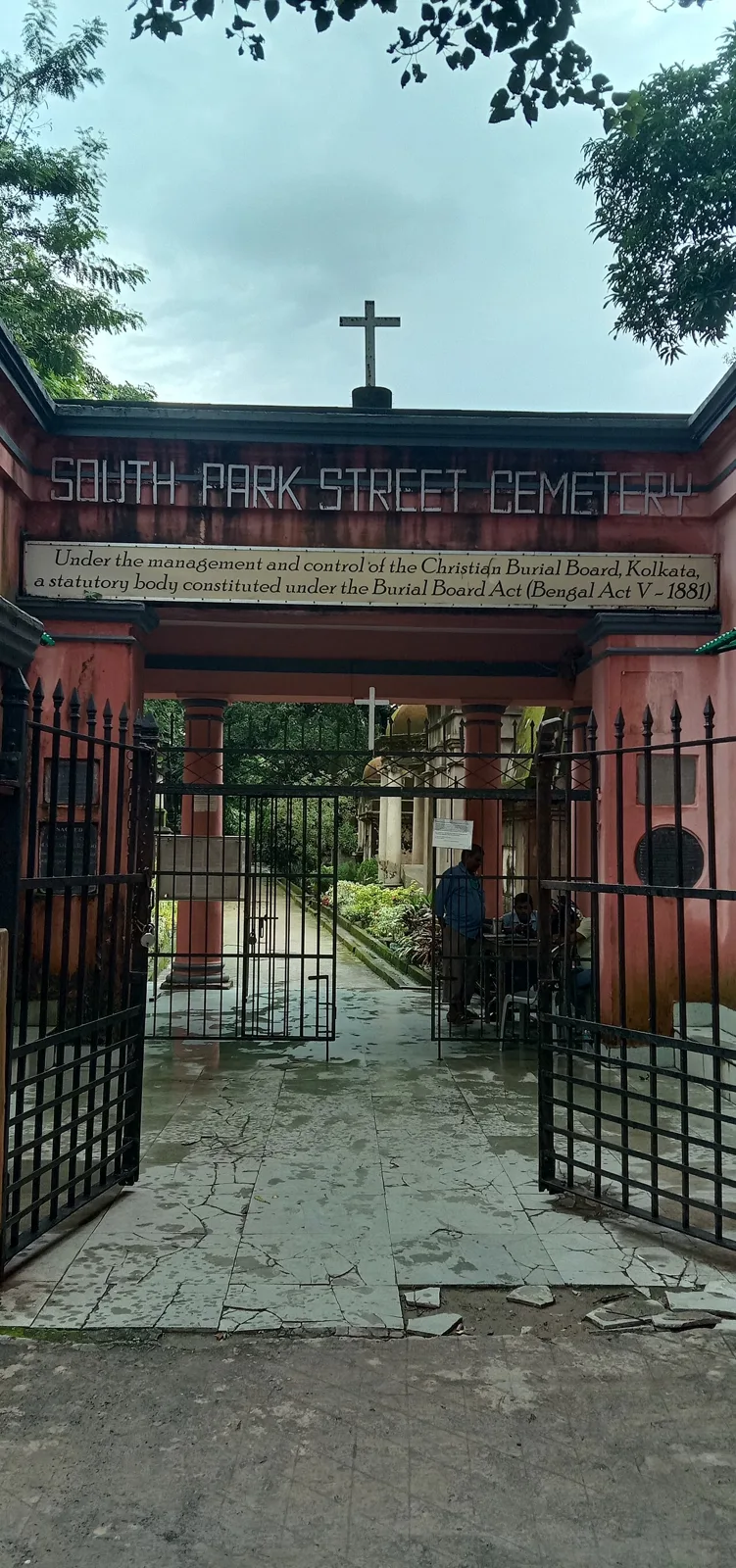
South Park Street Cemetery
This historic Kolkata burial ground, once called the Great Christian Burial Ground, is known for its early non-church origins and memorials to British personnel and notable figures.
Key facts · verified by Ghumoopedia editors
- Type of place
- Temple / pilgrimage site
- Best time to visit
- October to March for the plains and coast; March to May and October to December for the Darjeeling hills
- Nearest railway station
- Sealdah · about 5 km (straight line)
- Verified
- 21 Nov 2026
Plan a trip from South Park Street Cemetery — a day-by-day route through places nearby.
Located on Mother Teresa Sarani, also called Park Street, in central Kolkata, the cemetery lies within Kolkata district, West Bengal. Its former name was Great Christian Burial Ground. It is counted among the world's earliest burial grounds established separately from a church. The site contains numerous tombs and monuments linked to British soldiers, officials and their relatives. Among those buried here are Henry Louis Vivian Derozio and Sir William Jones, both prominent figures. Visitors can see individual graves alongside memorial structures connected with British military and administrative life. West Bengal stretches from the Himalayan tea gardens of Darjeeling to the mangrove delta of the Sundarbans, with Kolkata's colonial architecture, the terracotta temples of Bishnupur, Tagore's Santiniketan and the Nawabi heritage of Murshidabad. The plains are hot and humid from March to June, receive heavy monsoon rain from June to September and are pleasant from November to February; the Darjeeling hills are cool year-round and cold in winter, and the coast and Sundarbans can be hit by cyclones in May and October–November. The usual best time to visit is October to March for the plains and coast; March to May and October to December for the Darjeeling hills. Timings, fees and access arrangements must be confirmed locally. For official information, see West Bengal Tourism at https://wbtourism.gov.in.
Why it matters
South Park Street Cemetery is an important record of Kolkata’s colonial-era history and one of the city’s best-known historic burial grounds. Formerly called the Great Christian Burial Ground, it was among the earliest large cemeteries established outside a church in the English-speaking world. Its graves commemorate European soldiers, administrators, scholars and their families, as well as people connected with the city’s intellectual life, including Henry Louis Vivian Derozio and Sir William Jones. The site also illustrates how burial practices and memorial design changed in colonial Bengal. It is valued today as a heritage landscape and a place of historical study and remembrance. Visitors should check with the managing authority for current information about its heritage status and conservation arrangements.
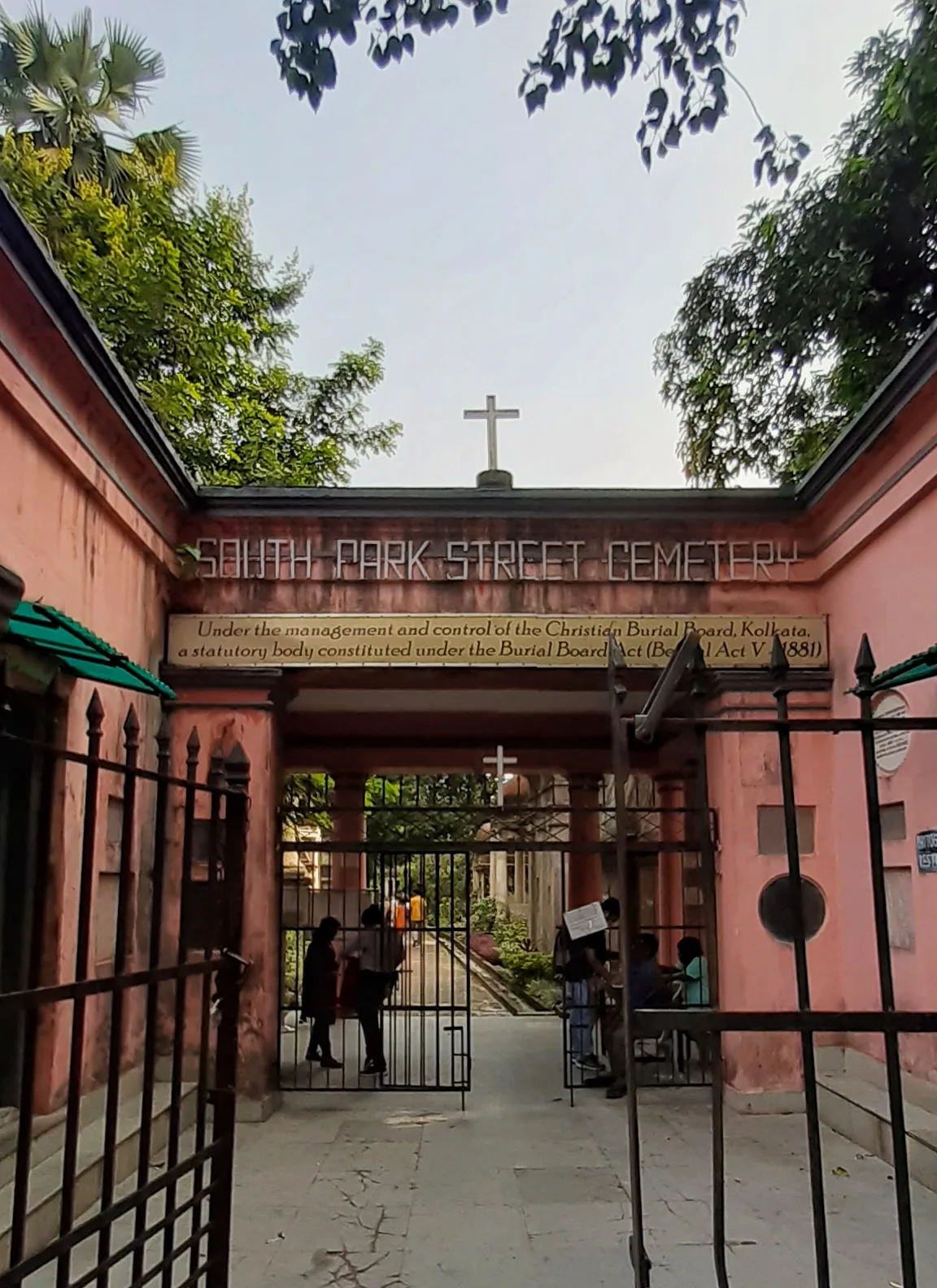
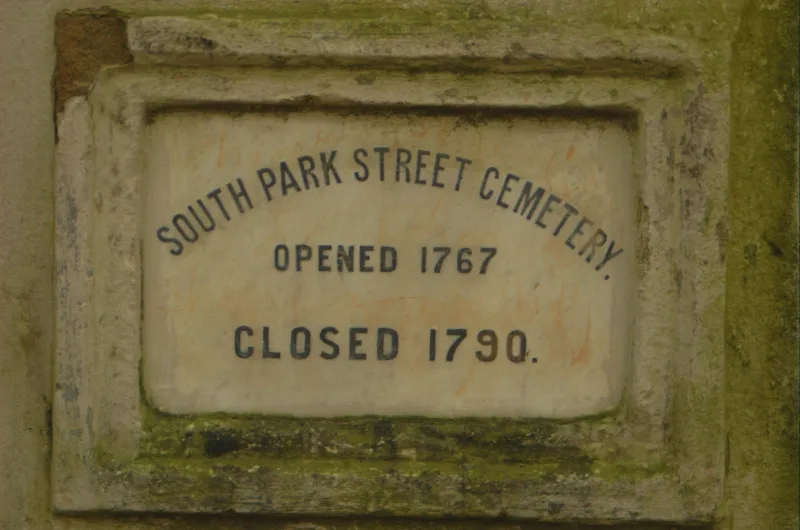
South Park Street Cemetery was established in 1767, when the European settlement in Calcutta was expanding and church burial grounds were becoming inadequate. It stood beyond the built-up settlement of the period, along what is now Park Street, and was then known as the Great Christian Burial Ground. The cemetery served the city’s European Christian community, including British soldiers, administrators, merchants, scholars and their families. Its burials continued into the early nineteenth century, a period represented by inscriptions and monuments across the grounds. Among those buried here are the Orientalist Sir William Jones, who died in 1794, and poet and educator Henry Louis Vivian Derozio, who died in 1831. The cemetery therefore preserves connections both to colonial administration and to Bengal’s literary and intellectual history. As the city grew around it, the burial ground became an enclosed historic site rather than a peripheral cemetery. Weather, vegetation and age have affected the monuments, and conservation work has been undertaken over time. For details of current restoration or management, consult the site authority; specific work and access arrangements may change.
Origin stories & folklore
There is no widely established origin legend attached to South Park Street Cemetery: its foundation is documented as a colonial-era burial ground. Stories of ghostly figures and unexplained sounds sometimes circulate in popular accounts of the cemetery, as they do about many old burial grounds, but these are folklore rather than verified history. The cemetery’s atmosphere—its old trees, quiet paths and weathered monuments—may help explain why such tales persist. Treat them as stories, not as a reason to disturb graves or enter closed areas. The documented inscriptions and biographies offer a more reliable way to understand the lives remembered here.
Architecture & design
The cemetery is laid out as a landscaped burial ground, with paths winding among graves and substantial memorials rather than rows of uniform headstones. Its monuments reflect European funerary design of the late eighteenth and early nineteenth centuries, especially classical forms. Visitors may notice obelisks, pyramidal structures, domed or temple-like tombs, columns, urns and sarcophagus-shaped memorials. Many combine a sturdy masonry base with decorative details and inscriptions. Brick, plaster and stone appear across the structures, though materials and condition vary from monument to monument. The scale of some tombs is striking, with tall profiles intended to be visible above the surrounding ground and vegetation. Their forms reflect changing tastes and the status of the people commemorated, rather than a single unified architectural scheme. Mature trees and dense greenery now soften the lines of the monuments and create a shaded, enclosed setting. Surfaces can be worn, and visitors should view fragile structures from a respectful distance rather than touching or climbing them.
Important objects & sculptures
Look for the cemetery’s varied tomb forms and their carved or engraved details: obelisks, urns, columns, pyramidal roofs and sarcophagus-like structures. Inscriptions are especially valuable, recording names, family relationships, professions and dates, though weathering can make some difficult to read. The graves of Sir William Jones and Henry Louis Vivian Derozio are among the best-known memorials. Details such as coats of arms, crosses, sculpted drapery and classical motifs reflect the beliefs and artistic conventions of their time. Not every monument is fully legible or accessible, so follow any on-site guidance and avoid touching carvings or leaning on fragile masonry.
Religious significance
The cemetery was established as a Christian burial ground, not as a Hindu temple or an active pilgrimage site. Its monuments principally reflect European Christian funerary customs, with crosses and religious inscriptions appearing alongside classical memorial forms. For descendants and communities connected with those buried here, it can hold significance as a place of remembrance; historians and visitors may also approach it as a memorial landscape. There is no regular public worship or routine pilgrimage to describe as part of a visitor visit. The site deserves quiet and respectful conduct: avoid stepping on graves, disturbing memorials or treating burial inscriptions as props. Its history should be understood in the context of colonial-era Kolkata and the people who lived and died there.
Explore South Park Street Cemetery slowly and read the interpretation boards, use the official audio guide where available or hire an authorised guide to understand its history. Check opening days, ticket counters and camera rules in advance; many monuments and museums close on one weekday and on some public holidays. Early morning gives softer light, cooler air and smaller crowds. A comfortable itinerary is one main visit in the morning, a local meal at midday and a short nearby stop before an afternoon return. Use the district list on this site to find other places in Kolkata, but check the route and its condition before combining stops. If a festival is on — such as Durga Puja, Kali Puja or the Poush Mela at Santiniketan — roads and stays can be busy, and the experience can be unforgettable. Leave no litter: many sites are protected by the communities around them.
Suggested itineraries
Half day: Spend about 1–2 hours exploring the cemetery and reading inscriptions; then take a relaxed Park Street meal and visit one nearby heritage stop. Full day: Allow about 1–2 hours at the cemetery; continue to the Indian Museum or Victoria Memorial, take a lunch break, then visit St Paul’s Cathedral or enjoy a short walk around the Maidan. Gentler option: Arrange a taxi drop-off close to the entrance, explore only the main paths at an unhurried pace, and take seated breaks nearby; check access and seating locally.
The cemetery is a place of historical reflection rather than a venue for regular performance or public religious gatherings. Visitors today include local residents, school and college groups, history enthusiasts and travellers interested in Kolkata’s colonial past. English appears frequently on the older memorial inscriptions; the city’s wider everyday languages include Bengali, Hindi and English. Guided visits and interpretation can help explain the lives and historical context behind the graves. Customs are simple: walk quietly, give other visitors space, and show care around memorials. The cemetery is also part of Kolkata’s broader heritage culture, where conservation, public history and the reuse of historic urban spaces are ongoing concerns.
Festivals & events
No major festival or fair is regularly held inside South Park Street Cemetery. Kolkata’s larger celebrations, especially Durga Puja in autumn and Kali Puja around the same festive season, can make the city lively and busy; nearby roads, transport and accommodation may be affected. Christmas brings seasonal activity to parts of central Kolkata, including Park Street, but celebrations are not cemetery rituals. Visitors planning a visit during city festivals should allow extra time for travel and check local access arrangements. Please observe any temporary restrictions and keep the cemetery quiet even when nearby areas are crowded.
Local food in West Bengal includes macher jhol (fish curry), shorshe ilish (hilsa in mustard), kosha mangsho, luchi with alur dom, kathi rolls and phuchka in Kolkata, mishti doi, rosogolla and sandesh; in the Darjeeling hills, momos, thukpa, shaphaley and first-flush Darjeeling tea. Ask what is fresh that day; many small eateries cook a limited daily menu. Vegetarian travellers eat well across the state, and most towns also have fish and meat dishes. Remote sites may have no restaurant at all. Carry water and snacks, eat a proper breakfast before long drives, and ask your accommodation for a packed lunch if you are heading out early. Try a home-cooked or local thali meal when you can — it is often the best food on the route. Choose busy, clean places, drink sealed or filtered water, and carry your packaging back with you.
Shopping & local experiences
There is no need to expect a souvenir shop inside the cemetery. Nearby Park Street has cafés, restaurants and shops, while the New Market area is a familiar place to browse for clothing, gifts and everyday goods. Kolkata is also known for Bengali books, textiles and sweets; visitors can look for these at established shops around the city rather than buying anything from or around the graves. Choose locally made products where possible, and avoid vendors or souvenirs that involve removing, copying or damaging heritage material.
October to March for the plains and coast; March to May and October to December for the Darjeeling hills
The nearest principal railway station by straight-line distance is Sealdah, roughly 5 km away. The nearest operating airport by straight-line distance is Netaji Subhas Chandra Bose International Airport, Kolkata, roughly 15 km away. These figures are calculated from map coordinates — actual road distance is longer. Howrah, Sealdah and Kolkata stations and Kolkata airport serve the south; New Jalpaiguri station and Bagdogra airport near Siliguri are the gateways to the Darjeeling hills and the Dooars. Within Kolkata, the Metro is the quickest way across the city, supplemented by app cabs, yellow taxis, buses and ferries across the Hooghly. When comparing train, bus and flight, count the complete door-to-door time: a flight saves the most time only if the onward road transfer is short, while an overnight train can save a hotel night. Book your return before you leave, because seats fill quickly on weekends, festivals and holidays. Current train numbers, timings, return services and fares are not listed here; check IRCTC and NTES for trains and the airline's own schedule for flights. No permit is needed for Indian citizens to visit West Bengal. Entry to the Sundarbans Tiger Reserve needs a forest permit, usually arranged through a registered boat operator or the forest office at Sajnekhali or Canning; trekking in Singalila National Park (Sandakphu) needs an entry permit and a registered guide from Maneybhanjan. Durga Puja in October brings huge crowds to Kolkata, so book transport and stays well ahead.
Confirm onward and return timings on IRCTC / NTES, the state bus operator or your airline before travel. A dash means current timings or fares have not been verified.
Getting around
The cemetery is on Mother Teresa Sarani, also known as Park Street, in central Kolkata. App-based cabs and yellow taxis can drop visitors near the entrance, while city buses serve routes through the wider Park Street area; confirm the stop and walking approach locally. Park Street Metro station is a useful option for reaching the neighbourhood, followed by a walk or short vehicle ride. Traffic and parking can be difficult in central Kolkata, so public transport or a taxi drop-off may be more convenient than driving. Walking between nearby attractions is possible, but pavements and crossings can be uneven or busy.
Hours, tickets & permissions
Entry may be subject to the cemetery’s current opening schedule, ticketing or visitor-management rules, and access can change for conservation work or special circumstances. Camera use may also be regulated. There is no temple dress code, but modest, practical clothing and suitable footwear are appropriate for a historic burial ground. Do not assume that all areas are open or that photography is unrestricted. Confirm current opening hours, fees, entry conditions and camera rules with the managing authority before travelling; these details can change.
Facilities
Facilities inside the cemetery may be limited. Interpretation boards or guided visits may be available, but arrangements can vary, so check locally or with the managing authority. Do not assume that toilets, drinking-water points or a café are provided on site. Park Street and central Kolkata have restaurants, cafés, shops, ATMs and other visitor services nearby. Parking in the area can be limited, and visitors may need to arrange a taxi drop-off or use public transport. Carry water and any personal supplies you need, and take all litter away with you.
Accessibility
The cemetery is an outdoor historic site with paths, grass and uneven ground; old paving, exposed roots or weathered surfaces may make walking difficult. Exploring the grounds involves some walking, and there may be no continuous step-free route to every monument. Shade from trees can be helpful, though conditions vary by season. Wheelchair and stroller access should not be assumed, and visitors with limited mobility may find the surface and distances challenging. Elderly visitors may prefer a short, slow visit with rest breaks and a companion. Check current access conditions with the managing authority before setting out.
No permit is needed for Indian citizens to visit West Bengal. Entry to the Sundarbans Tiger Reserve needs a forest permit, usually arranged through a registered boat operator or the forest office at Sajnekhali or Canning; trekking in Singalila National Park (Sandakphu) needs an entry permit and a registered guide from Maneybhanjan. Durga Puja in October brings huge crowds to Kolkata, so book transport and stays well ahead. Carry a photo ID at all times and save the emergency number 112 and your accommodation's contact offline. Heat in summer and heavy rain in the monsoon are the main weather risks; carry water, avoid midday sun and allow extra time when roads flood. Watch your belongings in crowds and on public transport, and follow posted instructions.
Visitor rules
Treat the cemetery as a place of burial and remembrance. Keep voices low, do not climb on, touch or lean against monuments, and do not walk over graves where paths are provided. Follow posted directions and stay out of any closed or protected areas. Wear practical footwear and respectful clothing; there is no temple dress requirement. Take litter with you and avoid single-use plastics where possible. Photography may be subject to site rules, so check before taking pictures. Do not conduct commercial shoots, ceremonies or other activities without permission from the managing authority.
Photography
Soft morning light can bring out the textures of the monuments while the grounds are quieter; late-day light may also be gentle, depending on weather and access. Photograph from paths and avoid climbing, touching memorials or blocking other visitors. Camera permissions and any restrictions on particular areas should be checked on site. Drone use should not be assumed to be allowed; obtain the required permissions and follow aviation and local rules before considering it. Be especially considerate if other visitors are paying their respects, and do not stage disrespectful poses among the graves.
Choose a stay by the full journey to South Park Street Cemetery, not just the district name. Kolkata offers the widest choice; on the coast, Digha and Mandarmani have many hotels, and the Sundarbans have eco-resorts and boat stays near Pakhiralay and Bali island. In summer, check air-conditioning; in the monsoon, check that the property is accessible if roads flood. Book in advance for weekends, festivals and the peak season (October to March for the plains and coast; March to May and October to December for the Darjeeling hills). Confirm the exact location, meals included, check-in time and cancellation terms in writing. Avoid sending money to unverified contacts or touts at stations. Carry some cash, as card and digital payments can be unreliable in remote areas.
In central Kolkata, visitors can combine the cemetery with the Indian Museum, Victoria Memorial, St Paul’s Cathedral and the Maidan, depending on available time and mobility. Park Street itself offers historic streetscapes and places to eat. The New Market area is another well-known central stop for shopping. These sites are in the wider central Kolkata area, but traffic and walking conditions can affect how easily they fit into one outing. Check each attraction’s current opening and access arrangements separately, and avoid planning too many stops in a single half-day.
For couples, South Park Street Cemetery rewards a slow pace: arrive early for soft light and fewer crowds, share a local meal and keep the evening free. A toy-train ride in the Darjeeling hills, a boat on the Hooghly at sunset or an evening of adda over tea in Kolkata makes the trip memorable. Public displays of affection can be frowned upon in conservative communities and at religious sites, so be discreet. Keep a buffer in your itinerary, because weather and road conditions can delay plans.
Q: How much time should I allow for a visit? A: About one to two hours is a reasonable allowance for walking the main paths and reading some inscriptions; a guided visit may take longer. Q: When is a comfortable season to visit? A: October to March is generally pleasant for Kolkata’s outdoor sightseeing. Summers can be hot and humid, while monsoon rain may make paths less comfortable. Q: Is entry free, and do I need to arrange anything? A: Entry conditions, fees and camera rules can change. Confirm current requirements with the managing authority before visiting. Q: Is the cemetery suitable for children or elderly visitors? A: Children can visit with supervision and respectful behaviour. Uneven paths and walking may be challenging for some elderly visitors or people with limited mobility. Q: Where can I stay nearby? A: Central Kolkata and the Park Street area have a range of accommodation. Choose based on your transport needs and confirm current availability before booking.
Be the first to share photos, stories, advice or a helpful contact for South Park Street Cemetery.
Loading…