
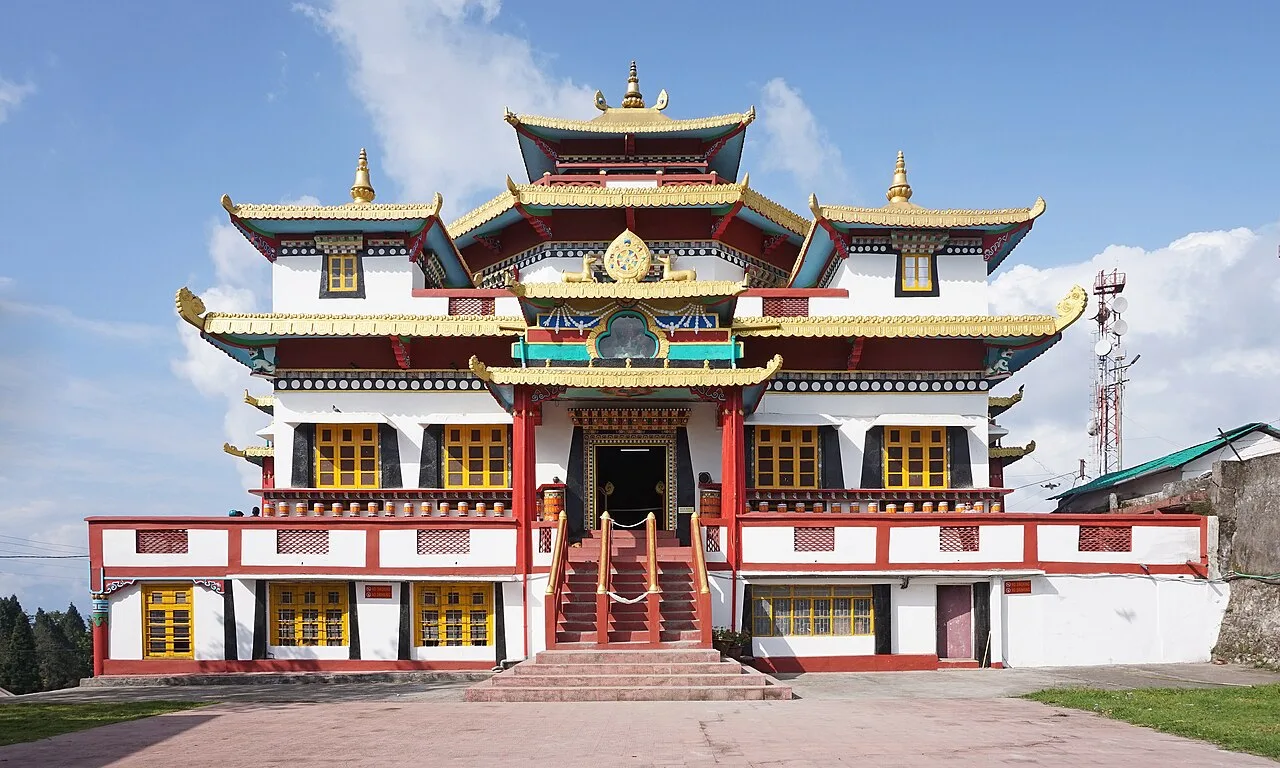
Zang Dhok Palri Phodang
Zang Dhok Palri Phodang is a Nyingma Buddhist monastery on Durpin Hill in Kalimpong. Visitors come to see its historic religious setting and collection of Tibetan Buddhist texts, including the Kangyur.
Key facts · verified by Ghumoopedia editors
- Type of place
- Temple / pilgrimage site
- Best time to visit
- October to March for the plains and coast; March to May and October to December for the Darjeeling hills
- Nearest railway station
- Darjeeling (toy train) · about 20 km (straight line)
- Nearest airport
- Bagdogra Airport (Siliguri) · about 40 km (straight line)
- Verified
- 21 Nov 2026
Plan a trip from Zang Dhok Palri Phodang — a day-by-day route through places nearby.
On Durpin Hill in Kalimpong district, West Bengal, Zang Dhok Palri Phodang is a Nyingma Buddhist monastery established by Dudjom Rinpoche in 1957. It was built where he lived during his exile from Tibet. The monastery represents Guru Rinpoche’s palace on the Glorious Copper-Coloured Mountain and is widely known as Durpin Monastery. Dudjom Rinpoche began a series of major Nyingma lineage teachings for Tibetan exile communities at the monastery in 1961. He left Kalimpong for Nepal in 1975, and the Dalai Lama consecrated the monastery in 1976. Its collection includes rare Tibetan Buddhist works, among them texts linked to Nyingma lineages. Dudjom Rinpoche had brought these texts to Sikkim; after China’s invasion of Tibet in 1949–1950, they were moved to Kalimpong. The holdings also include 108 volumes of the Buddhist Kangyur translated into Tibetan. Dudjom Rinpoche was also given Jangsa Dechen Choling Monastery in Kalimpong, where he trained lamas and students. Its Jangsa Gompa was built in 1692 by Bhutan’s government, during Bhutan’s control of Kalimpong. In the 1960s, Bhutan’s Queen Mother Choying Wangmo presented the gompa to Dudjom Rinpoche. West Bengal stretches from the Himalayan tea gardens of Darjeeling to the mangrove delta of the Sundarbans, with Kolkata's colonial architecture, the terracotta temples of Bishnupur, Tagore's Santiniketan and the Nawabi heritage of Murshidabad. The plains are hot and humid from March to June, receive heavy monsoon rain from June to September and are pleasant from November to February; the Darjeeling hills are cool year-round and cold in winter, and the coast and Sundarbans can be hit by cyclones in May and October–November. The usual best time to visit is October to March for the plains and coast; March to May and October to December for the Darjeeling hills. Timings, fees and access arrangements must be confirmed locally. For official information, see West Bengal Tourism at https://wbtourism.gov.in.
Why it matters
Zang Dhok Palri Phodang, also known as Zangdok Palri Monastery or Durpin Monastery, is an important Nyingma Tibetan Buddhist centre on Durpin Hill in Kalimpong. It is associated with Dudjom Rinpoche, a prominent Nyingma teacher who established it during his exile from Tibet, and with the preservation and transmission of Nyingma teachings among Tibetan exile communities. Its collection includes rare Buddhist texts and the 108-volume Kangyur, the Tibetan translation of the Buddhist canon. The monastery also gives Kalimpong a place in the religious history of Tibetan Buddhism in India. It is not identified here as a UNESCO World Heritage Site or an Archaeological Survey of India-protected monument; check with local authorities for its current management and visitor information.
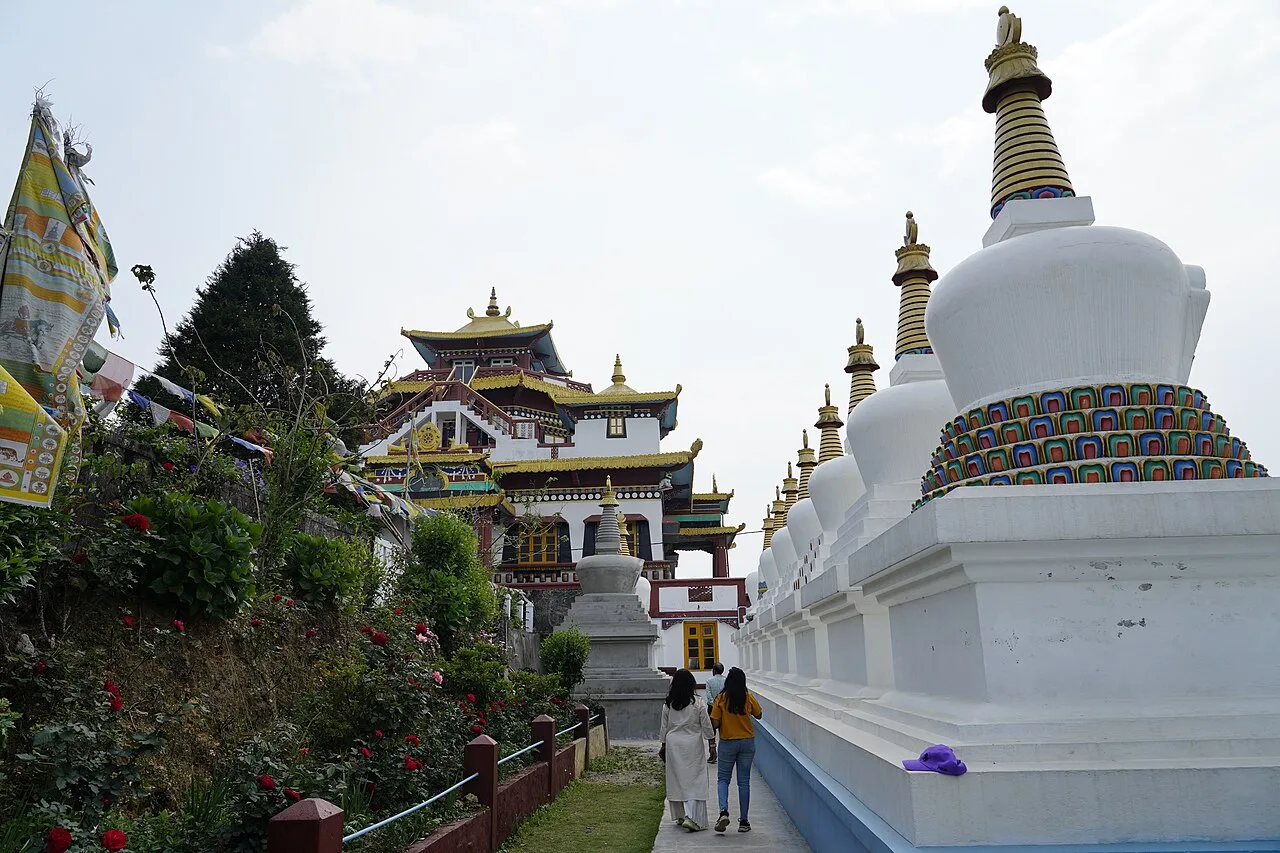
Dudjom Rinpoche established the monastery in 1957 on Durpin Hill, at the place where he had settled after leaving Tibet. Its name refers to Zangdok Palri, the Glorious Copper-Coloured Mountain associated with Guru Rinpoche. The monastery became a centre for Nyingma teachings and for the safekeeping of religious texts. In 1961, a series of significant Nyingma lineage transmissions given by Dudjom Rinpoche to Tibetan exile communities was first held here. Texts that he had brought into Sikkim were later moved to Kalimpong after China’s invasion of Tibet in 1949–1950; the collection includes the 108 volumes of the Kangyur. Dudjom Rinpoche left Kalimpong for Nepal in 1975. The following year, the visiting Dalai Lama consecrated the monastery, further establishing its religious significance. Dudjom Rinpoche was also given Jangsa Dechen Choling Monastery in Kalimpong, where he trained lamas and students. Jangsa Gompa has a separate history: it was built in 1692 under Bhutanese rule and was gifted to Dudjom Rinpoche by Bhutan’s Queen Mother Choying Wangmo in the 1960s. It should not be confused with Zang Dhok Palri Phodang.
Origin stories & folklore
The monastery’s name and spiritual identity draw on the Buddhist account of Zangdok Palri, the Glorious Copper-Coloured Mountain, understood as Guru Rinpoche’s pure realm or celestial palace. In Tibetan Buddhist belief, Guru Rinpoche—also known as Padmasambhava—is closely associated with the establishment of Buddhism in Tibet. The monastery is said to represent this sacred abode, making its setting and devotional imagery meaningful to practitioners. These are religious beliefs and symbolic associations, rather than claims about a historical building on the mountain. Visitors can ask a caretaker or knowledgeable local practitioner about the symbolism, while remembering that interpretations may differ among teachers and communities.
Architecture & design
Zang Dhok Palri Phodang is a Tibetan Buddhist monastery set on Durpin Hill. Its design expresses its religious purpose and its association with Zangdok Palri, the Glorious Copper-Coloured Mountain. The exterior is recognisably Tibetan in character, with vivid painted surfaces and traditional ornamental details; the overall form is arranged around spaces for worship and monastic practice. The principal interior to look for is the prayer hall, where religious images and painted decoration support meditation and ritual. The monastery’s position on the hill is also an important part of the visitor experience, though the approach and views depend on weather and visibility. Detailed information about the building’s structural materials, construction techniques or later restoration is not established in the available guide, so visitors should avoid assuming that every visible feature is original to the 1957 foundation.
Important objects & sculptures
The monastery is known for its religious library, including rare Tibetan Buddhist and Nyingma lineage texts, as well as the 108 volumes of the Kangyur. These books are significant as a preserved body of scripture and teaching, not simply as display objects; access to the collection may be restricted. In the prayer spaces, visitors may encounter Buddhist images and devotional artwork associated with Guru Rinpoche and the Nyingma tradition. Look carefully at painted details and symbolic decoration where visitors are permitted to do so. Do not touch books, images, offerings or ritual objects, and ask before entering areas beyond the public worship spaces.
Religious significance
The monastery belongs to the Nyingma school of Tibetan Buddhism and is associated with Dudjom Rinpoche and the teachings of Guru Rinpoche, or Padmasambhava. For practitioners, it is a place of prayer, study, meditation and lineage transmission, as well as a centre connected with the preservation of sacred texts. Monastic and community worship may include chanting, offerings and other rituals; the exact practice and whether visitors may observe can vary. Those attending should remain quiet and follow the instructions of monks or caretakers. Visitors of other faiths or no faith are generally best received as respectful observers, not as an audience entitled to enter every room or photograph every ceremony.
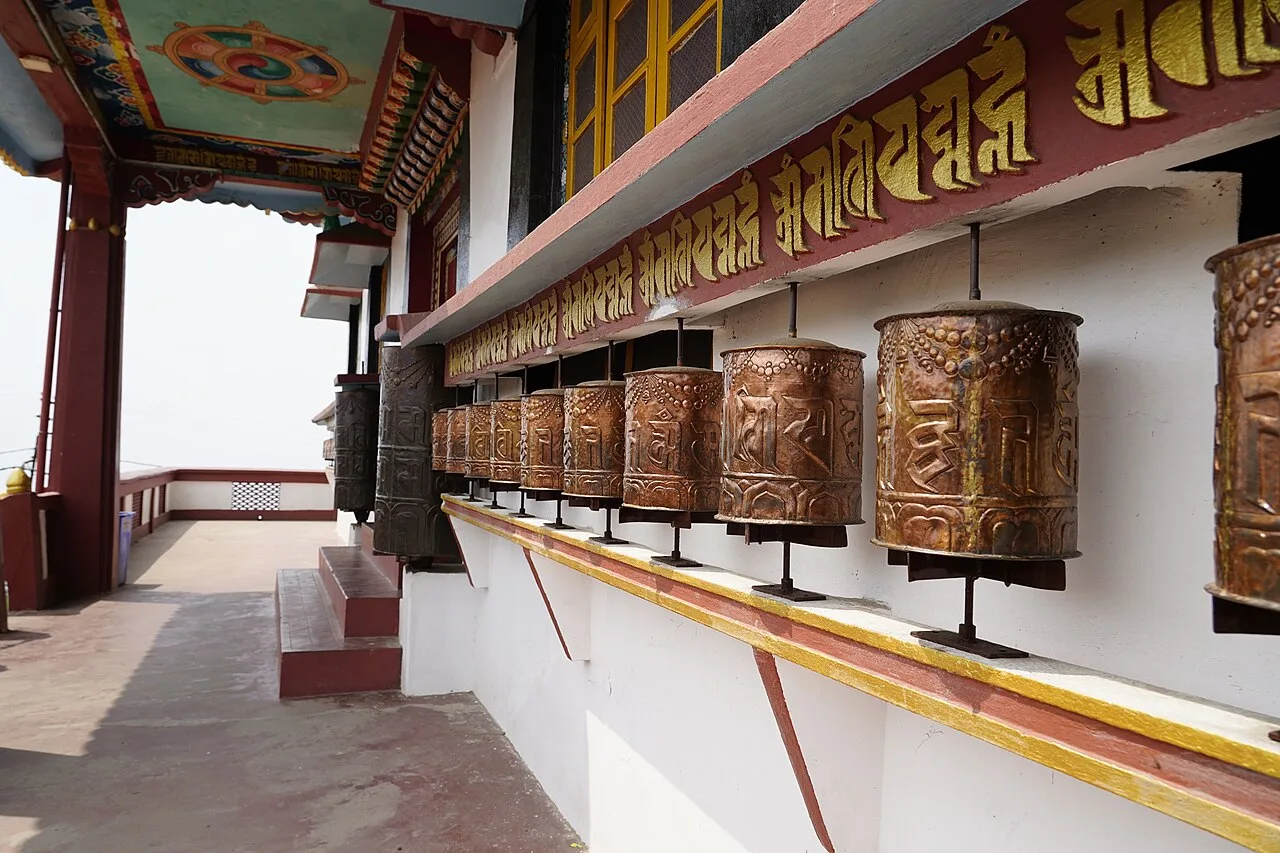
Visit Zang Dhok Palri Phodang with time to observe daily prayers and rituals respectfully. Follow the posted rules on footwear, photography, phones, head covering and dress, and avoid interrupting worshippers; popular temples may have separate queues, dress codes or mobile-phone deposit counters. Ask caretakers which areas are open to visitors, and beware of unofficial 'guides' or agents offering quick darshan for a fee. A comfortable itinerary is one main visit in the morning, a local meal at midday and a short nearby stop before an afternoon return. Use the district list on this site to find other places in Kalimpong, but check the route and its condition before combining stops. If a festival is on — such as Durga Puja, Kali Puja or the Poush Mela at Santiniketan — roads and stays can be busy, and the experience can be unforgettable. Leave no litter: many sites are protected by the communities around them.
Suggested itineraries
Half day: Travel from Kalimpong town to the monastery; allow about 1–2 hours for the visit and quiet observation; take a short stop at Durpin Dara if visibility and access permit; return to town for a meal. Full day: Visit the monastery in the morning; pause for a local meal in Kalimpong; spend the afternoon at Durpin Dara and, if time and road conditions allow, continue to Deolo Hill or another town attraction. Gentler option: Arrange a taxi to the nearest practical drop-off, limit the visit to the accessible public areas, and take breaks rather than walking between hilltop stops.
The monastery reflects the continuing presence of Tibetan Buddhist communities and traditions in Kalimpong. Tibetan religious practice, Nyingma teachings and the use of Tibetan scriptures are central to its identity. Visitors may encounter monks or worshippers in traditional dress, hear chanting during a service, or see prayer offerings, but these are part of living religious practice rather than staged performances. Tibetan, Nepali, Bengali and English may be heard in the wider area; which language is useful can depend on whom you meet. Courtesy, quiet conversation and asking before taking photographs help visitors engage respectfully. Do not assume that a ritual is open for public participation simply because it can be seen from a visitor area.
Festivals & events
Losar, the Tibetan New Year, is an important seasonal observance for Tibetan communities and may be marked by religious or community events; whether a public programme is held at the monastery varies, so check locally. Buddhist observances connected with the lunar calendar may also bring worshippers to the site. Kalimpong and the wider region celebrate other community and religious festivals, including Durga Puja, but these are not necessarily monastery events. Festival periods can make local roads and accommodation busier. Confirm dates and visitor arrangements with the monastery or local tourism sources rather than relying on a general festival calendar.
Local food in West Bengal includes macher jhol (fish curry), shorshe ilish (hilsa in mustard), kosha mangsho, luchi with alur dom, kathi rolls and phuchka in Kolkata, mishti doi, rosogolla and sandesh; in the Darjeeling hills, momos, thukpa, shaphaley and first-flush Darjeeling tea. Ask what is fresh that day; many small eateries cook a limited daily menu. Vegetarian travellers eat well across the state, and most towns also have fish and meat dishes. Remote sites may have no restaurant at all. Carry water and snacks, eat a proper breakfast before long drives, and ask your accommodation for a packed lunch if you are heading out early. If prasad or langar is offered, accept it according to local custom. Choose busy, clean places, drink sealed or filtered water, and carry your packaging back with you.
Shopping & local experiences
Kalimpong town is the best place nearby to browse for locally made crafts, Buddhist-themed souvenirs, woollen goods and regional food. Look for items from established shops or markets and ask about materials and provenance, especially for religious objects; sacred images and ritual items should be bought and used respectfully. Local bakeries and eateries offer an easy way to sample regional snacks and meals. There may not be a dependable shop at the monastery itself, so do not plan on purchasing souvenirs on site. Avoid buying wildlife products or anything that appears to have been taken from a protected place.
October to March for the plains and coast; March to May and October to December for the Darjeeling hills
The nearest principal railway station by straight-line distance is Darjeeling (toy train), roughly 20 km away. The nearest operating airport by straight-line distance is Bagdogra Airport (Siliguri), roughly 40 km away. These figures are calculated from map coordinates — actual road distance is longer. Howrah, Sealdah and Kolkata stations and Kolkata airport serve the south; New Jalpaiguri station and Bagdogra airport near Siliguri are the gateways to the Darjeeling hills and the Dooars. For the final leg, West Bengal Transport Corporation, North Bengal State Transport and South Bengal State Transport buses, private buses and shared jeeps in the hills link district towns. A private taxi gives more flexibility for remote sites. When comparing train, bus and flight, count the complete door-to-door time: a flight saves the most time only if the onward road transfer is short, while an overnight train can save a hotel night. Book your return before you leave, because seats fill quickly on weekends, festivals and holidays. Current train numbers, timings, return services and fares are not listed here; check IRCTC and NTES for trains and the airline's own schedule for flights. No permit is needed for Indian citizens to visit West Bengal. Entry to the Sundarbans Tiger Reserve needs a forest permit, usually arranged through a registered boat operator or the forest office at Sajnekhali or Canning; trekking in Singalila National Park (Sandakphu) needs an entry permit and a registered guide from Maneybhanjan. Durga Puja in October brings huge crowds to Kolkata, so book transport and stays well ahead.
Confirm onward and return timings on IRCTC / NTES, the state bus operator or your airline before travel. A dash means current timings or fares have not been verified.
Getting around
Kalimpong town is the practical base for reaching Durpin Hill. Local taxis are generally the most convenient option for the hill approach, and visitors can ask a driver or accommodation host about road conditions and a suitable drop-off point. Shared vehicles and local buses may serve parts of the wider area, but routes and availability should be checked locally. Walking is possible for some visitors, though the hill setting and uphill sections can make it tiring. Confirm where vehicles can wait or park, especially during busy periods, and arrange a return ride in advance if relying on a taxi.
Hours, tickets & permissions
Entry arrangements may depend on worship, monastic activities and which parts of the building are open to visitors. There may be rules about footwear, dress, photography, phones, or access to the prayer hall and library; follow notices and ask a caretaker before entering. Do not assume that services are held on a fixed public schedule or that every area is open. Confirm current visiting hours, any entry requirements and any applicable fees with the monastery’s managing authority or a reliable local tourism office before setting out.
Facilities
Facilities at the monastery may be limited and can change with the day’s activities. Toilets, drinking water, food stalls, seating and visitor information are not guaranteed on site; check locally and carry water and any essentials. Kalimpong town is a better place to find meals, shops, cash services and accommodation. Parking or a vehicle waiting area may be available nearby, but capacity and access should be confirmed with a driver. There is no basis here to promise an official guide service, so ask the monastery or a trusted local tourism office about guidance rather than accepting unsolicited offers.
Accessibility
The hilltop setting means the approach may involve sloping roads, uneven surfaces or steps, and the amount of walking depends on where a vehicle can stop. Strollers may be difficult to use over uneven ground. Older visitors and anyone with limited mobility may find the uphill approach tiring, so consider arranging a taxi close to the visitor entrance, allowing extra time and asking locally about the route before travelling. Shade and sheltered resting places can vary, and wet weather may make walking surfaces more challenging.
No permit is needed for Indian citizens to visit West Bengal. Entry to the Sundarbans Tiger Reserve needs a forest permit, usually arranged through a registered boat operator or the forest office at Sajnekhali or Canning; trekking in Singalila National Park (Sandakphu) needs an entry permit and a registered guide from Maneybhanjan. Durga Puja in October brings huge crowds to Kolkata, so book transport and stays well ahead. Carry a photo ID at all times and save the emergency number 112 and your accommodation's contact offline. Watch your belongings in crowds and on public transport, and follow posted instructions.
Visitor rules
Wear modest clothing suitable for a place of worship and remove footwear where instructed. Keep voices low, silence phones during prayers and follow signs or directions from monks and caretakers. Ask before entering rooms that appear private or restricted, and do not touch religious objects, books or offerings. Photography may be limited inside or during worship, so check before taking a camera or phone out. Avoid littering and reduce single-use plastic; carry rubbish away if bins are unavailable. Do not interrupt prayers or approach worshippers for photographs without permission.
Photography
The monastery’s hilltop setting can offer pleasant exterior views in clear weather, while morning or late-afternoon light may bring out painted details without the harsher midday glare. Visibility changes with cloud and mist, so allow for flexible plans. Photography inside, near sacred images or during prayers may be restricted; ask first and obey notices. Never photograph worshippers at close range without consent. Drone use can be subject to aviation, local and religious-site restrictions, so do not fly one without checking the relevant permissions. Avoid blocking paths or worship spaces while taking pictures.
Choose a stay by the full journey to Zang Dhok Palri Phodang, not just the district name. Darjeeling, Kalimpong and Kurseong offer hotels and family homestays; in smaller hill villages, homestays are the main option and should be booked ahead. In the hills, check heating, hot water and power backup, and expect cold nights from November to February. Book in advance for weekends, festivals and the peak season (October to March for the plains and coast; March to May and October to December for the Darjeeling hills). Confirm the exact location, meals included, check-in time and cancellation terms in writing. Avoid sending money to unverified contacts or touts at stations. Carry some cash, as card and digital payments can be unreliable in remote areas.
Durpin Dara, also called Durpin Hill viewpoint, is a natural companion to the monastery visit when visibility and access are good. Kalimpong town offers local markets and historic buildings, while Deolo Hill is another well-known viewpoint in the district. Jangsa Dechen Choling Monastery is a separate religious site with its own history, and Tharpa Choling Monastery is another Buddhist monastery in Kalimpong. Choose one or two nearby stops rather than overloading a half-day visit.
For couples, Zang Dhok Palri Phodang rewards a slow pace: arrive early for soft light and fewer crowds, share a local meal and keep the evening free. A toy-train ride in the Darjeeling hills, a boat on the Hooghly at sunset or an evening of adda over tea in Kolkata makes the trip memorable. Public displays of affection can be frowned upon in conservative communities and at religious sites, so be discreet. Keep a buffer in your itinerary, because weather and road conditions can delay plans.
Q: How much time should I allow for a visit? A: Allow about one to two hours at the monastery, with extra time for travel up Durpin Hill or a nearby viewpoint. Q: When is a good season to visit? A: October to December is generally pleasant for the Darjeeling hills; March to May can also be suitable. Weather and visibility vary, and winter can be cold. Q: Is there an entry fee or a fixed visiting schedule? A: Check with the monastery or a local tourism office before visiting. Q: Can children or elderly visitors visit? A: Yes, but keep children quiet in worship areas. The hill approach and possible steps may be tiring for some elderly visitors; arrange a vehicle close to the entrance and check access conditions. Q: Where should I stay nearby? A: Kalimpong town is the most practical base, with accommodation and food options. Confirm availability and transport arrangements locally, especially during holidays and festivals.
Be the first to share photos, stories, advice or a helpful contact for Zang Dhok Palri Phodang.
Loading…