
Prayagraj Kumbh Mela at the Triveni Sangam
Where the Ganga and Yamuna meet the unseen Saraswati — Maha Kumbh held 13 January – 26 February 2025; the Magh Mela returns every winter.
Overview
Maha Kumbh 2025 · Held — official dates
Coming up at the Sangam
- Magh Mela (every year): January – February; dates set each year by the Prayagraj Mela Authority
- Ardh Kumbh: Expected in 2031
- Purna (full) Kumbh: Expected around 2037
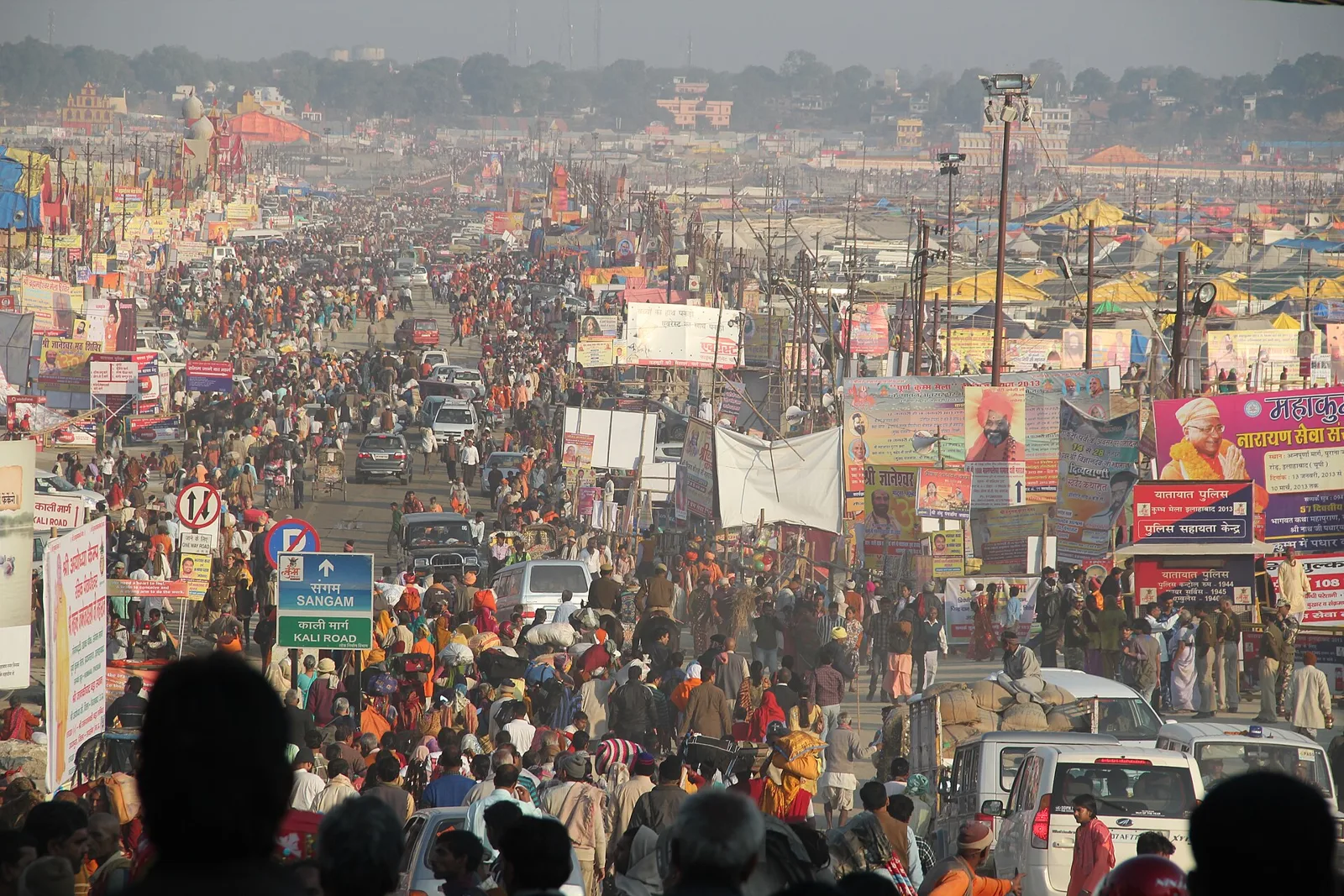
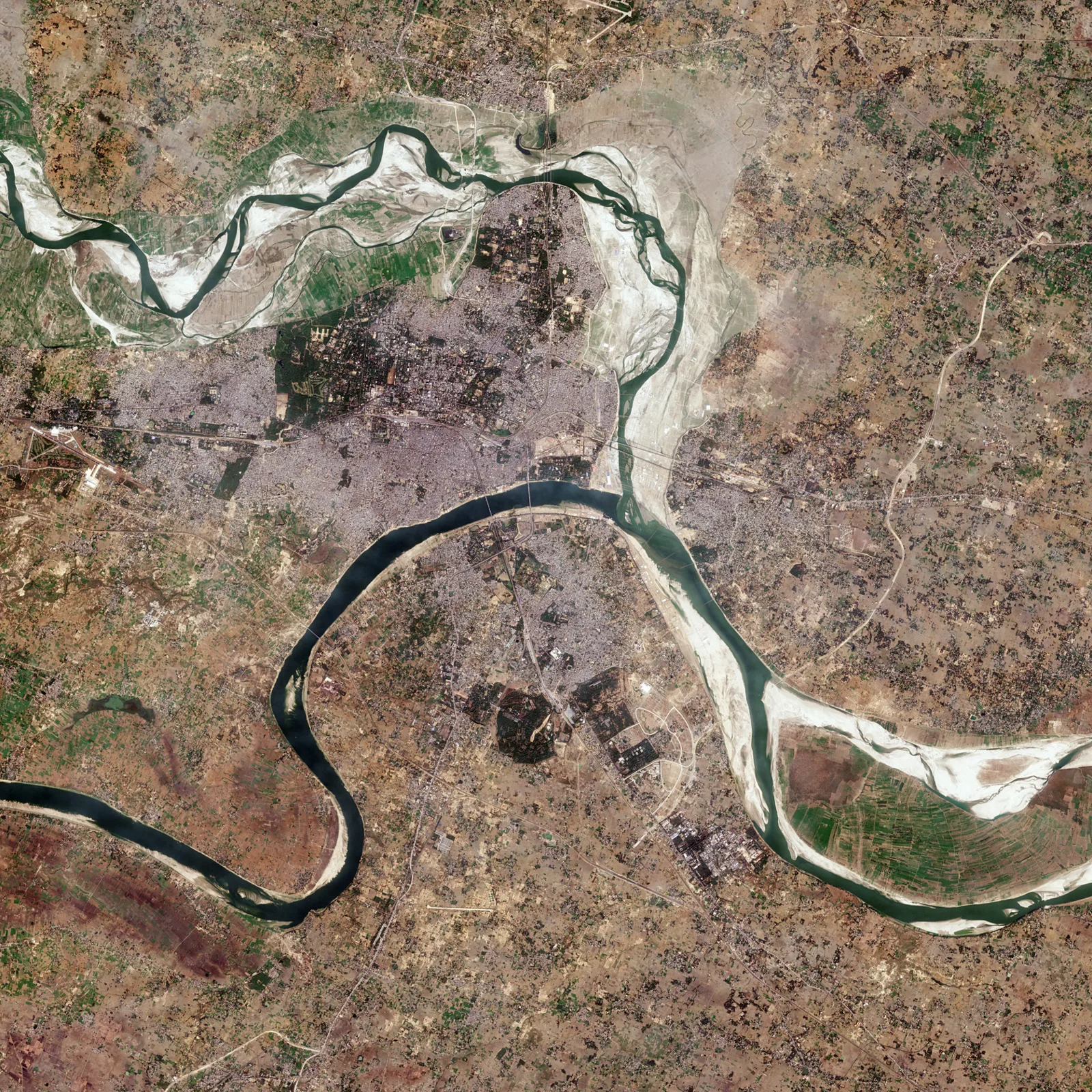
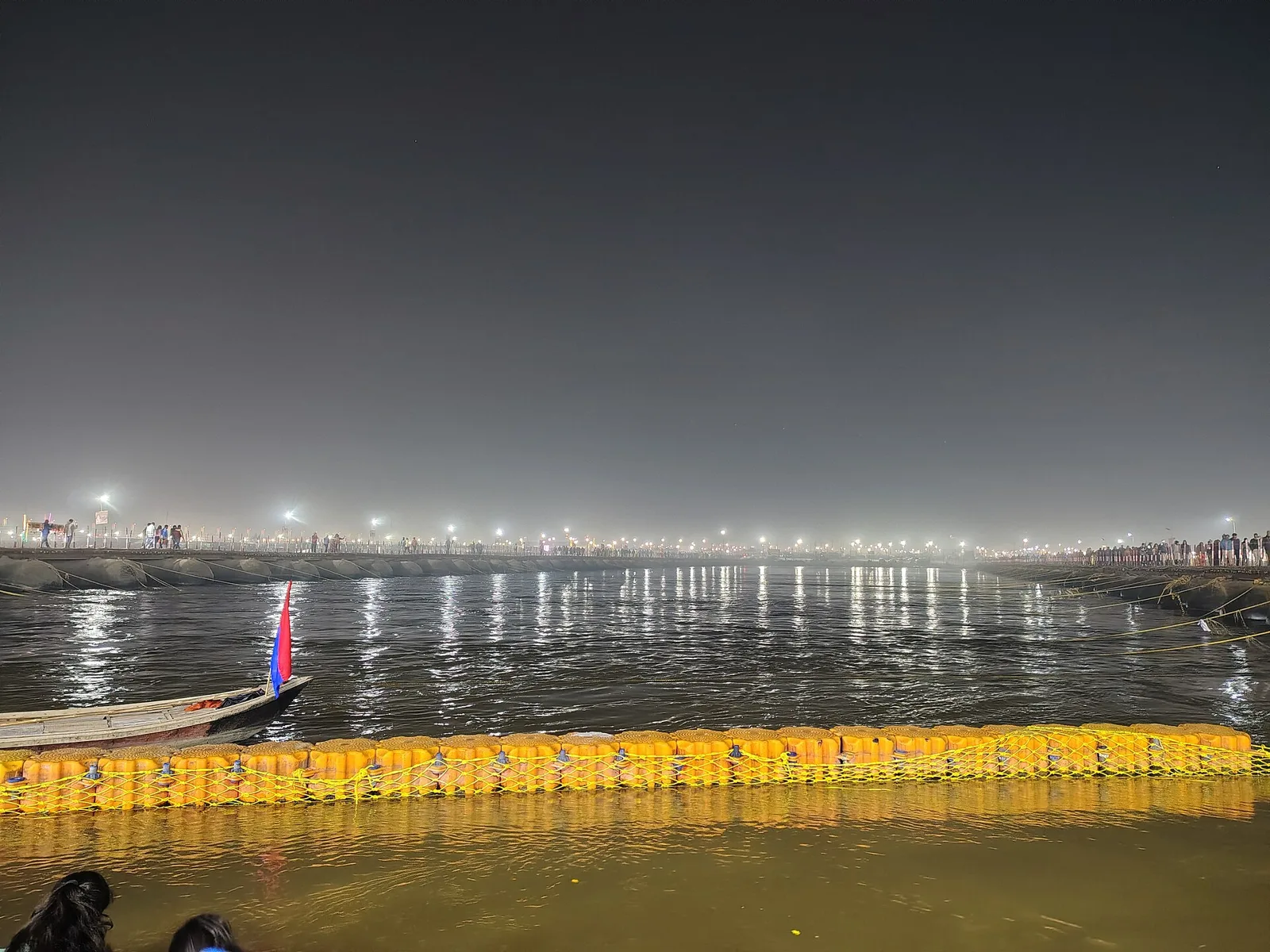
Prayagraj — the old Allahabad — is called Tirtharaj, the king of pilgrimage places, because of the Triveni Sangam: the point where the muddy Ganga and the greener Yamuna meet, joined in belief by the invisible Saraswati. Every Kumbh here is held on the vast sandbanks around that meeting point, which the river leaves dry in winter, so a tent city the size of a town is built on the floodplain each time.
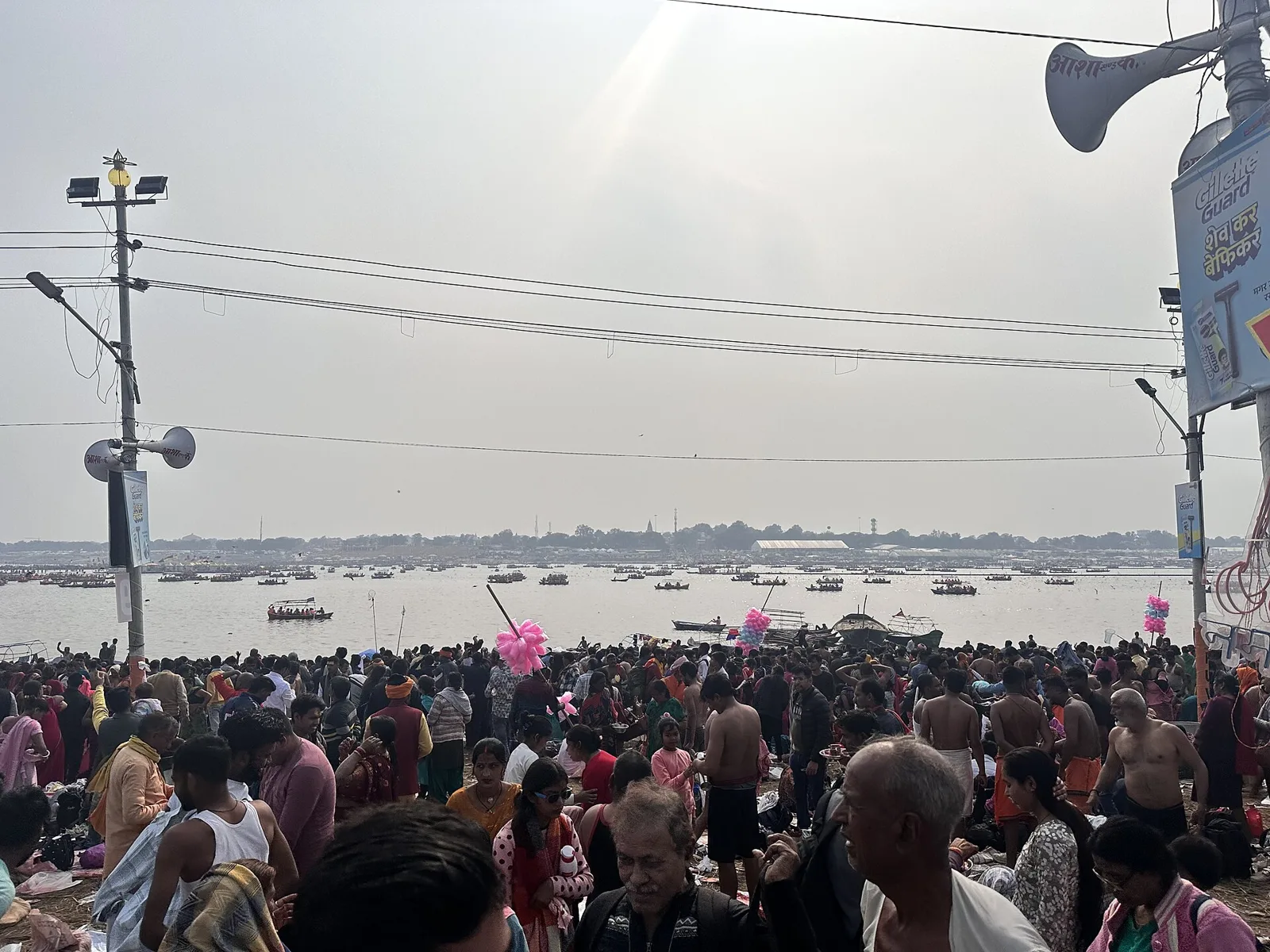
Prayagraj holds a gathering every single year — the Magh Mela of January and February — an Ardh (half) Kumbh about every six years and a full Kumbh every twelve. The 2025 gathering, called the Maha Kumbh, ran from Paush Purnima on 13 January to Mahashivratri on 26 February 2025, and the Uttar Pradesh government put total attendance at over 66 crore — the largest recorded human gathering. The next Ardh Kumbh at the Sangam is expected in 2031, and the next full Kumbh around 2037; neither has dates yet.
- Maha Kumbh: 13 Jan – 26 Feb 2025 (held)
- Triveni Sangam, Prayagraj
- Prayagraj Junction (North Central Railway)
- Prayagraj (Bamrauli) airport; Varanasi & Lucknow
- Emergency: 112
Maha Kumbh 2025 snan dates — and what comes next
Held — official dates
Mon, 13 January 2025 — Paush Purnima — the mela opens
Kalpavasis begin their month on the riverbank.
Tue, 14 January 2025 — Makar Sankranti — first Amrit Snan
The 13 akharas' first royal bath; about 3.5 crore people bathed that day by the Ministry of Culture's count.
Wed, 29 January 2025 — Mauni Amavasya — second Amrit Snan
The biggest bathing day. A crowd crush near the Sangam before dawn killed 30 people, according to the state government.
Mon, 3 February 2025 — Basant Panchami — third Amrit Snan
The last royal bath of the akharas.
Wed, 12 February 2025 — Maghi Purnima
Kalpavas ends; many families leave after this bath.
Wed, 26 February 2025 — Mahashivratri — the mela closes
Over 1.5 crore people bathed on the final day; total attendance crossed 66 crore.
These six bathing days were declared by the Prayagraj Mela Authority with the Akhil Bharatiya Akhara Parishad in July 2023. The three Amrit Snans — the akharas' royal baths, formerly called Shahi Snan — fall on Makar Sankranti, Mauni Amavasya and Basant Panchami, the pattern every Prayagraj Kumbh follows because the mela is tied to the Sun entering Capricorn in the month of Magh.
If you are planning a visit now, the Sangam's next big gatherings are the yearly Magh Mela (January–February, dates set by the mela authority each year), the Ardh Kumbh expected in 2031 and the full Kumbh expected around 2037. We will add their dates here only once they are announced.
What comes next
- Magh Mela (every year)January – February; dates set each year by the Prayagraj Mela Authority· Expected by the traditional cycle — not yet announced
- Ardh KumbhExpected in 2031· Expected by the traditional cycle — not yet announced
- Purna (full) KumbhExpected around 2037· Expected by the traditional cycle — not yet announced
Religious significance and beliefs
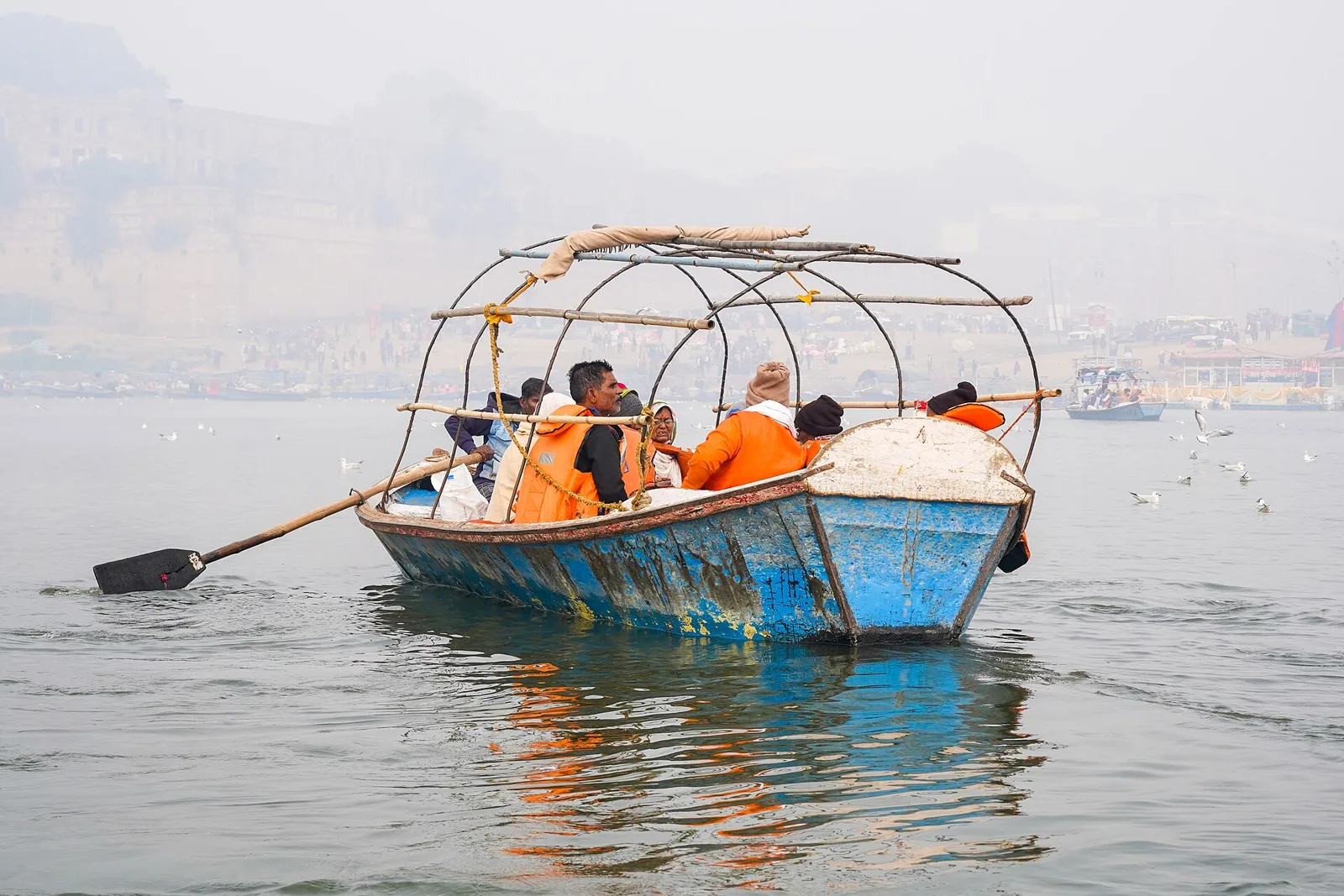
Tirtharaj and the confluence. The Puranas call Prayag the place of Brahma's first sacrifice (pra-yaga) after creating the world, and a late appendix to the Rigveda already praises bathing where the 'white and dark rivers' meet. The Sangam is believed to wash away sins more powerfully than any single river, which is why so many come here to bathe, to shave their heads and to immerse the ashes of their dead.
The drop of amrit. In the story of the Samudra Manthan, drops from the pot of nectar fell at four places as the gods fled with it — Prayag, Haridwar, Ujjain and Nashik. Prayag's Kumbh is held when Jupiter is in Taurus (Vrishabha) and the Sun in Capricorn (Makara), which places it in the winter month of Magh.
Kalpavas. Prayagraj's own tradition: families vow to live by the river for a whole month, from Paush Purnima to Maghi Purnima, in simple tents — bathing three times a day, eating one meal, sleeping on the ground and spending the day in prayer, katha and charity. Many households have kept the vow for generations, returning to the same priest (panda) each year; the pandas' flags and symbols are how pilgrims find them on the vast sands.
Akshayavat — the undying banyan. Inside the Allahabad Fort stands the Akshayavat, the 'indestructible banyan' that the Puranas say survives even the dissolution of the world. Long closed to the public, it was opened for darshan before the 2019 Ardh Kumbh and is now part of the Kumbh pilgrimage with the underground Patalpuri temple beside it.
Why Prayagraj hosts the biggest Kumbh
No other Kumbh site has room like Prayagraj. When the monsoon floods recede, the Ganga and Yamuna leave several thousand hectares of flat sand around the Sangam, and the administration lays out sectors, pontoon bridges, roads, power lines and water pipes on it — a temporary city that is dismantled again before the next rains. That space, the winter weather and the Kalpavas tradition are why the Prayagraj melas draw the largest crowds of all four.
The city also has deep roots in the Ramayana and Mahabharata — Rama is said to have stayed at the ashram of the sage Bharadwaj here and crossed the Ganga at Shringverpur upstream — and later became a centre of the freedom struggle, with Anand Bhavan, the Nehru family home, a short ride from the Sangam.
Sacred sites around the Sangam
Triveni Sangam
Boats take you out from the Kila (fort) ghats to bathing platforms moored at the meeting point, where the two colours of water can be seen side by side. Agree the fare before you get in; on big bathing days boats may be restricted.
Bade (Lete) Hanuman Mandir
A large reclining image of Hanuman below ground level near the fort. The Ganga is said to rise each year to touch the image, after which the temple floods; pilgrims visit it before or after bathing.
Akshayavat and Patalpuri
The undying banyan and the underground temple inside the Allahabad Fort, entered from the riverside. Open for darshan during the mela season; carry ID as the fort is an army area.
Shri Adi Shankar Vimana Mandapam
A tall South Indian–style temple on the Ganga bank by the fort, with views over the mela grounds from its upper floors.
Alop Shankari Devi
A Shakti shrine where, instead of an image, devotees worship a wooden cradle (doli) — the goddess is said to have 'disappeared' here.
Nagvasuki Temple
The serpent-king Vasuki's temple on the Ganga at Daraganj — Vasuki was the rope in the churning of the ocean, which ties the shrine to the Kumbh story.
History and past melas
- c. 644 CEThe Chinese pilgrim Xuanzang describes King Harshavardhana distributing his treasury at a great assembly at Prayag where the two rivers meet — the earliest outside account often linked to the mela.
- 1583Akbar builds the fort at the Sangam and renames the city Ilahabas, later Allahabad.
- 1954The first Kumbh after independence. On Mauni Amavasya, 3 February, a stampede near the Sangam killed hundreds of pilgrims — the worst disaster in the mela's history, which shaped crowd rules for decades.
- 2013Maha Kumbh, 14 January – 10 March. On 10 February a crush at Allahabad railway station on Mauni Amavasya killed 36 people.
- 2017UNESCO inscribes the Kumbh Mela on its list of the Intangible Cultural Heritage of Humanity.
- 2019Ardh Kumbh, 15 January – 4 March; the city's name changes to Prayagraj the year before, and the Akshayavat is opened for darshan.
- 2025Maha Kumbh, 13 January – 26 February: over 66 crore visitors by the state government's count, three Amrit Snans and a fatal crowd crush on Mauni Amavasya.
How the Prayagraj mela is run
Each Kumbh is organised by the Prayagraj Mela Authority with the Uttar Pradesh government, police, Indian Railways and the Akhil Bharatiya Akhara Parishad. The mela ground is split into numbered sectors linked by temporary roads and pontoon bridges over the Ganga; each sector has its own police station, hospital, fire post and lost-and-found centre. For 2025 the Ministry of Culture noted a 'tent city' at Arail across the Yamuna for visitors, and the railways ran special trains from stations around the city.
On the three Amrit Snan days the akharas have the right of way. Their processions leave the camps before dawn in a fixed order, and ordinary pilgrims are routed to other ghats along the riverfront — the administration asks people to bathe at the ghat nearest them rather than push towards the Sangam nose.
Prayagraj Kumbh map guide: ghats, temples and stations
- 1Triveni Sangam · Sacred bathing place
The meeting point of the Ganga and Yamuna; boats go out from the fort ghats. Directions - 2Sangam Ghat (fort side) · Bathing ghat
Main bathing front below the fort, closest to the Sangam on foot. Directions - 3Arail Ghat · Bathing ghat
South bank of the Yamuna, facing the Sangam; tent cities are usually set up behind it. Directions - 4Bade Hanuman Mandir · Temple / shrine
Reclining Hanuman beside the fort. Directions - 5Akshayavat Temple · Temple / shrine
The undying banyan and Patalpuri, inside the fort. Directions - 6Allahabad Fort · Landmark
Akbar's fort at the Sangam (army area; limited access). Directions - 7Shri Adi Shankar Vimana Mandapam · Temple / shrine
Temple on the Ganga bank with views over the mela ground. Directions - 8Alop Shankari Devi Mandir · Temple / shrine
Shakti shrine with the sacred cradle. Directions - 9Nagvasuki Temple · Temple / shrine
Temple of the serpent king Vasuki at Daraganj. Directions - 10Anand Bhavan · Landmark
Nehru family home and museum. Directions - 11Jhusi · Landmark
Ancient Pratishthanpur on the east bank; many camps spread here. Directions - 12Prayagraj Junction · Railway station
Main station (North Central Railway); special trains start here. Directions - 13Prayagraj Rambagh · Railway station
City station on the Varanasi line. Directions - 14Prayag Junction · Railway station
Northern station towards Lucknow and Faizabad. Directions - 15Prayagraj Sangam · Railway station
Small station at Daraganj, closest to the mela ground. Directions - 16Jhusi station · Railway station
East bank station for the Jhusi side of the mela. Directions - 17Prayagraj Chheoki Junction · Railway station
South of the Yamuna at Naini; serves the Arail side. Directions - 18Prayagraj Airport (Bamrauli) · Airport
About 12 km west of the city centre. Directions
The mela's sectors, pontoon bridges and camps are laid out afresh for each gathering, so only permanent ghats, temples and stations are pinned.
How to reach Prayagraj
By train
Prayagraj Junction is the main railhead on the Delhi–Howrah main line, with Prayagraj Rambagh, Prayag Junction, Prayagraj Sangam (Daraganj), Jhusi, Naini and Chheoki serving different sides of the city. During a Kumbh the railways run special trains and send each direction's passengers to a particular station — check your ticket for the station, not just the city.
By air
Prayagraj airport at Bamrauli has domestic flights; Varanasi (about 120 km) and Lucknow (about 200 km) have more connections and are linked by road and rail.
By bus
UPSRTC buses connect Prayagraj with Varanasi, Lucknow, Kanpur, Rewa and Ayodhya. For a Kumbh, temporary bus stations are set up on the entry roads and shuttles run towards the mela gates.
By road, cab or taxi
Highways lead in from Varanasi, Kanpur, Lucknow, Rewa and Mirzapur. On bathing days private vehicles are stopped at parking areas on the edge of the mela, and the last few kilometres are on foot or by shuttle. Cabs and autos are easiest to find near the stations; agree fares before you start.
Where to stay and staying safe
The mela itself offers everything from free camps run by religious organisations to paid tents; book these and city hotels as early as you can, and expect prices to rise around the main bathing days. Stay in the sector you will bathe from rather than crossing the river on a peak day.
Winter mornings by the river are cold and foggy — carry warm layers for a pre-dawn bath, a towel and a change of clothes. Agree a meeting point (a sector number and a landmark) with your group, carry a printed contact card for every child and elder, and use the lost-and-found centres if separated. Emergency number: 112.
The four Kumbh Melas compared
Every Kumbh shares the story of the pot of amrit and the holy bath, but each has its own river, season and character. Follow the links for the full guide to each.
| Kumbh | River | Planetary sign | Season | Presiding deity | What makes it distinct | Last held | Next |
|---|---|---|---|---|---|---|---|
| Nashik–Trimbakeshwar | Godavari (Ramkund & Kushavarta) | Jupiter in Leo (Simha) | Monsoon — Shravan–Bhadrapad | Rama (Panchavati) and Trimbakeshwar Jyotirlinga | Two bathing sites 28 km apart: Vaishnavas at Ramkund, Shaivas at Kushavarta; river source on Brahmagiri. | 2015 (Jul–Sep) | 2027 Amrit Snans; Simhastha Oct 2026 – Jul 2028 |
| Ujjain | Kshipra (Shipra) | Jupiter in Leo (Simha) | Spring — Chaitra–Vaishakh | Mahakaleshwar Jyotirlinga | Began in the 18th century when Ranoji Shinde invited the Nashik akharas; main bath on Vaishakh Purnima. | 2016 (22 Apr – 21 May) | 27 Mar – 27 May 2028 (planned) |
| Prayagraj | Triveni Sangam — Ganga, Yamuna and the unseen Saraswati | Jupiter in Taurus, Sun in Capricorn (Magh) | Winter — Magh | Sangam itself; Bade Hanuman | Kalpavas tradition; annual Magh Mela, Ardh Kumbh every six years and the Maha Kumbh. | Maha Kumbh 13 Jan – 26 Feb 2025 (about 660 million visitors) | Ardh Kumbh expected 2031; Magh Mela every year |
| Haridwar | Ganga at Har ki Pauri | Jupiter in Aquarius (Kumbha) | Spring — Chaitra–Vaishakh | Ganga; Mansa Devi and Chandi Devi | Historically the original 'Kumbh' — the only one named after the sign Kumbha; Ganga enters the plains. | 2021 (1–30 Apr) | Ardh Kumbh 14 Jan – 20 Apr 2027 |
Photos of the Prayagraj Kumbh
Frequently asked questions
When was the Prayagraj Maha Kumbh 2025?
From Paush Purnima on 13 January to Mahashivratri on 26 February 2025, with Amrit Snans on 14 January (Makar Sankranti), 29 January (Mauni Amavasya) and 3 February 2025 (Basant Panchami).
When is the next Kumbh Mela in Prayagraj?
The next Ardh Kumbh at the Sangam is expected in 2031 and the next full Kumbh around 2037, following the six- and twelve-year cycle; no dates have been announced. The Magh Mela is held at the Sangam every year in January and February.
What is Kalpavas?
A month-long vow to live on the banks of the Sangam, usually from Paush Purnima to Maghi Purnima, bathing several times a day, eating one simple meal and spending the time in prayer, discourse and charity.
How many people attended the 2025 Maha Kumbh?
The Uttar Pradesh government reported more than 66 crore (660 million) visits over the 45 days.
Which station is closest to the Sangam?
Prayagraj Sangam station at Daraganj is the nearest, but most long-distance trains use Prayagraj Junction. During a Kumbh the railways assign stations by direction of travel, so check your ticket.
Is it safe to bathe at the Sangam?
Bathe only in the marked, barricaded areas, ideally on a day that is not an Amrit Snan, and go with someone who stays on the bank with your things. Elders, children and anyone unwell should avoid the main bathing days. Emergency number: 112.
Dates follow the Prayagraj Mela Authority's schedule as reported in July 2023 and the Prayagraj district administration; attendance figures are the Uttar Pradesh government's and the Ministry of Culture's. Map points come from public map records and Ghumoopedia's place guides. Last checked 19 November 2026. Timings can change — follow announcements on the ground.