
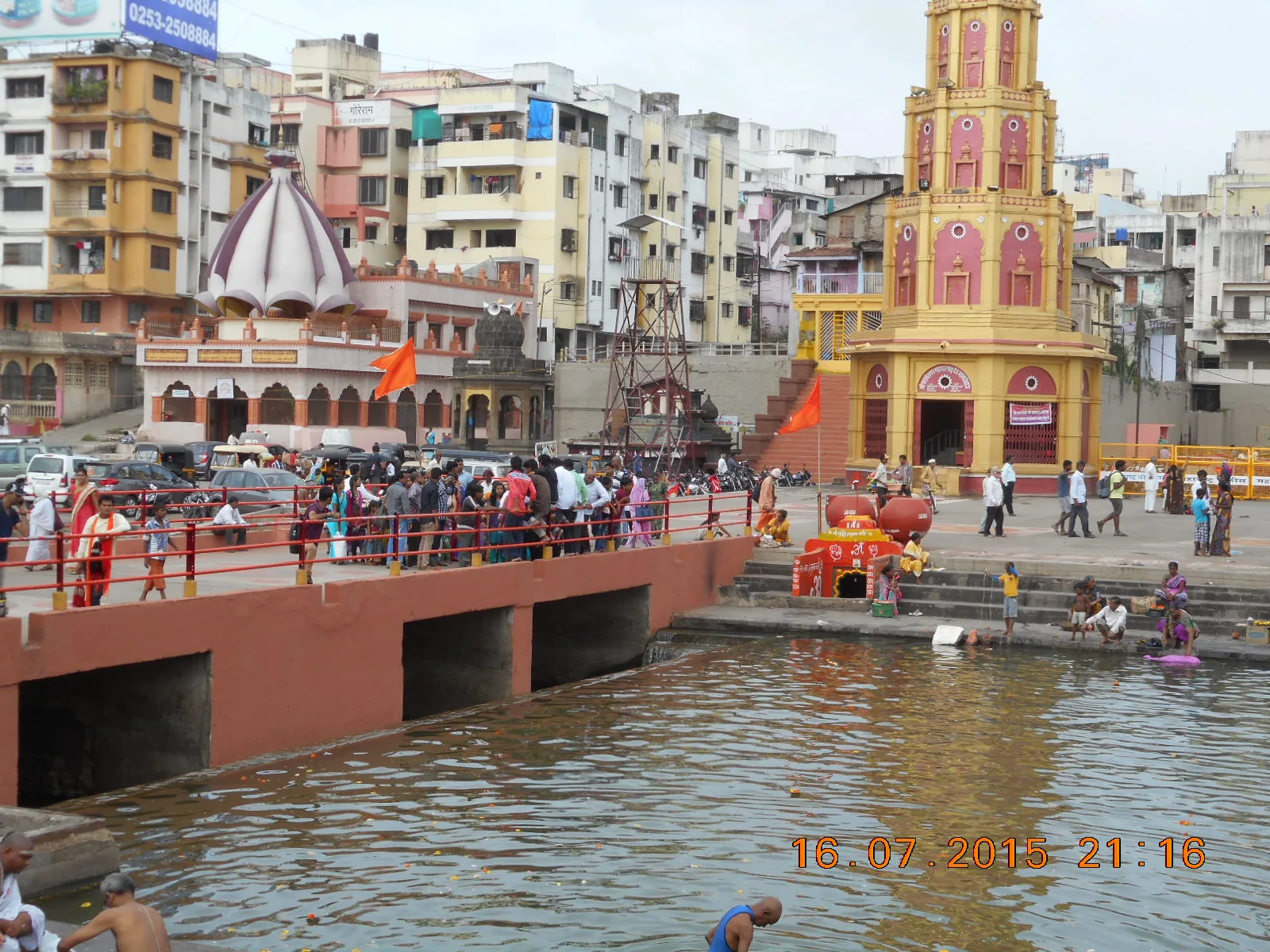
Nashik–Trimbakeshwar Simhastha Kumbh Mela 2027
Amrit Snan on 2 August, 31 August and 11–12 September 2027 — on the Godavari at Ramkund, Nashik and Kushavarta, Trimbakeshwar.
Overview
Next key date
Main mela period begins
Tue, 15 June 2027 · in 210 days
The Simhastha Kumbh is the twelve-yearly Kumbh Mela on the Godavari, held when Jupiter stands in the sign of Leo (Simha). It is the only Kumbh split between two places: the Vaishnava akharas bathe at Ramtirth (Ramkund) in Nashik's Panchavati, and the Shaiva akharas at Kushavarta Tirth in Trimbakeshwar, about 28 km away, beside one of the twelve Jyotirlingas and close to the river's source on Brahmagiri.
This Simhastha opened with the hoisting of the dharma flag on 31 October 2026 and closes on 24 July 2028. The crowds peak in the monsoon of 2027, when the main mela period runs from 15 June and the three Amrit Snans — the royal baths of the akharas, formerly called Shahi Snan — fall on 2 August, 31 August and 11–12 September. After this the next Nashik Simhastha will not come until 2039.
- 31 Oct 2026 – 24 Jul 2028
- Ramkund, Nashik · Kushavarta, Trimbakeshwar
- Nashik Road station (Central Railway)
- Nashik (Ozar) airport; Mumbai & Pune
- Emergency: 112
Amrit Snan (Shahi Snan) dates 2027 and the full snan calendar
Sat, 31 October 2026 · 12:02 PM — Dhwajarohan (flag hoisting)
Jupiter enters Leo; the dharma flag is raised and the Simhastha formally begins.
Tue, 15 June 2027 — Main mela period begins
Camps, ghats and visitor services open for the peak season.
Thu, 29 July 2027 — Nagar Pradakshina
The traditional procession around Nashik before the Amrit Snans; timing to be notified.
Mon, 2 August 2027 — First Amrit Snan
Somvati Amavasya (a new moon falling on a Monday) in Ashadh — the first great bathing day.
Tue, 31 August 2027 — Second Amrit Snan — the 'Mahakumbh Snan'
Shravan Amavasya, when the Sun, Moon and Jupiter all stand in Leo — regarded as the most meritorious day.
Sat, 11 September 2027 — Third Amrit Snan — Vaishnava akharas
Ramtirth (Ramkund), Nashik. Bhadrapad Shuddha Ekadashi (Parivartini Ekadashi).
Sun, 12 September 2027 — Third Amrit Snan — Shaiva akharas
Kushavarta Tirth, Trimbakeshwar. Vaman Dwadashi, the day after Ekadashi.
Mon, 24 July 2028 · 3:36 PM — Dhwajavatarana (flag lowering)
The flag comes down and the Simhastha concludes.
Why these days? On 2 August 2027 the new moon of Ashadh falls on a Monday (Somvati Amavasya), a day tradition ties to bathing, charity and rites for the ancestors. On 31 August, Shravan Amavasya, the Sun, Moon and Jupiter are all in Leo — the ideal combination described for the Nashik Kumbh, which is why it is called the Mahakumbh Snan. On 11 and 12 September, Parivartini Ekadashi and Vaman Dwadashi, the Vaishnavas bathe at Ramkund and the Shaivas at Kushavarta. Final timings are announced by the priests' association, the Akhara Parishad and the government.
Quieter bathing days. Besides the Amrit Snans, the almanac gives 65 auspicious bathing days (parvakal muhurat) at Ramtirth and 41 at Kushavarta. Choosing one of these means a calmer darshan and a safer snan — the best choice for elders, families with small children and anyone unwell.
Ramtirth (Ramkund), Nashik — 65 days
- Jul 202724, 29
- Aug 20272, 15, 17, 28, 31
- Sept 20275, 11, 26, 30
- Oct 202711, 15, 25
- Nov 202710, 13, 14, 24, 28
- Dec 20279, 27
- Jan 202826, 27, 28, 29, 30, 31
- Feb 20281, 2, 3, 4, 5, 6, 7, 8, 10, 20, 21, 25, 27
- Mar 20287, 21
- Apr 20285, 9, 24
- May 20285, 8, 20, 24, 25, 26, 27, 28, 29, 30, 31
- Jun 20281, 2, 3, 7, 18, 22
- Jul 20282, 6, 18
Kushavarta Tirth, Trimbakeshwar — 41 days
- Nov 20265, 6, 9, 20, 23, 24
- Jan 202715, 19, 21, 22
- Jul 20273, 4, 14, 18, 31
- Aug 20276, 9, 12, 16, 17, 23, 24, 28, 30
- Sept 20275, 15, 27, 29
- Oct 202714, 26
- Nov 202710, 13
- Mar 202821, 27
- Apr 20283, 7, 29
- May 20281
- Jul 20282, 6, 21
Religious significance and beliefs
The Samudra Manthan. The Vishnu Purana and the Bhagavata tell how the sage Durvasa's curse drained the gods of their splendour, and how gods and asuras churned the ocean of milk together — Mount Mandara as the churning staff, the serpent Vasuki as the rope and Vishnu, as the tortoise Kurma, holding the mountain on his back. First came the poison Halahal, which Shiva drank, turning his throat blue (Neelkanth); then the fourteen jewels; and at last Dhanvantari with the pot (kumbha) of amrit. As Indra's son Jayant fled with the pot, drops fell — or the pot was set down — at four places: Haridwar, Prayag, Ujjain and Nashik–Trimbakeshwar. When the planets return to that alignment, the rivers there are believed to carry the merit of amrit.
Why "Simhastha". Simha is Leo and stha means "standing in". The timing is fixed not by a calendar date but by Jupiter's position in the sky, which returns to Leo roughly once in twelve years. Ujjain also holds a Simhastha, but because of the Sun's position it falls in spring there, while Nashik's falls in the monsoon months of Shravan and Bhadrapad.
The holy bath. Every procession and calculation leads to one act: stepping into the river, taking water in the hands, making a sankalp (a spoken intention of who you are, where, when and why) and bathing. The Dharmashastras distinguish the daily bath, the occasional bath on days like Amavasya or an eclipse, and the bath taken for a wish; the Kumbh snan is mainly the second. It is followed by charity, japa, meditation and darshan of the saints. Some devotees see it as a path to moksha, others as purification, remembrance of the ancestors and gratitude.
Kalpavas. Some devotees and sadhus vow to live on the banks of the Godavari for the whole parvakal — bathing at fixed times, eating one simple meal a day and spending their time in japa, meditation and charity — the same tradition made famous by Prayagraj's Magh Mela.
The Godavari, Ganga of the South. Rising at Brahmagiri above Trimbakeshwar, the Godavari crosses the Deccan past Paithan, Nanded, Basar, Bhadrachalam and Rajahmundry to the sea at Antarvedi — a "cultural highway" joining Marathi, Telugu and other communities. In the story of the Kumbh the river is not a backdrop but the main character.
Why Nashik and Trimbakeshwar
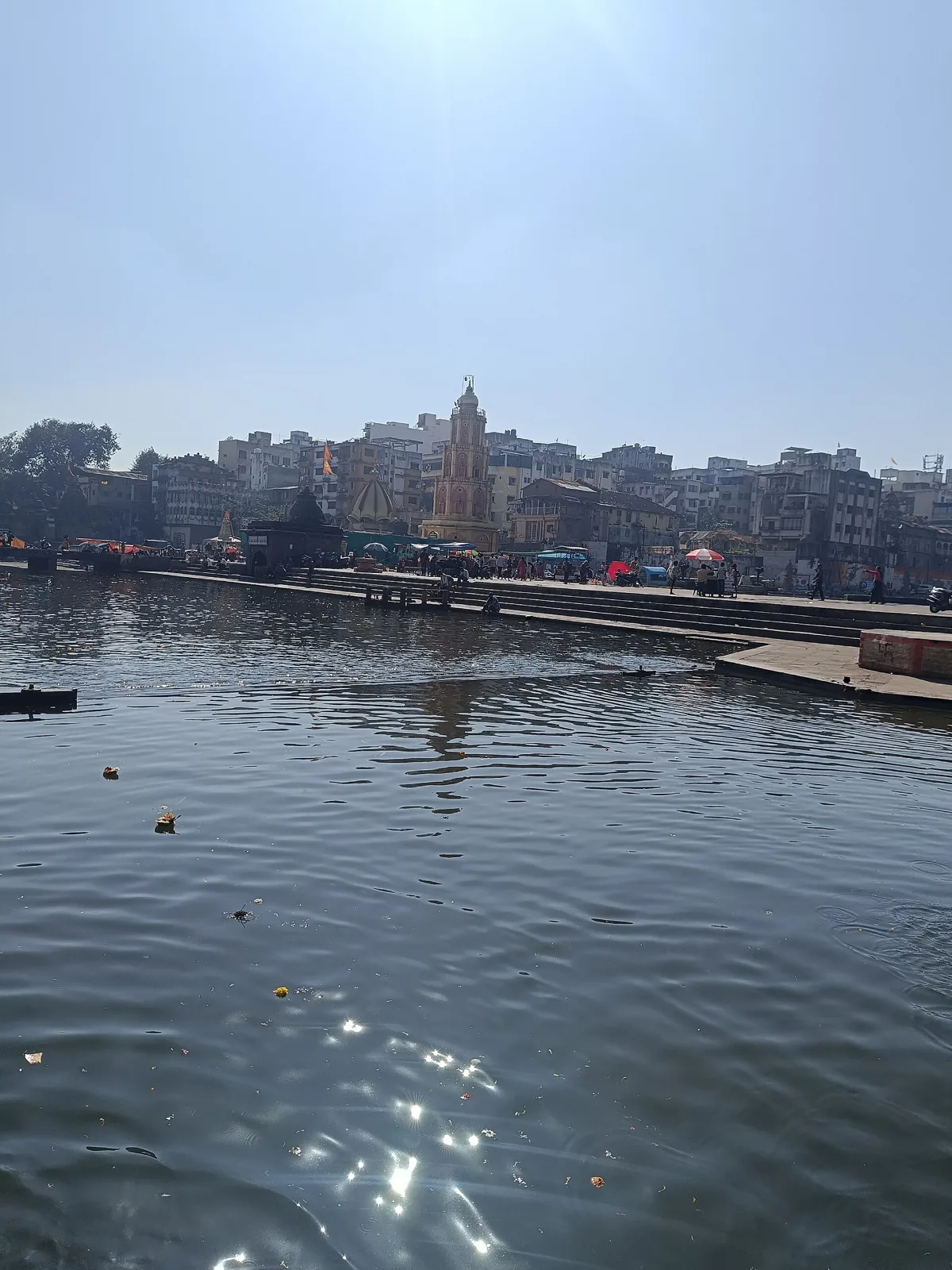
Nashik is a Ramayana land. In the Aranyakanda, after thirteen years of exile, Rama, Sita and Lakshmana settled at Panchavati on the Godavari on the advice of sage Agastya and built a leaf hut; Sita Gufa, Ramtirth, Tapovan and the Lakshman Rekha all carry that memory. That is why the Vaishnava akharas bathe at Ramtirth.
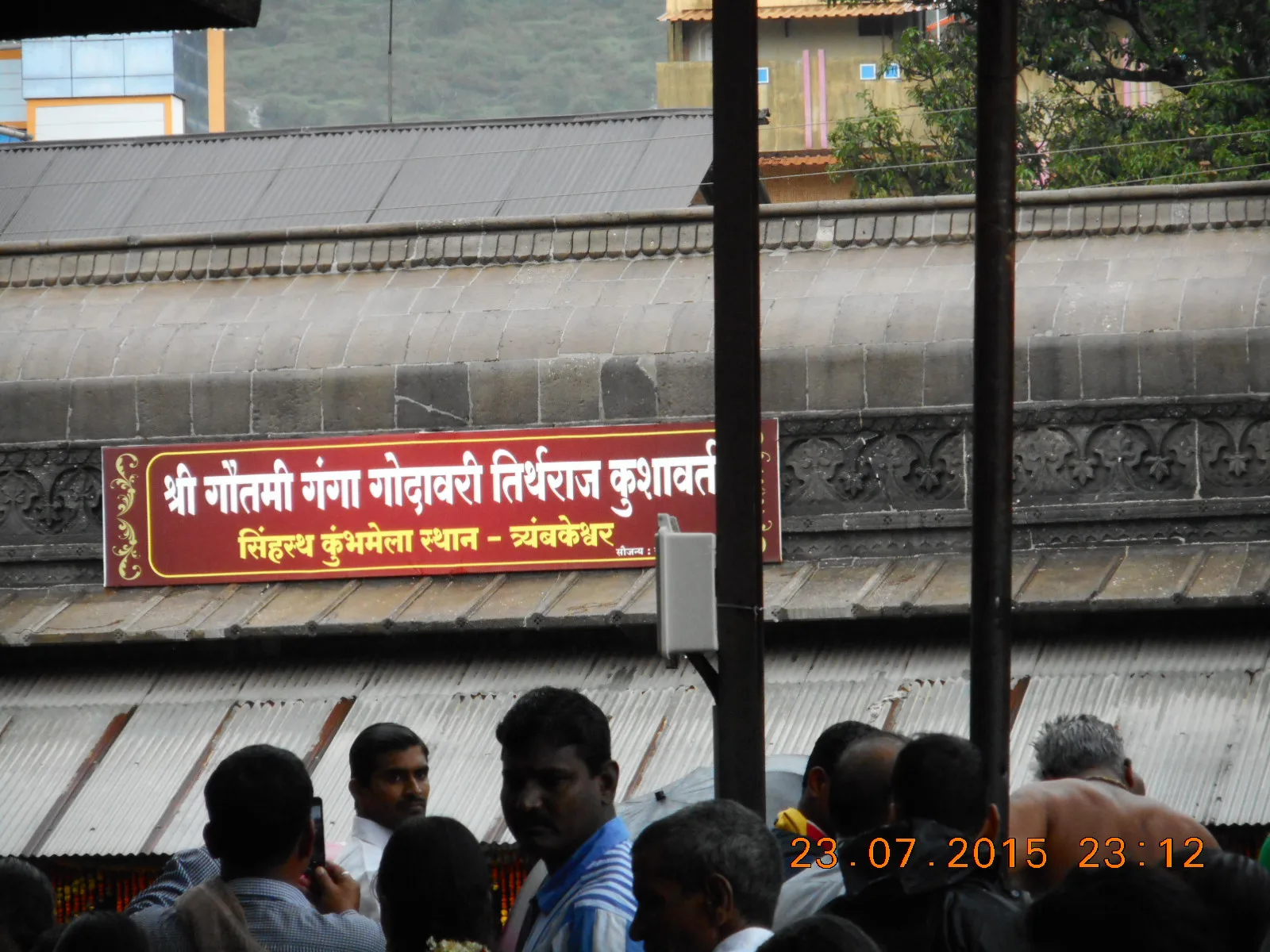
Trimbakeshwar is one of the twelve Jyotirlingas. Its linga does not stand tall but lies in a hollow, holding three small mounds regarded as Brahma, Vishnu and Mahesh — Tryambaka, the three-eyed one. A short walk away, Kushavarta Tirth is the visible source of the Godavari's flow; its stone pavilion is credited to Sardar Raosaheb Parnerkar of Indore. The Shaiva akharas bathe here. Together the two sites bind the Shaiva and Vaishnava traditions, the Ramayana and the birth of a river into one mela.
Panchavati: sacred sites to visit
Ramtirth (Ramkund)
A stone tank built into the bed of the Godavari. Tradition holds that Rama and Sita bathed here during the exile; it is also called Asthivilay Kund because families immerse the ashes of the departed here. Ghats, small shrines and priests' seats ring the tank.
Sita Gufa
A small cave beside the five banyan trees that give Panchavati its name, reached by narrow steps, with idols of Rama, Sita and Lakshmana and a Shivalinga Sita is said to have worshipped. The doorway is only about two and a half feet wide, so avoid it on crowded days.
Kalaram Temple
Black-stone Rama, installed by Sardar Rangrao Odhekar around 1788 after, the story goes, a dream told him the idol lay in the river. Eighty-four pillars and fourteen steps (one for each year of exile). In 1930 Dr B. R. Ambedkar led a satyagraha here for temple entry, making it a landmark of the struggle for social equality.
Gora Ram & Kapaleshwar Mahadev
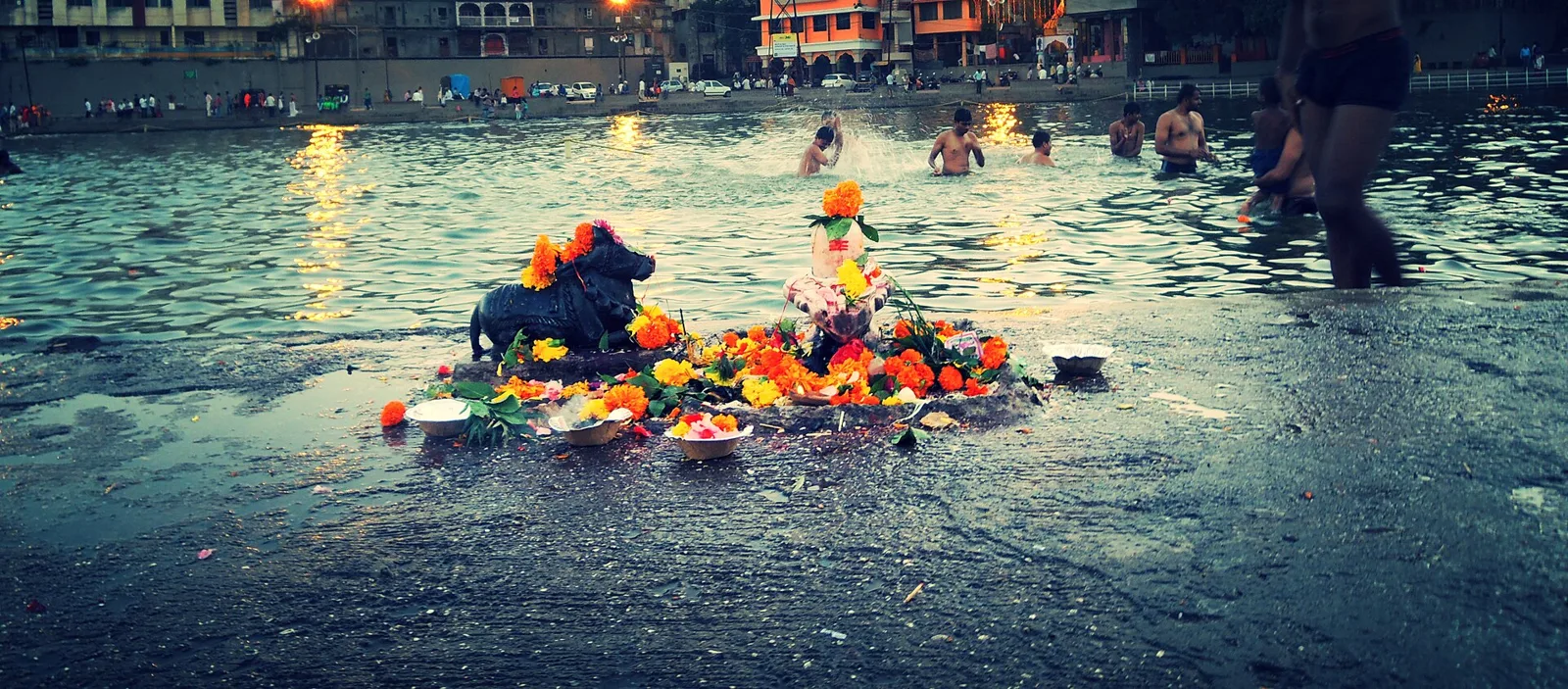
The white-stone Rama near Kalaram gives the city its 'Kala Ram–Gora Ram' pairing. Kapaleshwar, one of Nashik's oldest Shiva temples, is famous for the belief that it has no Nandi in front of it — see for yourself on a visit.
Tapovan & Lakshmana Temple
The forest north of Panchavati where Lakshmana is said to have cut off Shurpanakha's nose, with the Kapila–Godavari confluence. The akharas' Sadhugram is planned here.
Sundarnarayan & Naroshankar
Sundarnarayan (1756) is aligned so sunlight falls on the idol around 21 March; Naroshankar (1747) carries a bell hung to mark the Maratha victory at Vasai.
Full guides: Kalaram Temple · Trimbakeshwar Temple · Pandavleni Caves · Saptashrungi
The 13 akharas: what they are and why they matter
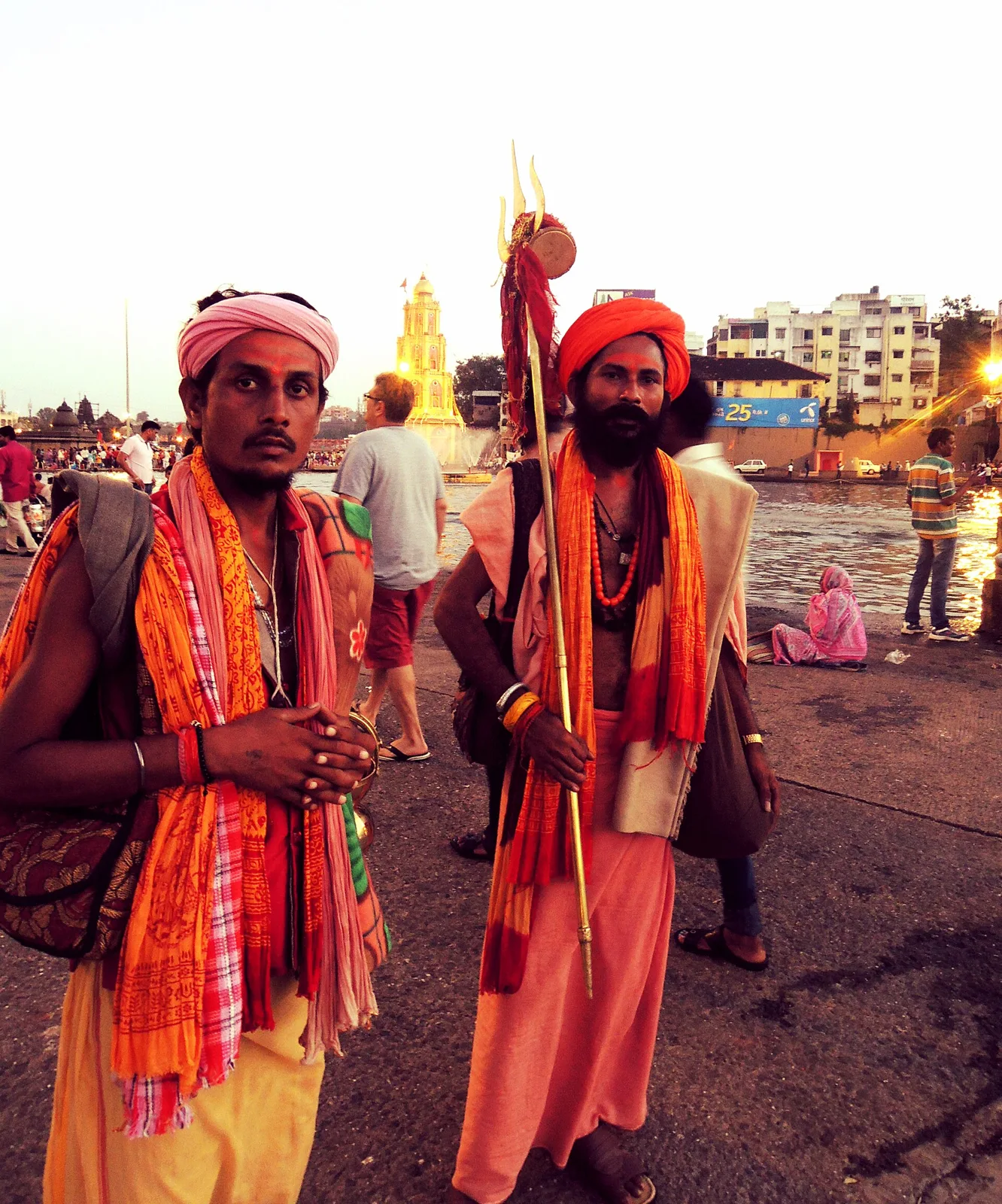
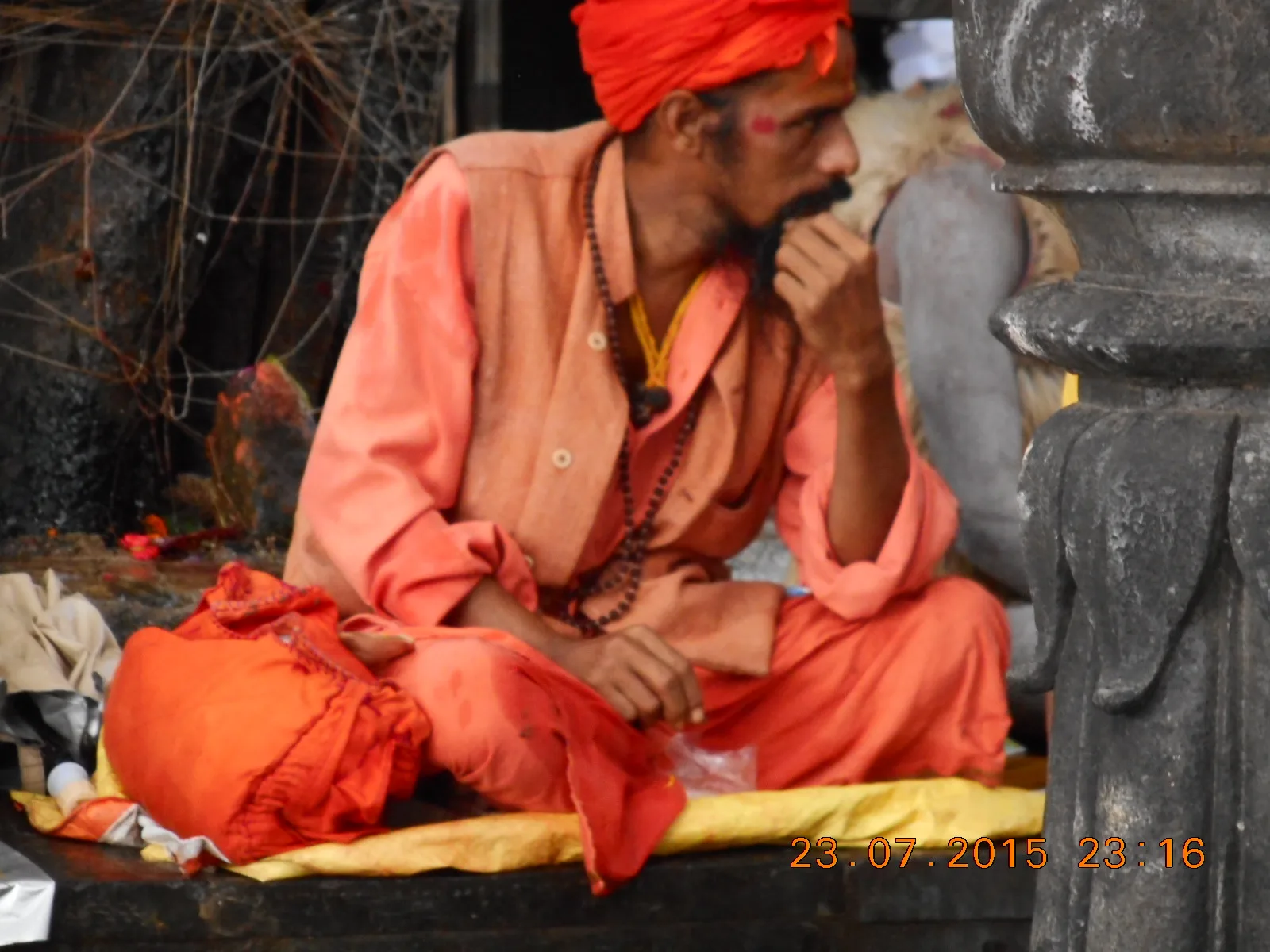
An akhara was once a ground for wrestling and the use of arms. For sadhus and sannyasis it came to mean an order — a centre of spiritual practice, learning and the protection of dharma, with its own deity, flag, leaders (Mahamandaleshwars and Mahants) and rules. The Kumbh is the one time all of them gather; their Amrit Snan processions, with elephants, horses, chariots, music and Naga sadhus, are the mela's most famous sight, and the order in which they bathe is fixed jointly by the Akhil Bharatiya Akhara Parishad and the administration.
The Kumbh Mela Authority's register counts thirteen akharas: ten on the Shaiva side — seven Dashnami sannyasi orders devoted to Shiva, and three that follow the Udasin and Nirmal traditions — and three Vaishnava (Bairagi) "anis" devoted to Vishnu, especially Rama and Hanuman. Each raises its dharma flag on a pole about fifty-two cubits high; Shaiva flags are mainly saffron, Vaishnava flags show red, white and gold, and Udasin flags red, peacock and yellow.
| # | Akhara | Tradition | Kumbh camp / office |
|---|---|---|---|
| 1 | Shri Panch Dashnam Juna Akhada | Shaiva (Dashnami) | Nilgiri Parvat, Trimbakeshwar |
| 2 | Shri Ramta Panchdashnam Avahan Akhada | Shaiva (Dashnami) | Trimbakeshwar |
| 3 | Shri Panch Agni Akhada | Shaiva (Dashnami) | Gangadwar Road, Trimbakeshwar |
| 4 | Shri Panchayati Akhada Shri Niranjani | Shaiva (Dashnami) | Swami Kartik Nagar, Trimbakeshwar |
| 5 | Taponidhi Shri Anand Akhada | Shaiva (Dashnami) | Trimbakeshwar |
| 6 | Shri Panchayati Akhada Mahanirvani | Shaiva (Dashnami) | Prayagtirth (Pegalwadi), Trimbakeshwar |
| 7 | Shri Shambhu Panchayati Atal Akhada | Shaiva (Dashnami) | Gangadwar, Trimbakeshwar |
| 8 | Shri Panchayati Bada Udasin Akhada | Udasin / Nirmal | Trimbakeshwar |
| 9 | Shri Panchayati Akhada Naya Udasin Nirvan | Udasin / Nirmal | Trimbakeshwar |
| 10 | Shri Panchayati Akhada Nirmal | Udasin / Nirmal | Trimbakeshwar |
| 11 | Akhil Bharatiya Shri Panch Nirmohi Ani Akhada | Vaishnava (Bairagi) | Tapovan, Panchavati, Nashik |
| 12 | Akhil Bharatiya Shri Panch Digambar Ani Akhada | Vaishnava (Bairagi) | Tapovan, Panchavati, Nashik |
| 13 | Akhil Bharatiya Shri Panch Ramanandiya Nirvani Ani Akhada | Vaishnava (Bairagi) | Tapovan, Panchavati, Nashik |
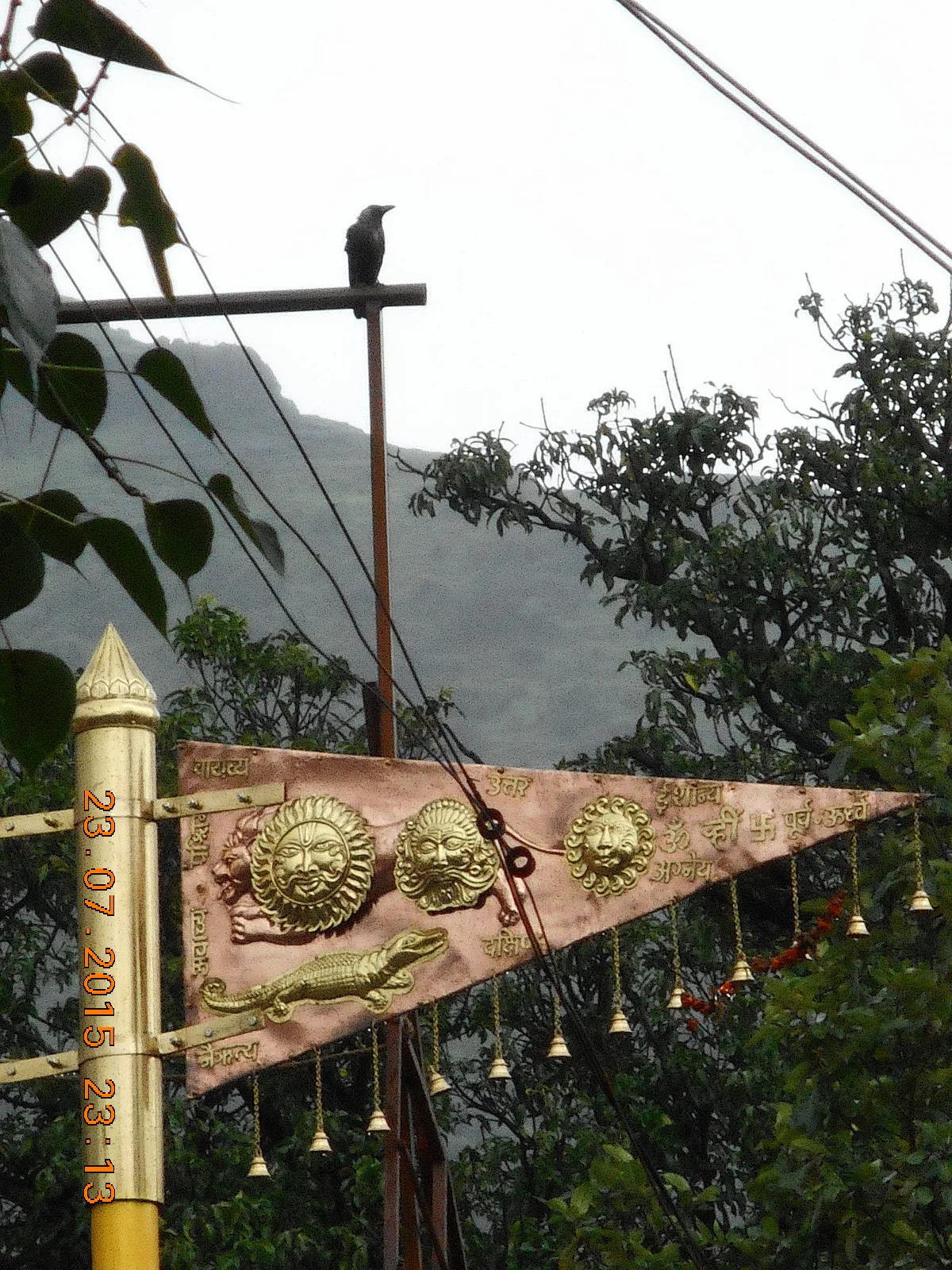
History: from 1789 to the 2015 Simhastha
- c. 1695The Mughal-era Khulasat-ut-Tawarikh records a mela at Trimbak 'when Jupiter enters Leo' — once every twelve years — the earliest written trace of today's Simhastha.
- 1789A bloody clash between Shaiva sannyasis and Vaishnava bairagis at Trimbak. The Peshwa ordered the two to bathe separately — Vaishnavas at Nashik, Shaivas at Trimbakeshwar. The rule still shapes the mela.
- 1860s–1870sDisputes over the processions of the Nirmal sadhus and bans on processions under British rule; the Gazetteer records the yatra arrangements.
- 1932The tradition resumed in full during the freedom-struggle years.
- 1967–80Post-independence melas move towards a modern organised system of camps, police and sanitation.
- 2003Simhastha in July–September. On 27 August a barricade gave way in a narrow lane near Kalaram Temple; 39 pilgrims died.
- 2015Flags were raised at Ramkund and Kushavarta on 14 July. Around 80 lakh to 1 crore pilgrims came to Nashik and 25–30 lakh to Trimbakeshwar. The Maharashtra government spent about ₹2,500 crore across 22 departments on water, power, lodging, security and transport — the first Simhastha to lean on smart technology for crowd watching.
- 2026–28The current Simhastha: flag hoisting on 31 October 2026, Amrit Snans in August–September 2027, flag lowering on 24 July 2028. The next one will not come until 2039.
How 2015 was run. The Simhastha opened on 14 July 2015 with prayers at Trimbakeshwar temple, the blowing of the conch, showers of flower petals and flag hoisting at both Ramkund and Kushavarta, under tight security. Some 22 state departments shared the work of water, power, lodging, security and transport, and it was the first Nashik Kumbh to experiment seriously with smart technology. Nashik took roughly 80 lakh to 1 crore pilgrims and Trimbakeshwar 25 to 30 lakh over the mela.
How the 2027 Simhastha is being planned
Preparations are led by the Nashik–Trimbakeshwar Kumbh Mela Authority (NTKMA) with the Nashik Municipal Corporation, district administration, police, railways and the state transport corporation. Alongside the Sadhugram townships at Tapovan and Trimbakeshwar — where the commissioner has assured the sadhus that the old trees of Tapovan will not be cut — the 2027 plan includes four new proposed ghats at Trimbakeshwar on the Mumbai, Gujarat, Saputara and Chhatrapati Sambhajinagar entry roads, park-and-ride shuttles, temporary bus stands, special trains and a paid tent city. Among the works already sanctioned:
- Roads and ancillary works in Nashik city (21 works)₹930.23 crore
- Water supply development in Nashik city₹403.82 crore
- CCTV surveillance and smart systems across Nashik city, with AI/ML analysis of video feeds studied with IIM Nagpur₹371.70 crore
- Water lifting and grid to fill Trimbakeshwar's reservoirs₹328.81 crore
- Network (connectivity) upgrades in Nashik and Trimbak₹128.99 crore
- Solid waste and extra water supply at Trimbakeshwar₹76.06 crore
- New 33/11 kV electrical substations (4)₹73.51 crore
- Bridges in Nashik city (4)₹62.80 crore
- Conservation of temples and tanks through the Archaeology Department (13 works)₹48.78 crore
- Fire tenders and quick-response vehicles₹18.31 crore
Kumbh map guide: ghats, camps, temples and stations
- 1Ramtirth (Ramkund) · Sacred tirth
Heart of Panchavati; Vaishnava akharas take their Amrit Snan here. Directions - 2Gandhi Talao Ghats · Bathing ghat
Next to Ramkund on both banks. Directions - 3June Bhaji Patangan Ghats · Bathing ghat
Left bank, downstream of Ramkund. Directions - 4Rokdoba Maidan Ghat · Bathing ghat
Right bank, open ground behind. Directions - 5Mhasoba Patangan Ghats · Bathing ghat
Left bank. Directions - 6Gauri Patangan Ghat · Bathing ghat
Left bank. Directions - 7Talkuteshwar Ghats · Bathing ghat
Right bank, upstream and downstream stretches. Directions - 8Lakshminarayan Ghat · Bathing ghat
Right bank, towards Tapovan. Directions - 9Kapila Sangam Ghat · Bathing ghat
Where the Kapila meets the Godavari, at Tapovan. Directions - 10Takli Sangam Ghat · Bathing ghat
Right bank, further downstream. Directions - 11Dasak & Nandur Dasak Ghats · Bathing ghat
Outer ghats that spread the crowd away from Ramkund. Directions - 12Anandvalli Ghats · Bathing ghat
Upstream ghats on the west side of the city. Directions - 13Nashik Sadhugram (Tapovan) · Sadhugram camp
Proposed camp township for the akharas in Nashik. Directions - 14Trimbakeshwar Sadhugram · Sadhugram camp
Proposed camp township for the akharas at Trimbakeshwar. Directions - 15Kalaram Temple · Temple / heritage
Black-stone Rama, built c. 1788. Directions - 16Trimbakeshwar Jyotirlinga · Temple / heritage
One of the twelve Jyotirlingas; Kushavarta Tirth, where the Shaiva akharas bathe, is a short walk away. Directions - 17Pandavleni Caves · Temple / heritage
2,000-year-old Buddhist caves on Trirashmi hill. Directions - 18Nashik Road Railway Station · Railway station
Main railhead on the Mumbai–Bhusaval line (Central Railway). Directions - 19Deolali Railway Station · Railway station
Alternative station south of Nashik Road. Directions - 20Odha Railway Station · Railway station
Smaller station east of the city. Directions
Kushavarta Tirth sits beside Trimbakeshwar temple (pin 16). Sadhugram and proposed ghat locations may still change.
How to reach Nashik and Trimbakeshwar
By train
Nashik Road is the main railhead, on the Central Railway main line from Mumbai and served by trains from across India. Deolali, Odha, Kherwadi and Kasbe Sukene are nearby alternatives. Book as early as you can for the Amrit Snan weeks and plan your onward ride to Panchavati or Trimbakeshwar before you arrive.
By air
Nashik's airport is at Ozar, outside the city; check which cities have flights when you plan. Mumbai and Pune are the nearest major airports, with onward road or rail travel to Nashik.
By bus
State transport and private buses link Nashik with cities across Maharashtra, Gujarat and Madhya Pradesh. During the mela temporary bus stands and special buses serve the parking areas and ghats.
By road, cab or taxi
Highways connect Nashik to Mumbai, Pune, Gujarat, Dhule and Chhatrapati Sambhajinagar. Trimbakeshwar is about 28 km away — an hour on a normal day, several hours during the mela. On snan days private cars are parked on the entry roads, shuttles run towards the ghats and the last stretch is on foot.
Golden rule: book early and arrive the day before an Amrit Snan, not on the morning itself. Roads near the ghats close or turn one-way, and the hill roads are wet and misty in the monsoon — do not drive tired.
Where to go, where to stay and staying safe
Plan one base. Pilgrims are advised to stay in one place and bathe there. Choose Nashik for Ramkund, Panchavati's Ramayana sites, Tapovan and the Vaishnava akharas; choose Trimbakeshwar for the Jyotirlinga, Kushavarta, Brahmagiri and the Shaiva akharas. If you want darshan at Trimbakeshwar temple, go on a quieter day — the Amrit Snan crowds at Kushavarta are enormous.
Stay. Hotels, dharamshalas and homestays in both towns fill months ahead; a paid government tent city is usually set up for devotees. Also see Saptashrungi, Pandavleni and the Godavari's ghats if you have extra days.
Safety. Wear comfortable footwear, carry water and a printed contact card for each child and elder, agree a meeting point, keep valuables, glass and anything inflammable at your stay, and follow the police and volunteers. Elderly or disabled travellers, pregnant women and anyone unwell should avoid Amrit Snan days. Emergency number: 112.
Build a Nashik–Trimbakeshwar itinerary · Jyotirlinga and pilgrimage circuits · Festival calendar entry
The four Kumbh Melas compared: Nashik, Ujjain, Prayagraj and Haridwar
Every Kumbh shares the Samudra Manthan story and the holy bath, but each has its own river, season and character. In Haridwar the Ganga leaves the Himalaya for the plains; at Prayagraj two rivers meet a third, unseen; at Ujjain the Kshipra circles the city of Mahakal; and at Nashik–Trimbakeshwar the Godavari comes out of the hills and runs through the heart of the town. Nashik and Ujjain are both Simhasthas and fall in the same or neighbouring years, which is why sadhus have often planned to attend both in one season.
| Kumbh | River | Planetary sign | Season | Presiding deity | What makes it distinct | Last held | Next |
|---|---|---|---|---|---|---|---|
| Nashik–Trimbakeshwar | Godavari (Ramkund & Kushavarta) | Jupiter in Leo (Simha) | Monsoon — Shravan–Bhadrapad | Rama (Panchavati) and Trimbakeshwar Jyotirlinga | Two bathing sites 28 km apart: Vaishnavas at Ramkund, Shaivas at Kushavarta; river source on Brahmagiri. | 2015 (Jul–Sep) | 2027 Amrit Snans; Simhastha Oct 2026 – Jul 2028 |
| Ujjain | Kshipra (Shipra) | Jupiter in Leo (Simha) | Spring — Chaitra–Vaishakh | Mahakaleshwar Jyotirlinga | Began in the 18th century when Ranoji Shinde invited the Nashik akharas; main bath on Vaishakh Purnima. | 2016 (22 Apr – 21 May) | 27 Mar – 27 May 2028 (planned) |
| Prayagraj | Triveni Sangam — Ganga, Yamuna and the unseen Saraswati | Jupiter in Taurus, Sun in Capricorn (Magh) | Winter — Magh | Sangam itself; Bade Hanuman | Kalpavas tradition; annual Magh Mela, Ardh Kumbh every six years and the Maha Kumbh. | Maha Kumbh 13 Jan – 26 Feb 2025 (about 660 million visitors) | Ardh Kumbh expected 2031; Magh Mela every year |
| Haridwar | Ganga at Har ki Pauri | Jupiter in Aquarius (Kumbha) | Spring — Chaitra–Vaishakh | Ganga; Mansa Devi and Chandi Devi | Historically the original 'Kumbh' — the only one named after the sign Kumbha; Ganga enters the plains. | 2021 (1–30 Apr) | Ardh Kumbh 14 Jan – 20 Apr 2027 |
Photos of the Nashik Simhastha
Frequently asked questions
When is the Nashik Kumbh Mela 2027?
The Simhastha runs from the flag hoisting on 31 October 2026 to the flag lowering on 24 July 2028. The main mela period begins on 15 June 2027 and the three Amrit Snans are on 2 August, 31 August and 11–12 September 2027.
What are the Shahi Snan (Amrit Snan) dates for Nashik 2027?
2 August 2027 (Somvati Amavasya), 31 August 2027 (Shravan Amavasya, the 'Mahakumbh Snan'), 11 September 2027 at Ramkund, Nashik for the Vaishnava akharas and 12 September 2027 at Kushavarta, Trimbakeshwar for the Shaiva akharas. 'Amrit Snan' is the new official name for the Shahi Snan.
Which is the best day to bathe if I want to avoid crowds?
Choose one of the many other parvakal days listed on this page rather than an Amrit Snan day. There are 65 such muhurats at Ramtirth and 41 at Kushavarta. Elderly travellers, pregnant women and families with small children should avoid the Amrit Snan days.
What is the difference between Nashik and Trimbakeshwar Kumbh?
They are one Simhastha held at two places about 28 km apart. Vaishnava sadhus bathe at Ramkund in Nashik's Panchavati; Shaiva sadhus bathe at Kushavarta in Trimbakeshwar, beside the Jyotirlinga and near the source of the Godavari.
Why is it called Simhastha?
Simha is the sign Leo and stha means 'standing in'. The mela is held when Jupiter is in Leo, which happens once in about twelve years. Ujjain's Kumbh is also a Simhastha, but there the Sun's position puts it in spring, while Nashik's falls in the monsoon.
How do I reach Nashik for the Kumbh?
By rail to Nashik Road station (Central Railway, on the Mumbai line), by air to Nashik's Ozar airport or to Mumbai/Pune, or by road on the highways from Mumbai, Pune, Gujarat, Dhule and Chhatrapati Sambhajinagar. Trimbakeshwar is about 28 km from Nashik by road. On snan days private vehicles are parked on the entry roads and shuttles take pilgrims towards the ghats.
Where can I stay during the Kumbh?
Book hotels, dharamshalas and homestays in Nashik or Trimbakeshwar months ahead. The government usually sets up a paid tent city during the Kumbh; stay in one place and bathe there instead of shuttling between Nashik and Trimbakeshwar on peak days.
What are akharas?
Akharas are the organised orders of sadhus. The word once meant a wrestling ground; today it means a centre of spiritual practice and the protection of dharma. Thirteen akharas recognised by the Akhil Bharatiya Akhara Parishad take part in the Amrit Snans, in an order fixed by the Parishad and the administration.
What should I not carry to the ghats?
Keep valuables, large bags, glass and anything inflammable at your stay. Wear comfortable footwear for the last stretch on foot, carry water, a printed contact card for each child and elder, and agree a meeting point in case you are separated. In an emergency call 112.
Dates, ghats, camps and the akhara register follow the published calendar and registers of the Nashik–Trimbakeshwar Kumbh Mela Authority; history draws on the Authority's publications. Last checked 19 November 2026. Timings can change — follow announcements on the ground.