
Ujjain Simhastha Kumbh Mela 2028
Planned from 27 March to 27 May 2028 on the Kshipra — Shahi Snans on 9 April, 23 April and 8 May, in the city of Mahakal.
Overview
Next date · Planned window — final notification awaited
Simhastha begins (planned)
Mon, 27 March 2028 · in 496 days
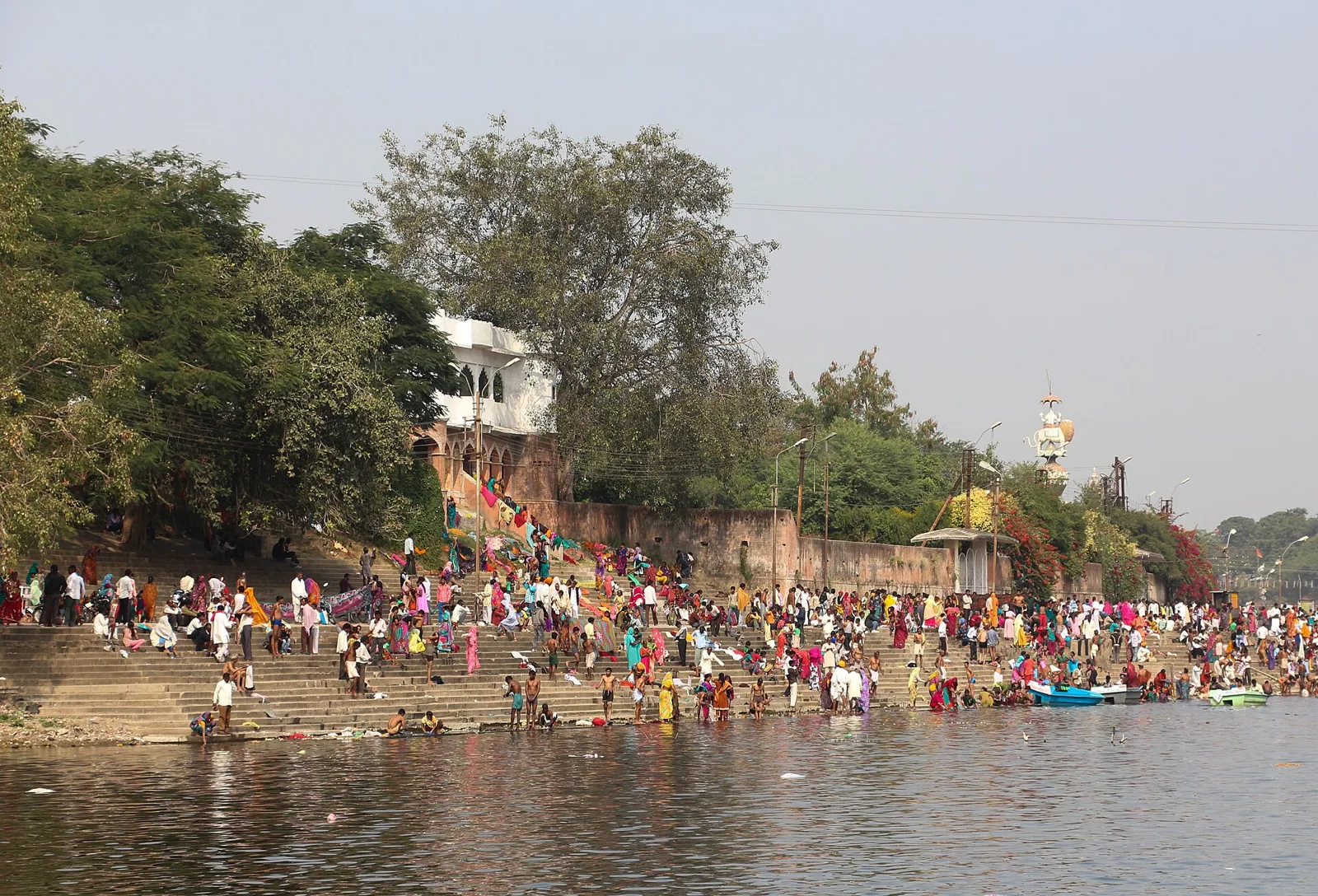
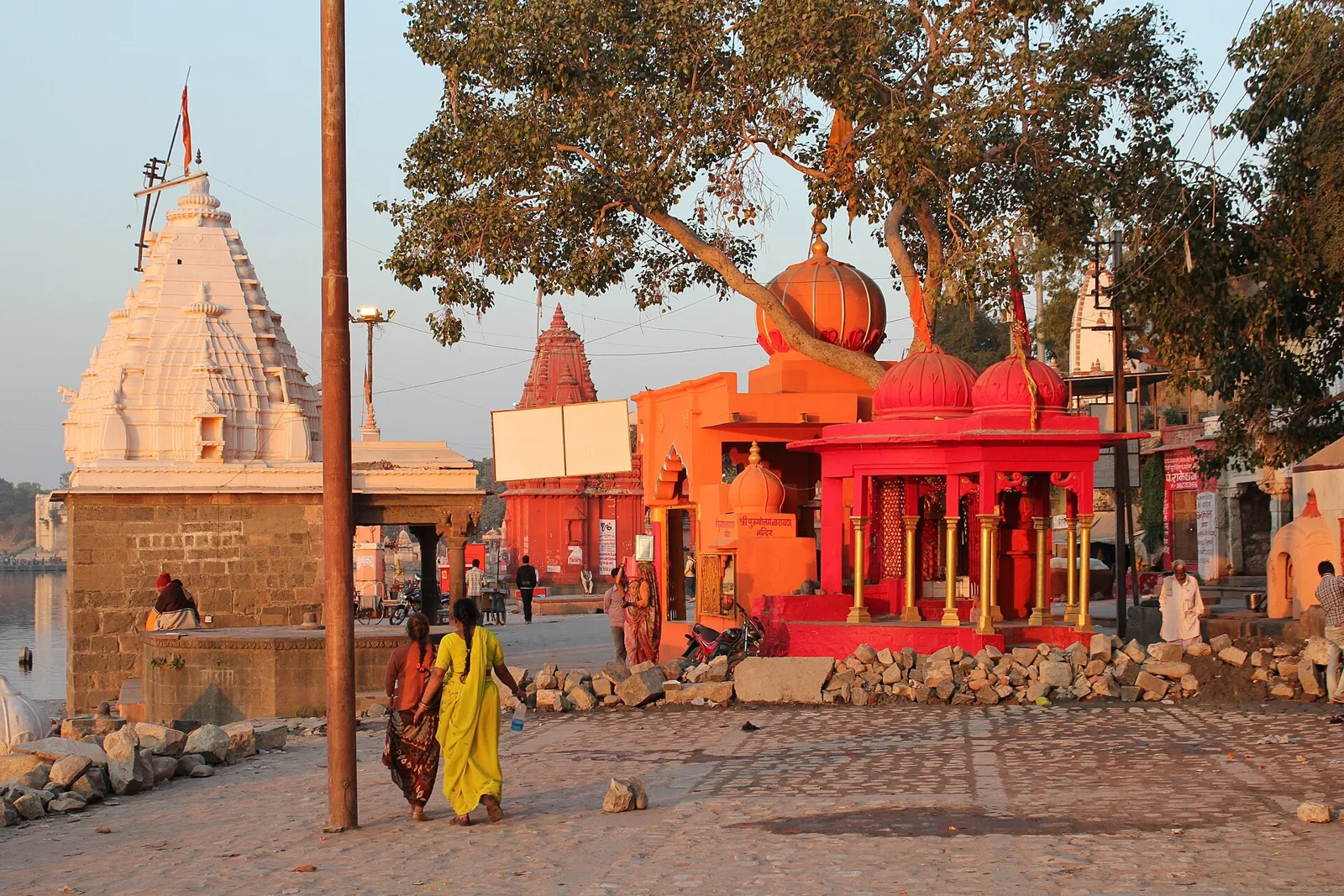
Ujjain, the ancient Avantika, is one of India's seven sacred cities and the seat of Mahakaleshwar, the Jyotirlinga of Shiva as lord of time. Its Kumbh is called the Simhastha because it falls when Jupiter is in Leo (Simha) — like Nashik's — but here the Sun is in Aries, which brings the mela to the hot spring months of Chaitra and Vaishakh. The bathing happens along the Kshipra, which curves around the old city, with Ram Ghat below Harsiddhi temple as the main ghat.
The Madhya Pradesh government has planned the 2028 Simhastha as a two-month mela, from 27 March to 27 May 2028 — twice as long as 2016 — with three Shahi (Amrit) Snans on 9 April, 23 April and 8 May and seven more parv snans in between. It expects around 14 crore visitors, roughly twice the 2016 figure. The window and royal-bath dates come from the state's planning meetings; we will update this page when the formal notification and full snan list are issued.
- 27 Mar – 27 May 2028 (planned)
- Ram Ghat and the Kshipra ghats, Ujjain
- Ujjain Junction (Western Railway)
- Indore airport (about 55 km)
- Emergency: 112
Simhastha 2028: planned dates
Planned window — final notification awaited
Mon, 27 March 2028 — Simhastha begins (planned)
Start of the two-month mela window.
Sun, 9 April 2028 — First Shahi Snan
Akharas lead the first royal bath on the Kshipra.
Sun, 23 April 2028 — Second Shahi Snan
The middle royal bath of the akharas.
Mon, 8 May 2028 — Third Shahi Snan
The last royal bath of the akharas; the exact tithi for each bath will be given in the formal notification.
Sat, 27 May 2028 — Simhastha ends (planned)
Close of the mela window.
These dates were set out by Chief Minister Mohan Yadav at planning meetings for Simhastha 2028 and have been repeated by the state since; the government also plans seven parv (festival) snans between 9 April and 8 May, whose dates it has not yet published. As with every Kumbh, the akharas' procession times are fixed only close to each bath.
In 2016 the mela ran for one month, from Chaitra Purnima on 22 April to Vaishakh Purnima on 21 May 2016, when the last Shahi Snan was held. The full moon of Vaishakh is the traditional heart of the Ujjain Simhastha, and the Panchkroshi Yatra — a circuit of about 118 km around the city's ancient boundary shrines — is also walked in this season.
What comes next
- Simhastha27 March – 27 May 2028 (planned)· Planned window — final notification awaited
- Next Simhastha after 2028Expected around 2040· Expected by the traditional cycle — not yet announced
Religious significance and beliefs
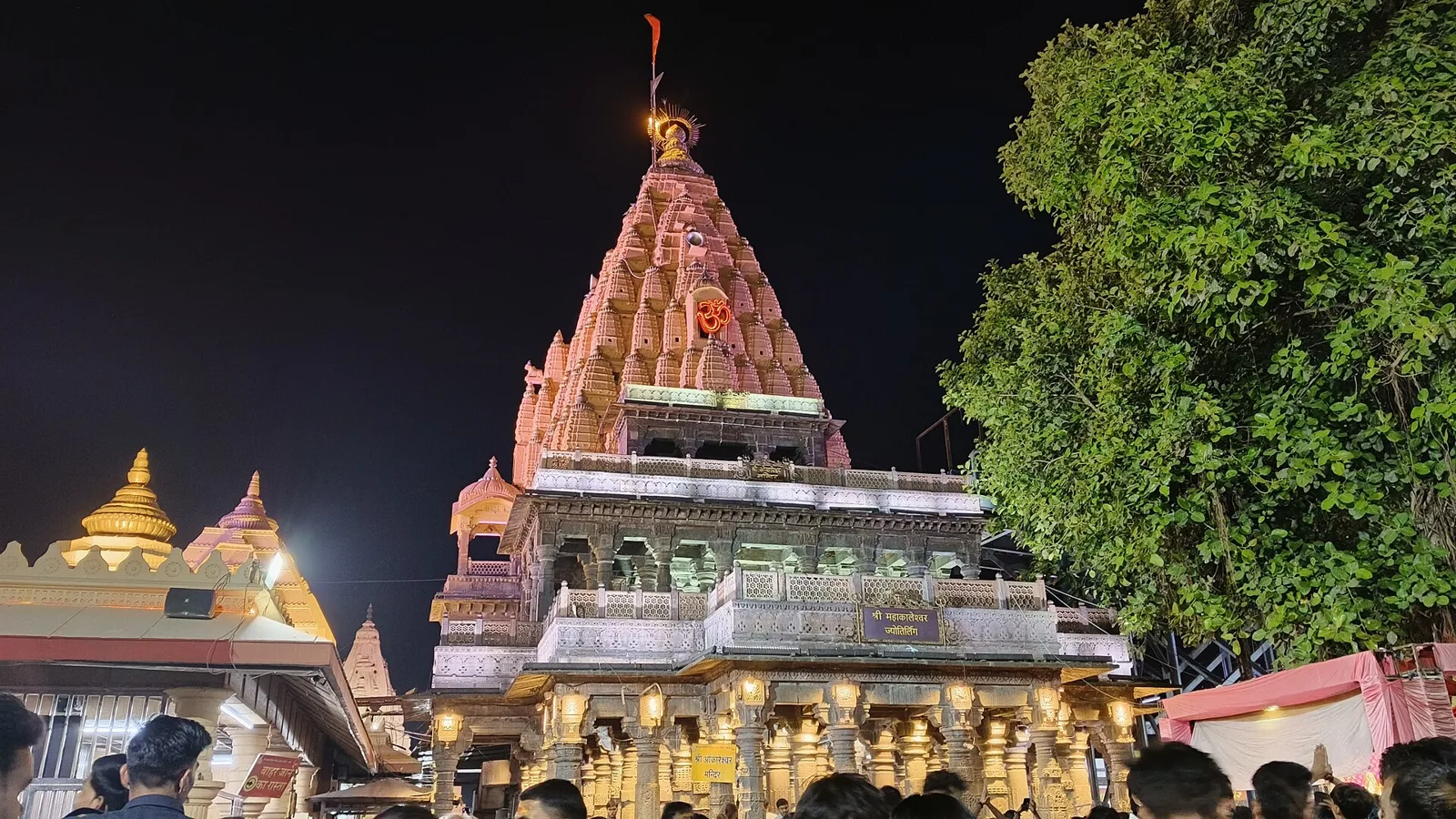
Mahakal, lord of time. Mahakaleshwar is the only one of the twelve Jyotirlingas that faces south (Dakshinamukhi), the direction of Yama, which is why Mahakal is worshipped as the conqueror of death. Its pre-dawn Bhasma Aarti, offered with sacred ash, is one of the most sought-after darshans in India and needs advance booking; during the Simhastha queues run for hours.
Why 'Simhastha'. Simha is Leo and stha means 'standing in'. Ujjain's Kumbh comes when Jupiter is in Leo and the Sun in Aries. Tradition adds further conditions — the Puranas list a set of auspicious yogas for the Avantika Kumbh — which is why the main bathing day is reckoned to fall on Vaishakh Purnima.
The Kshipra. The Skanda Purana's Avanti Khanda praises the Kshipra as a river of liberation; legend says it sprang from Vishnu's finger, or from the blood of Vishnu's hand when Shiva struck it. Ram Ghat takes its name from the belief that Rama performed his father's last rites here.
City of seers, poets and astronomers. Krishna and Balarama are said to have studied at the ashram of the sage Sandipani; Kalidasa and King Vikramaditya, whose era is the Vikram Samvat, belong to Ujjain's legends; and ancient Indian astronomers drew their prime meridian through the city, which is why Raja Jai Singh built one of his Jantar Mantar observatories here.
Why Ujjain hosts a Kumbh
Avantika is named among the four places where drops of amrit fell during the churning of the ocean. As at Nashik, the mela's present shape owes a great deal to the Marathas: in the eighteenth century the Scindia (Shinde) rulers of Ujjain, beginning with Ranoji Shinde, invited the akharas who bathed at Nashik to hold a Simhastha on the Kshipra too, and the two Simhasthas have run in the same or neighbouring years ever since.
The city's many akhara seats, the Mahakal temple and the Shakti Peetha of Harsiddhi make Ujjain a mela where Shaiva and Shakta traditions are especially strong, while the Vaishnava akharas camp in their own sectors along the river.
Sacred sites of Ujjain
Mahakaleshwar Jyotirlinga
The south-facing Jyotirlinga with its Bhasma Aarti and the new Mahakal Lok corridor of sculptures and gardens.
Ram Ghat
The main ghat on the Kshipra and the centre of the Shahi Snans and the evening aarti.
Harsiddhi Mata
A Shakti Peetha between Mahakal and Ram Ghat, known for its two tall lamp towers (deep stambhs) lit on festival nights.
Kal Bhairav
The city's guardian, famous for the offering of liquor to the deity.
Sandipani Ashram
Where Krishna, Balarama and Sudama are said to have studied; a stone tablet with numerals is shown to visitors.
Siddhavat & Mangalnath
Siddhavat, a sacred banyan on the Kshipra used for rites for ancestors, and Mangalnath, revered as the birthplace of the planet Mars.
History and past melas
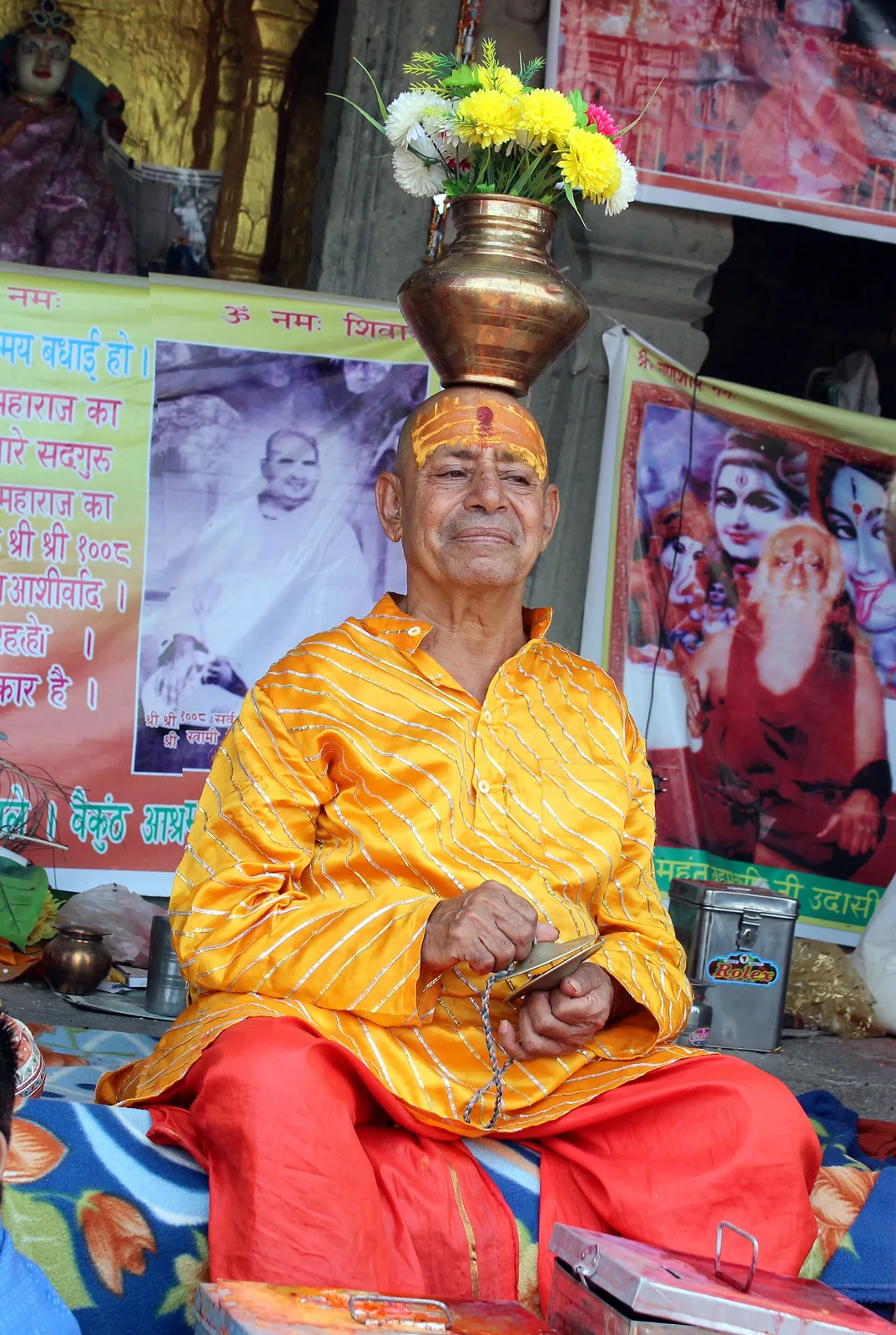
- AncientAvantika is one of the seven moksha-giving cities (Sapta Puri) and the capital of the Avanti kingdom; the Skanda Purana's Avanti Khanda describes its tirthas and the Kshipra.
- 18th c.The Scindia rulers of Ujjain invite the Nashik akharas to bathe on the Kshipra, establishing the Simhastha in its present form.
- 2016Simhastha, 22 April – 21 May. The state reported about 7.5 crore visitors. A storm on 5 May flattened hundreds of tents and killed seven people. The Kinnar Akhara of transgender sadhus took part for the first time, and an international convention on the 'Simhastha Declaration' was held alongside.
- 2028Planned two-month Simhastha, 27 March – 27 May 2028, with three Shahi Snans and seven parv snans.
How Simhastha 2028 is being planned
Planning is led by a cabinet committee of the Madhya Pradesh government with the Ujjain divisional administration. At the first planning meetings in March 2024 the Chief Minister asked for the Kshipra's ghats to be lengthened, more parking on every approach road, guest houses along the routes into Ujjain and homestays in nearby villages, and for Ujjain–Indore to be developed as one religious circuit with Omkareshwar and other shrines.
In April 2026 the committee approved 22 more works costing about ₹2,924 crore and set Diwali 2027 as the deadline for all Simhastha works, with an emphasis on trained staff, crowd management and pilgrim facilities.
- Works proposed in the first action plan (523 works, March 2024)₹18,840 crore
- Works approved by the cabinet committee on 7 April 2026 (22 works)₹2,923.84 crore
- Visitors expected in 2028 (state estimate)About 14 crore
Ujjain Kumbh map guide: ghats, temples and stations
- 1Ram Ghat · Bathing ghat
Main ghat on the Kshipra; Shahi Snans and evening aarti. Directions - 2Harsiddhi Mata Temple · Temple / shrine
Shakti Peetha with its lamp towers, between Ram Ghat and Mahakal. Directions - 3Mahakaleshwar Jyotirlinga · Temple / shrine
The south-facing Jyotirlinga; Bhasma Aarti. Directions - 4Kal Bhairav Temple · Temple / shrine
Guardian deity of Ujjain. Directions - 5Siddhavat · Temple / shrine
Sacred banyan on the Kshipra; rites for ancestors. Directions - 6Sandipani Ashram · Temple / shrine
Where Krishna is said to have studied. Directions - 7Chintaman Ganesh Temple · Temple / shrine
Ancient Ganesh temple south-west of the city. Directions - 8Jantar Mantar (Vedh Shala) · Landmark
Jai Singh's observatory. Directions - 9Kaliadeh Palace · Landmark
Island palace on the Kshipra, north of the city. Directions - 10Ujjain Junction · Railway station
Main station (Western Railway). Directions - 11Chintaman Ganesh station · Railway station
Small station by the Ganesh temple. Directions - 12Vikramnagar station · Railway station
Station on the east side of the city. Directions - 13Dewas Gate bus stand · Bus stand
Interstate bus stand near the railway station. Directions - 14Nanakheda bus terminal · Bus stand
Interstate bus terminal on the south side. Directions
Ram Ghat, Harsiddhi and Sandipani Ashram are placed from the GPS positions of several photographs taken on the spot. The mela's sectors, akhara camps and parking areas will be laid out for 2028 and are not pinned.
How to reach Ujjain
By train
Ujjain Junction (Western Railway) has direct trains from Delhi, Mumbai, Ahmedabad, Bhopal, Indore, Jaipur and many other cities; Chintaman Ganesh and Vikramnagar are smaller stations. Special trains are usually run for a Simhastha.
By air
Indore's Devi Ahilyabai Holkar airport, about 55 km away, is the nearest, with flights across India; Bhopal is about 190 km away.
By bus
Buses run from the Dewas Gate and Nanakheda bus stands to Indore, Bhopal, Dewas, Ratlam, Kota and Ahmedabad. For the mela, temporary bus stations are set up on the main roads into the city.
By road, cab or taxi
Ujjain is about 55 km from Indore and 190 km from Bhopal by good highways. On bathing days vehicles are stopped at parking areas on the outskirts and shuttles take pilgrims towards the ghats. Taxis and autos are found at the station and bus stands — agree fares first.
Build a Ujjain itinerary · Pilgrimage circuits · Festival calendar entry
Where to stay and staying safe
Ujjain has hotels, dharamshalas and ashrams near Mahakal and the station; Indore, an hour away, has many more rooms. The government plans guest houses on the approach roads and homestays in nearby villages for 2028. Book as early as possible for the Shahi Snan weeks.
April and May are very hot in Malwa — often over 40 °C by afternoon. Bathe early, carry water, wear a hat and light cotton, and rest in the shade at midday. Keep to the barricaded parts of the ghats, carry a printed contact card for each child and elder, and agree a meeting point. Emergency number: 112.
The four Kumbh Melas compared
Every Kumbh shares the story of the pot of amrit and the holy bath, but each has its own river, season and character. Follow the links for the full guide to each.
| Kumbh | River | Planetary sign | Season | Presiding deity | What makes it distinct | Last held | Next |
|---|---|---|---|---|---|---|---|
| Nashik–Trimbakeshwar | Godavari (Ramkund & Kushavarta) | Jupiter in Leo (Simha) | Monsoon — Shravan–Bhadrapad | Rama (Panchavati) and Trimbakeshwar Jyotirlinga | Two bathing sites 28 km apart: Vaishnavas at Ramkund, Shaivas at Kushavarta; river source on Brahmagiri. | 2015 (Jul–Sep) | 2027 Amrit Snans; Simhastha Oct 2026 – Jul 2028 |
| Ujjain | Kshipra (Shipra) | Jupiter in Leo (Simha) | Spring — Chaitra–Vaishakh | Mahakaleshwar Jyotirlinga | Began in the 18th century when Ranoji Shinde invited the Nashik akharas; main bath on Vaishakh Purnima. | 2016 (22 Apr – 21 May) | 27 Mar – 27 May 2028 (planned) |
| Prayagraj | Triveni Sangam — Ganga, Yamuna and the unseen Saraswati | Jupiter in Taurus, Sun in Capricorn (Magh) | Winter — Magh | Sangam itself; Bade Hanuman | Kalpavas tradition; annual Magh Mela, Ardh Kumbh every six years and the Maha Kumbh. | Maha Kumbh 13 Jan – 26 Feb 2025 (about 660 million visitors) | Ardh Kumbh expected 2031; Magh Mela every year |
| Haridwar | Ganga at Har ki Pauri | Jupiter in Aquarius (Kumbha) | Spring — Chaitra–Vaishakh | Ganga; Mansa Devi and Chandi Devi | Historically the original 'Kumbh' — the only one named after the sign Kumbha; Ganga enters the plains. | 2021 (1–30 Apr) | Ardh Kumbh 14 Jan – 20 Apr 2027 |
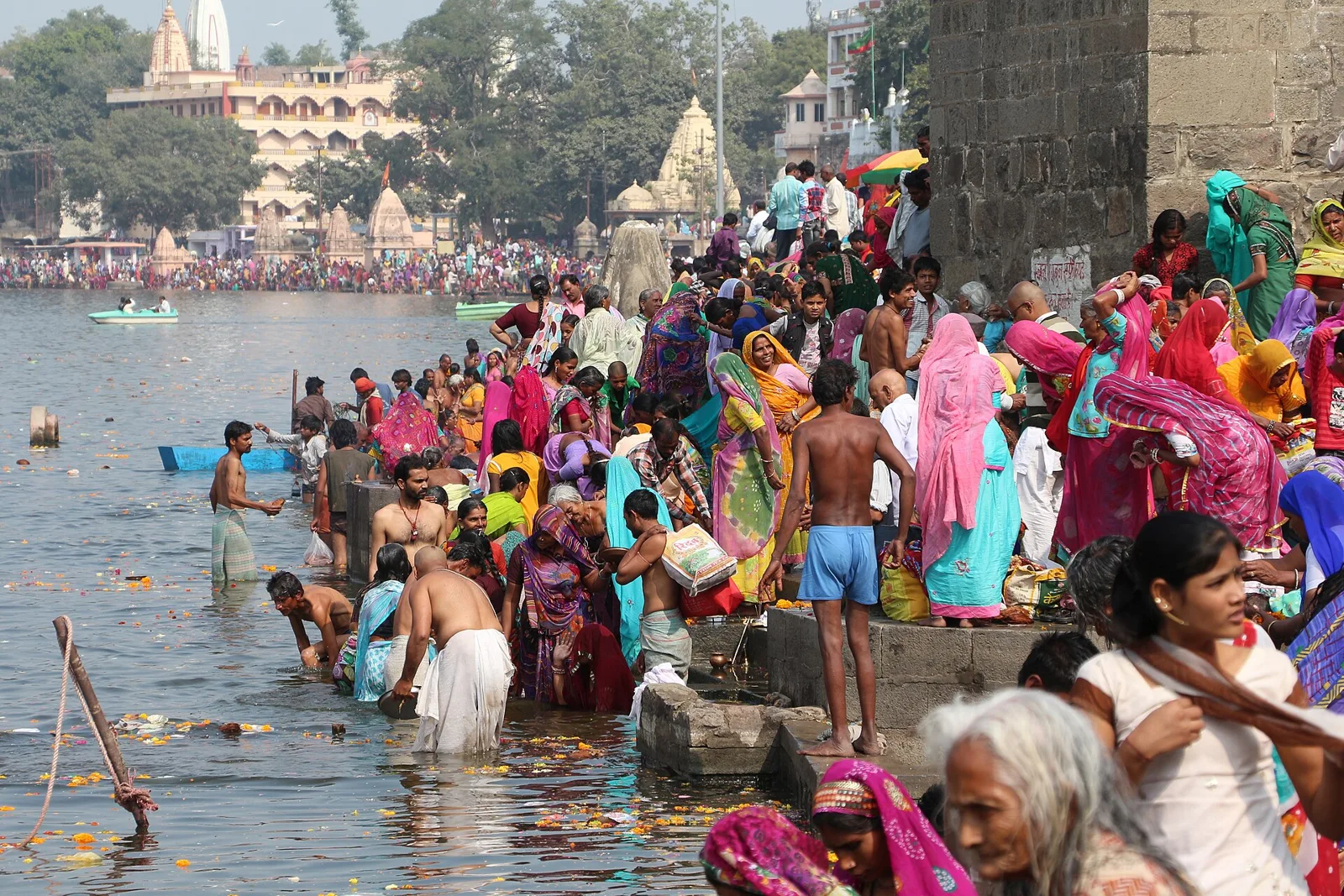
Photos of the Ujjain Kumbh
Frequently asked questions
When is the Ujjain Simhastha 2028?
The Madhya Pradesh government plans it from 27 March to 27 May 2028. The formal notification is still awaited, so reconfirm before booking non-refundable travel.
What are the Shahi Snan dates for Ujjain 2028?
9 April, 23 April and 8 May 2028, according to the state's plan; seven parv snans will fall between them, with dates still to be published.
Why is the Ujjain Kumbh called Simhastha?
It is held when Jupiter is in Leo (Simha). Nashik's Kumbh is also a Simhastha, but in Ujjain the Sun is in Aries, which puts the mela in spring.
Can I do the Mahakal Bhasma Aarti during the Simhastha?
The Bhasma Aarti continues daily but needs advance booking, and access may be restricted on Shahi Snan days. Plan your darshan for a non-bathing day.
How hot is Ujjain during the Simhastha?
Very — April and May afternoons are often above 40 °C. Bathe at dawn, drink plenty of water and avoid walking long distances at midday.
How do I reach Ujjain?
By train to Ujjain Junction, by air to Indore (about 55 km), or by road from Indore and Bhopal. On bathing days private vehicles are parked outside the city and shuttles run to the ghats.
Planned dates and figures follow the Madhya Pradesh government's planning meetings (March 2024, April 2026) as reported by Patrika, News18 and NDTV; 2016 dates follow the NDRF's report and the Indian Express. Map points come from public map records and Ghumoopedia's place guides. Last checked 19 November 2026. Timings can change — follow announcements on the ground.