
District · Manipur
Thoubal
Thoubal offers a quieter way to experience the agricultural Manipur valley beyond Imphal.
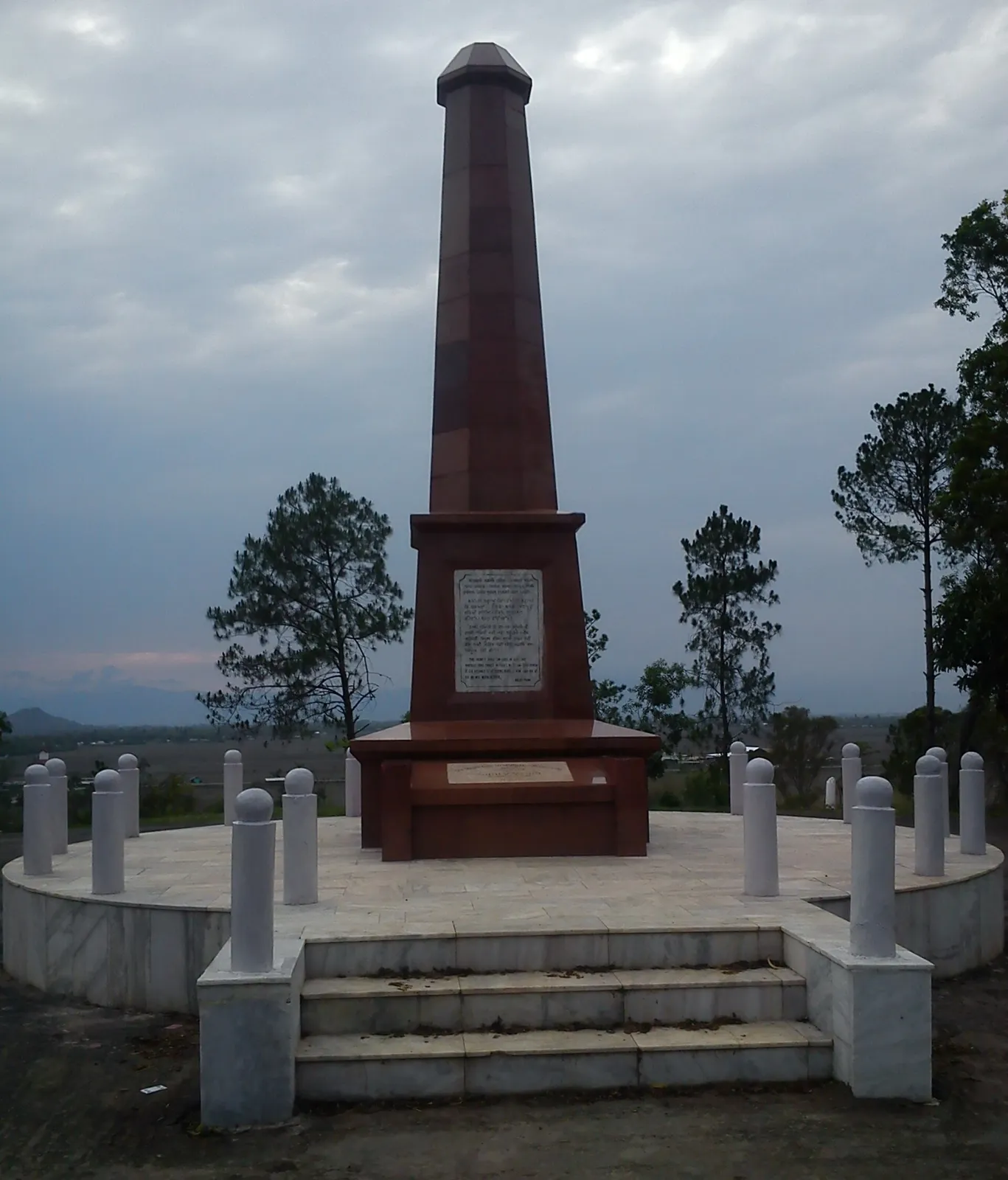
Thoubal lies in the Manipur valley, where paddy fields, rivers and low hills shape a largely agricultural landscape. Its towns and villages offer a quieter view of valley life beyond the state capital, Imphal, with local markets and cultivated countryside forming much of the everyday setting. The district also holds an important place in Manipur’s history. At Khongjom, the War Memorial Complex commemorates the Anglo-Manipur War of 1891 and the resistance associated with Manipuri fighters, including Paona Brajabashi. For visitors, this connection between landscape, community life and historical memory gives Thoubal its character. It is best approached as a district to explore thoughtfully rather than as a collection of major tourist attractions.
Thoubal offers a quieter way to experience the agricultural Manipur valley beyond Imphal. Paddy fields, rivers and low hills frame everyday life, while local markets and village roads reveal a district shaped by farming and community ties. It is best known to visitors for Khongjom War Memorial Complex, which commemorates the Anglo-Manipur War of 1891 and the resistance associated with Manipuri fighters, including Paona Brajabashi. Thoubal is a useful road stop on the Imphal–Moreh corridor, but its appeal lies less in a long list of attractions than in the connection between landscape, local life and historical memory.
The Thoubal area forms part of the Manipur valley, whose history is closely linked with the Meitei kingdom and its rulers. The kingdom’s political centre developed at Kangla in the valley, while agricultural settlements and routes connected communities across the surrounding plain. The region’s story is part of Manipur’s wider history; it is difficult to separate the district’s past from that of the valley kingdom as a whole. In 1891, conflict between the Manipuri kingdom and the British became the Anglo-Manipur War. The resistance at Khongjom is remembered as a significant episode, and the memorial there honours Manipuri fighters, including Paona Brajabashi. Manipur later remained a princely state under British paramountcy until Indian independence, before becoming a full state of India in 1972. Thoubal district was formed in 1983, when it was separated from the former Imphal district. Its modern identity therefore combines the older history of the valley with a more recent district administration and continuing agricultural life.
Food in Thoubal draws on the wider culinary traditions of the Manipur valley. Rice commonly anchors meals, accompanied by vegetables, fish and preparations using fermented ingredients. Regional dishes to look for include eromba, a vegetable mash often made with fermented fish; singju, a salad with varied ingredients; and kangshoi, a light vegetable stew. Chak-hao kheer, made with Manipur’s aromatic black rice, is another regional speciality. Small eateries may prepare only a limited daily selection, so ask what is fresh. Vegetarians should explicitly ask about fish and fermented-fish ingredients. Carry drinking water and snacks when visiting sites away from town.
Thoubal shares in Manipur’s wider handloom culture, particularly the weaving traditions associated with Meitei communities in the valley. Familiar textiles include phanek, a wraparound garment, and innaphi, a shawl or upper-body drape, with designs ranging from everyday patterns to elaborate ceremonial work. Bamboo and cane basketry also belong to the region’s practical craft traditions, supplying household and agricultural objects. These are regional associations rather than crafts exclusive to Thoubal. When shopping, ask where an item was woven or made, and distinguish locally produced handwork from machine-made goods.
Thoubal shares many festivals with the wider Manipur valley. Yaoshang, usually held around February or March, brings community celebrations and activity to localities across the region. Ningol Chakouba, generally in October or November, centres on family visits and shared meals. Lai Haraoba is observed in some communities, though its timing and scale vary by locality. Festival periods can make markets and roads busier, while accommodation choices in smaller towns may be limited; check availability ahead if travelling during a major celebration. Customs and observances differ between communities.
Thoubal lies mainly in the Manipur valley, with cultivated plains, paddy fields and settlements linked by rivers and roads. The Thoubal River and smaller waterways form part of the district’s lowland setting, while low hills rise around parts of the valley edge. Farming shapes much of the scenery and can make rural roads feel open and exposed. Travel is mostly by road across the plain, but rain can affect smaller routes and field-side tracks. Take care on narrow roads and avoid entering farmland or river edges without local guidance.
The district has a broadly seasonal valley climate. Summer, from around March to May, can be warm, while the monsoon months, generally June to September, bring frequent rain and can make local roads muddy or slow. Winter, roughly November to February, is cooler, with chilly mornings and evenings. October through April is often a more comfortable period for road travel, although conditions vary from year to year. Pack light clothing for warmer days, a warm layer for winter mornings, and a waterproof jacket or umbrella during the rainy season. Sturdy footwear is useful on uneven ground.
The nearest airport is Bir Tikendrajit International Airport at Imphal, from which Thoubal is reached by road. The district lies along the Imphal–Moreh road corridor, with road connections serving Thoubal town and Khongjom. For rail journeys, confirm a suitable railhead and its onward road connection before booking; a dependable nearest-station recommendation is not established here. Shared taxis and buses connect Imphal with district towns, while hired vehicles can make visits to individual sites easier. Allow flexibility for road conditions, security restrictions and transport disruptions, and check travel advisories before setting out. Check current services locally.
Road travel is the practical way to move around Thoubal district. Thoubal town and Khongjom are served by the Imphal–Moreh road corridor, with local roads linking nearby villages. Buses and shared taxis connect district towns with Imphal, while shared jeeps or autos may be available for shorter local journeys; services can be less frequent away from main routes. A hired vehicle is useful for visiting Khongjom and allowing flexibility, especially if combining several rural stops. Confirm return transport locally, as services and road conditions can change. Boats are not a usual visitor transport option here.
2 days: Thoubal town → Khongjom War Memorial Complex → Thoubal town; sleep in Thoubal town on the first night. 3 days: Thoubal town → Khongjom War Memorial Complex → Thoubal town; sleep in Thoubal town on the first and second nights, allowing an extra day for a slower visit and the surrounding countryside.
Thoubal town is the most practical base for visiting Khongjom War Memorial Complex and exploring the district by road. Expect a modest choice of hotels and guesthouses; homestays may be available, but should be confirmed directly and booked ahead where possible. Facilities and services can be simpler than in Imphal, which lies outside the district and offers a broader choice of accommodation. Government lodges or dharamshalas should not be assumed to be available; check current access and availability before planning around them.
Check current travel advisories and local information before setting out, since security conditions, restrictions and road disruptions can change. Monsoon rain may affect rural roads, and uneven surfaces can be difficult for visitors with limited mobility. Use treated or sealed drinking water and carry essential medicines; larger towns are more likely to have basic services than villages. Mobile connectivity may be inconsistent away from town centres. Wildlife is not usually the main concern on this road-based visit, but take ordinary care near fields and waterways. Indian visitors from outside Manipur should confirm current Inner Line Permit requirements through official channels; other travellers should check applicable entry rules officially.
All districts of Manipur
Q: How many days should I spend in Thoubal? A: One or two days can cover a visit to Khongjom War Memorial Complex and a little time in the surrounding countryside. Allow longer if travelling slowly or relying on public transport. Q: When is the best time to visit? A: October to April is generally more comfortable for road travel. The monsoon can bring rain-related delays, while winter mornings and evenings can be chilly. Q: Where is the best base? A: Thoubal town is a practical base for the district. Imphal, outside Thoubal, has a wider range of accommodation and services. Q: How do I get to Thoubal? A: Travel by road from Imphal, which has Bir Tikendrajit International Airport. Confirm onward road transport locally; check current rail connections before planning a rail journey. Q: Is Thoubal suitable for families or elderly travellers? A: It can suit visitors who are comfortable with road travel and a quieter itinerary. Arrange a vehicle for flexibility, check access conditions at the memorial, and plan for uneven ground and limited facilities outside towns.
This page draws on our 1 destination guides for Thoubal and is updated as our team checks it.
Be the first to share photos, stories, advice or a helpful contact for Thoubal.
Loading…