Origins & legends
Rath Yatra is rooted in the worship of Jagannath, Balabhadra and Subhadra at Puri, where Jagannath is understood as a form of Krishna and is also revered in a distinctive local tradition. The festival’s central image is of the deities leaving their temple to travel among the people. In popular accounts, the journey to the Gundicha temple recalls Krishna’s return to Vrindavan and a visit to his aunt’s home. These stories are part of a living devotional tradition, and explanations of the journey can vary among communities and tellings. The festival also expresses the idea that the divine is not confined to the temple: the deities appear in public, where people of many backgrounds can see the chariots pass.
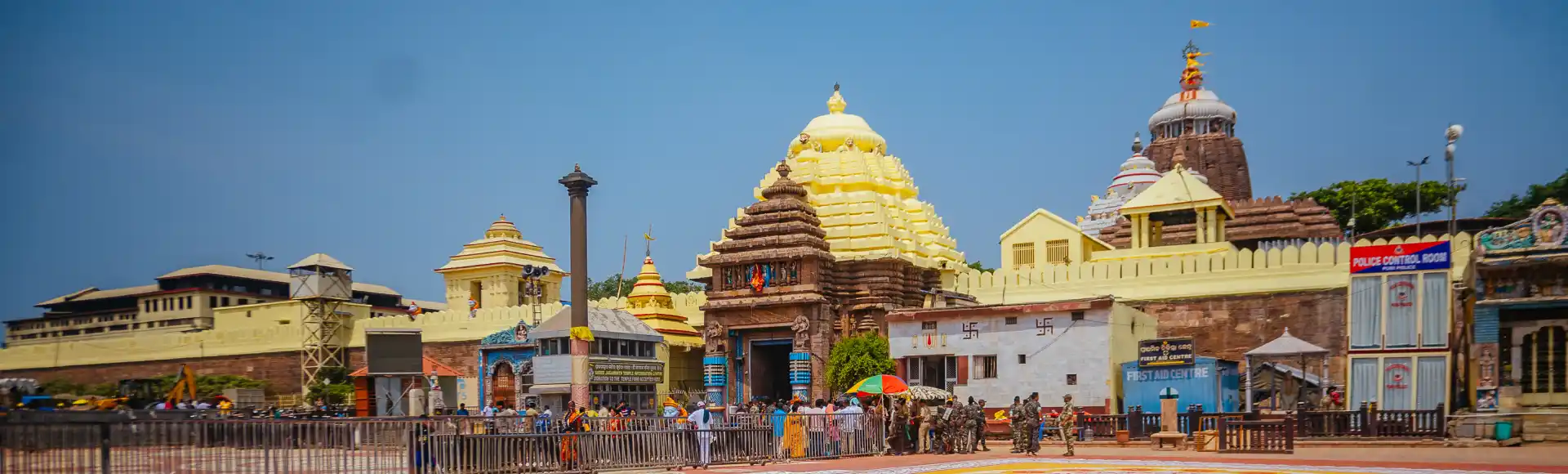
The present Jagannath temple took shape under the Eastern Ganga rulers; construction is generally associated with Anantavarman Chodaganga in the twelfth century and later work by his successors. Rath Yatra developed over centuries alongside the temple’s rituals, royal patronage and Puri’s importance as a pilgrimage centre. Its exact beginnings are difficult to assign to one date or single founding story. A defining feature is that the three large wooden chariots are made anew for the annual journey, linking inherited ritual practice with skilled work carried out for each festival. The Gajapati king’s ceremonial sweeping of the chariots is another longstanding expression of service and humility before Jagannath.