
Auli
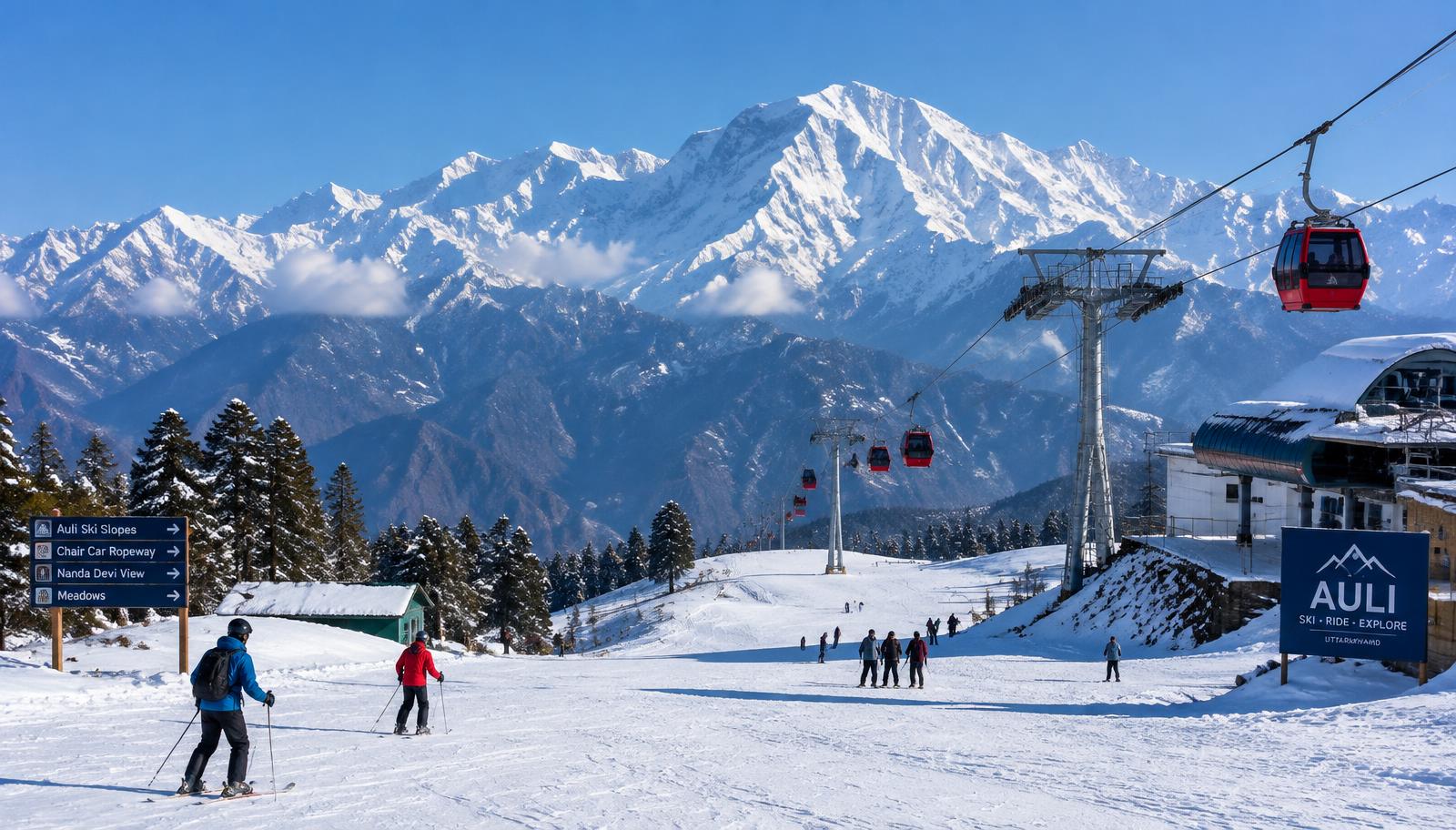
Above Joshimath in Uttarakhand’s Chamoli district, Auli attracts skiers and visitors seeking open alpine slopes and views of Nanda Devi.
Key facts · verified by Ghumoopedia editors
- Type of place
- Natural attraction
- Best time to visit
- December–March for snow, April–June for meadows
- Altitude
- 2,800 m
- Verified
- 21 Nov 2026
Plan a trip from Auli — a day-by-day route through places nearby.
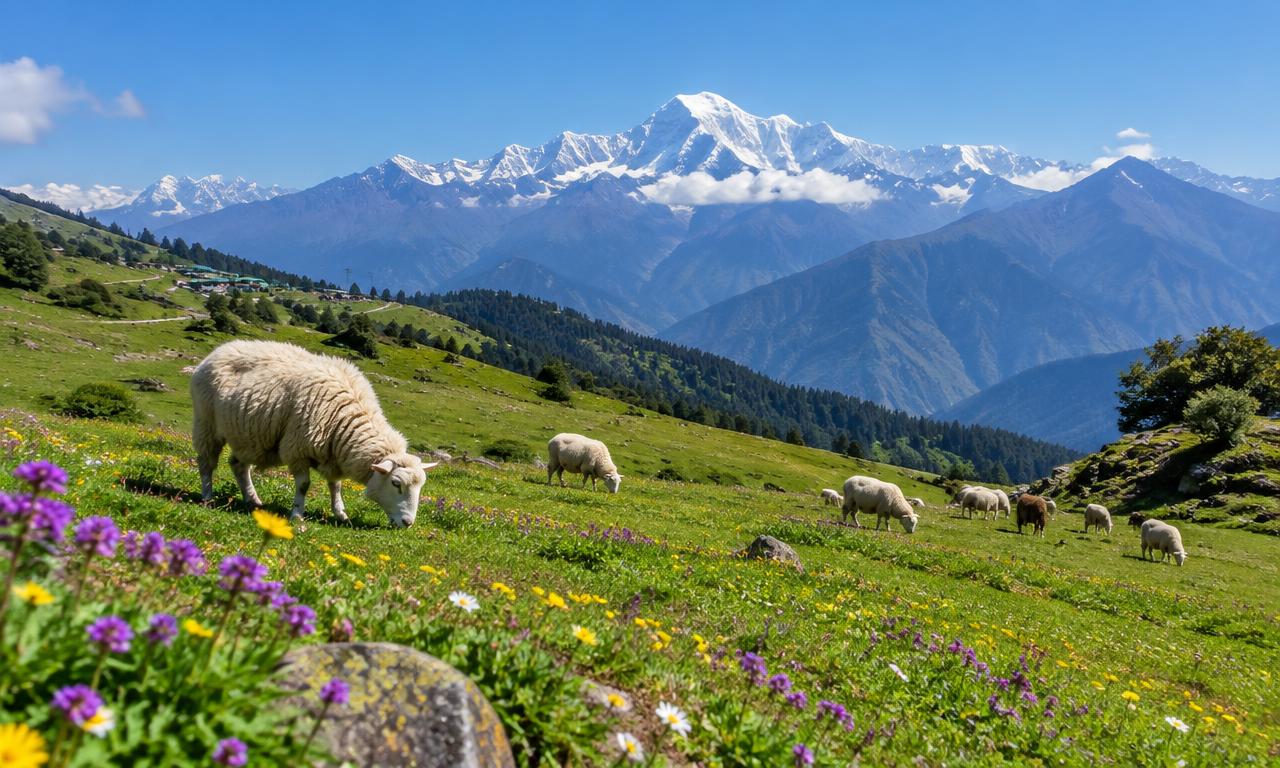
Auli lies above Joshimath, also known as Jyotirmath, in Chamoli district, Uttarakhand. A ropeway connects the two places. Its broad meadows and ski slopes are among the reasons people come here. The visitor areas range from about 2,500 to 3,050 metres. Grassy openings sit among oak and conifer trees, with the Himalaya as a backdrop. Nanda Devi can be seen when cloud cover allows. The elevation shapes conditions during a visit: nights can be cold and sunlight strong. Even a leisurely stay may involve walking uphill in places. Winter attracts skiers and travellers hoping for snow, generally from December to March, but snowfall and usable ski conditions vary considerably. Do not book solely on promises of guaranteed snow. April to June usually suits meadow walks and mountain viewing; September and October can offer clearer skies after the monsoon. July and August bring green landscapes but also rain, slippery paths and greater disruption on mountain roads. Allow two or three nights rather than treating Auli as a quick photo stop. The approach is long, and weather may hide the peaks for an entire day. Facilities are limited compared with larger hill stations: nightlife, shopping and restaurant choice are modest. Auli works best for travellers comfortable with simple evenings, flexible plans and scenery-led days.
Why it matters
Auli is a prominent mountain-meadow and winter-sports destination in Chamoli district, valued for its ski slopes, high-altitude grasslands and views of Nanda Devi when skies are clear. It is reached from Joshimath, also known as Jyotirmath, and forms part of the wider visitor circuit for the Garhwal Himalaya and Badrinath pilgrimage region. The Garhwal Mandal Vikas Nigam has been associated with ski facilities and training in Auli, while the destination has also hosted organised winter-sports events, including the 2011 South Asian Winter Games. Its importance is regional as a base for skiing and meadow walks, rather than as a major urban or cultural centre. No UNESCO or ASI-protected designation is identified for Auli itself.
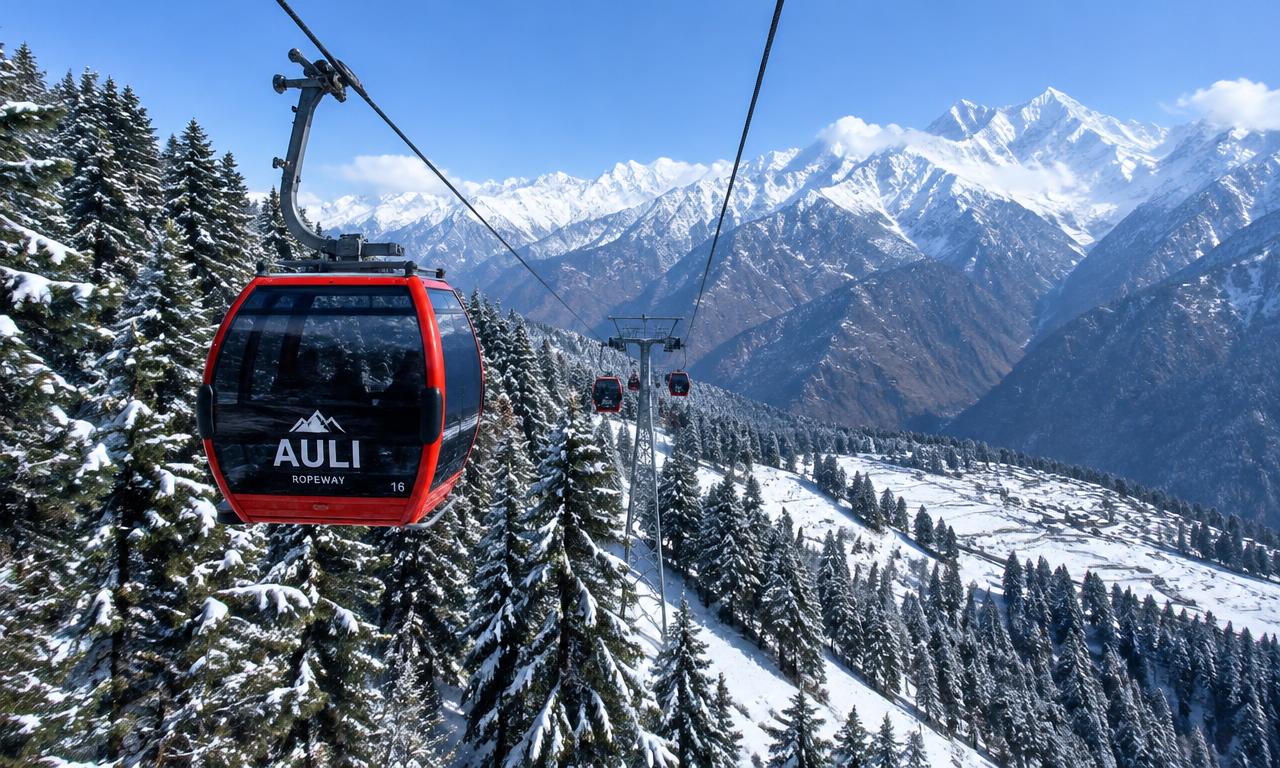
Auli developed as a destination around a landscape long used as high pasture. The surrounding meadows, or bugyals, are part of a wider Himalayan tradition of seasonal grazing; their use and access have been connected with local pastoral livelihoods. Auli was not originally a purpose-built town, and its scattered visitor facilities grew around the slopes and the road and ropeway links to Joshimath. Modern tourism increasingly presented Auli as a place for skiing and mountain recreation. The Garhwal Mandal Vikas Nigam became associated with ski facilities and instruction, and the slopes later hosted organised winter-sports events, including the 2011 South Asian Winter Games. The Joshimath–Auli ropeway was developed to connect the town with the high meadow, though its operation has been subject to closures and local conditions; it should not be assumed to be running. Roads, accommodation and seasonal visitor services have also changed the way people reach and use the area. These developments brought tourism and winter-sports work, while the high-altitude setting continues to make access and activities dependent on weather, snow and road conditions. Auli’s history is therefore best understood as the evolution of a pastoral landscape into a seasonal recreation destination, rather than as an old settlement with a single founding date.
Origin stories & folklore
Auli does not have a widely established origin legend specific to the meadow. Local beliefs and stories are often part of the wider Garhwal region. In nearby Joshimath, religious tradition connects the town with Adi Shankaracharya and the establishment of Jyotirmath. Another well-known Hindu epic tradition places Hanuman’s search for the life-restoring herb Sanjeevani in the Himalayan region; it is a broad regional story, not a documented explanation for Auli’s name or formation. Visitors may hear local versions that differ in detail. Treat these accounts as living religious traditions rather than as verifiable historical records, and ask before photographing worshippers or ceremonies.
- Try skiing with an established local operator when snow coverage permits. Ask whether the quoted price includes boots, skis, poles, instruction and any lift charges. Beginners benefit more from a proper lesson than an unguided equipment rental. - Walk through the meadows for mountain views. Start early for a better chance of clear skies, but avoid icy paths before they soften. Never enter active ski runs casually. - Consider the Gorson Bugyal walk, commonly described as about three kilometres each way from upper Auli, depending on the starting point. Take a local guide in snow, fog or unfamiliar conditions; deep winter snow can make this substantially harder than a summer stroll. - Ride the local chairlift if operating; it is separate from the longer Joshimath ropeway. Confirm boarding arrangements, opening times and return services that day. - Visit Joshimath’s Narsingh Temple if access permits. Dress respectfully and check local restrictions. Treat the artificial lake as a scenic feature, not a swimming spot.
Suggested itineraries
Half day: Allow about 3–4 hours for a meadow viewpoint walk, a relaxed break and, if operating, a ride on the local chairlift; keep to marked areas and avoid active ski runs. Full day: Spend about 1–2 hours on the slopes or in a lesson if conditions permit, take a long lunch break, then allow about 3–4 hours for a walk towards Gorson Bugyal and back, adjusting for weather and fitness. Gentler option: Choose a nearby viewpoint with vehicle drop-off where available, take short level walks with frequent rests, and skip the longer Gorson Bugyal route.
Everyday culture in Auli reflects its place in Garhwal and its close connection to Joshimath. Garhwali is widely associated with the region, alongside Hindi, which is commonly used in shops and visitor services. Local religious life follows Hindu customs, with temple visits and seasonal observances more visible in nearby towns than on the meadow itself. Folk music and dance traditions are part of the wider Uttarakhand cultural landscape, though Auli is not a regular performance venue. Warm layered clothing is practical in the cold, but there is no single local dress code for visitors. At temples, modest clothing and respectful behaviour are appreciated; follow any posted or locally explained restrictions.
Local communities
Residents of Joshimath and nearby villages are closely connected to Auli through transport, accommodation, food services, guiding and seasonal tourism work. The wider area also has a history of pastoral use of high meadows, with seasonal grazing forming part of livelihoods in the region. Tourism and winter sports provide additional work, though demand changes with snow, weather and road access. Garhwali-speaking communities are part of the local cultural setting, alongside people who have moved for work and public services. Visitors should use established local guides when conditions are difficult and avoid disturbing grazing animals, meadow vegetation or customary activities.
Festivals & events
Auli itself does not have a large, dependable annual festival programme. In Joshimath and nearby communities, Hindu festivals such as Holi, Diwali and Makar Sankranti are observed, with dates following the religious calendar. Temple events and Nanda Devi-related observances may take place locally, but their form and timing can vary. The Badrinath pilgrimage season brings increased movement through Joshimath and the surrounding roads, generally during the warmer months when the shrine is accessible. These periods can make transport and accommodation busier. Check local notices if hoping to attend an event, and observe any guidance about photography or access at places of worship.
Most visitors eat at their accommodation or small cafés and dhabas. Expect simple North Indian meals, rice, dal, vegetables, parathas, eggs and tea rather than extensive menus. Ask ahead for Garhwali dishes such as mandua roti, chainsoo or jhangora kheer; these are not available everywhere daily. Joshimath generally has more choice and better opportunities to buy snacks. Carry drinking water, nuts and something substantial for walks. Request early breakfasts and packed lunches the previous evening. Confirm dietary requirements before booking, especially for strict allergies or vegan meals.
Shopping & local experiences
Shopping in Auli is limited, so visitors looking for a wider choice should check the markets and shops in Joshimath. Depending on what is available, look for warm woollen clothing, practical winter accessories, packaged local foods and regional products. Ask sellers about the origin of handmade items rather than assuming they are locally produced. Small shops may have limited stock, particularly outside busy seasons. A meal or snack featuring Garhwali-style dishes can be a more memorable local experience than souvenir shopping; availability varies, so ask restaurants what is freshly prepared.
Auli is a high meadow landscape on the slopes above Joshimath, with open grasslands, ski runs and views across the Garhwal Himalaya. Visitor areas lie roughly between 2,500 and 3,050 metres. Oak and conifer forests border parts of the open slopes, and the scenery changes with snow cover, seasonal grasses and weather. Nanda Devi may be visible in clear conditions, but clouds can obscure the peaks. Auli also has an artificial lake; it is a scenic feature, not a swimming spot. The broader region supports Himalayan wildlife and birdlife, but sightings are never assured. Stay on established paths, do not feed animals, and take care not to trample meadow plants or leave litter.
Best time to visit
December–March for snow, April–June for meadows
Climate through the year
Bars show rainfall; numbers show average temperature (°C).
The nearest practical airport is Dehradun’s Jolly Grant Airport; Rishikesh and Haridwar are useful rail gateways. From Rishikesh, the road journey to Auli is approximately 270–290 kilometres via Devprayag, Srinagar, Rudraprayag, Karnaprayag and Joshimath. Budget a full daylight travel day, often 10–12 hours or longer with traffic, stops or roadworks. Buses and shared jeeps serve Joshimath, generally with better availability early in the day; confirm departures locally. The final climb to Auli is roughly 14–16 kilometres by road. Snow may require suitable vehicles and chains. Do not assume the Joshimath–Auli ropeway is operating: services have been affected by local conditions and closures. Verify road access, ropeway status, fares and the exact hotel drop-off before departure.
| Option | Fastest | Cheapest from | Time saved |
|---|---|---|---|
| Train | 16h 20m | ₹450 | — |
| Bus | 10h 30m | ₹500 | 5h 50m |
| Flight | 1h | ₹3,200 | 15h 20m |
Main leg only; check notes for last-mile road time. Time saved is compared with the slowest option.
Best train: 14609 Hemkunt Express — quickest at 16h 20m, departs 21:10.
Confirm onward and return timings on IRCTC / NTES, the state bus operator or your airline before travel. A dash means current timings or fares have not been verified.
Getting around
On arrival, visitors commonly use locally arranged taxis or private vehicles between Joshimath and Auli; road access and the final drop-off can vary with snow and road conditions. Shared vehicles may be available in the area, but confirm locally rather than relying on a fixed schedule. The Joshimath–Auli ropeway, when operating, is separate from Auli’s local chairlift, and neither should be assumed to be running. Within the visitor area, walking is often necessary between slopes, accommodation and viewpoints. Ask your driver about parking and return arrangements before leaving Joshimath, especially in winter or poor weather.
Hours, tickets & permissions
Auli is an open mountain destination rather than a single attraction with one universal entrance rule. Particular lifts, ski facilities, ropeway services or organised activities may have separate operating arrangements, tickets or restrictions, and some may close because of weather or local conditions. Do not assume the Joshimath–Auli ropeway is operating. No general camera permit or dress rule is stated for the meadow; temple sites nearby may have their own expectations. Confirm current access, hours and fees with the relevant operator or managing authority before setting out.
Facilities
Facilities are modest compared with larger hill stations. Accommodation, simple meals and basic visitor services are available in Auli and Joshimath, but choice can be limited and seasonal. Toilets and drinking water may be available at hotels or specific visitor facilities; check locally and carry water. Ski equipment and instruction may be offered by established operators when snow conditions allow. Parking is limited or location-dependent, and ATMs and a broader range of shops are more likely in Joshimath. Confirm what is open before travelling, especially outside the main visitor season.
Accessibility
Auli is a high-altitude mountain destination with sloping ground, uneven meadow paths and potentially icy or muddy surfaces. Reaching viewpoints and activity areas can involve uphill walking; routes vary with snow and the precise starting point. Shade is limited on open slopes, while cold, strong sun and thinner air can make even short walks tiring. The destination should not be assumed to be wheelchair- or stroller-accessible, and step-free routes or accessible toilets are not assured. Older visitors and anyone with mobility or heart or breathing concerns should plan short outings, allow rest, check vehicle drop-off options and seek medical advice if needed.
Ascend gently, hydrate and avoid strenuous activity immediately after arrival. Headache with nausea, dizziness or unusual fatigue can indicate altitude illness; stop ascending and seek medical advice. Breathlessness at rest, confusion or worsening symptoms require urgent help and descent. Wear grippy footwear, layered clothing, gloves and UV protection. Avoid night driving, closed trails, unstable slopes and walking onto frozen water. Check weather and road advisories daily. Mobile coverage and electricity can fail. Carry essential medicines, cash and offline information. India’s emergency number is 112; confirm nearby medical facilities with your host.
Photography
Early morning often offers the best chance of clear mountain views, though weather can change quickly; softer light later in the day can suit the meadows. Viewpoints around the open slopes and the route towards Gorson Bugyal provide broad landscape compositions when accessible. Ordinary personal photography is generally suitable in open public areas, but check rules at facilities and temples. Do not enter ski runs or block paths for a photograph. Drone use may be restricted by aviation rules, local security or site conditions, so verify permissions before flying. Ask people before taking close portraits and respect worship and privacy.
Choose an Auli stay for slope access and mountain atmosphere, or Joshimath for transport links, shops and a wider budget range. Compare the exact location, not just the listing’s destination label: some properties involve steep steps or a walk from the road. Before paying, confirm heating charges, hot-water hours, power backup, meal availability and snow-day transfers. Ask about cancellation terms if roads close. In Joshimath, seek current local advice on building safety and avoid any property or neighbourhood subject to evacuation orders or official restrictions.
Joshimath is the main nearby town, with the Narsingh Temple and services useful to visitors; access to the temple may be subject to local restrictions. Gorson Bugyal is a popular meadow walk from upper Auli, though snow, fog and trail conditions can make it demanding. Vishnuprayag, where the Alaknanda and Dhauliganga rivers meet, is another nearby regional landmark. Badrinath is a major pilgrimage destination farther along the mountain route and is accessible only when local road and seasonal conditions permit. Treat these as separate excursions rather than assuming all can be combined in one day, and check road status before travelling.
Places in Auli
Plan three nights if possible, leaving one flexible day for weather. Choose a room with confirmed heating and an actual mountain-facing view rather than relying on promotional photographs. A shared beginner ski lesson or a guided meadow walk makes a better anchor activity than rushing between viewpoints. Arrange transport back before sunset, and do not expect late-night cafés. For special meals or room arrangements, contact the property directly and confirm any extra charges.
Q: How much time should I plan for Auli? A: Two or three nights allow for the long approach, changing weather and time to enjoy the meadows without rushing. Q: When is the best season to visit? A: December to March is the usual winter-sports season, but snow and ski conditions vary. April to June and September to October often suit walks and mountain viewing. Q: Is there an entry ticket for Auli? A: There is no single general entry rule for the whole meadow; lifts, ropeway services or activities may have separate arrangements. Confirm current access and fees locally. Q: Is Auli suitable for children and elderly visitors? A: It can suit visitors who are comfortable with cold, altitude and uneven ground. Keep walks short, allow rests and avoid icy or steep routes if mobility is limited. Q: Where should I stay near Auli? A: Stay in Auli for proximity to the slopes or in Joshimath for a broader choice of services and road connections; check access and drop-off arrangements before booking.
Be the first to share photos, stories, advice or a helpful contact for Auli.
Loading…