
Rishikesh
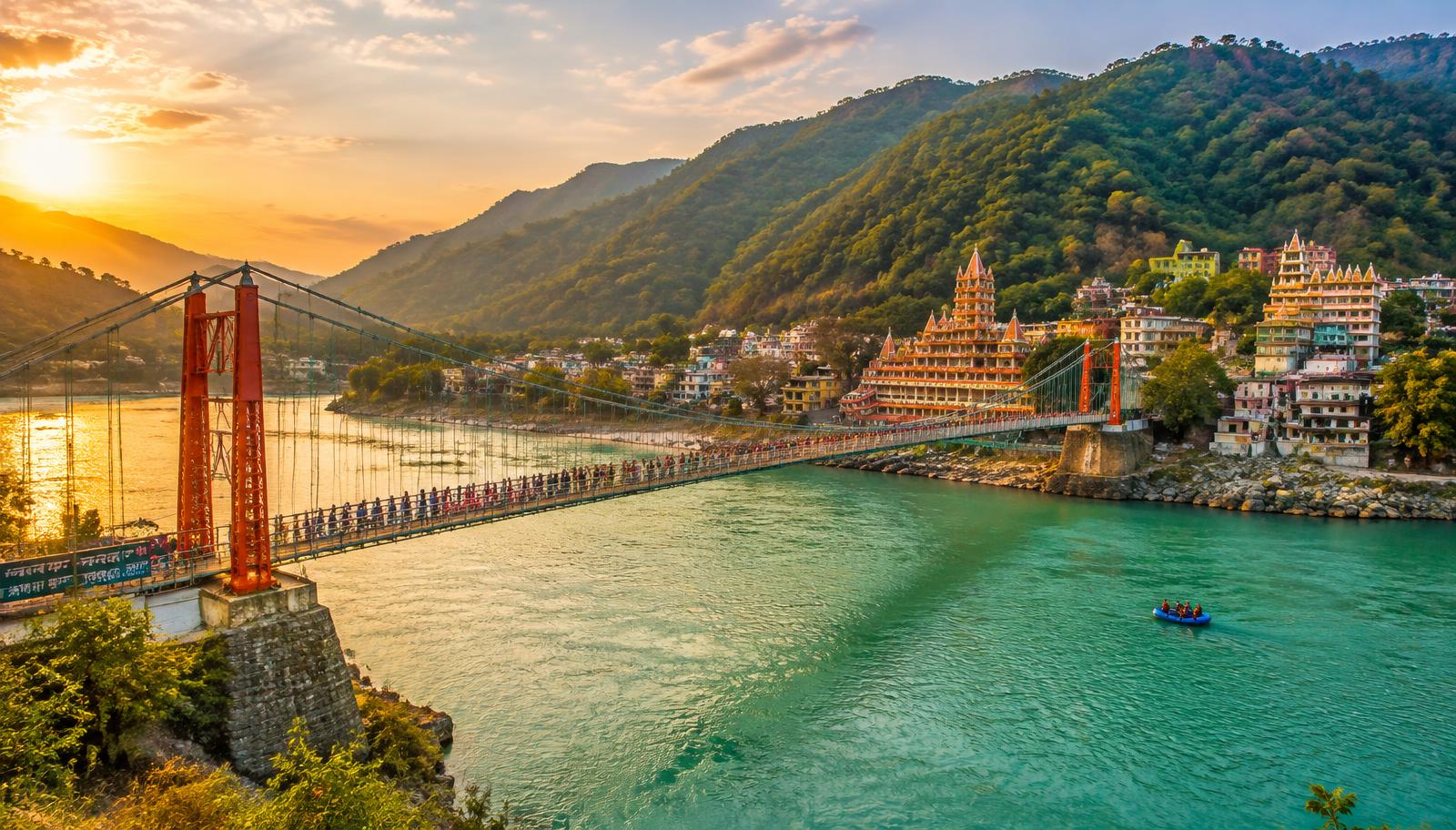
Rishikesh is a pilgrimage town in Uttarakhand where yoga and worship meet river adventure. Visitors come for its ghats, suspension bridges, rafting and the evening aarti ceremony at Triveni Ghat.
Key facts · verified by Ghumoopedia editors
- Type of place
- Temple / pilgrimage site
- Best time to visit
- October–April
- Altitude
- 372 m
- Verified
- 2 Nov 2026
Plan a trip from Rishikesh — a day-by-day route through places nearby.
In Uttarakhand, Rishikesh lies where the Ganga comes out of the Himalayan foothills and flows towards the plains. The river shapes both the town’s religious life and its setting. Ashrams, yoga schools and riverside worship share space with cafés and forest walks. Ghats, suspension bridges, seasonal rafting and the evening aarti at Triveni Ghat are among the reasons people visit. Rishikesh is an active pilgrimage centre, not a place of uninterrupted quiet. Temple bells, traffic, construction and busy lanes beside the river are part of everyday life. The main visitor areas have different moods. Tapovan has numerous yoga studios, cafés and guesthouses, but many properties involve steep approaches. Swarg Ashram, on the eastern bank, suits walking between ashrams, ghats and vegetarian eateries. The central town around Triveni Ghat is convenient for markets and transport but generally busier. Choose your base carefully because crossing the river and navigating congested roads can take longer than map distances suggest. Allow three or four days for an introductory visit, or a week or more for a structured yoga programme. February–April and October–November are often comfortable; May and June can be hot, while the monsoon brings heavy rain and disrupted outdoor activities. Winter mornings and evenings are chilly. Festival periods and weekends attract crowds, so reserve suitable accommodation ahead.
Why it matters
Rishikesh is a major Hindu pilgrimage centre on the Ganga, where foothill landscapes, river bathing places, temples and ashrams shape daily religious life. Many pilgrims also pass through the town on journeys toward Himalayan shrines, including the Char Dham, while others come for yoga study or the riverfront aarti. Triveni Ghat and Parmarth Niketan are among the best-known places for evening worship. The town is also associated with the international spread of modern yoga, but remains a working settlement with busy roads and residential neighbourhoods.
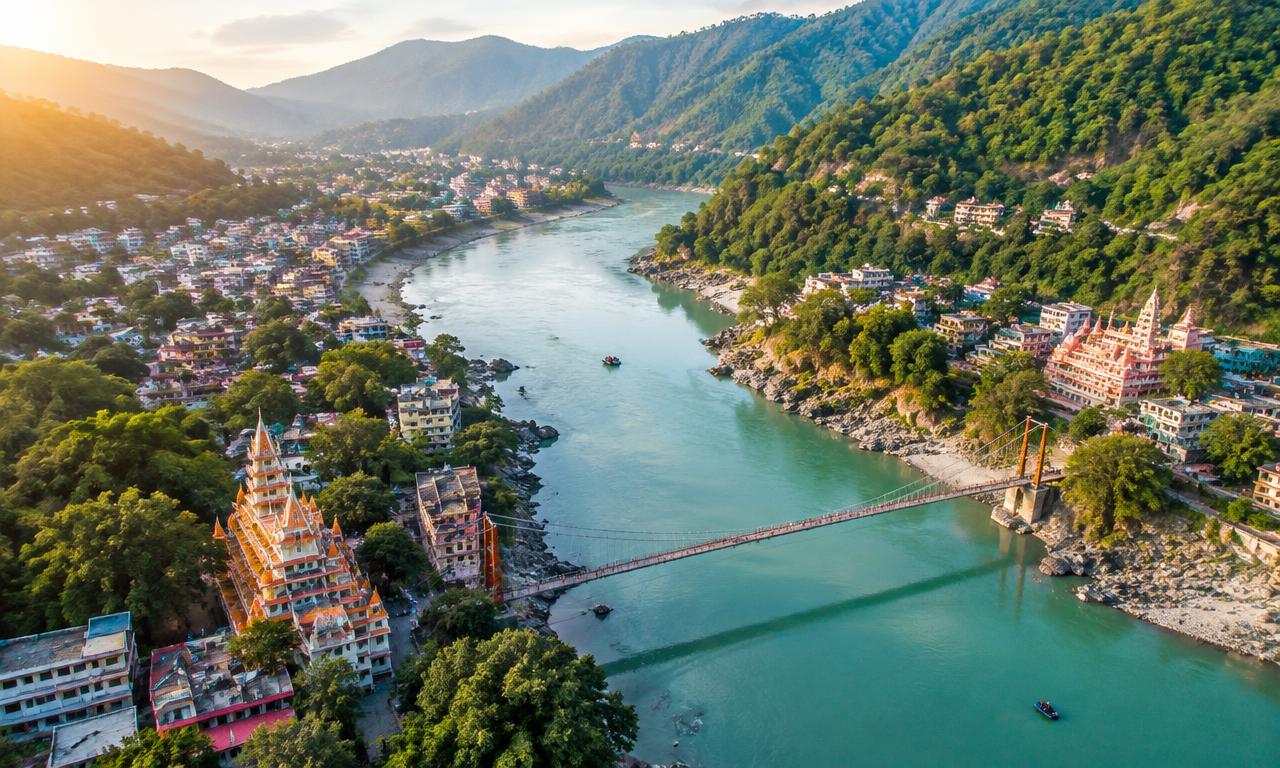
Rishikesh’s name is commonly linked to Hrishikesha, a name of Vishnu. The town’s sacred identity grew around the Ganga, forested foothills, pilgrimage routes and communities of ascetics, temple servants and local residents. Hindu traditions describe the area as a place of penance and spiritual practice, though accounts of its earliest history are not always independently verifiable. Over many generations, shrines and ashrams developed along both banks, serving pilgrims travelling toward Himalayan temples and people seeking instruction in religious disciplines. In the modern period, improved roads, river crossings and rail connections made visits easier, while markets and guesthouses expanded. The town also became widely known outside India as a centre for yoga. In 1968, members of the Beatles visited Maharishi Mahesh Yogi’s ashram, now commonly called the Beatles Ashram or Chaurasi Kutia, bringing international attention to the area. Rishikesh has since grown into a busy pilgrimage and visitor destination, with newer construction alongside older religious sites. Buildings and riverfront facilities have undergone maintenance and alteration over time; there is no single restoration history that describes the whole town.
Origin stories & folklore
According to local tradition, the sage Raibhya performed austerities here and received a vision of Vishnu as Hrishikesha; this account is often used to explain the town’s name and sacred status. Another well-known legend connects Lakshman Jhula with Lakshmana, who is said to have crossed the Ganga at this place on a jute-rope bridge. The present river crossings are modern structures, not the legendary bridge. Bharat Mandir is associated in local belief with Bharat, the brother of Rama, and with worship of Vishnu. These stories remain part of how pilgrims understand the landscape, but they should be read as religious tradition rather than verified historical events.
Architecture & design
Rishikesh has no single architectural style: its sacred landscape includes compact temples, ashram compounds, ghats, shrines and modern river crossings. Temple buildings commonly use stone, plaster and painted masonry, with sanctums, pillared or covered gathering spaces, and towers whose forms vary by site. At riverfront ghats, broad flights of steps lead down toward the water, providing places for bathing, prayer and ceremonies; water levels and river conditions can change how much of the steps are usable. Ashram campuses may combine prayer halls, accommodation, gardens and teaching spaces within walled grounds. The Ganga is crossed by suspension bridges, including Ram Jhula and Lakshman Jhula, whose cables and suspended walkways reflect modern engineering rather than temple construction. Narrow lanes, uneven paving and later additions are part of the built environment, so access and views differ from one neighbourhood to another.
Important objects & sculptures
At temples such as Bharat Mandir, visitors may see a principal image of Vishnu, worshipped locally as Hrishikesha, along with subsidiary images and ritual furnishings. The specific images, access to inner sanctums and permitted viewing arrangements depend on the temple and the service in progress. Around the ghats, look for small shrines, bells, lamps and offerings used in daily worship rather than expecting a museum collection. Chaurasi Kutia is known for its former meditation buildings and painted murals, some weathered by exposure. Do not touch ritual objects, climb on structures or assume that photography of an image is permitted; ask temple staff or follow posted instructions.
Religious significance
The Ganga is revered by many Hindus as a sacred river, and bathing, prayer and offerings at its banks are important parts of pilgrimage. Rishikesh’s temples serve different traditions, with Vishnu worship especially associated with Bharat Mandir and devotional practice visible at shrines and ashrams throughout town. Evening aarti at Triveni Ghat and Parmarth Niketan brings worshippers together for lamps, chants and offerings; arrangements vary by place and day. Visitors may observe quietly without joining rituals. River conditions can be hazardous, and ritual bathing should take place only where locally considered safe. Customs differ among temples, so follow the guidance of priests, staff and signs, and approach worshippers with respect.
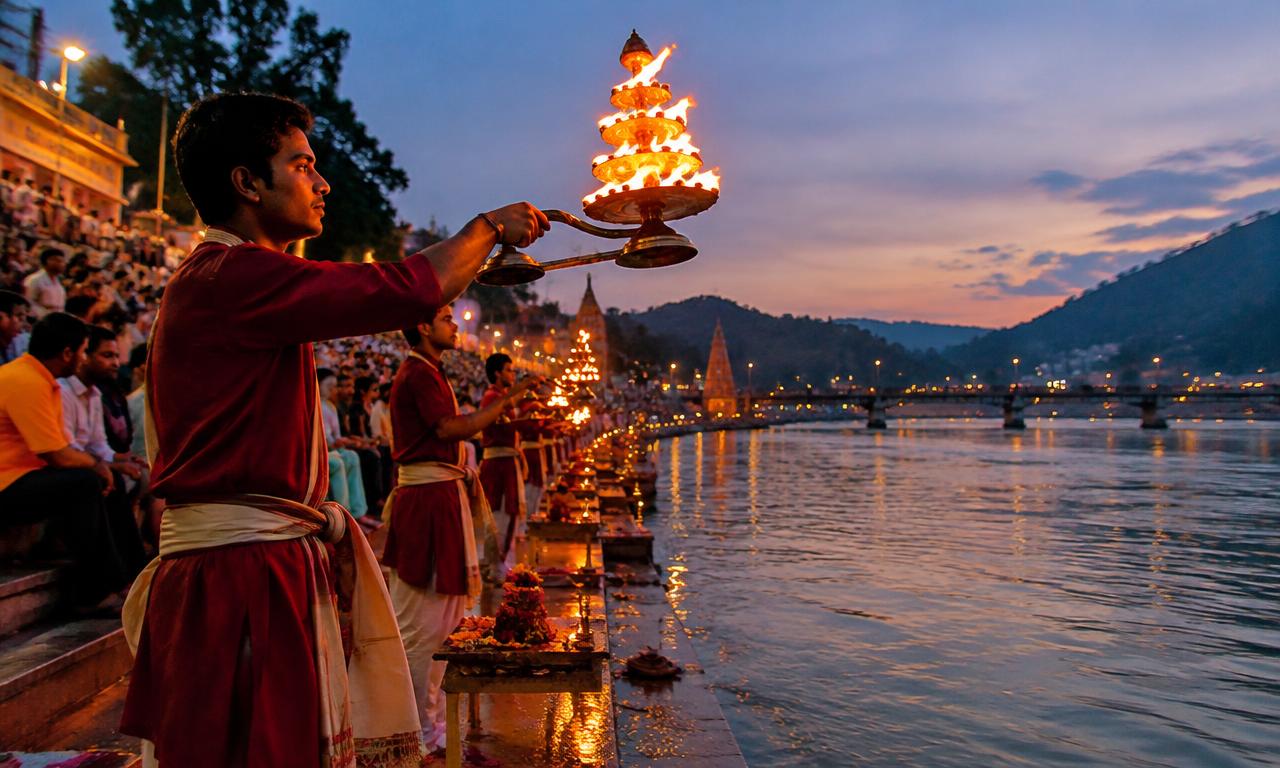
- Attend evening Ganga aarti at Triveni Ghat or Parmarth Niketan. Arrive early, keep steps and pathways clear, and confirm the day’s timing locally because it varies with sunset and arrangements. - Try a beginner yoga class before committing to a longer course. Ask about teacher qualifications, class size, physical adjustments and whether meditation or philosophy is included. - Visit the Beatles Ashram, also called Chaurasi Kutia, for former meditation buildings, murals and woodland atmosphere. Verify opening hours and entry charges; carry water and expect uneven paths. - Book rafting only with an authorised operator. Discuss route difficulty, swimming requirements, age restrictions and medical suitability; operations depend on river conditions and official permissions. - Walk the Swarg Ashram riverfront in daylight, combining temples, bookshops and a café stop. - Consider Neer Garh waterfall or an early excursion to Kunjapuri for mountain views. Check trail conditions, transport and weather first; waterfall access may be unsafe after rain.
Suggested itineraries
Half day: Triveni Ghat and nearby market walk (1–1.5 hours); visit Bharat Mandir or another nearby temple (about 1 hour); finish with the evening aarti, arriving early (about 1 hour). Full day: Morning walk and temple visits in Swarg Ashram (2–3 hours); lunch nearby; visit the Beatles Ashram/Chaurasi Kutia (2–3 hours, allowing for uneven paths); return for a riverside stroll and evening aarti at Triveni Ghat or Parmarth Niketan (about 1–2 hours). Gentler option: Choose one neighbourhood, use a taxi to reduce walking between areas, visit a single accessible riverside viewpoint or temple, and rest at a nearby café; check steps and entry conditions before setting out.
Religious life in Rishikesh is interwoven with yoga teaching, ashram routines, pilgrimage and ordinary town activity. Sanskrit chants, devotional songs and temple bells can be heard alongside traffic and conversation. Hindi is widely used; English is common in many visitor-facing yoga schools and cafés, while local residents may speak other regional languages. Dress is generally practical and modest, especially at temples and ashrams. Vegetarian food is widely available around religious centres, and some establishments follow additional dietary rules. The town is not uniformly quiet or retreat-like: busy markets, construction, crowded riverfront paths and the routines of local families are part of its living culture.
Festivals & events
Maha Shivaratri, usually in February or March, is observed at temples in and around Rishikesh and can bring additional worshippers. Holi, generally in March, and Diwali, usually in October or November, are marked across the town, with local customs and crowd levels varying. The International Yoga Festival is held in Rishikesh, commonly during March, and draws yoga participants and visitors; confirm current arrangements with its organisers. Ganga-related religious observances and seasonal pilgrimage periods can also make ghats and roads busier. During festivals and holiday weekends, allow extra time for walking and transport, and reserve accommodation ahead.
Vegetarian food dominates the pilgrimage areas: try a simple thali, aloo puri, chole, seasonal sabzi and fresh roti. Tapovan also has cafés serving porridge, sandwiches, coffee and international vegetarian dishes; vegan travellers should ask specifically about milk, ghee, paneer and honey. Choose busy kitchens, eat freshly cooked food and use sealed or reliably filtered drinking water. For sensitive stomachs, skip raw chutneys and unrefrigerated dairy. Ask for menu prices before ordering, and check whether your ashram stay includes meals with fixed serving times.
Shopping & local experiences
Markets and small shops sell prayer beads, incense, religious images, books on yoga and spirituality, clothing and simple souvenirs. Handicrafts and locally made items vary by shop, so ask about materials and origin if that matters to you. Around ashrams, look for yoga texts and music recordings, while riverfront areas have stalls serving snacks and drinks. Vegetarian cafés and eateries offer a range of regional and visitor-oriented food; ask about ingredients and dietary practices. Carry reusable bags where practical, and avoid buying items made from protected wildlife or plants.
Best time to visit
October–April
Climate through the year
Bars show rainfall; numbers show average temperature (°C).
- By air: Dehradun’s Jolly Grant Airport is roughly 20–25 km from central Rishikesh. Prebook a hotel transfer or use an authorised airport taxi; allow approximately 45–75 minutes, longer during congestion. - By rail: Check services to Yog Nagari Rishikesh, whose station code is YNRK. Haridwar Junction, around 25 km away, offers additional connections; continue by taxi, bus or shared transport. Confirm the actual arrival station before booking your pickup. - By road: Buses connect Delhi, Haridwar and Dehradun with Rishikesh. Delhi journeys commonly take six to eight hours but can run substantially longer. - Locally: Walk within neighbourhoods and use autos or taxis between them. Verify fares, bus departure points, bridge access and vehicle restrictions locally; do not assume a mapped river crossing is open.
| Option | Fastest | Cheapest from | Time saved |
|---|---|---|---|
| Train | 4h 30m | ₹250 | 2h |
| Bus | 6h 30m | ₹750 | — |
| Flight | 1h | ₹3,200 | 5h 30m |
Main leg only; check notes for last-mile road time. Time saved is compared with the slowest option.
Best train: 12017 Dehradun Shatabdi Express — quickest at 4h 30m, departs 06:45.
Confirm onward and return timings on IRCTC / NTES, the state bus operator or your airline before travel. A dash means current timings or fares have not been verified.
Getting around
Walking works well within compact areas such as Swarg Ashram, but steep approaches, crowds and uneven lanes can slow progress. Autos, e-rickshaws and taxis connect neighbourhoods; agree the destination and confirm the fare before setting off. Local buses serve some routes, but check departure points and availability locally. River crossings and road access can be affected by congestion, bridge restrictions or works, so do not rely on map distance alone. Parking is limited near busy ghats and lanes; use designated areas where available. Treat boats as a possible local service only when authorised and operating, not as a dependable crossing.
Hours, tickets & permissions
There is no single entry system for Rishikesh: public ghats, temples, ashrams and managed attractions each set their own access rules. Some sites may request donations, require a ticket or restrict entry during rituals; camera rules and access to inner areas can also differ. Confirm current opening arrangements and any fees with the relevant temple, attraction or managing authority before travelling. Check locally for changes on festival days or during maintenance, and observe notices at entrances.
Facilities
Facilities vary by neighbourhood and site. Busy ghats and visitor areas usually have nearby food stalls, cafés and shops, while toilets may be available at larger attractions or public facilities; check locally for cleanliness and access. Carry drinking water and use refill points only when their safety is clear. ATMs, pharmacies and accommodation are found in the town, but may not be close to every temple or trail. Parking is limited around congested riverfront lanes. Guides are available for some visits, though services and credentials vary; arrange them through a reliable local source.
Accessibility
Rishikesh can be physically demanding: many riverfront routes include steps, uneven paving, narrow lanes, slopes or steep approaches, particularly around Tapovan and some ashrams. Ghats have stairways down to the river, and access changes with water levels. Shade is intermittent, so heat and crowding may add to the effort. Wheelchair and stroller access is limited and cannot be assumed at temples, bridges or older sites; check with the specific venue before visiting. Older visitors or anyone with limited mobility may find it easier to choose one area, travel between neighbourhoods by taxi and avoid steep trails or crowded stairs.
The Ganga has powerful currents: do not swim casually or enter water simply because others are doing so. Stay behind barriers and away from slippery edges. For rafting, insist on a correctly fitted life jacket, helmet, safety briefing and a clear rescue plan. During monsoon weather, avoid waterfalls, unstable trails and unnecessary mountain-road journeys. Keep food hidden from monkeys and never feed them. Use reputable transport after dark, protect valuables in crowds and dress respectfully at religious sites. Save India’s emergency number, 112, and verify nearby medical facilities with your accommodation.
Visitor rules
Dress modestly at temples and ashrams, and remove footwear where requested. Follow signs and staff instructions about restricted areas, ritual spaces and river access. Do not enter the water where conditions are unsafe, litter, or leave plastic offerings behind. Keep pathways and ghat steps clear, especially during ceremonies. Avoid loud behaviour and do not touch idols, offerings or ceremonial equipment without permission. Some sites restrict photography, footwear or entry during worship; rules differ, so ask before proceeding. Use authorised operators for adventure activities and follow current safety directions.
Photography
Soft morning or late-afternoon light can suit riverfront views, while evening aarti is visually striking but often crowded. Ghats, bridges and public streets offer viewpoints, subject to access and safety conditions. Photography is commonly possible in public areas, but temples, ashrams and the Beatles Ashram may have site-specific restrictions or charges; confirm with staff before taking pictures. Ask permission before photographing people, especially worshippers and children, and avoid interrupting prayers. Do not use a drone without checking applicable permissions and local restrictions; never fly it over crowds or ceremonies.
Choose Tapovan for cafés and yoga options, Swarg Ashram for an ashram-focused atmosphere, or central Rishikesh for transport convenience. Ashrams may require advance registration, modest clothing, early attendance, vegetarian meals and compliance with curfews; they are not interchangeable with hotels. Before paying, confirm bathroom arrangements, hot water, heating or air-conditioning, cancellation terms and the final approach from the road. River-facing rooms can still be noisy. Seniors should prioritise lifts and step-free access. Verify current rates directly, especially around weekends, festivals and yoga events.
Within Rishikesh, Triveni Ghat, Parmarth Niketan, Bharat Mandir and the Beatles Ashram/Chaurasi Kutia offer different kinds of religious and cultural visits. Neer Garh waterfall and Kunjapuri Devi Temple are popular outings; check weather, trail conditions and transport before setting out. Neelkanth Mahadev Temple is another pilgrimage destination in the surrounding hills, but the journey requires planning. Haridwar, a separate pilgrimage town on the Ganga, can be combined with a longer regional visit. Rajaji National Park lies in the broader region; check current access and activity arrangements with its authorities.
Places in Rishikesh
Base yourselves near the riverfront for relaxed walks, or choose a quieter hotel outside the busiest lanes if you have reliable transport. Combine one yoga class, a leisurely breakfast and evening aarti rather than packing every day with excursions. Confirm that both partners are comfortable with any rafting route. Ask accommodation about identification requirements, visitor rules and privacy before booking. Keep public affection discreet around temples and ashrams, and do not assume riverside accommodation includes direct, safe water access.
Q: How much time should I plan for Rishikesh? A: Three or four days suit an introductory visit. Allow longer for a structured yoga programme, outdoor excursions or a slower pace. Q: When is a comfortable season to visit? A: February–April and October–November are often comfortable. Summer can be hot, and monsoon rain may disrupt outdoor activities; check conditions before travel. Q: Is there an entry fee for Rishikesh? A: The town itself has no single entry system. Individual attractions may have tickets, donations or separate rules; confirm with the managing authority. Q: Can children or elderly visitors enjoy the pilgrimage sites? A: Yes, with planning. Crowds, steps, slopes and river conditions can be challenging, so choose shorter visits and check access at each site. Q: Where should I stay for nearby temples and ghats? A: Swarg Ashram suits walking between ashrams and ghats; central Rishikesh is convenient for markets and transport, while Tapovan has many cafés and guesthouses. Consider slopes and river crossings when choosing.
Be the first to share photos, stories, advice or a helpful contact for Rishikesh.
Loading…