
District · Nagaland
Dimapur
Dimapur is Nagaland’s western gateway and one of the state’s main centres for transport, trade and urban life.
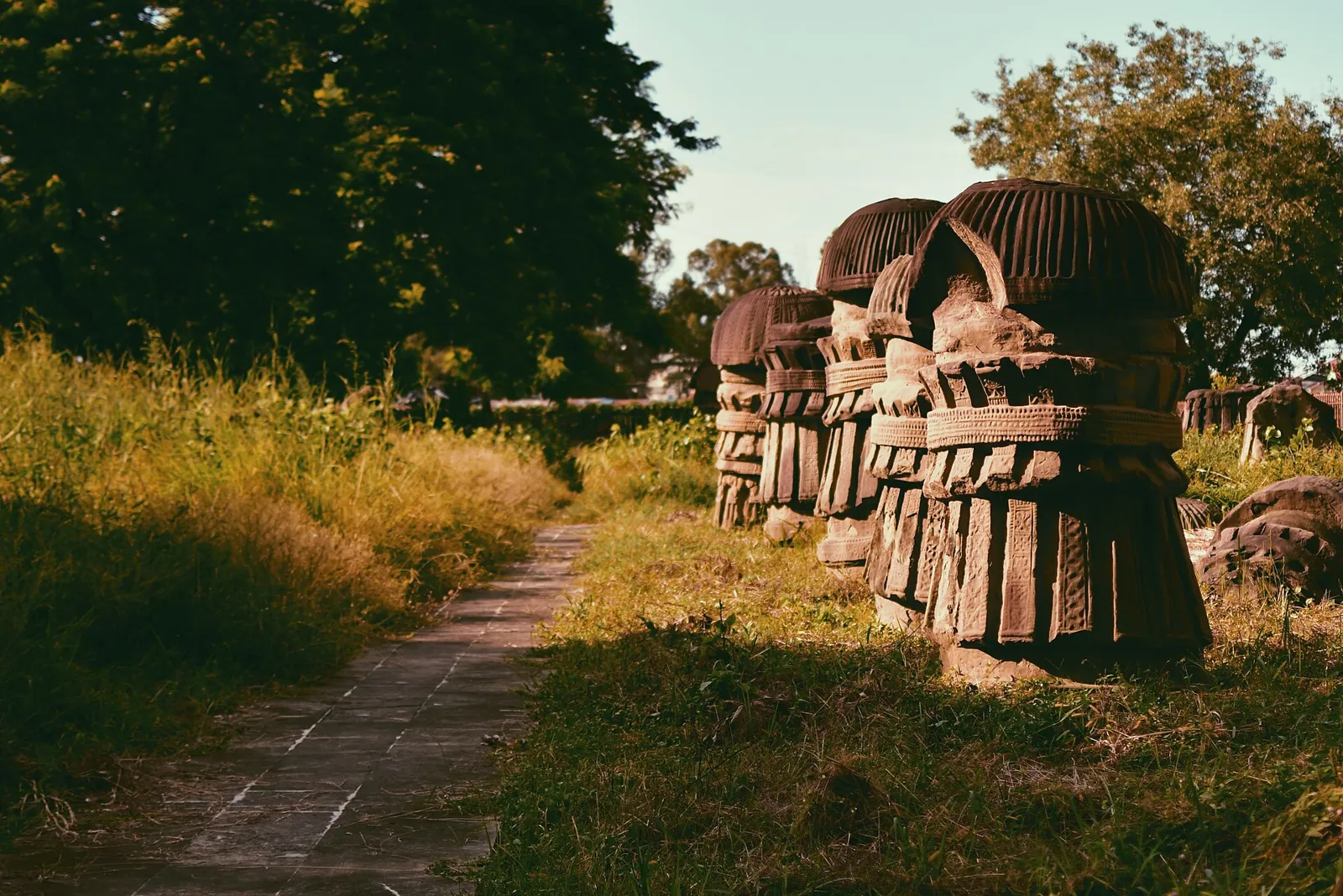
Dimapur district occupies Nagaland’s lowland western edge, where the plains around the Dhansiri River meet the approaches to the Naga Hills. Its character is more urban and commercially connected than that of many hill districts, with Dimapur city serving as an important gateway to the state. Markets, transport connections and communities from different backgrounds shape its everyday life. The Ruins of Kachari Rajbari preserve a visible link with the area’s medieval Kachari past, notably through their distinctive standing stone pillars. For travellers, the district offers both a practical arrival point and an introduction to Nagaland’s layered history, with archaeological remains set against the bustle of a trading city.
Dimapur is Nagaland’s western gateway and one of the state’s main centres for transport, trade and urban life. Its position on the Assam border makes it a practical arrival point for journeys onward to Kohima and the hill districts, while its railway station and airport distinguish it from many more remote parts of Nagaland. The district is best known for the Ruins of Kachari Rajbari, where standing stone pillars recall the region’s medieval Kachari past. Dimapur also offers a view of Nagaland’s varied communities and everyday city life, making it a useful introduction to the state as well as a place to explore its archaeological heritage.
The plains around present-day Dimapur are associated with the medieval Kachari, or Dimasa, kingdom. The Ruins of Kachari Rajbari, with their distinctive stone pillars and other remains, are commonly linked to that period and provide an important record of the kingdom’s presence. The site’s precise dates and the purpose of individual structures are not always firmly established, so it is best understood as part of a wider Kachari heritage rather than assigned a single definitive story. British expansion and administration reshaped the region during the colonial period, while Dimapur’s position on routes into Assam and the Naga Hills helped it develop as a transport and commercial centre. Nagaland became a state in 1963. Dimapur district was formed in 1997 from the former Kohima district, reflecting the growing importance of the plains city and its surrounding area. Today the district’s history is visible both in the archaeological remains and in the movement of people and goods through its modern urban centre.
2 destination guides
Dimapur
Dimapur is Nagaland’s largest city and a major centre for commerce. Visitors use it as a principal entry point to the state, with rail connections serving the city.
Ruins of Kachari Rajbari
The Ruins of Kachari Rajbari are medieval remains in Dimapur, Nagaland, linked to the Kachari civilisation. Visitors come to see the distinctive mushroom-shaped pillars and learn about their uncertain history and use.
Dimapur is a useful place to explore the wider food traditions of Nagaland, rather than a single district-specific cuisine. Smoked pork with bamboo shoot, dishes flavoured with axone or fermented soybean, galho rice porridge, seasonal greens and raja mircha relishes are among the foods to look for. Preparations vary between communities and kitchens. Small eateries may serve a limited daily menu, so ask what has been cooked fresh. Pork, beef, fish and fermented ingredients are common; vegetarian travellers should explain their requirements clearly and ask whether vegetables or broths contain meat or fish.
Dimapur’s shops and markets provide access to crafts from across Nagaland, especially handwoven textiles, bead ornaments, and bamboo and cane work. These are regional traditions, not crafts exclusive to the district. Naga shawls and other woven cloth often carry patterns associated with particular communities, and some designs have customary significance. Bamboo and cane are used for baskets and practical household objects as well as decorative pieces. When shopping, ask about the maker, community and materials, and distinguish locally handmade work from factory-produced souvenirs.
Communities in Dimapur observe a range of festivals, and celebrations vary across the district’s diverse population. Nagaland’s Hornbill Festival is held in December at Kisama, near Kohima; it is a regional event rather than a festival based in Dimapur, but visitors may use the city as a transport stop or overnight base. Traditional Naga festivals, including community harvest and seasonal observances, are generally held at different times of year. Travel and room demand can rise during major state events and holiday periods, so it is sensible to check local conditions and arrange accommodation ahead when visiting then.
Elsewhere in Nagaland
Dimapur occupies Nagaland’s western lowlands, around the Dhansiri River and near the Assam border. The flatter, more built-up plains give way to rising ground and the approaches to the Naga Hills farther east and south. Urban development and transport routes dominate much of the district, while river corridors and remaining green areas mark the less built-up landscape. The contrast between plains and hills shapes onward journeys: travel within the city is comparatively straightforward, but routes toward Kohima and other upland areas involve winding roads and can be affected by rain, traffic and occasional road disruption.
Dimapur has a broadly humid, subtropical climate. Summer, before and around the arrival of the monsoon, can feel hot and humid; the monsoon season brings frequent rain, wet roads and occasional travel disruption. Winter is generally milder and drier, making the cooler months from around October to March a comfortable period for exploring the city and archaeological remains. These months are often the easiest choice for visitors, though conditions vary from year to year. Pack light, breathable clothing, a rain jacket or umbrella in wetter months, and comfortable shoes. A light layer is useful on cooler winter evenings and for journeys into the hills.
Dimapur Airport is the main air gateway for visiting the district, while Dimapur railway station provides rail access. Guwahati is an important regional connection point for longer journeys, though routes depend on the traveller’s starting place. Roads connect Dimapur with Assam and with Kohima and other parts of Nagaland. Buses, shared taxis and hired vehicles are options for onward travel; auto-rickshaws and taxis serve journeys within the city. Allow extra time when continuing into the hills, where road conditions and weather can affect travel. Check current services locally.
Dimapur city is served by auto-rickshaws and taxis, with local buses and shared vehicles operating on some routes; availability and frequency can vary. Hired taxis or shared road transport are practical for reaching the Ruins of Kachari Rajbari and other parts of the urban area. The city connects by road west toward Assam and east toward Kohima, but onward hill journeys can take longer when roads are wet or congested. There are no routine passenger boat journeys to rely on for getting around the district. Confirm local transport options on arrival, especially for travel outside the city.
2 days: Dimapur → Ruins of Kachari Rajbari; sleep in Dimapur. 3 days: Dimapur → Ruins of Kachari Rajbari → Dimapur; sleep in Dimapur on both nights.
Dimapur city is the most practical base for both circuits, with the widest choice of hotels and guesthouses and access to transport connections. Some homestays may also be available; check location and arrangements before booking. The city suits travellers arriving by air or rail and those making a short visit to the Kachari remains. Government accommodation may be available in the district, but options and access can vary, so confirm directly through official channels. For travel onward into the hills, consider an overnight stop in Dimapur before continuing.
Use care on busy city roads and when crossing streets; traffic can be crowded, and conditions change in heavy rain. Wet weather may slow road journeys or contribute to local disruptions, particularly on routes toward the hills. Carry drinking water and use reliably treated or sealed supplies. Mobile coverage is generally more available in the city than in less built-up areas, but do not rely on uninterrupted connectivity while travelling. Wildlife is not usually a major concern in the urban area, though ordinary caution is sensible near greener, less developed places. Permit requirements can depend on nationality and current rules; confirm with official Nagaland authorities before travel rather than assuming an exemption.
- Perenabout 48 km
- Kohimaabout 49 km
- Wokhaabout 58 km
- Zunhebotoabout 80 km
- Phekabout 89 km
- Mokokchungabout 92 km
- Golaghat · Assamabout 93 km
- Jorhat · Assamabout 108 km
Straight-line distance between the centres of each district's destinations; road distance is longer.
All districts of Nagaland
Q: How many days should I spend in Dimapur district? A: One or two nights is usually enough for the city and the Ruins of Kachari Rajbari; allow more time if Dimapur is a stop before travelling into the hills. Q: When is the best time to visit? A: The cooler, generally drier months from around October to March are often the most comfortable. Monsoon travel can be wetter and less predictable. Q: What is the best base for exploring? A: Dimapur city is the most convenient base, with transport connections and the broadest choice of accommodation in the district. Q: How do I get to Dimapur? A: The district is served by Dimapur Airport and railway station, with road links to Assam and Kohima. Check current services for your route. Q: Is Dimapur suitable for families or elderly travellers? A: The city and its main archaeological visit can suit many families and older travellers. Plan for uneven ground at the ruins, busy traffic and potentially slower onward road journeys.
This page draws on our 2 destination guides for Dimapur and is updated as our team checks it.
Be the first to share photos, stories, advice or a helpful contact for Dimapur.
Loading…