
Ghumoopedia — Explore, Discover, Experience
Sign in
Dawki, near Dawki

City guide · Meghalaya

Dawki

Dawki, also known as Dauki, is a town in Meghalaya’s West Jaintia Hills district, India. People visit to see the town and learn its place within the district.

Famous for

  • Umngot River
  • Dawki Suspension Bridge
  • India–Bangladesh border crossing
  • River boating and kayaking
  • Border trade
In the city
1
District
West Jaintia Hills

Why Dawki matters

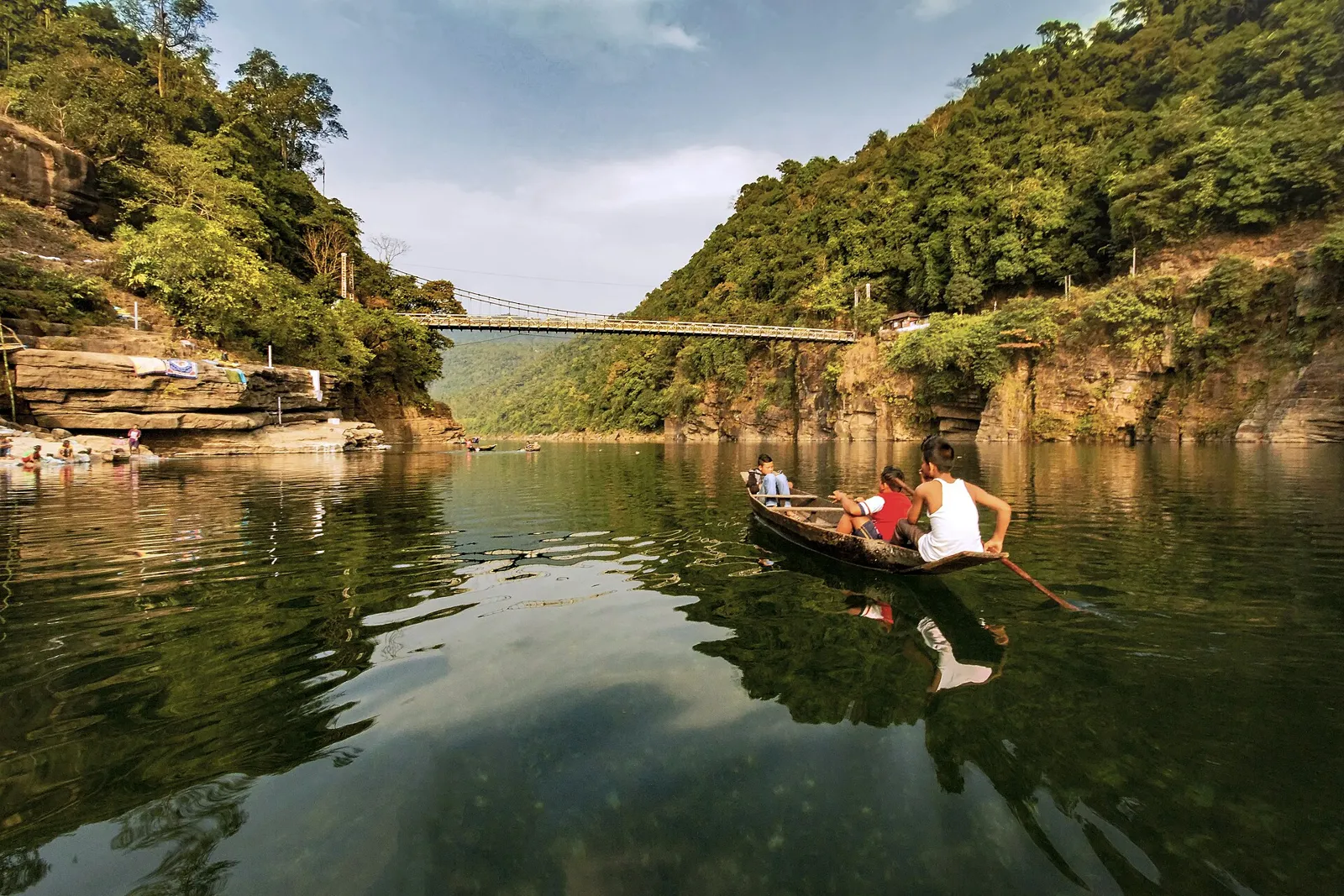
Dawki is a small border town in Meghalaya’s West Jaintia Hills district, set beside the Umngot River and the India–Bangladesh frontier. Its location gives it a practical role as a road crossing to Tamabil in Bangladesh, while the river and surrounding green hills make it a popular stop for visitors exploring the region. The Dawki Integrated Check Post supports cross-border movement and trade, including the transport of goods such as coal.

For many travellers, Dawki is best known for the Umngot’s clear water, which can appear strikingly transparent in the dry season. Boating, kayaking and riverside visits draw people from Shillong and beyond. The 1932 Dawki Suspension Bridge is another landmark, linking the town’s scenic appeal with its transport history. Nearby Shnongpdeng offers further river-focused activities and stays. Dawki is not a large resort town: its appeal lies in its border setting, river landscape and role as a gateway to the southern Jaintia Hills.

Famous for: crafts, trade & products

Dawki is better known for border commerce and river tourism than for a signature textile, handicraft or GI-tagged product. The Dawki–Tamabil crossing handles road trade between India and Bangladesh, with coal among the goods transported through the route. The Integrated Check Post is the main institution associated with this activity. Travellers should treat the crossing as a formal border facility: visiting the riverfront does not itself permit entry into Bangladesh, which requires the appropriate documents and procedures.

There is no prominent, well-established craft bazaar or major manufacturing cluster in Dawki. Small shops serve local needs and visitors, while regional Khasi and Jaintia handwoven items, bamboo and cane work, and other Meghalaya-made goods are more readily sought in larger centres such as Shillong or Jowai. Dawki can be a convenient place to buy refreshments and basic travel supplies, but it is not a dependable destination for a particular craft or branded local product. Its strongest associations remain the Umngot River, the historic bridge and cross-border transport.

History

Dawki’s development has been shaped by its position on a route between the Jaintia Hills and what is now Bangladesh. The town lies close to the international boundary, and the road crossing to Tamabil has made it a point of movement for people and goods. After the boundary became an international frontier in 1947, this location took on added importance for regulated cross-border travel and trade. The area remains part of the wider Jaintia Hills, whose communities and history extend beyond the modern border.

A notable colonial-era landmark is the Dawki Suspension Bridge over the Umngot River, built by the British in 1932. It served the road connection through this hilly terrain and remains a defining feature of the town. In recent decades, Dawki’s role has broadened: border infrastructure supports commercial traffic, while the river’s scenic reputation has brought increasing numbers of domestic visitors. The Integrated Check Post is part of this modern border development.

Food, festivals & culture

Dawki’s everyday culture reflects the Khasi and Jaintia communities of the surrounding hills, alongside the influences of a busy border route. Khasi, Pnar, English and Hindi are heard in the wider area; Bengali is also familiar in cross-border settings. Regional meals commonly feature rice, meat or fish, greens and seasonal ingredients. Jadoh, dohneiiong and tungrymbai are well-known Khasi dishes, though menus and food traditions vary between communities and households. Visitors will find simple local eateries rather than a large dining district.

Community and religious life across the region includes Christian churches as well as other local places of worship. Seasonal celebrations are important: the Jaintia festival Behdienkhlam is usually held around July, while Khasi celebrations such as Shad Suk Mynsiem take place in spring in parts of Meghalaya. Traditional music, dance and ceremonial dress are especially visible during festivals and community gatherings. Dawki itself is a small town, so larger cultural events and broader choices of worship places are more easily found in nearby towns such as Jowai or in Shillong.

Visiting the city

The drier months, roughly November to April, are generally the best time to visit for clearer river views and outdoor activities. Monsoon rains can swell the Umngot and affect road and river conditions, so check local conditions before travelling. Shillong Airport at Umroi is the nearest airport, though Guwahati’s Lokpriya Gopinath Bordoloi International Airport is the main air gateway for many travellers. Guwahati Railway Station is the principal rail connection.

Dawki is reached by road, with buses and shared vehicles serving the route from Shillong. In town, visitors can explore the Umngot riverfront, Dawki Suspension Bridge and the border area; use authorised transport and follow border instructions. Shnongpdeng, upstream, is a popular nearby base for river activities and riverside stays. Plan extra time for hill roads, especially during wet weather.

Attractions

Places to visit in Dawki

Sights within about 12 km of each other, even when they fall in different districts.

Map

Dawki on the map

  1. 1Dawki

Meghalaya

Other cities to explore