
District · Chhattisgarh
Janjgir-Champa
Janjgir-Champa offers a view of Chhattisgarh’s settled, agricultural plains, where temple towns, market centres and working villages sit alongside farming and industry.
Janjgir-Champa lies in the cultivated plains of central Chhattisgarh, where paddy fields, villages and busy market towns shape the landscape. The Hasdeo and Mahanadi river systems support the wider area's farming and settlement patterns. Janjgir, the district headquarters, is known for its unfinished Vishnu temple, a notable sandstone monument associated with the Kalachuri period. Shivrinarayan adds an important pilgrimage tradition, with temples and a riverside setting near the meeting of the Mahanadi, Shivnath and Jonk. Champa is associated with silk weaving as well as trade. Agriculture, industry and religious life coexist here, giving the district a working, everyday character rather than that of a purpose-built tourist destination.
Janjgir-Champa offers a view of Chhattisgarh’s settled, agricultural plains, where temple towns, market centres and working villages sit alongside farming and industry. Janjgir is best known for its unfinished Vishnu temple, a sandstone monument associated with the Kalachuri period. Shivrinarayan is an important pilgrimage town near the meeting of the Mahanadi, Shivnath and Jonk rivers, while Champa is associated with silk weaving and trade. The district suits travellers interested in regional religious traditions, architecture and everyday town life more than a concentrated resort-style itinerary. Note that the supplied destination, Champaran, is in Raipur district, not Janjgir-Champa.
The area’s historical identity is closely tied to the Kalachuris of Ratanpur, whose influence extended across parts of present-day Chhattisgarh during the medieval period. Janjgir’s unfinished Vishnu temple is commonly associated with Kalachuri-era temple building and reflects the region’s religious and architectural history. Shivrinarayan’s river confluence and temples have sustained a long-standing pilgrimage tradition. In later centuries, the wider region came under Maratha influence, including the Bhonsles of Nagpur, before British authority was established in the nineteenth century. Under colonial administration, the area was governed as part of the Central Provinces and, later, Madhya Pradesh. Janjgir-Champa was separated from Bilaspur district during an administrative reorganisation in 1998; Chhattisgarh became a separate state in 2000. The district’s present character also reflects modern agriculture, transport links, local commerce and industrial development. Historical dates and attributions for individual monuments can vary in published accounts, so local interpretation at the site may provide further context.
Rice anchors food traditions across Janjgir-Champa and the wider Chhattisgarh plains. Look for fara, steamed rice dumplings, and chila, a savoury pancake commonly made with rice or lentils. Muthiya, bafauri and aamat belong to the broader regional repertoire, while thethari and khurmi are familiar savoury and sweet snacks. Pej, a simple grain-based preparation, reflects the region's everyday food traditions. Availability varies: small eateries may offer a basic rice, dal and vegetable meal rather than a full selection of traditional dishes. Ask what has been freshly prepared, and carry drinking water and snacks when visiting rural temples or quieter sites.
Champa is a well-established centre associated with kosa silk, the local name commonly used for tasar silk. Weaving and trading in silk textiles are important parts of its craft identity, with saris, dress materials and other fabrics among the products visitors may encounter. Natural shades and the textured feel of the fibre are characteristic attractions, although dyed textiles are also available. Ask sellers about fibre content, weaving methods and where an item was made; not every product sold locally is locally woven. Other celebrated Chhattisgarh crafts should be understood as regional traditions, not automatically attributed to this district.
Religious observances such as Navratri, Shivratri and Ram Navami are marked in towns and temple communities. Shivrinarayan draws pilgrims for its Maghi fair, usually held in the winter season around Magh. Agricultural festivals including Hareli, Pola and Teeja are observed in the wider Chhattisgarh region, with local practices varying between communities. Temple fairs and major festival periods can bring larger crowds, busier roads and greater demand for accommodation near pilgrimage centres. For a quieter visit, avoid the main fair period or arrange a room in advance, especially in Shivrinarayan and nearby towns.
Elsewhere in Chhattisgarh
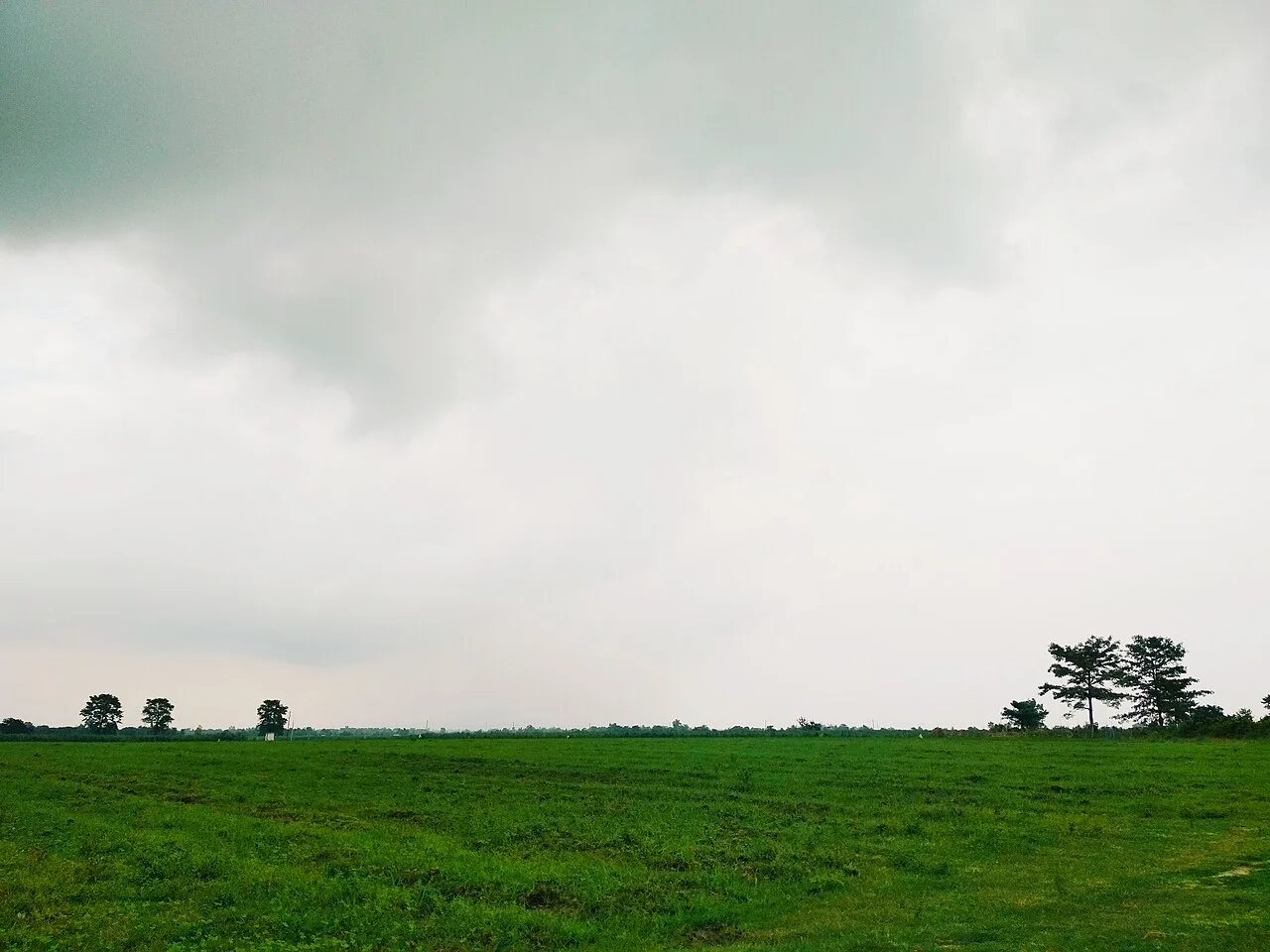
Janjgir-Champa is largely a cultivated plain, with paddy fields, villages and market towns shaping the view and most journeys. The Hasdeo and Mahanadi river systems support settlement and farming across the wider region; Shivrinarayan stands near the confluence of the Mahanadi, Shivnath and Jonk. The district is not a highland or coastal destination, and its relatively open terrain generally makes road travel straightforward. Rural roads can pass through agricultural areas and smaller settlements, so journeys may take longer during harvest activity, local fairs or heavy monsoon rain.
The district has a warm central Indian climate. Summer, before the monsoon, can be hot, so plan outdoor temple visits for cooler parts of the day and carry sun protection and water. Monsoon brings rainfall that refreshes the fields but can make rural roads slower or occasionally difficult. Winter is generally the most comfortable season for sightseeing and pilgrimage visits. The period from roughly November to February is often the most convenient time to travel, though festival crowds may affect accommodation. Pack light, breathable clothing for warm weather, a rain layer during the monsoon, and a light warmer for winter mornings and evenings.
Champa Junction and Janjgir Naila railway station are useful rail access points, depending on your destination and the services available. Swami Vivekananda Airport at Raipur is a practical major air gateway, with onward travel by road or by rail from Raipur. Road connections link the district with Bilaspur, Raipur and nearby towns; buses and hired cars are options for the onward journey. Within towns, auto-rickshaws handle shorter trips, while a hired vehicle can simplify visits to scattered temples and villages. Confirm return transport before heading to quieter locations, and check current services locally.
Roads connect Janjgir, Champa, Janjgir Naila and other towns, with local buses and shared vehicles serving some routes. Services to smaller villages and temple sites may be less frequent, so ask locally about return options before setting out. Auto-rickshaws are useful for short trips within towns. A hired car or taxi can make a visit to several dispersed sites easier, particularly when travelling with family or limited time. The district’s rivers are part of its landscape, but visitors should not assume that boats are a regular or practical form of local transport.
The supplied list contains only Champaran, which is outside Janjgir-Champa; these are therefore out-of-district extensions rather than district circuits. 2 days: Champaran; sleep in Raipur on the night between visits. 3 days: Champaran; sleep in Raipur on the first night and Janjgir on the second night.
Janjgir is a practical base for the district headquarters and its Vishnu temple; Champa can suit travellers using the rail junction or visiting the town’s weaving and trading areas. Shivrinarayan is useful for a pilgrimage-focused visit, though accommodation choices may be more limited than in larger towns. Expect ordinary hotels and guesthouses in the main towns, with simpler lodgings or dharamshalas in pilgrimage centres; availability of homestays and government accommodation can vary. The supplied Champaran destination is in Raipur district, so Raipur is the more sensible base for that separate visit.
Take care on rural roads, especially during monsoon rain, after dark, and around busy festival gatherings. Check local road conditions before travelling to smaller settlements and confirm a return ride before leaving a town. Carry drinking water and use reliably treated or sealed water; heat and dehydration can be concerns in summer. Mobile connectivity may be weaker outside larger settlements, so save key directions and share your plans. At riverbanks, avoid entering unfamiliar water or approaching slippery edges. Ordinary town and temple visits generally do not require special permits, but confirm any current access rules with local authorities before travel.
- Gariabandabout 9 km
- Raipurabout 34 km
- Mahasamundabout 56 km
- Dhamtariabout 59 km
- Durgabout 61 km
- Balodabout 82 km
- Balangir · Odishaabout 115 km
- Bilaspurabout 119 km
Straight-line distance between the centres of each district's destinations; road distance is longer.
Q: How many days should I spend in Janjgir-Champa? A: Two or three days can allow time for Janjgir, Champa and a pilgrimage visit to Shivrinarayan, depending on road connections and your interests. Q: When is the best time to visit? A: Winter, roughly November to February, is generally the most comfortable season. Check festival dates locally if you wish to attend a fair or avoid crowds. Q: What is the best base? A: Janjgir is practical for the district headquarters; Champa is useful for rail access, while Shivrinarayan suits a pilgrimage-focused stay. Q: How do I get to the district? A: Champa Junction and Janjgir Naila are rail access points. Raipur is a major air gateway, with onward travel by road or rail; confirm current services before setting out. Q: Is the district suitable for families or elderly travellers? A: Yes, town visits and major temple stops can suit many families and older visitors. Allow extra time for road journeys, check steps and walking surfaces at temples, and arrange transport suited to your mobility needs.
This page draws on our 1 destination guides for Janjgir-Champa and is updated as our team checks it.
Be the first to share photos, stories, advice or a helpful contact for Janjgir-Champa.
Loading…