
Ghumoopedia — Explore, Discover, Experience
Sign in
Narnaul, near Narnaul

City guide · Haryana

Narnaul

Narnaul is a Haryana city and municipal council, and the headquarters of Mahendragarh district; its district-administration role is a reason to visit.

Famous for

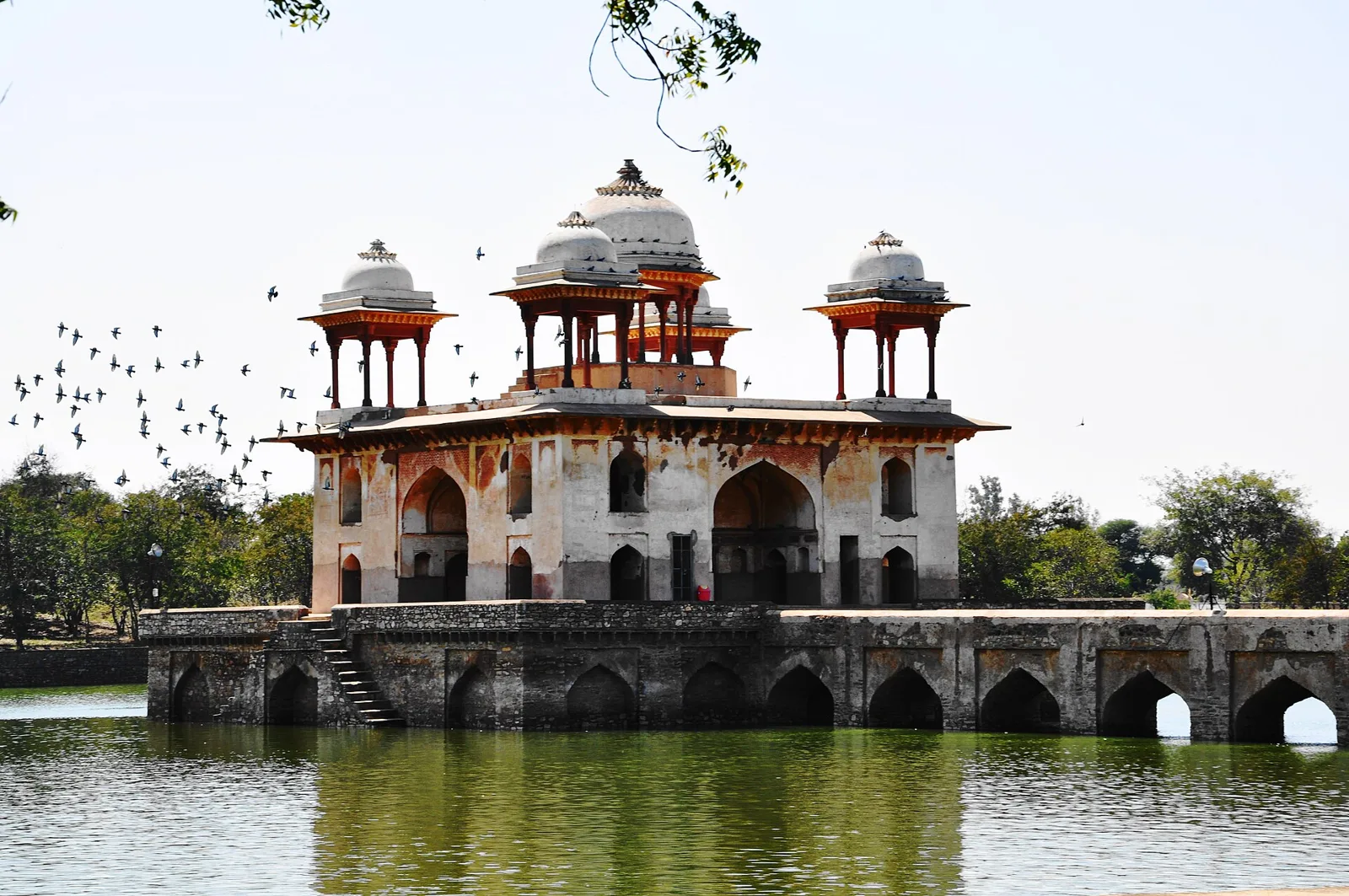
  • Jal Mahal
  • Ibrahim Khan Suri's tomb
  • Chor Gumbad
  • Chhata Rai Bal Mukund Das
  • Battle of Nasibpur
  • Dhosi Hill
In the city
1
District
Mahendragarh

Why Narnaul matters

Narnaul is a historic city in southern Haryana and the headquarters of Mahendragarh district. Its position in the National Capital Region connects it to Delhi and the surrounding towns, while its markets and public services serve a largely rural hinterland. For visitors, the main draw is a remarkable collection of monuments spanning the Delhi Sultanate, Sur and Mughal periods, often found close together in and around the old city.

The Jal Mahal, built beside an artificial lake, and the tomb of Ibrahim Khan Suri offer a glimpse of the region’s courtly past. Other notable stops include the octagonal tomb of Shah Quli Khan, Chor Gumbad and the ornate Chhata Rai Bal Mukund Das haveli. Stepwells and historic water structures add to the picture of how people lived in this dry landscape. Dhosi Hill, associated in local tradition with the sage Chyavana, makes a rewarding excursion beyond the city. Narnaul is best approached as a compact heritage destination rather than a resort town: its appeal lies in architecture, regional history and the quieter rhythms of a district centre.

Famous for: crafts, trade & products

Narnaul is better known for historic architecture than for a nationally recognised textile, handicraft or GI-tagged product. Its signature sights include the Jal Mahal, the tomb of Ibrahim Khan Suri, Shah Quli Khan’s tomb, Chor Gumbad and Chhata Rai Bal Mukund Das, a distinctive multi-storey haveli. Nagpurian Baoli, also called Mirza Alijan Baoli, is another notable heritage stop. Together, these buildings make the city a rewarding place for visitors interested in regional architecture and conservation.

The town’s commercial life is centred on its local bazaars and everyday retail streets, which serve residents and villages across Mahendragarh district. Shoppers can look for routine clothing, household goods, snacks and seasonal produce, but should not expect a dedicated craft quarter or a single famous local product. There is no widely established signature textile or craft market for visitors to seek out. For a more specific souvenir, ask locally about items made by nearby artisans rather than assuming a particular craft is produced in town. The heritage area and central markets are the most practical places to combine sightseeing with a look at ordinary local commerce.

History

Local tradition connects Narnaul with the names Nandigram and Nara Rashtra, and with the sage Chyavana and the Mahabharata era. These stories form part of the region’s cultural memory, but the city stands on an unexcavated archaeological mound, so its earliest settlement history remains uncertain. Surviving monuments provide firmer evidence of its later importance. Sultanate-era structures include the complex around the tomb of Shah Wilayat and the Lodi-style tomb of Ibrahim Khan Suri, the grandfather of Sher Shah Suri. Mughal-era landmarks include the Jal Mahal and Shah Quli Khan’s tomb.

Control of the area shifted among local rulers and Maratha powers during the eighteenth century. In 1857, local forces fought the British at nearby Nasibpur in a major engagement of the uprising. After the rebellion, the Nawab of Narnaul lost his lands. Under British rule the town remained a regional centre; after Haryana became a state, Narnaul developed further as the headquarters of Mahendragarh district, with civic services alongside its historic core.

Food, festivals & culture

Narnaul’s food reflects the hearty cooking of southern Haryana and the neighbouring Rajasthan borderlands. Bajra roti, seasonal vegetables, lentils, curd and dishes enriched with ghee are familiar regional fare; sweets such as churma and milk-based treats are commonly enjoyed. These are regional favourites rather than a uniquely Narnaul cuisine. Local eateries and sweet shops in the central market are convenient places to sample everyday food.

Hindi and Haryanvi are widely used, with Ahirwati heard in the surrounding area. Folk songs and ragini performances are part of the wider cultural landscape, especially at community gatherings and fairs. Diwali in autumn, Holi in spring, and the harvest festivals of Lohri in winter and Baisakhi in spring are observed alongside religious occasions. Places of worship include temples and the historic Shah Wilayat dargah complex, reflecting the city’s layered religious history. Nearby Dhosi Hill, with its ashram traditions, is also a place of pilgrimage and local significance.

Visiting the city

The most comfortable time to explore Narnaul is from October to March, when days are generally cooler. Summer heat can be intense, while the monsoon brings variable conditions. The nearest major airport is Indira Gandhi International Airport in Delhi. Narnaul has its own railway station, Narnaul railway station, and is also connected by road with towns across southern Haryana and northern Rajasthan.

Within town, local taxis, auto-rickshaws and other road transport can help link the monuments; arrange onward transport for sites outside the centre, such as Dhosi Hill. Begin around the old city and the Shah Wilayat complex, then visit nearby tombs and historic streets. The Jal Mahal lies in the southern part of town, while Chor Gumbad is beside the highway on the western side. Central market streets make a useful stop for food and everyday shopping. Allow extra time for outlying stepwells and forts, as they are spread across the district.

Attractions

Places to visit in Narnaul

Sights within about 12 km of each other, even when they fall in different districts.

Map

Narnaul on the map

  1. 1Narnaul

Haryana

Other cities to explore