
Ghumoopedia — Explore, Discover, Experience
Sign in
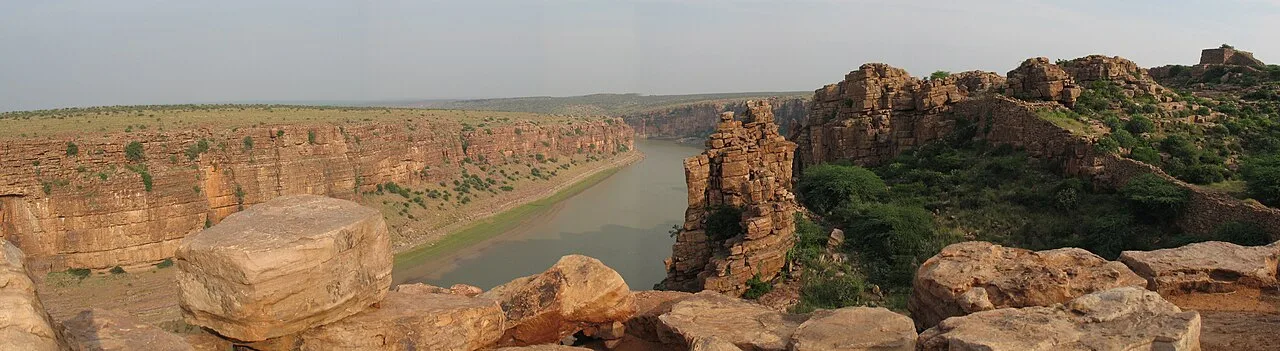
Gandikota Gorge and Fort, near Gandikota

City guide · Andhra Pradesh

Gandikota

Gandikota is a village in Andhra Pradesh’s Kadapa district, best known for its historic fort and the dramatic gorge carved by the Penna River beside the Erramala hills. The narrow canyon, often called the “Grand Canyon of India,” is the area’s defining natural feature and draws visitors for its rocky viewpoints, river scenery and walks along the canyon edge.

Famous for

  • Gandikota Fort
  • Penna River canyon
  • Pemmasani Nayaka heritage
  • Jamia Masjid
  • Madhava and Ranganatha temples
In the city
1
District
YSR

Why Gandikota matters

Gandikota is a village in Andhra Pradesh’s Kadapa district, best known for its historic fort and the dramatic gorge carved by the Penna River beside the Erramala hills. The narrow canyon, often called the “Grand Canyon of India,” is the area’s defining natural feature and draws visitors for its rocky viewpoints, river scenery and walks along the canyon edge.

Within the fort walls, visitors encounter layers of regional history in temples, a mosque, granaries, a palace, wells and other remains. The site reflects the influence of several ruling powers, particularly the Pemmasani Nayakas, and is protected as a centrally protected monument by the Archaeological Survey of India. Gandikota is an important heritage and nature destination rather than a large urban centre. It also serves as a base for exploring the nearby Penna riverbanks and surrounding countryside, with Jammalamadugu providing the nearest town services and road connections.

Famous for: crafts, trade & products

Gandikota is chiefly known for its fort, canyon landscape and architectural remains, not for a major textile, handicraft or manufacturing trade. No distinctive local saree, craft or GI-tagged product is especially associated with the village. The Gandikota Quartzite name belongs to the area’s geology: it describes a rock formation in the Chitravati Group, rather than a recognised local retail product.

Visitors are more likely to take home photographs and memories of the fort and Penna gorge than to shop for specialist goods. The fort’s notable features include the Jamia Masjid, the Madhava and Ranganatha temples, a vaulted granary, a pigeon tower and palace remains. Basic provisions and everyday shopping are better sought in Jammalamadugu, the nearby town, rather than expected within the fort area. For a visit centred on heritage, allow time to walk through the fort and explore the canyon viewpoints; the site’s value lies in its landscape and historic structures rather than a commercial market.

History

Gandikota’s history is closely tied to its strategic position beside a narrow gorge on the Penna River. A sand fort is said to have been established in 1123 by Kaka Raja, a subordinate of the Kalyani Chalukya ruler Ahavamalla Someswara I. The area later came under Kakatiya authority and was governed by its subordinates. From the rise of the Pemmasani Nayakas, the village developed into a major fortified settlement.

The fort later came under the Golconda Sultanate, and additions from the period of Muslim rule brought Islamic architectural features, including the Jamia Masjid. The fort’s surviving structures—among them temples, granaries, a palace and defensive works—reflect these successive phases, though many are now in ruins. Gandikota’s later colonial-era history is less prominent in its surviving visitor story than its earlier dynasties. Today, the fort is a centrally protected monument maintained under the Archaeological Survey of India, while tourism has brought renewed attention to the village and its canyon setting.

Food, festivals & culture

Gandikota’s cultural character is shaped by its mix of religious and architectural heritage. The fort contains the remains of temples dedicated to Madhava and Ranganatha, as well as the Jamia Masjid, a reminder of the area’s later Muslim rule. Telugu is the principal language of the region. The village is a small settlement rather than a major centre for staged music or dance performances, so visitors should not expect a regular programme of cultural events.

An annual heritage festival is held in the fort area. Hindu festivals observed across the region, including Sankranti in mid-January and major temple-calendar celebrations, may also be marked locally, though activities vary. There is no widely established signature dish or sweet specific to Gandikota. Food reflects broader Andhra tastes, with rice-based meals, lentils, pickles and chilli-forward curries; choices are generally more practical to seek in Jammalamadugu. Carry water and provisions when exploring the fort and river viewpoints, as services around the historic site are limited.

Visiting the city

The cooler months, roughly October to February, are generally the most comfortable for exploring Gandikota; the rocky fort and canyon can be exposed to strong heat in summer. The nearest airport is Kadapa Airport. Jammalamadugu railway station is the closest local rail option, while Muddanuru is another station to consider; train frequency on the local line can be limited. Buses run from Jammalamadugu, and road travel is the practical way to reach the village.

Inside the fort, getting around is mainly on foot. Focus on the fort core, its temples and mosque, and the viewpoints above the Penna gorge. The riverbank and the downhill route into the canyon offer a different perspective but require care on uneven ground. Jammalamadugu is the most useful nearby area for everyday services and transport connections.

Attractions

Places to visit in Gandikota

Sights within about 12 km of each other, even when they fall in different districts.

Map

Gandikota on the map

  1. 1Gandikota Gorge and Fort

Andhra Pradesh

Other cities to explore