
Ghumoopedia — Explore, Discover, Experience
Sign in
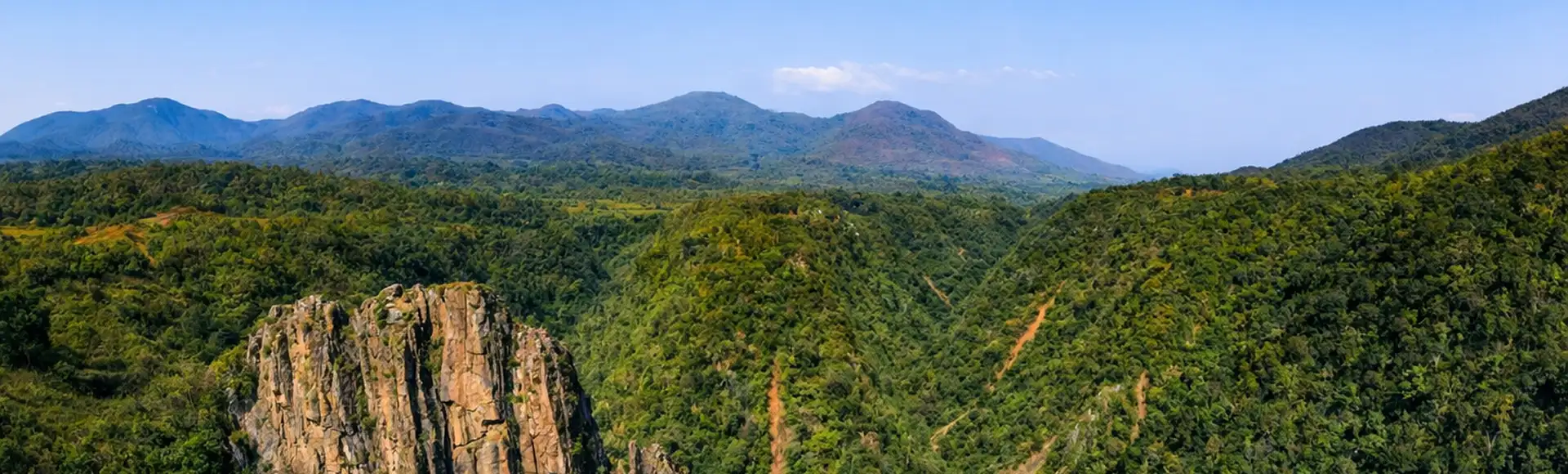
Mandasaru Valley, near G. Udayagiri

City guide · Odisha

G. Udayagiri

G. Udayagiri, also called Ghumusar Udayagiri, is a small highland town in Kandhamal district, Odisha.

Famous for

  • Kandhamal turmeric
  • Kondh cultural heritage
  • Eastern Ghats highlands
  • Roads to Daringbadi
In the city
0
Nearby
1
District
Kandhamal
Plan a trip

Why G. Udayagiri matters

G. Udayagiri, also called Ghumusar Udayagiri, is a small highland town in Kandhamal district, Odisha. Set at roughly 715 metres above sea level, it serves as a local centre for nearby villages, with shops and everyday services connecting the surrounding upland communities. Its importance comes less from big-city attractions than from its place within Kandhamal’s forested, agricultural landscape and its role on routes through the district.

Visitors use the town as a base or stop on journeys into the hills, including trips towards Daringbadi, a well-known highland destination. The wider district is associated with Kondh communities, distinctive local traditions and Kandhamal turmeric, a recognised regional product. Roads, markets and public services give G. Udayagiri a practical role in this rural region, while its cooler elevation and green surroundings offer a contrast to Odisha’s coastal plains. It is best approached as a gateway to the district’s scenery and everyday life rather than as a destination with a concentrated belt of monuments or resorts.

Famous for: crafts, trade & products

The best-known regional product is Kandhamal Haladi, or Kandhamal turmeric, which has a Geographical Indication tag. Grown in the district, it is valued for its colour and aroma and appears in local cooking as well as in wider markets. G. Udayagiri’s shops and local market serve residents and travellers; visitors may find turmeric and other farm goods there, while a broader selection is more likely in larger district markets. Check product labels when buying packaged turmeric.

The town is not especially known as a centre for sarees, textiles or large-scale handicraft retail. Kandhamal’s rural economy is closely tied to farming and forest landscapes, and local markets are primarily places for daily provisions and produce rather than dedicated tourist bazaars. Small household-made goods and seasonal agricultural products may be encountered through ordinary shops and market stalls. For a sense of what the district produces, look for locally grown turmeric and other regional foods, and ask vendors about the origin of unlabelled goods. The surrounding countryside, rather than a formal shopping quarter, is central to the area’s identity.

History

G. Udayagiri’s alternate name, Ghumusar Udayagiri, reflects its place in a region whose communities and routes have long connected the Kandhamal uplands with neighbouring parts of Odisha. The area is part of the homeland of Kondh communities, whose social and cultural histories are closely linked to the hills and forests. During the colonial period, British expansion and attempts to control local territory and resources met resistance in the wider Ghumsur region. Kondh resistance in the nineteenth century is associated with leaders including Chakra Bisoi; this history belongs to the broader region rather than to a single town centre.

In modern times, G. Udayagiri developed as a local service and market town serving surrounding settlements. Changes to district administration placed it within Kandhamal, while roads and public facilities strengthened its connections with Phulbani, Daringbadi and other parts of the district. Its growth has remained closely tied to rural trade, transport and public services rather than heavy industry or large urban expansion.

Food, festivals & culture

Daily life reflects the mix of communities across Kandhamal. Odia is widely used, while Kui and other community languages are important in the district. Rice is a staple, often served with lentils, vegetables and locally available greens; millets such as ragi are also part of the wider upland food tradition. Turmeric flavours many dishes. Meals are generally home-style, and visitors are more likely to encounter everyday regional cooking than a distinct restaurant-led food scene or a signature town sweet.

Hindu festivals such as Durga Puja and Rath Yatra are observed in the wider area, while Christmas and Easter are significant for Christian communities. Harvest and community observances also follow local and agricultural traditions, with timing varying by place. Music, dance and ceremonies are shaped by the district’s diverse communities, including Kondh traditions, as well as broader Odia practices. In town, Hindu shrines and Christian churches serve as familiar places of worship and gathering; respectful dress and permission before photographing ceremonies are appreciated.

Visiting the city

October to March is generally the most comfortable period to visit, with milder weather for road journeys and time outdoors. The monsoon brings greener hills but can make travel slower. The nearest major airport is Biju Patnaik International Airport in Bhubaneswar. Berhampur railway station is a useful rail gateway for reaching the district; onward travel to G. Udayagiri is by road, so confirm the best connection for your route before setting out.

Buses and shared road transport connect towns in the district, while a hired car offers more flexibility for nearby excursions. Local auto-rickshaws can help with short trips where available. Explore the town’s market area for everyday activity, then use G. Udayagiri as a starting point for the surrounding uplands and journeys towards Daringbadi. Allow extra time for winding rural roads.

Short trips

Around G. Udayagiri

Within about 40 km — easy half-day or day trips from the city.

Map

G. Udayagiri on the map

  1. 1Mandasaru Valley

Odisha

Other cities to explore