
Ghumoopedia — Explore, Discover, Experience
Sign in
Pithoragarh, near Pithoragarh

City guide · Uttarakhand

Pithoragarh

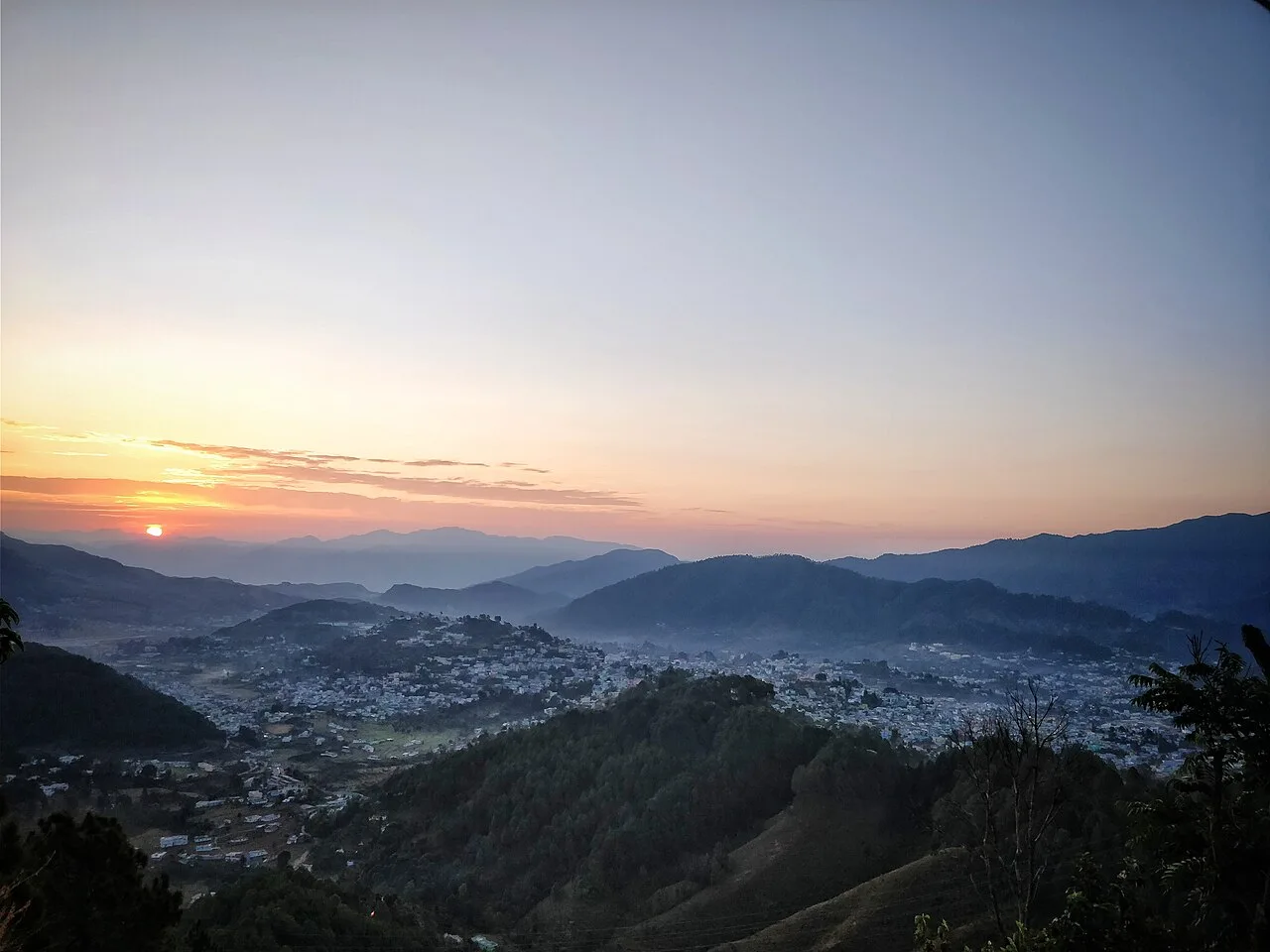
Pithoragarh is a Himalayan town and municipal corporation in Uttarakhand’s Kumaon division. Visitors come to experience the state’s largest hill town.

Famous for

  • Saur Valley setting
  • Chand-era fort heritage
  • Chaitol festival
  • Kumaoni folk traditions
  • Eastern Kumaon gateway
In the city
1
District
Pithoragarh

Why Pithoragarh matters

Pithoragarh is the administrative and commercial centre of its district, set in the Saur Valley of eastern Kumaon. Its position among Himalayan foothills makes it a useful base for exploring nearby temples, mountain viewpoints and villages, as well as for journeys farther into the district’s highland and border regions. The surrounding landscape—green slopes, ridgelines and distant peaks—is a major part of the town’s appeal.

The town is associated with the Chand rulers and the fort that gave it its name. Today, visitors come for its Kumaoni character, local festivals and access to places such as Chandak ridge and the historic temple group at Kasni. Pithoragarh also serves residents from a wide rural hinterland, with government services, schools, healthcare and markets drawing people into town. It is not a resort town alone: everyday hill-town life, regional trade and its setting together give it importance in eastern Uttarakhand.

Famous for: crafts, trade & products

Pithoragarh is better known as a regional market and service centre than as a major textile or saree-manufacturing town. Its shops serve residents and visitors from surrounding valleys, with everyday goods alongside seasonal farm produce and locally made items. In the central bazaar, visitors can look for Kumaoni woollens and woven household textiles, as well as bamboo and ringaal (hill-bamboo) baskets and other practical crafts. Availability varies, and some goods come from elsewhere in Kumaon rather than being made in town.

Small craft and souvenir outlets may also carry locally inspired decorative work, including aipan-style designs. Pithoragarh does not have a widely recognised city-specific saree tradition or a signature GI-tagged product to seek out; the appeal is the broader craft and produce of the region. Ask shopkeepers in the central market about the origin of handmade items, particularly when looking for work made by artisans in nearby villages. There is no single specialist craft district, so browsing the main bazaar is the most straightforward way to see what is available.

History

The Saur Valley formed part of the wider Manaskhand region and passed through the hands of several Himalayan powers. After the decline of the Katyuri kingdom, Bam rulers governed Saur, before the area came under the Chand kingdom of Kumaon in the sixteenth century. Local traditions give differing accounts of the origin of the town’s name, but both connect it with a fort. A fort was built on the present town’s hill in 1790, during Chand rule.

Following the expansion of Gorkha power, Kumaon came under British rule in the early nineteenth century. In the twentieth century, local participation in the freedom movement included support for non-cooperation and Quit India. After independence, Pithoragarh developed as a district headquarters and the region’s administrative centre. The town’s municipal body dates to 1962; it became a municipal corporation in 2024. The old fort was later demolished, and its former site is associated with the present Girls Inter College.

Food, festivals & culture

Kumaoni is widely spoken alongside Hindi, and local cultural life includes folk songs, devotional performance and jagar traditions, in which stories and songs invoke local deities. Regional foods to look for include aloo ke gutke, bhatt ki churkani, madua roti and jhangora kheer. Bal mithai and singori are well-known Kumaoni sweets, though they are associated with the wider region rather than being unique to Pithoragarh.

Chaitol is observed during Chaitra, usually around March or April, with processions and worship of local deities. Hilljatra, linked to farming and pastoral life, is held during the monsoon season, often in August or September. In the Chaudans area of the district, the Kandali flower festival is celebrated when the flower blooms, once every twelve years, generally between August and October. The Pithoragarh Mahotsav features regional music and dance, with dates that vary. Places of worship in and around town include Kapileshwar Mahadev and temples on nearby hills; Kasni’s historic temple group lies a short distance away.

Visiting the city

Spring and early autumn, especially March to May and September to November, generally offer comfortable conditions for exploring. Monsoon brings frequent rain and can disrupt road journeys; winter mornings are cold. Naini Saini Airport is the closest airport, but scheduled commercial services may be limited. Tanakpur Railway Station is a rail gateway for the area; travellers may also use Kathgodam as a larger railhead for Kumaon and continue by road.

Taxis and shared vehicles are useful for reaching nearby sights, while local vehicles can cover journeys around town. Explore the central bazaar for shops and everyday town life, then visit the Saur Valley viewpoints and Chandak ridge for broad views. Kasni’s temple group makes a nearby cultural excursion. Check local road and weather conditions before heading farther into the district’s mountain areas.

Attractions

Places to visit in Pithoragarh

Sights within about 12 km of each other, even when they fall in different districts.

Map

Pithoragarh on the map

  1. 1Pithoragarh

Uttarakhand

Other cities to explore