
District · Andhra Pradesh
Eluru
Eluru district offers a mix of pilgrimage, Buddhist heritage and rural Andhra landscapes in the state’s coastal region.
Eluru district lies in the fertile coastal plain of Andhra Pradesh, between the Krishna and Godavari regions. Its landscape includes extensive rice-growing country, waterways and wetlands, with Kolleru Lake—one of India’s largest freshwater lakes—an important natural feature. The district brings together busy towns, agricultural villages and pilgrimage destinations such as Dwaraka Tirumala. Its history reaches back to the region’s ancient Buddhist past, visible at the Guntupalli group of caves and monuments near Kamavarapukota. Today, farming and aquaculture shape much of local life, while temple visits and seasonal festivals remain central to the area’s character.
Eluru district offers a mix of pilgrimage, Buddhist heritage and rural Andhra landscapes in the state’s coastal region. Its best-known visitor sites include Dwaraka Tirumala Temple, an important regional pilgrimage centre, and the Guntupalli Buddhist Caves, a group of rock-cut monuments near Kamavarapukota. The district also lies in the wider historic Vengi region, associated with early Buddhist remains and the Eastern Chalukyas. Eluru city is a practical centre for exploring the district, while visits to the temple and caves give a sense of its varied religious and historical traditions. This index covers published tourist places, not every local site.
The Eluru region forms part of the wider Vengi country, an important political centre in Andhra history. Buddhist remains at Guntupalli point to religious activity in the area from ancient times; the cave and stupa complex is generally dated across the centuries before and after the start of the Common Era. From around the seventh century, Vengi was closely associated with the Eastern Chalukyas, whose influence continued for several centuries. The region later came under changing powers, including the Kakatiyas, Gajapatis, Vijayanagara rulers and Deccan sultanates. In the colonial period, the area was administered within the Madras Presidency. It became part of Andhra State when that state was formed in 1953, and of Andhra Pradesh after the state reorganisation of 1956. Eluru district was created in 2022 during Andhra Pradesh’s district reorganisation, principally from the former West Godavari district, with boundaries redrawn as part of that process.
2 destination guides
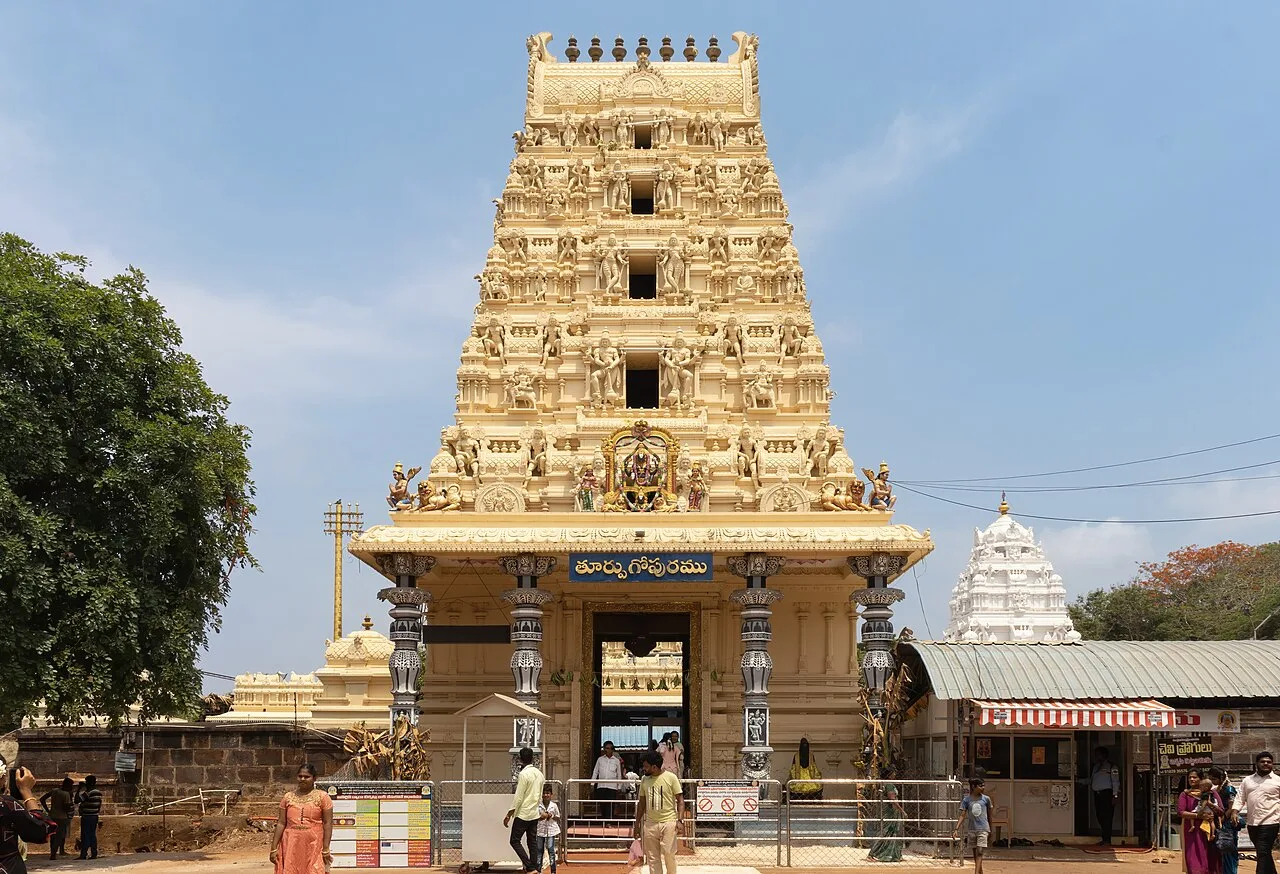
Dwaraka Tirumala Temple
In Andhra Pradesh’s Eluru district, Dwaraka Tirumala is a census town known for its Venkateswara temple, a destination for Hindu pilgrims locally called Chinna Tirupati, meaning mini Tirupati.
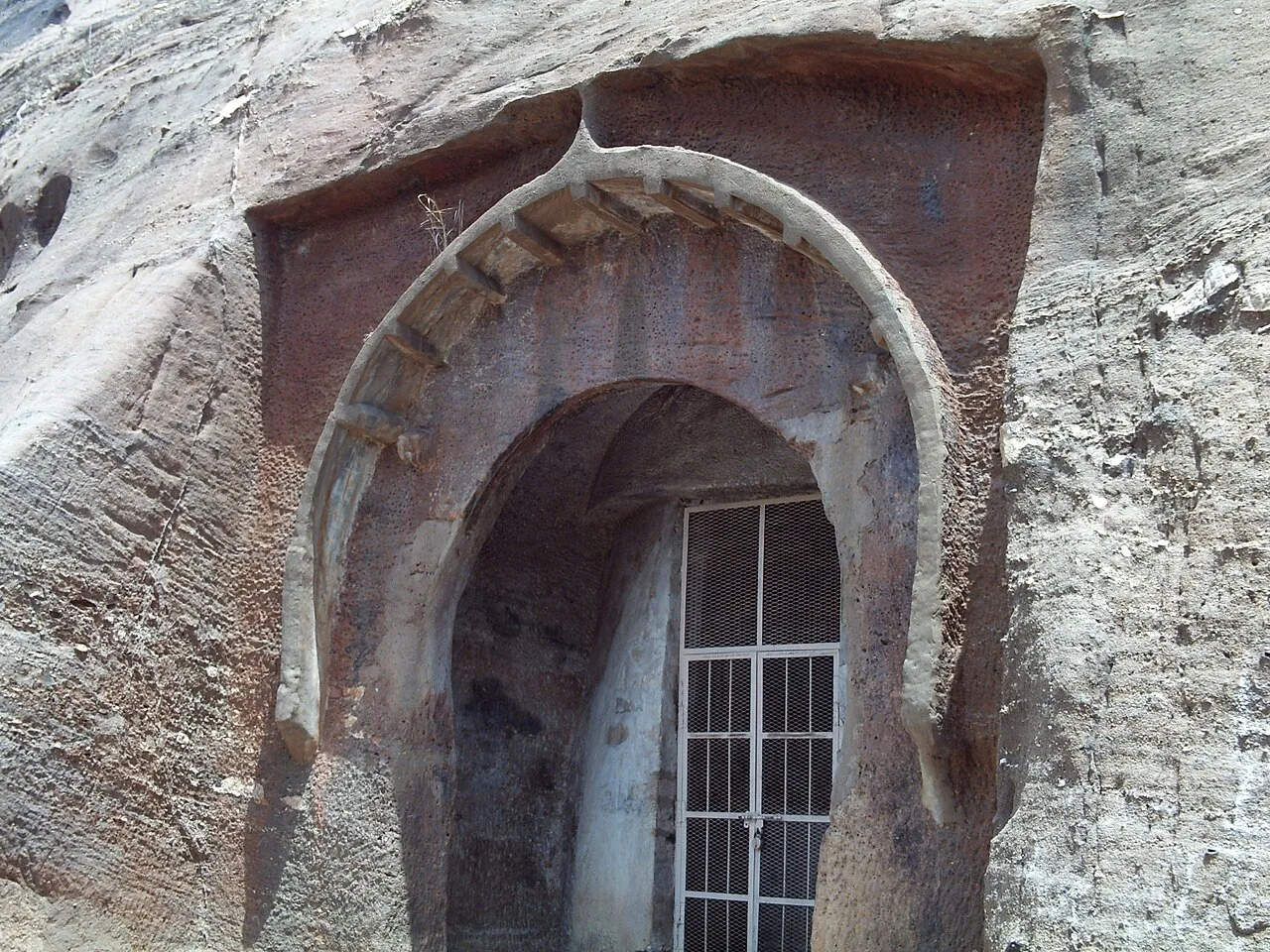
Guntupalli Buddhist Caves
Guntupalli is a Buddhist archaeological complex in Eluru district, Andhra Pradesh. Visitors come to see its caves, chaitya hall, stupas and remains of ancient religious buildings.
Rice is central to everyday meals in Eluru district, as in much of coastal Andhra Pradesh. A typical meal may include rice, lentils, vegetables, pickles and curd; gongura and avakaya are familiar regional accompaniments. Pulihora and pesarattu are also popular across the wider state. Fish and prawns feature in the broader delta region, though menus vary between towns and villages. Andhra cooking can be notably hot, so ask for a milder version if preferred. Small eateries may prepare a limited selection each day, making it useful to ask what is freshly cooked.
Eluru is known for its longstanding carpet-weaving tradition. Local artisans produce patterned carpets and floor coverings, an industry that has contributed to the town’s identity and livelihoods. Designs and materials can vary by maker and workshop, so visitors interested in the craft may wish to ask locally about current production and opportunities to see the work. The district’s heritage also includes the Buddhist caves and monuments at Guntupalli, whose rock-cut spaces and stupas are important examples of historic religious architecture rather than a present-day craft tradition.
Sankranti, usually celebrated in January, is widely observed across the region with family gatherings and village festivities. Ugadi in spring and Dasara in autumn are also important occasions. At Dwaraka Tirumala, temple observances include annual Brahmotsavam celebrations and other Vaishnava festivals; the season and programme can vary. Major temple events may bring larger pilgrim crowds, so rooms around Dwaraka Tirumala and Eluru can be more sought after. Visitors planning around a festival should confirm the current schedule locally and arrange accommodation ahead where possible.
Much of Eluru district is made up of low-lying agricultural plains, waterways and settlements, with higher ground in parts of the interior. The district is inland, rather than a coastal destination. The wider delta region’s canals and rivers support farming, while wetlands in the broader area provide habitat for waterbirds. Guntupalli’s caves are set among rocky hill slopes, so reaching them involves a change from the flatter roads and farmland around Eluru. These contrasts make road travel the main way to link the district’s sights, with some final approaches passing through smaller rural areas.
The district has a hot season, a rainy monsoon period and a comparatively milder winter. Summer can feel humid and tiring, particularly for temple visits or walking around the Guntupalli hillside. Monsoon showers can affect rural roads and make steps or rocky surfaces slippery. The cooler months, broadly from late autumn through winter, are generally the most comfortable time to visit. Carry light, breathable clothing for warm weather, a sun hat and drinking water; pack a rain layer during the monsoon. For the caves, sturdy footwear with good grip is useful, subject to site rules.
Eluru railway station lies on the main rail route linking Vijayawada and Visakhapatnam; Vijayawada Junction is a major rail hub for onward connections. For air travel, Vijayawada International Airport at Gannavaram is a useful gateway for Eluru and much of the district. National Highway 16 connects the area with Vijayawada and Rajamahendravaram, while state roads lead to district towns and attractions such as Dwaraka Tirumala and Guntupalli. APSRTC buses serve many towns, and autos or taxis can help with local journeys; rural services may be less frequent. Check current services locally before travelling.
Eluru city is the main transport hub, with road connections to Dwaraka Tirumala and the Kamavarapukota area, from which Guntupalli is reached by a local approach road. State and private buses serve larger towns and some pilgrimage routes, but services may be less convenient for the final leg to rural sites. Autos and shared vehicles can help locally; a hired taxi offers more flexibility for visiting both destinations in one trip. Eluru is also on the railway corridor connecting major cities in coastal Andhra. Check current road and public-transport options before setting out, especially for the caves.
Eluru is the most practical base for a circuit that includes both listed sites, with a broader choice of ordinary hotels and guest accommodation. Staying near Dwaraka Tirumala can suit pilgrims who want to spend more time at the temple; availability may tighten during major observances. Smaller towns and rural areas have fewer choices, so confirm arrangements before travelling to Guntupalli. Homestays and government lodges may be available in the wider region, but availability varies. Dharamshalas or other pilgrim accommodation may be found near temple centres; check current access and facilities directly.
Take care on the uneven steps and rocky ground at Guntupalli, particularly after rain, and follow any signs or staff instructions at the caves. Heat and humidity can make outdoor visits tiring; carry water, take breaks and use sun protection. Rural roads may be narrow or affected by monsoon conditions, so allow flexibility and avoid rushing after dark. Keep valuables secure in crowded temple areas, and be considerate around wildlife and birds near wetlands. Mobile connectivity can vary outside towns. No special permit is generally associated with these listed sites, but confirm current access rules with official sources before travel.
- West Godavariabout 33 km
- Krishnaabout 53 km
- NTRabout 65 km
- East Godavariabout 70 km
- Konaseemaabout 81 km
- Gunturabout 111 km
- Bhadradri Kothagudem · Telanganaabout 112 km
- Yanam · Puducherryabout 115 km
Straight-line distance between the centres of each district's destinations; road distance is longer.
Q: How many days should I spend in Eluru district? A: Two days can cover both listed sites at a measured pace; three days allows a less hurried visit and an overnight near the temple. Q: When is the best time to visit? A: The cooler months from late autumn through winter are generally the most comfortable; monsoon travel may involve wet roads and slippery surfaces. Q: Where is the best base? A: Eluru is the most practical base for both sites, while staying near Dwaraka Tirumala suits a temple-focused visit. Q: How do I get to Eluru and its attractions? A: Eluru is connected by rail and road. From the city, continue by bus, local vehicle or taxi towards Dwaraka Tirumala and Kamavarapukota, checking current connections for the final legs. Q: Are the sights suitable for families or elderly travellers? A: Dwaraka Tirumala is accessible to many visitors, though crowds can be tiring. Guntupalli has uneven, sloping terrain, so elderly visitors and anyone with limited mobility should assess the walk and steps before going.
This page draws on our 2 destination guides for Eluru and is updated as our team checks it.
Be the first to share photos, stories, advice or a helpful contact for Eluru.
Loading…