
District · Punjab
Firozpur
Firozpur offers a view of southwestern Punjab where farming, canal irrigation and life beside an international border shape the landscape and local routines.
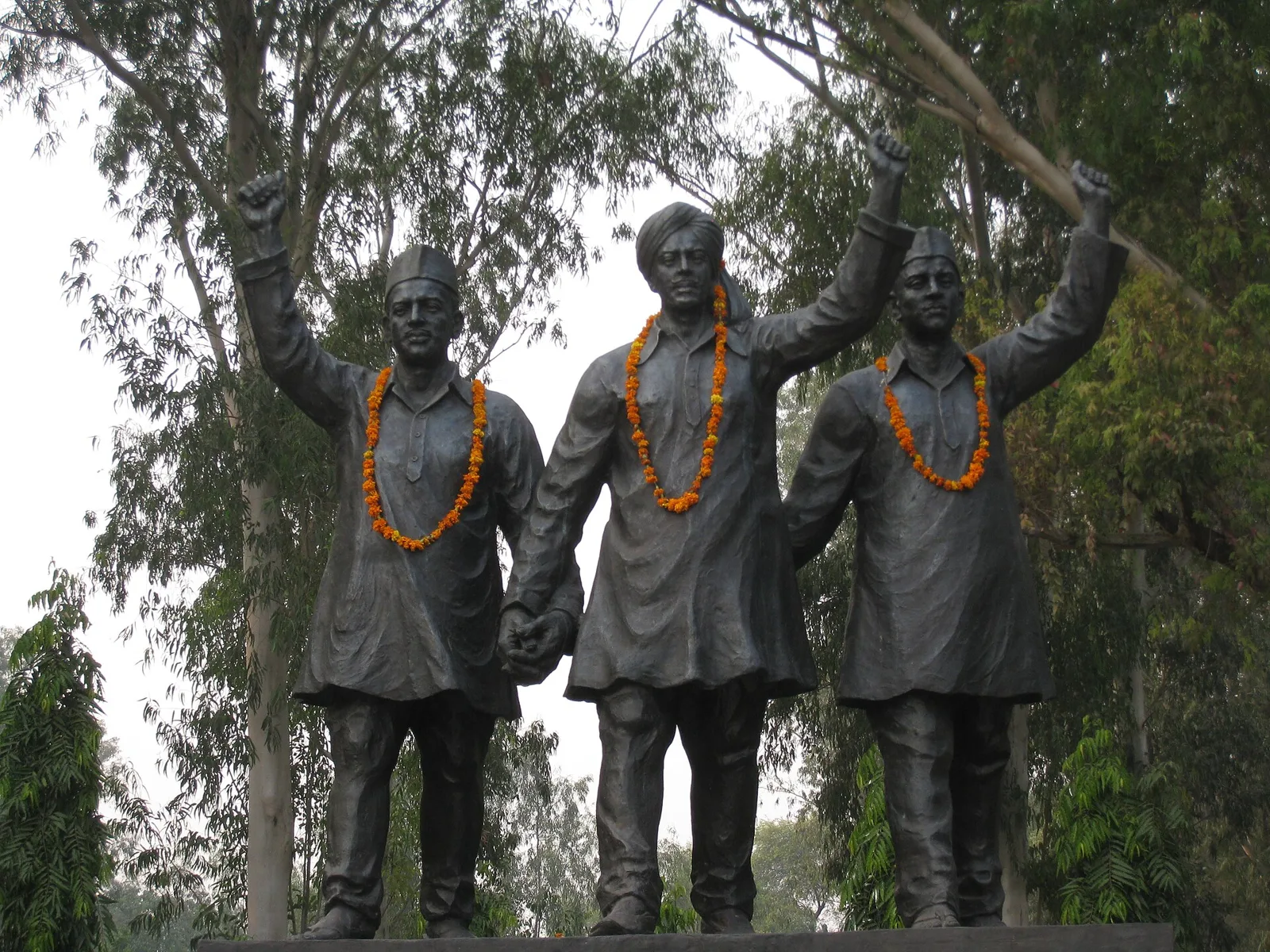
Firozpur district occupies southwestern Punjab along the Sutlej and the India–Pakistan border. Its largely level, fertile plains are shaped by canal irrigation and intensive farming, with villages, fields and market towns defining much of the landscape. Firozpur city has long served as an administrative and military centre; its cantonment reflects the region’s strategic position and colonial-era history. The district also has an important place in modern Indian memory: Hussainiwala is associated with the memorial to freedom fighters Bhagat Singh, Rajguru and Sukhdev, while Saragarhi commemorates the 1897 battle fought by Sikh soldiers. Today, agriculture, borderland life, military heritage and Punjabi religious and cultural traditions give Firozpur its distinctive character.
Firozpur offers a view of southwestern Punjab where farming, canal irrigation and life beside an international border shape the landscape and local routines. The district is best known to many visitors for Hussainiwala, the memorial associated with freedom fighters Bhagat Singh, Rajguru and Sukhdev, and for the Saragarhi Memorial, which honours the Sikh soldiers who fought in 1897. Firozpur city’s cantonment and long-standing administrative role add a military and colonial-era dimension. The district suits travellers interested in modern Indian history, Punjabi religious and cultural traditions, and the quieter rhythms of a largely agricultural border region.
The Firozpur region has been part of shifting political territories over many centuries. In the medieval period, it lay within areas governed by successive Delhi Sultanate and Mughal-era authorities. As Mughal power weakened in Punjab, Sikh misls gained influence, and the region later came under the rule of the Sikh kingdom centred on Lahore. The British established a cantonment at Firozpur in the nineteenth century, reflecting the town’s strategic position near the Sutlej and the frontier. After the British annexed Punjab in 1849, Firozpur developed as an administrative and military centre under colonial rule. The 1897 Battle of Saragarhi took place at a frontier post in what is now Pakistan; the memorial in Firozpur commemorates the Sikh soldiers who fought there. Hussainiwala is associated with the cremation of Bhagat Singh, Rajguru and Sukhdev after their execution in 1931. Partition in 1947 made the Sutlej-side region a borderland between India and Pakistan. Firozpur continued as a district after independence, while later administrative changes reshaped district boundaries in this part of Punjab.
2 destination guides · 1 on the map
Hussainiwala
Hussainiwala is a village in Punjab’s Firozpur district, visited for its memorial to Bhagat Singh, Sukhdev Thapar and Shivaram Rajguru, and the daily India–Pakistan retreat ceremony.
Saragarhi Memorial
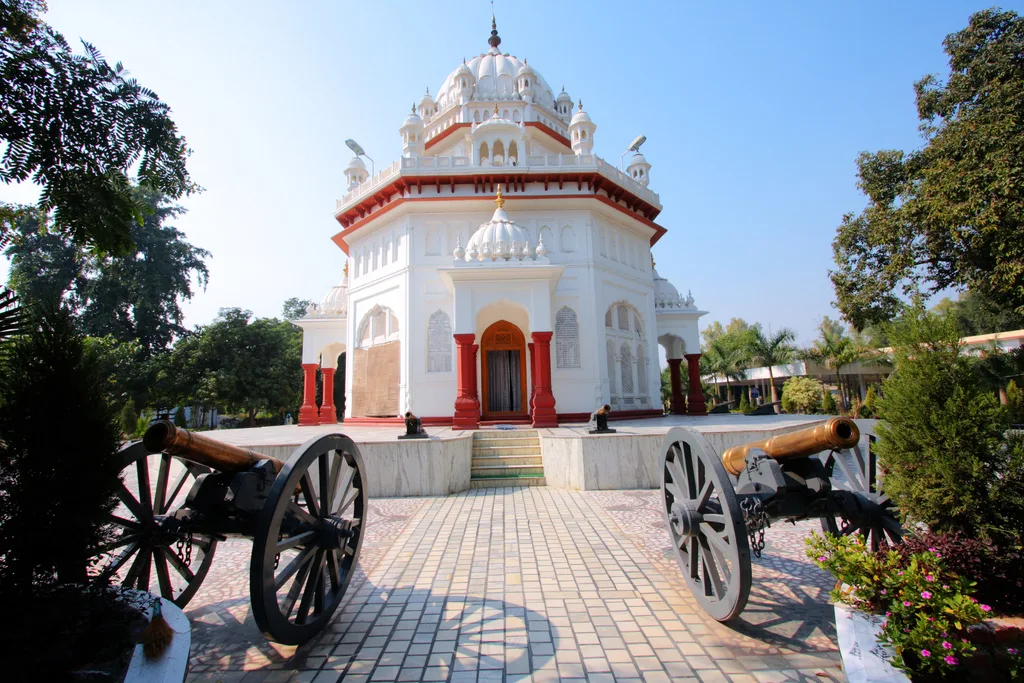
Saragarhi Memorial is a memorial in Firozpur district, Punjab. People visit to see the memorial and the place identified by this name.
Firozpur shares the hearty food traditions of Punjab. Sarson da saag with makki di roti, tandoori dishes, chole bhature and lassi are familiar regional favourites; Amritsari kulcha is also popular across the wider state. Sweets such as jalebi and pinni may be found at local shops. Gurdwara langar offers a free vegetarian meal to all, reflecting a strong tradition of hospitality and service. Small eateries may prepare a limited menu based on what is fresh that day, and travellers can usually find both vegetarian meals and simple non-vegetarian dhaba fare in towns. Carry water and snacks when visiting remote sites.
Firozpur is part of Punjab’s wider tradition of embroidery, weaving and practical handmade goods. Phulkari, the region’s colourful embroidered textile work, is among the best-known Punjabi art forms, while handwoven durries and other household textiles are associated with the state’s craft heritage. These traditions are not exclusive to Firozpur, and availability can vary between towns and markets. Visitors interested in locally made work can ask shopkeepers about the maker and where an item was produced, especially when looking for textiles rather than factory-made souvenirs.
Baisakhi in spring is widely observed across Punjab and may bring gatherings at gurdwaras and local fairs. Lohri in midwinter and Diwali in autumn are celebrated by families and communities, while Gurpurabs honour Sikh Gurus according to the Sikh calendar and can draw larger congregations to gurdwaras. These are regional traditions rather than events unique to Firozpur. Visitors may find busier roads, religious sites and town markets during major observances. Demand for rooms can rise around prominent celebrations, so it is sensible to arrange accommodation ahead if travelling during a festival period.
Elsewhere in Punjab
- Hola Mohalla23 Mar 2027 – 25 Mar 2027 · Provisional
- Lohri & Maghi MelaDates to be announced · Seasonal
- BaisakhiDates to be announced · Seasonal
- Gurpurabs at the Golden Temple24 Nov 2026 · Provisional
- Shaheedi Jor MelaDates to be announced · Seasonal
- TeeyanDates to be announced · Seasonal
- Kila Raipur Sports FestivalDates to be announced · Seasonal
Firozpur is a mostly level alluvial plain in southwestern Punjab. The Sutlej forms a significant part of the district’s regional geography, while canals and irrigation channels support extensive cultivation. Fields, villages and market towns dominate the scenery; there are no major hills or extensive forest areas to shape routes. The open terrain generally makes road travel straightforward, though village roads and canal crossings can add time. In the monsoon, local conditions near waterways and low-lying stretches may change, so check road updates before travelling to outlying sites.
Firozpur has hot summers, a monsoon season and cool winters. Summer days can feel intense in the open countryside, so plan outdoor visits for cooler parts of the day and carry water, sun protection and light clothing. Monsoon weather brings humidity and periods of rain that can affect rural roads. Winter is generally the most comfortable season for visiting memorials and travelling between towns, though mornings and evenings can be cold or foggy. October to March is usually a practical period for a visit. Pack layers in winter and rain protection during the monsoon; check local forecasts before setting out.
Firozpur Cantt Junction is the district’s principal railway station. For air travel, Sri Guru Ram Dass Jee International Airport in Amritsar is a major option; road travel from the airport can differ considerably from straight-line map distance. Firozpur is connected by road with other Punjab towns, and long-distance journeys commonly link through hubs such as Amritsar, Chandigarh or Delhi. Buses and private coaches serve regional routes, while taxis and shared vehicles can help with the final leg. Local transport is easier to find in towns than at remote memorials or border sites, so arrange onward travel in advance. Check current services locally before setting out.
Firozpur city and Firozpur Cantt are the main local transport hubs, with road connections to towns and villages across the district. Regional buses serve established routes, while autos and shared vehicles are more readily found in town centres than at memorials or rural stops. Taxis or a pre-arranged vehicle are useful for combining Hussainiwala and the Saragarhi Memorial, especially if travelling with limited time or mobility needs. Public transport availability can be less convenient for the final leg to a site, so confirm onward options locally and arrange a return journey in advance.
2 days: Saragarhi Memorial → Hussainiwala; sleep both nights in Firozpur city. 3 days: Hussainiwala → Saragarhi Memorial; sleep both nights in Firozpur city.
Firozpur city is the most practical base for visiting both listed destinations, with a wider choice of ordinary hotels and access to local transport and services. Firozpur Cantt may also suit visitors who prefer to stay near the railway station and established town facilities. Options elsewhere in the district are more limited and may include basic guest accommodation or dharamshalas, depending on availability and local arrangements. Do not assume a government lodge or homestay is available near a memorial; confirm accommodation before travelling, particularly during major religious observances.
The district is mostly flat, but summer heat, winter fog and monsoon rain can affect comfort and road conditions. Carry drinking water and use sealed or reliably treated water; take sun protection in hot weather. Roads beyond town centres may be narrow or poorly lit, so avoid rushing and arrange transport back from outlying sites. Mobile connectivity is generally more dependable in towns than in every rural area. Hussainiwala is close to the international border: follow official signs and instructions, respect restricted areas, and ask authorities about current access or photography rules. No special permit requirement is assumed here; confirm any access rules officially before visiting.
- Tarn Taranabout 44 km
- Sri Muktsar Sahibabout 58 km
- Amritsarabout 76 km
- Kapurthalaabout 89 km
- Bathindaabout 96 km
- Jalandharabout 105 km
- Ludhianaabout 121 km
- Gurdaspurabout 124 km
Straight-line distance between the centres of each district's destinations; road distance is longer.
Q: How many days should I spend in Firozpur district? A: Two days are enough to visit both listed memorials at an unhurried pace; allow an extra day if you want a slower schedule. Q: When is the best time to visit? A: October to March is generally the most comfortable period, while summer can be very hot and monsoon weather may affect roads. Q: Where is the best base for visiting the sights? A: Firozpur city is the most practical base for both Hussainiwala and the Saragarhi Memorial. Q: How do I get to Firozpur? A: Firozpur Cantt Junction is the district’s principal railway station. Road journeys connect through Punjab towns, and Amritsar is a major airport option; check current services before travel. Q: Is Firozpur suitable for families or elderly travellers? A: Yes, with advance transport planning. Heat, uneven surfaces and limited facilities at some sites may require extra care and a slower pace.
This page draws on our 2 destination guides for Firozpur and is updated as our team checks it.
Be the first to share photos, stories, advice or a helpful contact for Firozpur.
Loading…