
Ghumoopedia — Explore, Discover, Experience
Sign in
Brihadisvara Temple, near Thanjavur

City guide · Tamil Nadu

Thanjavur

Thanjavur is a major cultural and agricultural centre in Tamil Nadu’s Kaveri Delta. It is best known for Brihadisvara Temple, the monumental Chola-era shrine at the heart of the city and part of the UNESCO-listed Great Living Chola Temples.

Famous for

  • Brihadisvara Temple
  • Tanjore paintings
  • Thanjavur art plates
  • Thanjavur veena
  • Chola architecture
  • Kaveri Delta rice
In the city
3
District
Thanjavur

Why Thanjavur matters

Thanjavur is a major cultural and agricultural centre in Tamil Nadu’s Kaveri Delta. It is best known for Brihadisvara Temple, the monumental Chola-era shrine at the heart of the city and part of the UNESCO-listed Great Living Chola Temples. Its soaring stone tower, sculpted details and large monolithic Nandi draw visitors interested in South Indian architecture and history. The former name Tanjore is still familiar in references to the region’s art and music.

The city is also celebrated for Tanjore painting, a distinctive style known for vivid figures and decorative gold work, as well as for traditional veena-making and metal craft. Beyond its heritage, Thanjavur serves as the headquarters of its district and a regional hub for the surrounding farming communities. The fertile delta supports extensive rice cultivation, earning the area its reputation as Tamil Nadu’s rice bowl. Visitors can combine the temple and historic palace quarter with craft shops, museums and the city’s active markets.
Famous for: crafts, trade & products

Thanjavur’s signature craft is Tanjore painting, traditionally made on a prepared surface with raised details and gold foil. The city is also associated with Thanjavur art plates, decorative metalwork made by combining metals, and the Thanjavur veena, a classical instrument crafted by specialist makers. These crafts have recognised geographical-indication status in their respective forms. Visitors can look for paintings, instruments and metalwork at craft shops around the old city and palace area; Poompuhar, the Tamil Nadu handicrafts retailer, is another place to browse regional crafts.

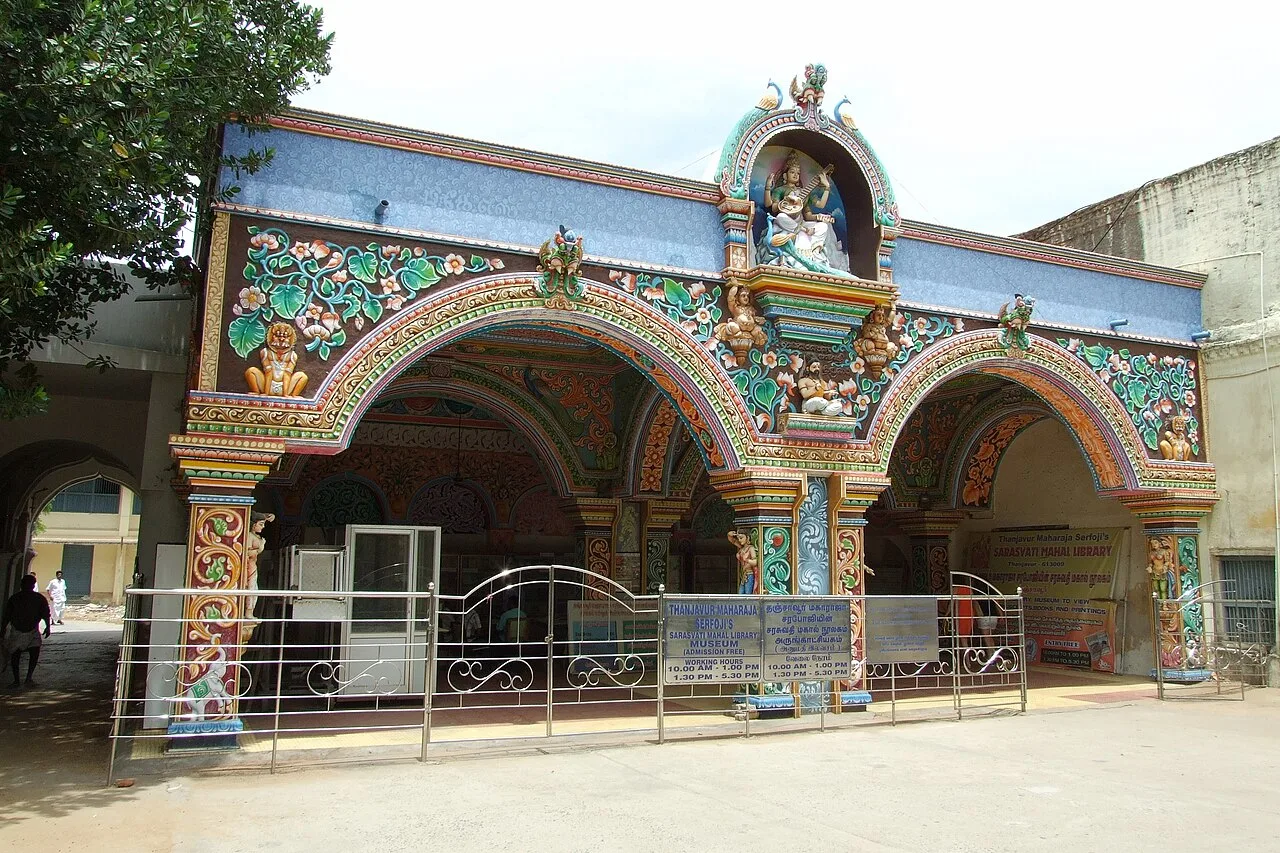
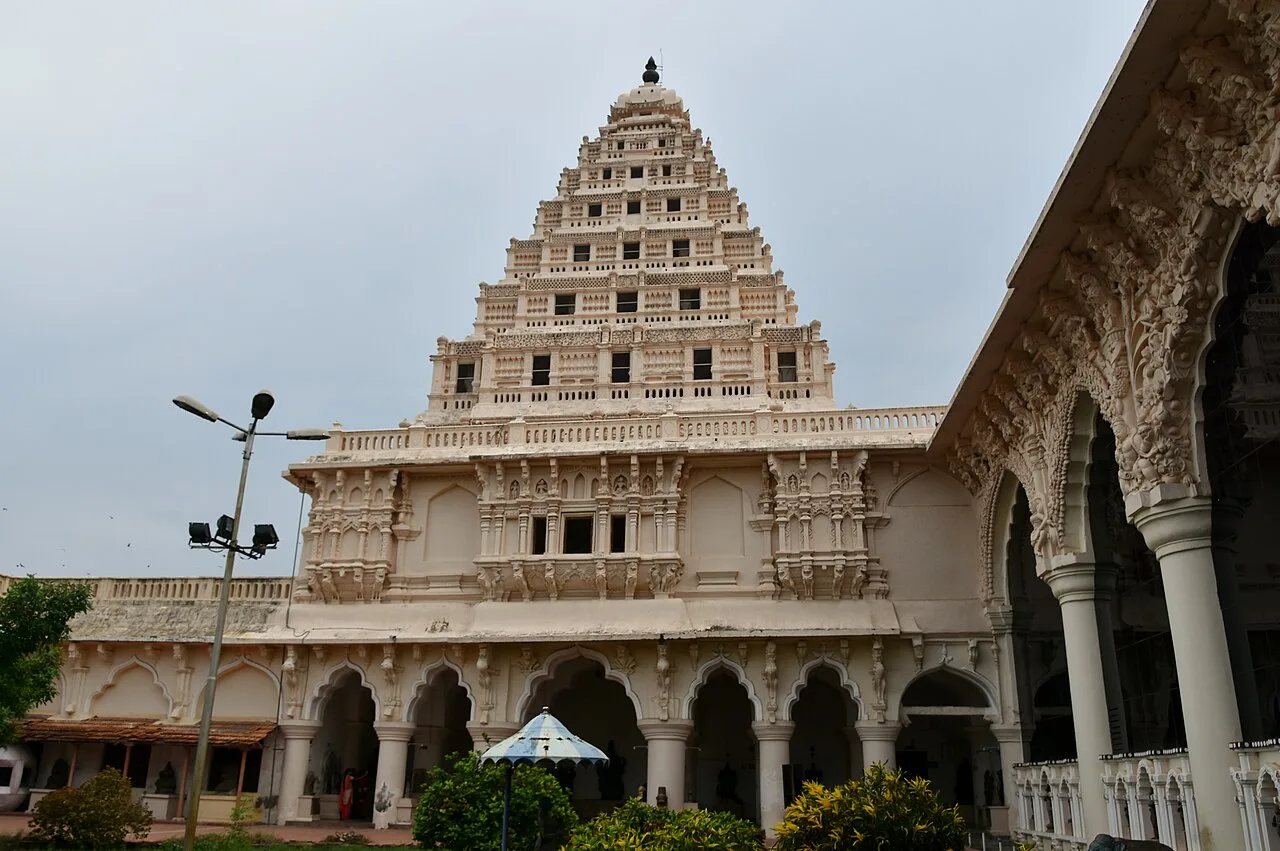
Rice is the area’s defining agricultural product, and paddy trading and rice milling serve the wider delta. The city’s bazaars offer everyday goods alongside brassware, devotional objects and locally made souvenirs. Handloom cotton and silk textiles are available in shops, though Thanjavur is more strongly identified with its paintings and crafts than with a single signature saree tradition. The historic Maratha Palace complex is home to the Saraswathi Mahal Library, an important institution associated with the region’s manuscript and cultural heritage. Ask sellers about materials and workmanship when choosing traditional pieces.

History

Thanjavur rose to prominence under the medieval Cholas, who made it an imperial centre. Vijayalaya Chola took the city in the ninth century, and the Chola emperor Rajaraja I later built Brihadisvara Temple, completed in the early eleventh century. Thanjavur remained a leading Chola capital until the seat of power shifted to Gangaikonda Cholapuram. Pandyas, the Vijayanagar rulers and the Nayaks subsequently held the city. The Nayaks encouraged literature and the arts, and their rule was followed by the Thanjavur Marathas, who also supported music and scholarship.

The British took control in the eighteenth century and annexed the Maratha kingdom in 1855. Under colonial administration, Thanjavur became an important district centre. Since Indian independence, it has continued as the district headquarters and a service hub for the surrounding agricultural region. Its historic temples, palace and living craft traditions remain central to the city’s identity.

Food, festivals & culture

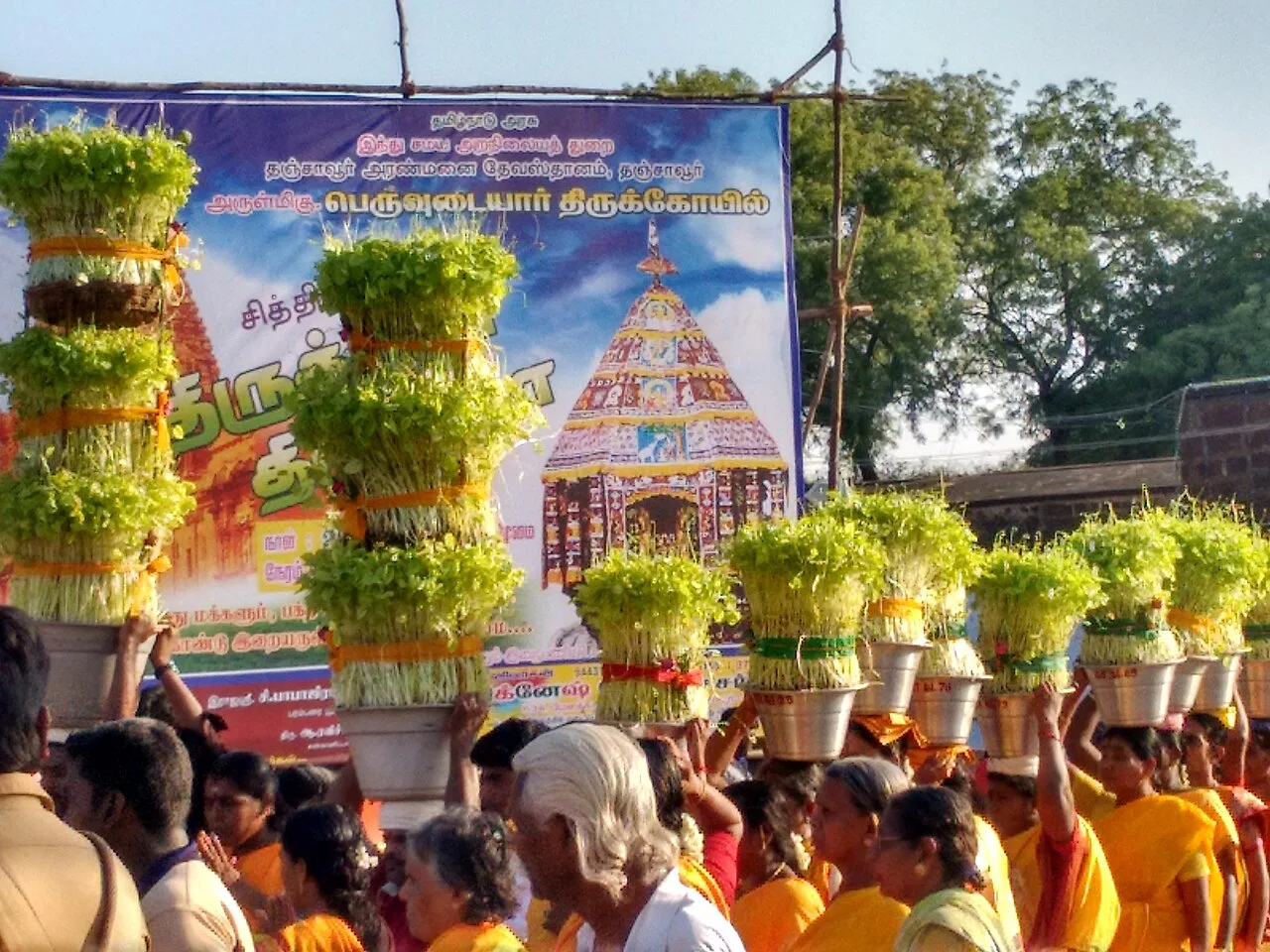
Tamil is the principal language of daily life, and the city’s religious and cultural calendar reflects its long history. Pongal, the harvest festival, is celebrated in January; Tamil New Year falls in April, while Navaratri and Deepavali usually come in autumn. The Brihadisvara Temple’s annual observances draw worshippers, and Sadhaya celebrations honour the Chola ruler Rajaraja I. The city has Hindu temples as well as churches and mosques serving its diverse communities.

Meals commonly feature rice with sambar, rasam, vegetables and curd; idli and dosa are popular breakfast foods, often paired with filter coffee. Sweets and festival offerings include adhirasam and sakkarai pongal. Thanjavur has a strong association with Carnatic music and classical arts, shaped by generations of royal and temple patronage. Nadaswaram music is heard at religious celebrations, while Bharatanatyam and other classical performances are part of the region’s cultural life. The palace quarter and Saraswathi Mahal Library offer further glimpses of the city’s artistic and scholarly heritage.

Visiting the city

November to February is generally a comfortable time to visit, with warm days and cooler evenings; October to December can bring northeast monsoon rain. Thanjavur is served by Thanjavur Junction railway station. The nearest major airport is Tiruchirappalli International Airport, about 60 kilometres away. Road travel, local buses, auto-rickshaws and taxis are practical ways to get around.

Start around Brihadisvara Temple and explore the surrounding historic streets, then visit the Maratha Palace complex and its museum and library. The old bazaar and market streets are good for browsing crafts, devotional items and daily produce. Allow time to see paintings and metalwork in local craft shops, and use the city as a base for exploring other Chola-era temples in the wider region.

Attractions

Places to visit in Thanjavur

Sights within about 12 km of each other, even when they fall in different districts.

Map

Thanjavur on the map

  1. 1Brihadisvara Temple
  2. 2Saraswathi Mahal Library
  3. 3Thanjavur Palace

Tamil Nadu

Other cities to explore