Ghumoopedia — Explore, Discover, Experience
Sign in
Thanumalayan Temple, Suchindram, near Kanyakumari

City guide · Tamil Nadu

Kanyakumari

Kanyakumari, at the southern tip of mainland India, is a coastal town and pilgrimage centre in Tamil Nadu. Its position beside the meeting waters of the Arabian Sea, Bay of Bengal and Indian Ocean gives it a distinctive setting, especially at sunrise and sunset.

Famous for

  • Kumari Amman Temple
  • Vivekananda Rock Memorial
  • Thiruvalluvar Statue
  • Sunrise and sunset views
  • Kanyakumari clove
  • Seashell souvenirs
In the city
4
District
Kanniyakumari

Why Kanyakumari matters

Kanyakumari, at the southern tip of mainland India, is a coastal town and pilgrimage centre in Tamil Nadu. Its position beside the meeting waters of the Arabian Sea, Bay of Bengal and Indian Ocean gives it a distinctive setting, especially at sunrise and sunset. Visitors come for the seafront views, the Kumari Amman Temple and boat trips to Vivekananda Rock Memorial and the Thiruvalluvar Statue, which stands on a rocky islet offshore.

The town is also the gateway to the wider Kanyakumari district, with Nagercoil nearby and hill country, historic churches and coastal settlements within reach. Pilgrims visit the temple dedicated to the goddess Kanya Kumari, while travellers often combine the waterfront with the Gandhi Mandapam and local markets. Though compact, Kanyakumari brings together religious traditions, maritime life and tourism at a meeting point of India’s southern landscapes. Its appeal lies as much in this geography and atmosphere as in its monuments.
Famous for: crafts, trade & products

Kanyakumari is better known for coastal souvenirs and produce from its surrounding district than for textiles or large-scale handicraft industries. Shops near the temple and seafront sell shell and conch objects, small decorative pieces and other tourist keepsakes. Palm-leaf and coir articles are also found in the wider region. Choose responsibly made goods and avoid items made from protected wildlife or coral.

The district’s Kanyakumari clove, grown in the Western Ghats, has a Geographical Indication tag and is valued for its aromatic quality. It may be found through local grocery and spice sellers, though cultivation is in the district’s hill areas rather than the town centre. Kanyakumari’s everyday economy includes tourism, fishing, retail and services; it is not a major textile or industrial centre. For local shopping, browse the bazaar streets around the temple and the stalls along the waterfront, comparing labels and asking sellers where regional products were made. Nagercoil, the district’s principal urban centre, offers a wider range of shops and services.

History

Kanyakumari has a long history as a coastal settlement and sacred destination. The town has links to the Sangam period and appears in old Tamil and Malayalam literary traditions. Accounts by classical geographer Ptolemy and the medieval traveller Marco Polo also refer to the region, reflecting its place on Indian Ocean routes. The town takes its name from Kanya Kumari, the goddess worshipped at its prominent coastal temple.

The surrounding area was shaped by South Indian kingdoms and later by the rulers of Travancore. During British rule, the cape was widely known as Cape Comorin. The region remained part of the princely state of Travancore and, after independence, of Travancore-Cochin. In 1956, the Tamil-speaking areas that form Kanyakumari district were transferred to Madras State, now Tamil Nadu, during the reorganisation of states. Tourism grew around the temple and coastal setting, with the Vivekananda Rock Memorial and Thiruvalluvar Statue becoming major modern landmarks.

Food, festivals & culture

Local food reflects both Tamil and Kerala influences. Rice, coconut, fish and seafood feature prominently, alongside familiar Tamil meals and breakfasts such as idli, dosa, appam and puttu. Fish curry and tapioca are common regional choices; sweets such as payasam and adhirasam are enjoyed at homes and festivals. Menus vary between restaurants, and vegetarian meals are readily available near the temple.

The Kumari Amman Temple is the town’s central place of worship and draws pilgrims throughout the year. Its annual temple celebrations, including festivals in the Tamil month of Vaikasi (May–June), and Navaratri in September or October bring processions and devotional activity. Tamil is the main language, while Malayalam is also widely understood, reflecting the district’s location beside Kerala. Bharatanatyam and Tamil folk forms such as kummi and villupattu belong to the wider cultural region. Churches and mosques, as well as Hindu shrines, reflect the area’s diverse religious life.

Visiting the city

October to March is generally a comfortable season to visit, with warmer conditions before the monsoon and rain possible during the southwest monsoon months. The nearest major airport is Thiruvananthapuram International Airport, roughly 90 kilometres away. Kanyakumari railway station serves the town; Nagercoil Junction, about 20 kilometres north, is a larger nearby rail hub.

Auto-rickshaws, taxis and local buses connect the station, temple and waterfront. Boats carry visitors to Vivekananda Rock Memorial and the Thiruvalluvar Statue, subject to sea conditions. Explore the temple quarter, the promenade around the ferry area and the Gandhi Mandapam for the town’s main sights. The seafront can be busy around sunrise and sunset, so allow time to move between viewpoints. Nagercoil makes a practical base for wider district trips.

Attractions

Places to visit in Kanyakumari

Sights within about 12 km of each other, even when they fall in different districts.

Map

Kanyakumari on the map

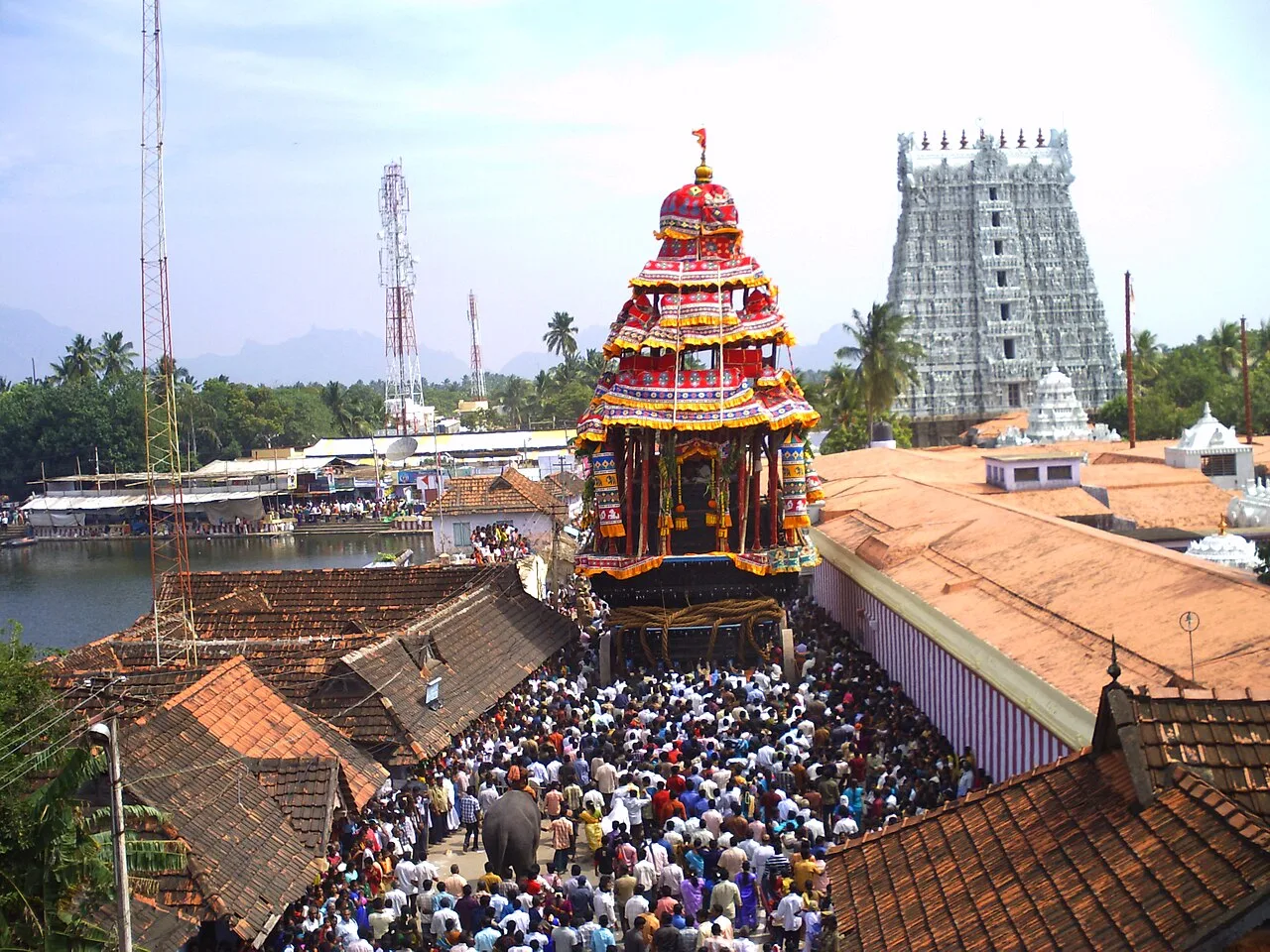
  1. 1Thanumalayan Temple, Suchindram
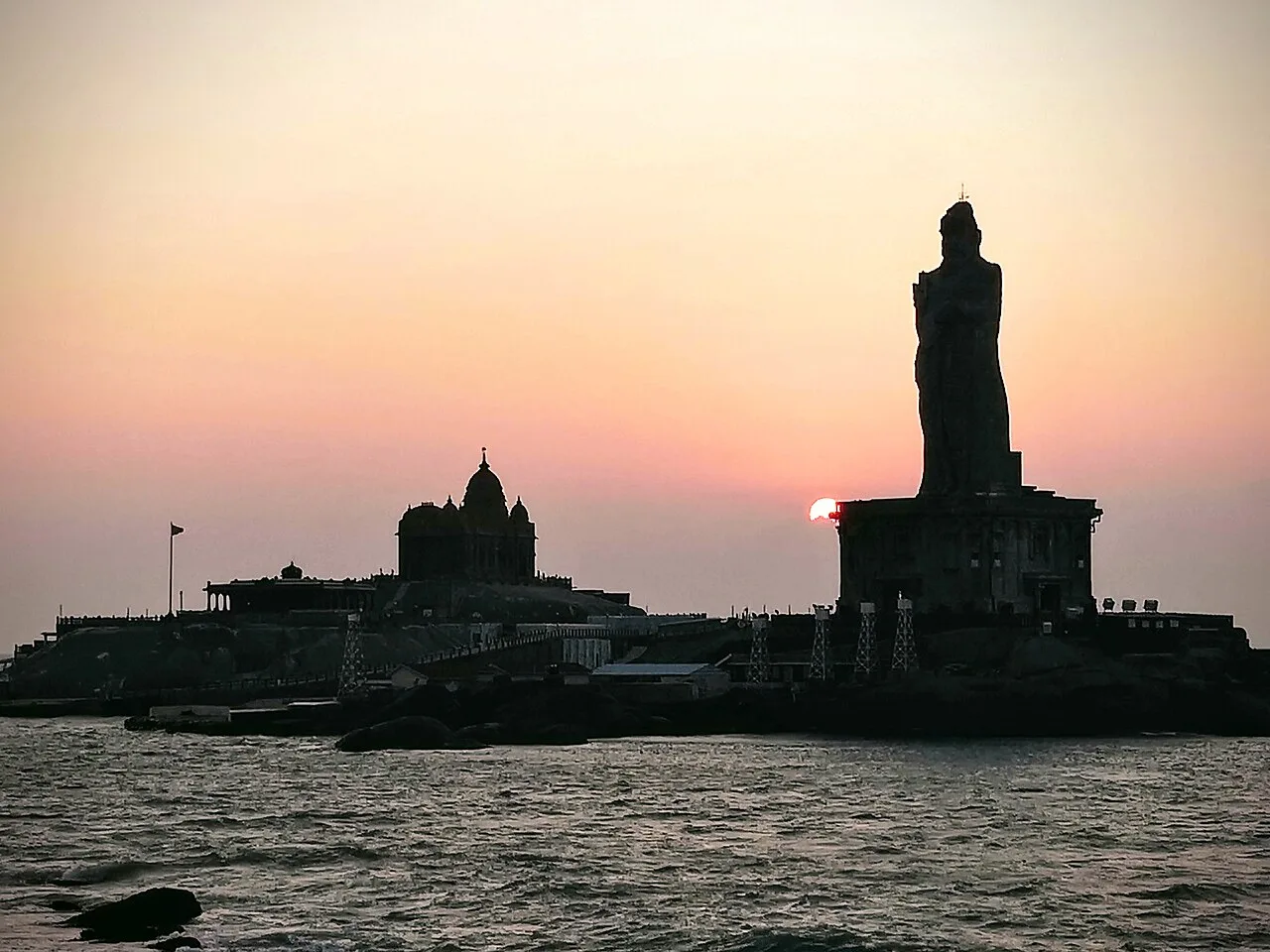
  2. 2Thiruvalluvar Statue
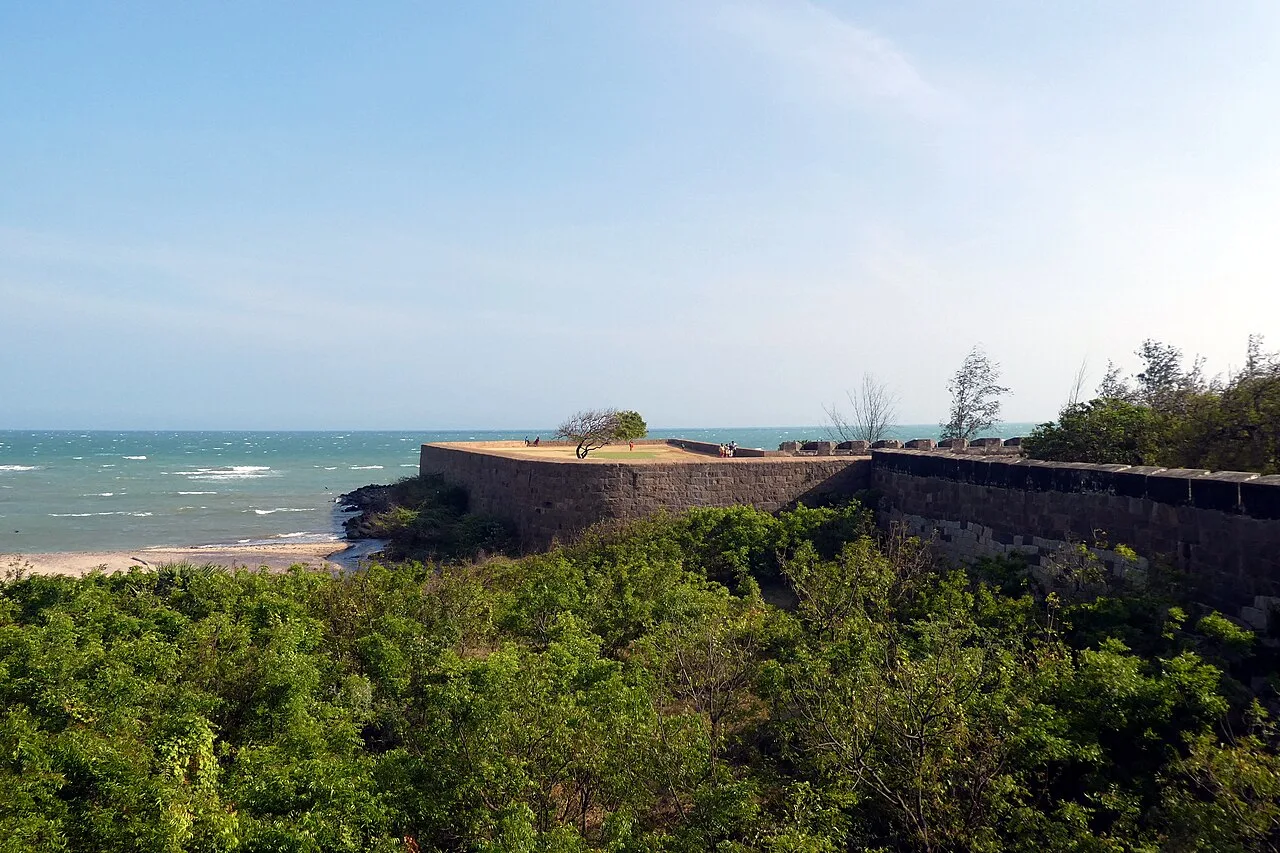
  3. 3Vattakottai Fort
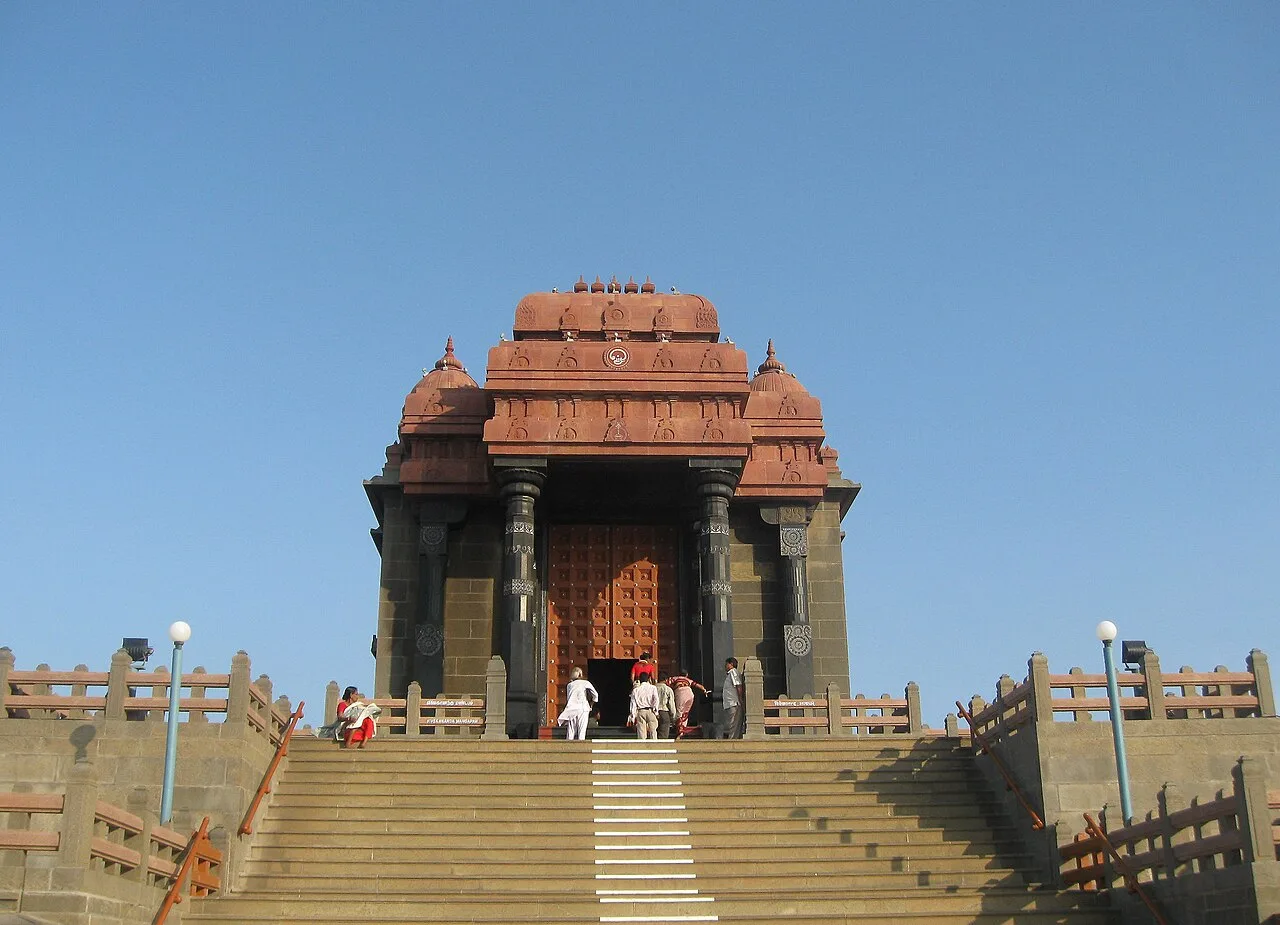
  4. 4Vivekananda Rock Memorial

Tamil Nadu

Other cities to explore