
Ghumoopedia — Explore, Discover, Experience
Sign in
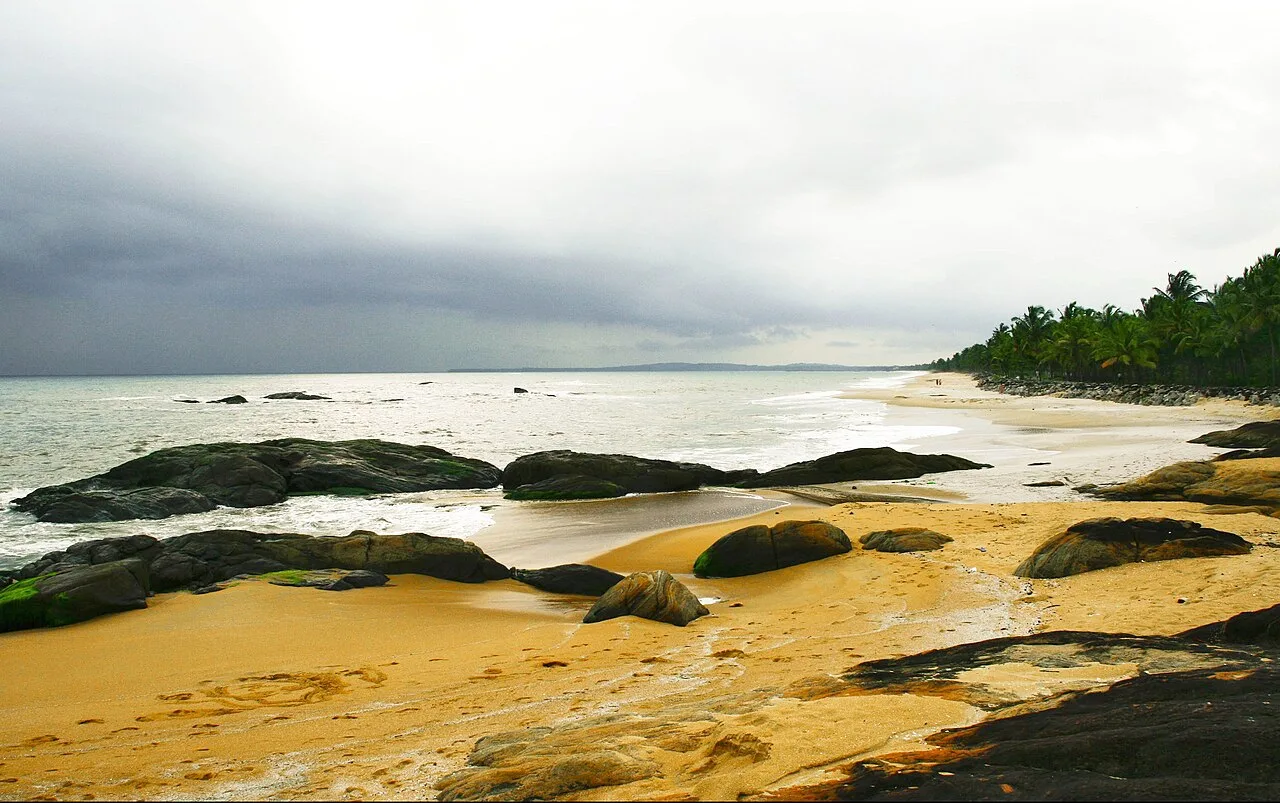
Kappad Beach, near Koyilandy

City guide · Kerala

Koyilandy

Koyilandy is a coastal municipality and taluk in Kozhikode district, set between Kozhikode and Kannur along National Highway 66. Its position on the Malabar Coast makes it a useful regional centre for nearby communities, with road and rail links and a working connection to the sea.

Famous for

  • Koyilandy hookah
  • Pandalayani Kollam port
  • Kappad coast
  • Historic Jumu'ah Mosque
  • Malabar fishing
In the city
1
District
Kozhikode

Why Koyilandy matters

Koyilandy is a coastal municipality and taluk in Kozhikode district, set between Kozhikode and Kannur along National Highway 66. Its position on the Malabar Coast makes it a useful regional centre for nearby communities, with road and rail links and a working connection to the sea. Visitors come for the coast, local markets and the layered history of the former port of Pandalayani Kollam. Kappad, a beach near the town, is associated with Vasco da Gama’s arrival on the Malabar Coast in 1498.

The town is also known for Koyilandy hookahs, a distinctive traditional craft, and for the old Jumu'ah Mosque, whose inscription is an important record of early Muslim life and royal patronage in Kerala. Nearby Muchukunnu was the birthplace of K. Kelappan, the independence activist remembered as Kerala Gandhi. Koyilandy suits travellers interested in coastal history and everyday Malabar life more than those seeking a large resort destination; it can also serve as a base for exploring this stretch of northern Kerala.

Famous for: crafts, trade & products

Koyilandy’s best-known specialised product is the Koyilandy hookah, a handcrafted water pipe traditionally made with metal components and a coconut-shell base. The craft has a Geographical Indication (GI) tag. Production and availability can vary, so visitors interested in buying one should ask in town about current makers or specialist sellers rather than assume it is stocked by every shop. The town is not especially known for a particular saree or textile tradition, and there is no need to expect a dedicated craft bazaar.

Koyilandy’s coastal setting also shapes local trade: fish and other everyday goods are part of the town’s markets, while shops in the centre serve residents and travellers from surrounding villages. For the freshest sense of the local economy, explore the central shopping streets and market areas; ask locally about fish-market activity and hookah craft outlets. Pandalayani Kollam’s former port links the area to a much older history of maritime exchange, but it is the hookah, rather than a large export industry, that gives Koyilandy its distinctive product identity.

History

Koyilandy was historically known as Panthalayani or Pandalayani Kollam, a port on the Malabar Coast. Some historians identify it with Tyndis, an ancient trading port mentioned in classical accounts, though the identification is not certain. The harbour connected the coast with wider Indian Ocean commerce. An inscription at the town’s Jumu'ah Mosque, written in Old Malayalam scripts, records royal patronage to Muslims and offers evidence of the area’s early medieval history.

In the medieval period, the port was associated first with Kolathunadu and later came under the influence of the Zamorin of Calicut. Portuguese fleets attacked coastal settlements here in the 16th century, during their efforts to control maritime trade. The town’s older names include Coulete and Coilandy. In the modern era, Koyilandy developed as a municipality and taluk centre, supported by its position on the coastal road and railway corridor between Kozhikode and Kannur. Fishing, local commerce and connections with nearby settlements remain part of its regional role.

Food, festivals & culture

Koyilandy shares the food traditions of northern Kerala’s Malabar Coast. Meals often feature rice, fish and coconut, with regional favourites such as biryani, pathiri and seafood preparations found in local eateries. Malabar sweets and snacks, including unnakaya and mutta mala, may be available, though menus vary between establishments. Malayalam is the main language; English is also understood in many travel and business settings.

Onam, usually celebrated in August or September, and Vishu, in April, are major seasonal festivals across Kerala. Eid celebrations are also important in this predominantly Muslim coastal region, with dates that shift each year according to the lunar calendar. Local temple festivals bring processions, percussion and community gatherings at different times of year. The town’s places of worship include the historic Jumu'ah Mosque and Hindu temples; churches and other congregations are part of the wider area. Traditional Kerala music and percussion are heard especially during religious festivals, while classical and folk performance traditions are shared across the region.

Visiting the city

November to February is generally a comfortable time to visit, with less rain and milder weather than during the southwest monsoon. The monsoon months can bring heavy showers and rough coastal conditions. Calicut International Airport is the nearest major airport, and Koyilandy railway station serves the town. National Highway 66 provides road connections along the coast.

Auto-rickshaws, local buses and taxis are practical for getting around. Explore the town centre and its market streets, then visit the Pandalayani Kollam area and the old Jumu'ah Mosque, keeping in mind that places of worship may have visitor protocols. Kappad beach, a short trip from town, is a popular coastal excursion. Ask locally about access to historic or working sites, as they may not be arranged as formal visitor attractions.

Attractions

Places to visit in Koyilandy

Sights within about 12 km of each other, even when they fall in different districts.

Map

Koyilandy on the map

  1. 1Kappad Beach

Kerala

Other cities to explore