
Ghumoopedia — Explore, Discover, Experience
Sign in
Salkhan Fossils Park, near Robertsganj

City guide · Uttar Pradesh

Robertsganj

Robertsganj is the administrative headquarters of Sonbhadra district, in Uttar Pradesh’s southeastern corner. Its importance comes from serving as the district’s main centre for government offices, services and trade, while linking nearby towns and the wider industrial belt.

Famous for

  • Sonbhadra district headquarters
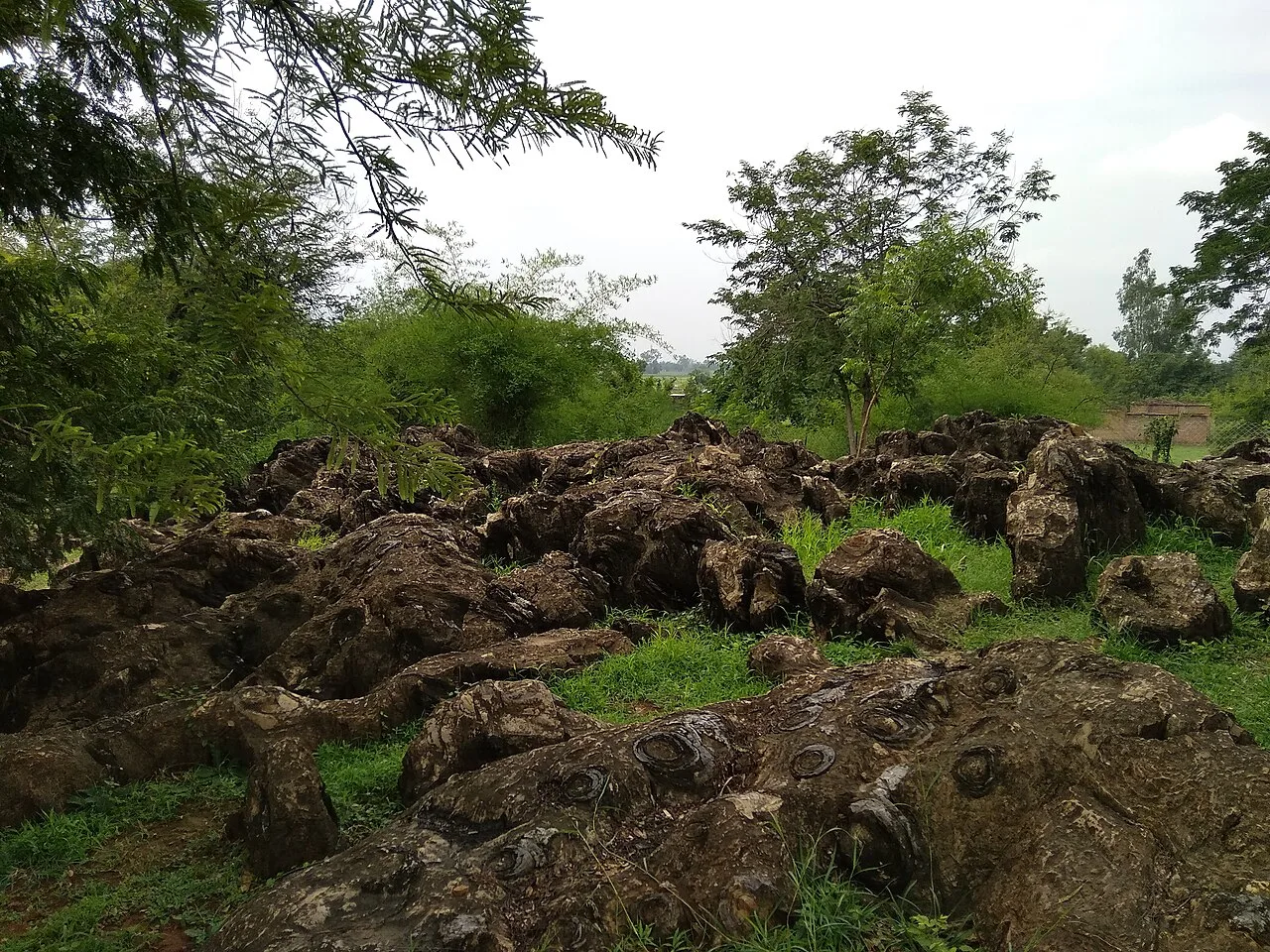
  • Salkhan Fossils Park
  • Prehistoric rock paintings
  • Vindhyan-Kaimur landscape
  • Sonbhadra energy belt
In the city
1
District
Sonbhadra

Why Robertsganj matters

Robertsganj is the administrative headquarters of Sonbhadra district, in Uttar Pradesh’s southeastern corner. Its importance comes from serving as the district’s main centre for government offices, services and trade, while linking nearby towns and the wider industrial belt. The city is also a practical base for exploring a landscape of hills, rivers and archaeological sites between the Vindhyan and Kaimur ranges.

Visitors come for the area’s natural and prehistoric heritage, particularly Salkhan Fossils Park, about 16 kilometres away, and rock paintings found in the surrounding region. Chopan, near the Son River, is another nearby excursion. Robertsganj is not primarily a resort town; it is a working regional centre whose appeal lies in combining everyday local life with access to Sonbhadra’s varied terrain. The surrounding district is associated with coal mining and power generation, giving the city a broader economic role beyond its municipal limits.

Famous for: crafts, trade & products

Robertsganj is best understood as a district service and trading centre rather than a specialist craft or textile city. There is no widely established signature saree, handicraft or GI-tagged product associated specifically with the city. Its shops and markets mainly serve local residents and people travelling from nearby towns, with everyday clothing, groceries, household goods and regional provisions on offer. The central market area is the most convenient place to browse and shop.

The wider Sonbhadra economy is strongly connected with coal mining and power generation, especially in industrial areas beyond Robertsganj. These activities help explain the city’s role as a service hub, but they should not be confused with products made in the city itself. Visitors interested in the district’s identity may find its landscape and heritage more distinctive than its retail specialities: prehistoric rock art and the fossil-bearing terrain around Salkhan are notable attractions. For locally made goods, ask in the market about current availability rather than expecting a particular craft tradition or branded regional product.

History

The region around Robertsganj has a long human history. Its position between the Vindhyan and Kaimur ranges, and the prehistoric cave paintings found in the area, point to early human activity. The town’s present name recalls Frederick Roberts, the British military officer who later became the 1st Earl Roberts and served as Commander-in-Chief of the British Indian Army.

Robertsganj became more prominent as an administrative centre in modern times. Sonbhadra district was formed on 4 March 1989 from the southern part of the former Mirzapur district, with Robertsganj as its headquarters. This brought district administration and related services into the town and strengthened its role as a regional hub. In 2018, the railway station serving the city was renamed Sonbhadra, reflecting the district name. Meanwhile, coal mining and power development in the wider district have shaped the region’s economy and transport links.

Food, festivals & culture

Daily life reflects the customs of eastern Uttar Pradesh and the neighbouring regions. Hindi is widely used, alongside regional speech such as Bhojpuri. Meals are typically based on wheat breads, rice, lentils and seasonal vegetables; familiar snacks and sweets can be found in local shops, though Robertsganj is not known for a distinctive city-specific cuisine. Visitors can ask locally about seasonal specialities and dishes prepared for family or religious occasions.

Holi in spring, Diwali in autumn and Dussehra are widely observed, while Chhath is also important in the broader eastern Uttar Pradesh region, usually around October or November. Devotional songs and folk music accompany festivals and community gatherings; dance traditions vary across the district and its communities. Worship in the city is centred on neighbourhood temples and mosques, with festivals bringing people together in public and family settings. The surrounding district’s cultural life is diverse, so customs may differ between the city and nearby rural or tribal communities.

Visiting the city

The most comfortable time to visit is generally October to March, when daytime conditions are cooler than in the hot summer. The nearest major airport is Lal Bahadur Shastri International Airport at Varanasi, about 82 kilometres away. The main railway station is Sonbhadra railway station, formerly known as Robertsganj station. Buses and road connections link the city with Varanasi and other regional centres; local autos and taxis are useful for short trips.

Explore the central market and administrative area for a sense of everyday city life. Robertsganj also makes a useful base for Salkhan Fossils Park, roughly 16 kilometres away, and for trips towards Chopan and the Son River, about 25 kilometres south. Check local road conditions before setting out for sites beyond the city.

Attractions

Places to visit in Robertsganj

Sights within about 12 km of each other, even when they fall in different districts.

Map

Robertsganj on the map

  1. 1Salkhan Fossils Park

Uttar Pradesh

Other cities to explore