
District · Telangana
Mahabubnagar
Mahabubnagar, also called Palamuru, offers a view of southern Telangana’s Deccan Plateau and its agricultural towns and villages.
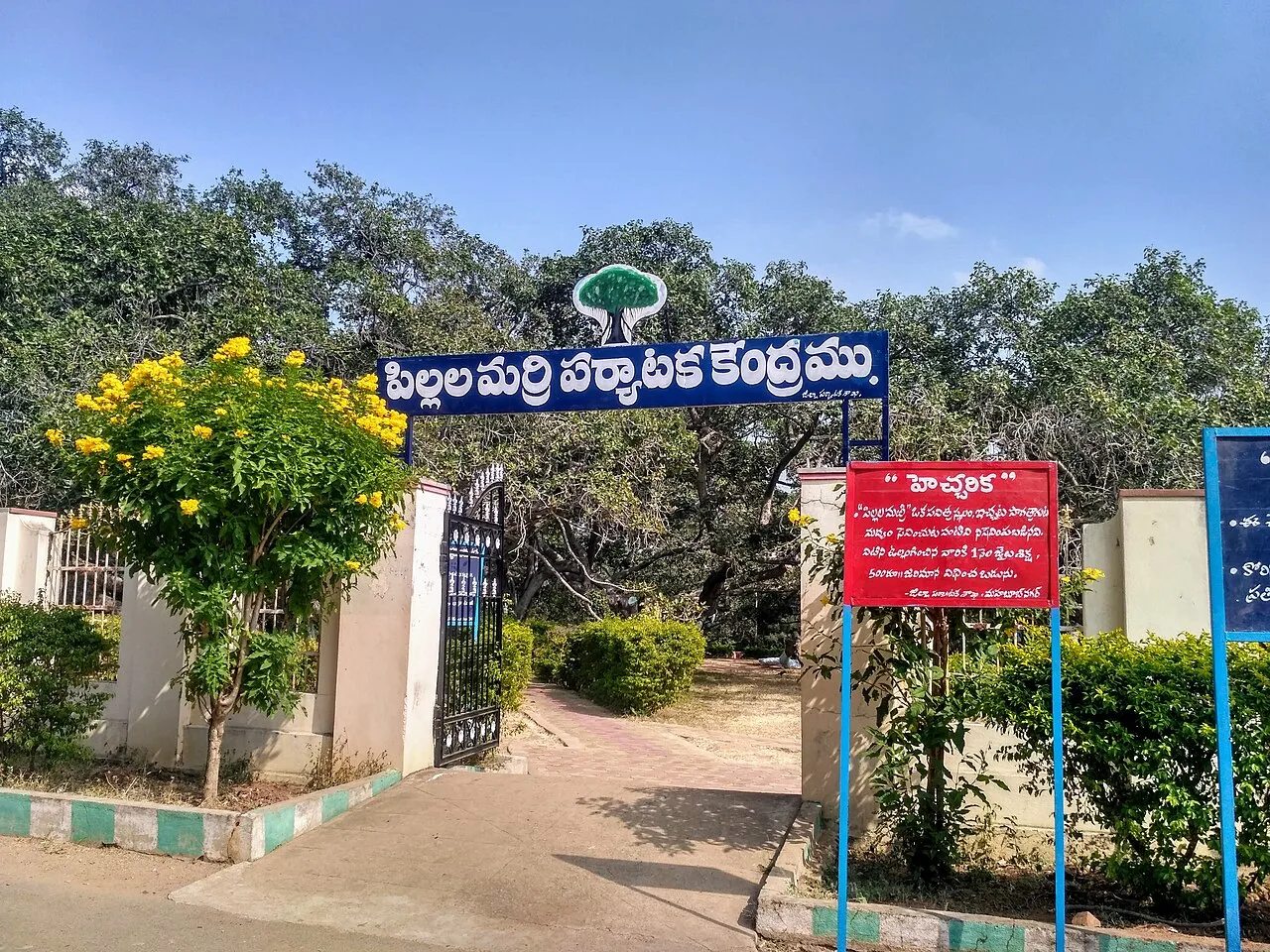
Mahabubnagar, also known as Palamuru, lies in southern Telangana on the Deccan Plateau. Rocky outcrops, stretches of dry agricultural land and village tanks shape its landscape, with the monsoon bringing a marked seasonal change. The district shares the wider region’s history of Deccan kingdoms and the former Hyderabad State under the Nizams. Mahabubnagar town is its administrative and commercial centre, while surrounding villages retain a strongly agricultural character. Its best-known landmark is Pillalamarri, a sprawling banyan traditionally described as about 800 years old. The tree offers a distinctive introduction to the district: an encounter with a living landmark rather than a monumental building.
Mahabubnagar, also called Palamuru, offers a view of southern Telangana’s Deccan Plateau and its agricultural towns and villages. It is part of a region shaped by Deccan kingdoms and the former Hyderabad State under the Nizams. Mahabubnagar town serves as the district’s main administrative and commercial centre, while rural life is closely tied to farming and village tanks. The district’s best-known attraction is Pillalamarri Banyan Tree, traditionally described as about 800 years old. Its broad canopy makes the site a memorable stop for travellers interested in natural landmarks as well as the region’s history and everyday landscape.
Mahabubnagar lies in a part of the Deccan that came under successive regional powers and kingdoms. The wider Telangana region was associated at different times with the Satavahanas, Chalukyas and Kakatiyas, followed by the Deccan Sultanates, including the Qutb Shahi kingdom. These broad histories are part of the region’s context; political boundaries changed over time and did not always correspond to the present district. The area later formed part of Hyderabad State, ruled by the Nizams. It remained within the princely state during the period of British paramountcy rather than becoming a directly administered British province. The district is commonly associated with the name of Mir Mahbub Ali Khan, the sixth Nizam. After Hyderabad State was integrated into India, the area became part of the reorganised state of Andhra Pradesh and later Telangana. Mahabubnagar district was reorganised in 2016 when several new districts were created in Telangana, leaving the present district smaller than its earlier administrative unit.
Food here belongs broadly to Telangana’s culinary tradition, with grain-based meals, spicy accompaniments and seasonal home cooking. Look for jonna rotte, or sorghum flatbread, served with pachadi, and ask about natu kodi, a country-chicken curry. Sarva pindi, a savoury rice-flour pancake, and sakinalu, a crisp snack associated with Sankranti, are regional specialities rather than dishes unique to Mahabubnagar. Hyderabad’s influence is reflected in the wider region’s biryani, Irani chai and sweets such as double ka meetha; haleem is especially associated with Ramzan. Small eateries may prepare only a limited daily menu, so ask what has been freshly cooked.
For handloom context, look to the wider Palamuru region rather than assuming every textile is made within today’s Mahabubnagar district. Narayanpet, now a separate neighbouring district, is known for handwoven saris with checked patterns and contrasting borders. Gadwal, in present-day Jogulamba Gadwal district, is celebrated for saris combining cotton bodies with silk borders and pallus. Both traditions are associated with the larger historical Mahabubnagar area. When shopping, ask where a piece was woven, whether it is handloom, and what fibres it contains; a local sales outlet does not necessarily indicate local production.
Bathukamma, a floral festival celebrated in Telangana, is observed in autumn, while Bonalu is associated with the summer festival season in parts of the state. Sankranti in midwinter and Ugadi in spring are also marked by family gatherings, local events and seasonal customs. Temple fairs and jatara celebrations take place in the district and wider region, though their scale and timing vary by locality. Larger celebrations can bring extra visitors to town centres and pilgrimage sites, so local transport and accommodation may be busier. For smaller village fairs, check locally for the event season and access arrangements.
The district occupies a dry, rocky stretch of the Deccan Plateau, with exposed outcrops, gently undulating agricultural land and village tanks. Seasonal streams and water bodies become more prominent during and after the monsoon; the Krishna lies in the wider southern regional landscape. Scrub and scattered tree cover occur alongside cultivated fields and settlements. Roads link the district headquarters with smaller towns and villages, but rural journeys can take longer where routes are narrow or surfaces are affected by rain. The landscape is generally open rather than mountainous, and shade and water can be limited on exposed stretches.
Mahabubnagar has a hot, mostly dry climate for much of the year. Summer, before the monsoon, can make outdoor sightseeing tiring, especially around midday. Monsoon rains usually bring a greener landscape and refill tanks, but can also make some rural roads slower or uneven. Winter is generally the most comfortable season for exploring outdoors. The cooler months from late autumn into early spring are usually the best time to visit, while early mornings are preferable in warmer periods. Pack light, breathable clothing, sun protection and a refillable water bottle; add rain protection during the monsoon and a light layer for cooler evenings in winter.
Hyderabad’s Rajiv Gandhi International Airport is the main air gateway for Mahabubnagar. Mahbubnagar railway station serves the district headquarters, with onward travel by road. The Hyderabad–Bengaluru corridor, National Highway 44, provides the principal regional road approach, while connecting roads lead into town and surrounding settlements. Buses link Mahabubnagar with Hyderabad and other regional centres. Within town, auto-rickshaws are useful for shorter journeys; taxis can be more practical for Pillalamarri and trips involving several rural stops. Confirm return transport before leaving town, particularly for less busy locations, and check current services locally.
Mahabubnagar town is the most useful local transport hub, with road connections to surrounding settlements and links to the Hyderabad–Bengaluru corridor. Local and regional buses serve the town and some nearby communities, but service frequency can vary outside main routes. Auto-rickshaws are practical for short trips in town. For Pillalamarri Banyan Tree and journeys involving several rural stops, a taxi or hired vehicle offers more flexibility. Shared vehicles may operate on local routes, but availability can be less predictable. Confirm the return journey before travelling to a quieter village, especially later in the day.
2 days: Pillalamarri Banyan Tree; sleep in Mahabubnagar town on the first night. 3 days: Pillalamarri Banyan Tree; sleep in Mahabubnagar town on both nights, allowing a relaxed visit and time for local exploration.
Mahabubnagar town is the most practical base for visiting Pillalamarri Banyan Tree and arranging onward transport. It has the district’s broadest choice of ordinary hotels and guest accommodation, while smaller settlements may offer fewer options. Homestays or government lodges may be available in the wider area, but availability and standards vary and should be checked ahead. Dharamshalas are not a dependable option everywhere. For a short visit, staying in town avoids relying on late rural transport; during festival periods, reserve accommodation in advance where possible.
Carry drinking water and sun protection, particularly when visiting exposed rural sites in warm weather. After monsoon rain, check local advice on road conditions before travelling outside town; some smaller roads may be uneven or slower to use. Rural mobile coverage and access to services can vary, so plan return transport in advance. Keep to visitor areas at Pillalamarri and follow any on-site instructions intended to protect the tree and its grounds. There is no general permit requirement known for an ordinary visit to the listed attraction, but confirm access rules with local authorities or site staff before travelling. Take extra care in crowds during festivals.
All districts of Telangana
- Adilabad
- Bhadradri Kothagudem
- Hanamkonda
- Hyderabad
- Jagtial
- Jangaon
- Jayashankar Bhupalpally
- Jogulamba Gadwal
- Kamareddy
- Karimnagar
- Khammam
- Kumuram Bheem Asifabad
- Mahabubabad
- Mancherial
- Medak
- Medchal–Malkajgiri
- Mulugu
- Nagarkurnool
- Nalgonda
- Narayanpet
- Nirmal
- Nizamabad
- Rajanna Sircilla
- Ranga Reddy
- Sangareddy
- Siddipet
- Suryapet
- Wanaparthy
- Warangal
- Yadadri Bhuvanagiri
Q: How many days should I spend in Mahabubnagar? A: One or two days can cover Pillalamarri Banyan Tree and a relaxed visit to Mahabubnagar town. Allow longer if you are exploring rural areas. Q: When is the best time to visit? A: The cooler months from late autumn into early spring are generally the most comfortable for outdoor sightseeing. Q: Where is the best base? A: Mahabubnagar town is the most practical base for accommodation, local services and onward travel to Pillalamarri. Q: How do I get to the district? A: Hyderabad’s Rajiv Gandhi International Airport is the main air gateway. Mahbubnagar railway station and regional buses serve the district headquarters; road links connect it with Hyderabad and other centres. Q: Is Mahabubnagar suitable for families or elderly travellers? A: Yes, with sensible planning. Arrange a vehicle for rural visits, allow time for rest, and consider heat, walking surfaces and the amount of shade at outdoor sites.
This page draws on our 1 destination guides for Mahabubnagar and is updated as our team checks it.
Be the first to share photos, stories, advice or a helpful contact for Mahabubnagar.
Loading…