
District · Telangana
Suryapet
Suryapet sits on the main road corridor between Hyderabad and Vijayawada, making it a useful stop and base in eastern Telangana.
Suryapet district in Telangana combines a busy highway town with farming villages, stretches of dry Deccan countryside and the Krishna River along its southern edge. Its religious heritage offers two contrasting introductions: the Yogananda Lakshmi Narasimha Swamy Temple at Mattapalli, dedicated to Narasimha and Lakshmi, and the Shaivite Erakeswara Temple on the western side of Pillalamarri. Pillalamarri’s temples connect the area with the architectural legacy of the Kakatiya period. Beyond these landmarks, the district’s character is largely agricultural, shaped by seasonal cultivation, village markets and pilgrimage. Suryapet town provides a practical base for exploring, while the temple settlements offer a quieter encounter with the region’s devotional traditions.
Suryapet sits on the main road corridor between Hyderabad and Vijayawada, making it a useful stop and base in eastern Telangana. Its appeal lies in the contrast between a busy regional town, agricultural countryside and temple settlements near the Krishna River. The district is best known to visitors for Mattapalli’s Yogananda Lakshmi Narasimha Swamy Temple and the Erakeswara Temple at Pillalamarri, whose architecture reflects the area’s Kakatiya heritage. These sites offer different devotional traditions, while village markets and cultivated landscapes give a sense of everyday life beyond the major pilgrimage stops.
The history of Suryapet is part of the wider history of the Telangana plateau. Pillalamarri’s Erakeswara Temple is associated with the Kakatiya architectural legacy, which shaped many religious buildings across the region during the medieval period. Later, the area came under successive powers that governed the Deccan, including the Qutb Shahis of Golconda and, after the Mughal conquest of Golconda in 1687, the expanding Mughal empire. From the eighteenth century, it formed part of the Hyderabad princely state under the Asaf Jahi Nizams. During the British colonial period, Hyderabad remained a princely state rather than a directly administered British province. Hyderabad State joined the Indian Union in 1948, and the region subsequently became part of Andhra Pradesh before Telangana was formed in 2014. Suryapet district itself was created in 2016, when Telangana reorganised its districts, with territory drawn principally from the former Nalgonda district. Mattapalli’s temple traditions and Pillalamarri’s historic shrine remain important links between the district’s present-day pilgrimage life and its longer regional past.
2 destination guides
Erakeswara Temple, Pillalamarri
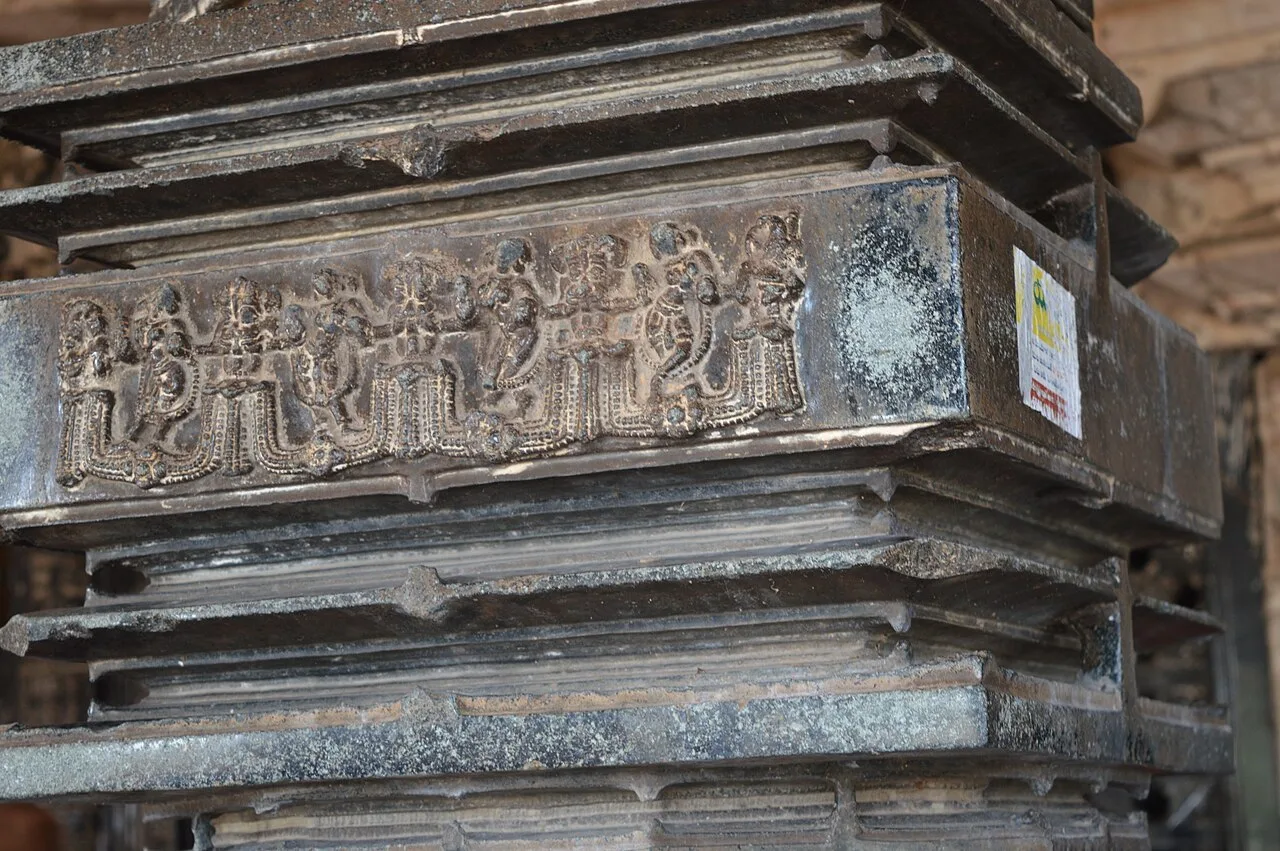
Erakeswara Temple is a Shaivite shrine at Pillalamarri, Telangana. Visitors come to see its carved stonework and its connection with a cluster of temples dating to the 12th and early 13th centuries.
Mattapalli Narasimha Temple
A riverside Vaishnava shrine in Telangana, Mattapalli is revered for its self-manifested Narasimha image and longstanding worship traditions; pilgrims also come for its free meals and accommodation.
Food in Suryapet belongs to the wider Telangana tradition rather than a separately documented district cuisine. Look for jonna rotte, or sorghum flatbread, with spicy pachadi, and ask whether sarva pindi, a savoury rice-flour pancake, is available. Natu kodi curry is a regional country-chicken preparation, while sakinalu are associated with Sankranti celebrations. Rice meals and seasonal vegetable dishes are practical choices at everyday eateries. Biryani, Irani chai and sweets such as double ka meetha belong to the broader regional food scene, especially Hyderabad; do not assume every small town serves them. Ask what has been freshly prepared that day.
Suryapet’s temple heritage provides an introduction to regional stone carving and architectural ornament, particularly at Pillalamarri’s historic shrines. These are heritage arts, not evidence of a present-day souvenir industry. For textiles, Telangana’s wider handloom traditions include Pochampally ikat, known for patterns created by dyeing yarn before weaving, and Gadwal saris with contrasting borders. Their established weaving centres lie outside Suryapet district, so describe such purchases as regional rather than locally made unless the seller can identify their origin. Ask about the weaving centre, fibre and production method before buying.
Temple observances at Mattapalli, including celebrations associated with Narasimha, draw pilgrims from the surrounding region; dates follow the religious calendar and vary from year to year. Across the district, Sankranti in midwinter, Bathukamma in the post-monsoon season, and Dasara in autumn are observed with family gatherings and local events. Festival days at major temples can bring heavier traffic and larger crowds, while rooms in Suryapet town may be more sought after. Check locally for the timing and scale of particular temple celebrations before travelling.
Suryapet is mainly a dry Deccan plateau of gently rolling farmland, settlements and open countryside, with irrigation supporting cultivation in some areas. The Krishna River marks the district’s southern edge and is a defining feature of the Mattapalli side. Much of the landscape is agricultural rather than forested or mountainous, so journeys between sights are chiefly by road through towns and villages. Distances between temple areas and the main town can make a private vehicle useful; rural roads and services may be less frequent away from major routes.
Summer, broadly from March into June, is often hot and sunny, making midday outdoor travel tiring. The monsoon generally brings rain from around June through September; showers can affect rural road conditions and make journey times less predictable. The cooler, drier months from October to February are usually the most comfortable period for temple visits and road trips. Light, breathable clothing, a hat, sunscreen and drinking water are useful in warm weather. During the monsoon, pack a light rain layer and allow extra time for travel. Carry a warmer layer for cooler evenings in winter.
Suryapet town lies on National Highway 65, the main Hyderabad–Vijayawada road corridor, making road travel the simplest approach. Hyderabad’s Rajiv Gandhi International Airport is a practical gateway; Vijayawada Airport at Gannavaram is another option, particularly when planning a visit towards Mattapalli. Rail access depends on the destination: Nalgonda is useful for the Pillalamarri side, while Khammam is an option for onward travel to Mattapalli. Both require a road connection. Intercity buses serve Suryapet, with local buses, auto-rickshaws and hired cars useful for onward journeys. Allow flexibility for village connections and check current services locally.
National Highway 65 provides the main road link through Suryapet town, with other roads connecting it to Pillalamarri and the Mattapalli area. Intercity buses reach Suryapet, while local buses and shared vehicles may serve some onward routes; service frequency can be limited in village areas. Auto-rickshaws are useful for shorter journeys, and a hired car offers more flexibility for visiting both temples in one trip. Nalgonda and Khammam can serve as rail gateways for different parts of the district, but each requires a road connection. Confirm local transport options before setting out.
2 days: Mattapalli Narasimha Temple on day one; sleep in Suryapet town. Erakeswara Temple, Pillalamarri on day two; sleep in Suryapet town. 3 days: Mattapalli Narasimha Temple on day one; sleep in Suryapet town. Allow day two for a slower journey or rest; sleep in Suryapet town. Erakeswara Temple, Pillalamarri on day three; sleep in Suryapet town.
Suryapet town is the most practical base for both listed temples, with hotels and lodges and access to bus and road connections. It suits visitors who prefer to return to town each evening. Accommodation choices may be limited near Mattapalli and Pillalamarri, so check availability before planning an overnight stay there. Pilgrimage facilities or dharamshalas may be available in temple areas, but arrangements and standards vary. Homestays and government lodges are not a dependable option throughout the district; confirm directly with local sources if seeking them.
Summer heat can cause dehydration, so carry drinking water, sun protection and plan breaks; use sealed or treated water if unsure of local supplies. Monsoon rain may leave rural roads wet or uneven, and night driving outside towns is best kept to a minimum. Expect crowds around temple observances and follow local guidance at shrines. Mobile connectivity may be less reliable in villages than in Suryapet town, so save route details in advance. No special permit is generally associated with visits to the listed temples; confirm with official local sources if travel plans include any restricted site or area.
- Khammamabout 49 km
- Nalgondaabout 52 km
- Palnadu · Andhra Pradeshabout 59 km
- Mahabubabadabout 72 km
- Guntur · Andhra Pradeshabout 97 km
- Jangaonabout 101 km
- Yadadri Bhuvanagiriabout 104 km
- Nagarkurnoolabout 108 km
Straight-line distance between the centres of each district's destinations; road distance is longer.
All districts of Telangana
- Adilabad
- Bhadradri Kothagudem
- Hanamkonda
- Hyderabad
- Jagtial
- Jangaon
- Jayashankar Bhupalpally
- Jogulamba Gadwal
- Kamareddy
- Karimnagar
- Khammam
- Kumuram Bheem Asifabad
- Mahabubabad
- Mahabubnagar
- Mancherial
- Medak
- Medchal–Malkajgiri
- Mulugu
- Nagarkurnool
- Nalgonda
- Narayanpet
- Nirmal
- Nizamabad
- Rajanna Sircilla
- Ranga Reddy
- Sangareddy
- Siddipet
- Wanaparthy
- Warangal
- Yadadri Bhuvanagiri
Q: How many days should I spend in Suryapet district? A: Two days can cover both listed temples with road travel; three days allows a more relaxed pace. Q: When is the best time to visit? A: October to February is generally the most comfortable season for temple visits and travel. Q: What is the best base for exploring? A: Suryapet town is the most practical base for both Mattapalli and Pillalamarri. Q: How do I get to the district? A: Suryapet is on National Highway 65 and is served by intercity buses. Hyderabad and Vijayawada airports are possible gateways; rail journeys need a road connection from Nalgonda or Khammam. Q: Is the district suitable for families or elderly travellers? A: Yes, with planning. Allow for road journeys, heat and walking at temple sites; arrange suitable transport and check accessibility locally.
This page draws on our 2 destination guides for Suryapet and is updated as our team checks it.
Be the first to share photos, stories, advice or a helpful contact for Suryapet.
Loading…