
District · Telangana
Siddipet
Siddipet offers a view of Telangana beyond its larger cities: cultivated Deccan countryside, village tanks and worship traditions remain part of everyday life.
Siddipet district lies in Telangana’s Deccan countryside, where cultivated fields, village tanks and rocky rises shape the landscape. Created in 2016, the district has a much older cultural identity rooted in agriculture, village worship and Telangana’s storytelling traditions. Siddipet town is its administrative and commercial centre, while smaller settlements offer a quieter rural setting. A prominent pilgrimage destination is the hilltop Komuravelli Mallanna Swamy Temple in Komuravelli village, where devotion to Mallanna draws visitors from across the region. Cheriyal adds an important artistic dimension through its painted storytelling tradition. Together, these places give the district a character defined more by living religious and rural traditions than by monumental urban sightseeing.
Siddipet offers a view of Telangana beyond its larger cities: cultivated Deccan countryside, village tanks and worship traditions remain part of everyday life. The district was formed in 2016, with Siddipet town serving as its administrative and commercial centre. Travellers come chiefly for Komuravelli Mallanna Swamy Temple, a hilltop pilgrimage site drawing devotees from across the region. The district is also associated with Cheriyal’s painted storytelling tradition, an art form that reflects the area’s cultural life. Siddipet suits visitors interested in rural landscapes, regional religious practice and local traditions more than those seeking a concentration of urban attractions.
The Siddipet area has a long history as part of the Deccan, where farming settlements, local shrines and regional trade developed under successive powers. Like much of Telangana, it experienced the influence of the Kakatiya kingdom and later Deccan states, including the Bahmani and Qutb Shahi sultanates, followed by Mughal authority and the Asaf Jahi Nizams of Hyderabad. These broad political changes shaped the region, though their effects varied between localities. Under the Nizams, the area formed part of Hyderabad State. After Hyderabad State joined the Indian Union in 1948, Siddipet remained within the larger administrative framework of the region, later becoming part of Andhra Pradesh and then Telangana when the state was formed in 2014. Siddipet district was established in 2016 during Telangana’s district reorganisation, drawing territory from the earlier district structure. Its history is also carried through living practices, including village worship and Cheriyal’s traditional painted narratives.
2 destination guides
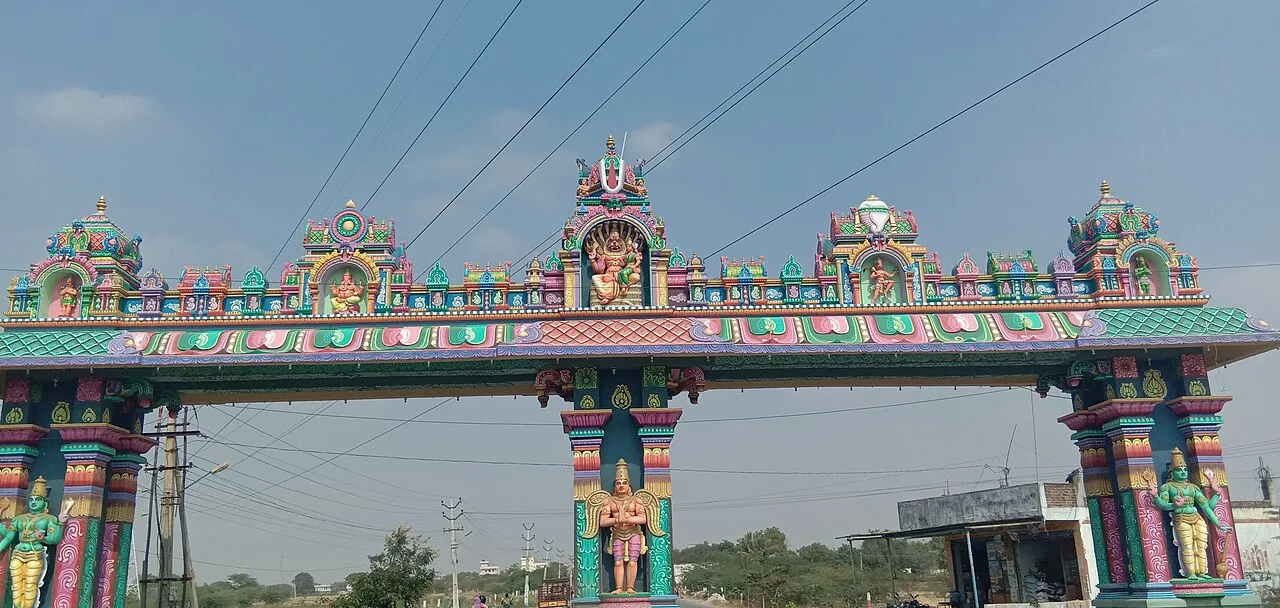
Cheriyal
Cheriyal is a village in Telangana’s Siddipet district, known for Nakashi families who make painted story scrolls and masks. Visitors come to learn about this regional art and its mythological themes.
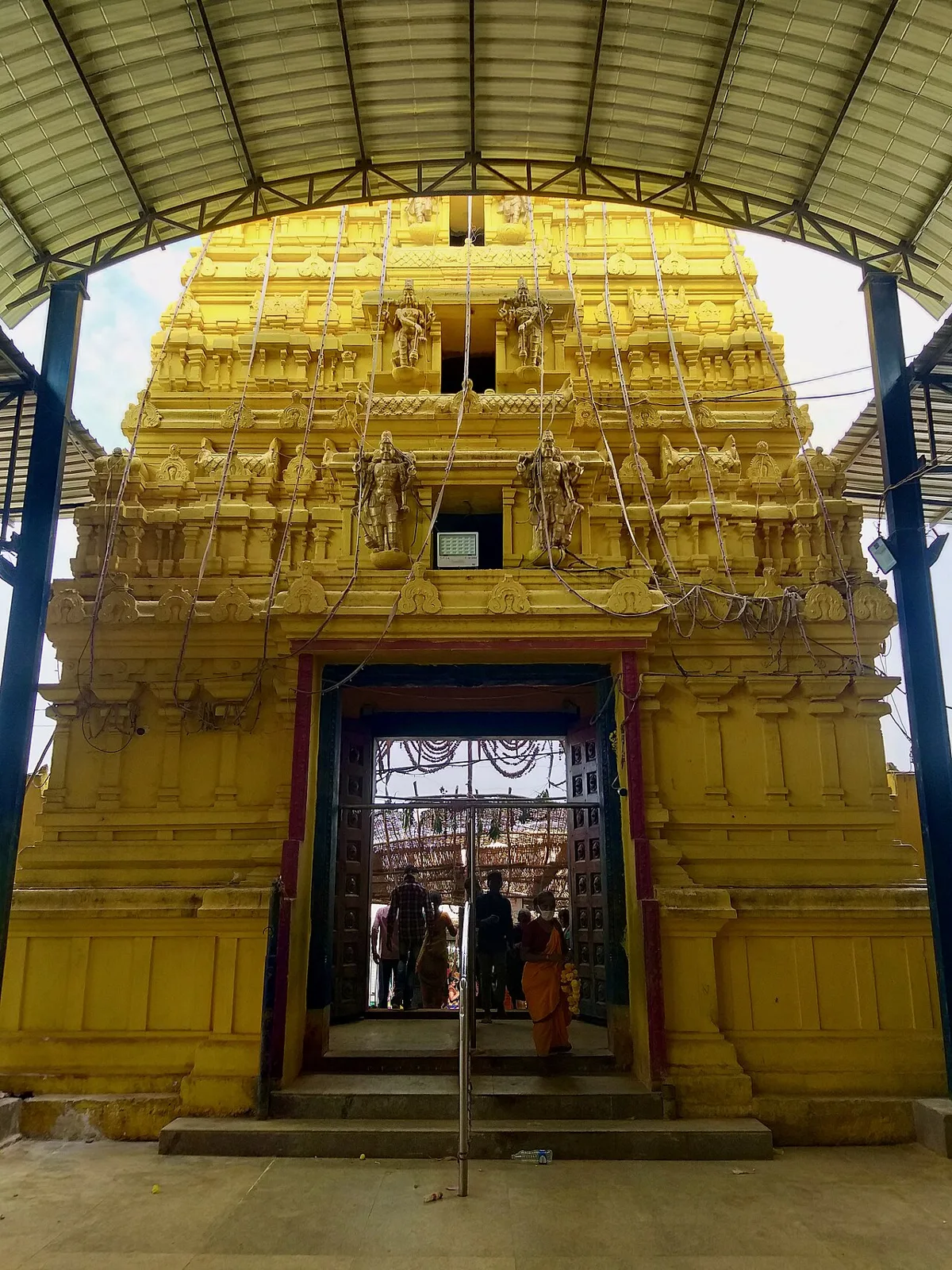
Komuravelli Mallanna Temple
This hilltop Hindu shrine in Komuravelli, Siddipet district, honours Mallanna, a form of Shiva. Visitors come to worship him, including Maharashtrian devotees who know him as Khandoba.
Food in Siddipet belongs to the wider Telangana tradition rather than a separate district cuisine. Look for jonna rotte, or sorghum flatbread, served with spicy pachadi, and sarva pindi, a savoury rice-flour pancake. Natu kodi, or country chicken curry, is another regional favourite, while sakinalu are closely associated with Sankranti celebrations. Availability varies between town restaurants and village eateries, so ask what has been freshly prepared. Hyderabadi biryani, Irani chai and sweets such as double ka meetha represent the broader regional food culture, but should not be assumed to be specialities of every local kitchen.
Cheriyal in Siddipet district is associated with one of Telangana’s best-known painting traditions: Cheriyal scroll painting. Traditionally linked to travelling storytellers, these narrative paintings depict episodes from epics, folklore and community life in bold colours, often against a red background. Artists from the Nakashi tradition also make painted masks and figurines associated with this visual vocabulary. Contemporary work may include smaller panels suited to home display rather than long storytelling scrolls. Where visits or purchases can be arranged, buying directly from practising artists offers a clearer understanding of the work’s materials, subjects and provenance.
The Komuravelli Mallanna Jatara is the district’s major pilgrimage gathering, held during the winter-to-early-spring season. Devotees travel to the hill temple, so roads and local transport can be busier and nearby accommodation may be in greater demand; check availability ahead of a visit. Sankranti, Maha Shivaratri, Bonalu, Bathukamma and Dasara are observed in Siddipet and the wider Telangana region, with celebrations varying by community and locality. Bathukamma festivities are especially associated with the monsoon’s end and autumn. Festival periods bring lively public spaces, but dates and arrangements can change from year to year.
Siddipet lies in the Deccan interior, where gently rolling farmland, rocky rises and village tanks form much of the landscape. The countryside is predominantly cultivated, with seasonal watercourses and local reservoirs shaping settlement and farming. The hilltop setting of Komuravelli Mallanna Swamy Temple is a notable change from the flatter agricultural stretches and involves an uphill visit. Roads connect the district’s towns and villages, but smaller rural routes may be less direct and can be affected by rain or local conditions. Allow extra time when travelling between villages, and check the state of access roads before setting out.
Siddipet has a hot, generally dry Deccan climate. Summer, roughly from March into June, can make midday sightseeing tiring, so plan outdoor visits for cooler parts of the day and carry sun protection. The monsoon usually arrives from June and continues into the early autumn; showers can soften rural roads and make travel less predictable. Winter, broadly from November to February, is usually the most comfortable season for temple visits and countryside travel. The cooler months are a good time to visit, though festival crowds may be larger around Komuravelli. Pack breathable clothing, a hat, sunscreen and water; during the monsoon, bring rain protection and footwear with a reliable grip.
Rajiv Gandhi International Airport in Hyderabad is the main air gateway for Siddipet district. Hyderabad’s major railway stations, including Secunderabad, Nampally and Kacheguda, provide options for arriving by train and continuing by road. The most useful railhead depends on your destination within the district; Bhongir is another station to consider for Komuravelli, subject to onward transport. Siddipet town has road connections with Hyderabad and other Telangana centres. Buses, hired cars and taxis are practical for inter-town travel, while auto-rickshaws can help with shorter local journeys. For temple or village visits, plan your return transport and check current services locally.
Siddipet town is the district’s main road hub, with bus and road connections to Hyderabad and other Telangana centres. Local buses serve principal towns and some villages, while service frequency and onward options can be limited in rural areas. Auto-rickshaws are useful for short trips within towns; hired cars or taxis offer more flexibility for reaching Komuravelli and other village destinations. Shared vehicles may be available on commonly travelled routes, but do not rely on a return ride without checking locally. For a temple visit, arrange onward and return transport in advance, especially during the Jatara or after dark.
2 days: Travel to Komuravelli Mallanna Temple; stay overnight in Siddipet town, then return or continue your journey. 3 days: Visit Komuravelli Mallanna Temple; stay in Siddipet town on both nights, allowing an additional day for a slower visit and local exploration.
Siddipet town is the most practical base for district travel, with the broadest choice of ordinary hotels and access to local road transport. It works well for a visit to Komuravelli when you prefer to return to town after the temple. Accommodation options in smaller settlements are more limited and may require advance checking. Homestays or basic guest accommodation may be available in the wider area, but availability varies; government lodges and dharamshalas should not be assumed to operate everywhere. During the Komuravelli Jatara, arrange a room early and confirm its location and facilities.
The temple hill and uneven rural paths call for sturdy footwear and care, particularly after rain. Summer heat can lead to dehydration, so carry drinking water and take breaks; use sealed or otherwise reliably treated water. Monsoon showers may affect village roads, and conditions can change quickly, so check locally before travelling. Expect crowds and slower movement during the Komuravelli Jatara, and agree on a meeting point if travelling in a group. Mobile coverage can be weaker outside towns. Use established road transport and avoid unfamiliar routes after dark. No special permit is generally associated with these visits; confirm with official local sources if your itinerary includes restricted sites.
- Medchal–Malkajgiriabout 53 km
- Yadadri Bhuvanagiriabout 56 km
- Karimnagarabout 56 km
- Rajanna Sircillaabout 60 km
- Kamareddyabout 64 km
- Jangaonabout 65 km
- Hanamkondaabout 68 km
- Warangalabout 72 km
Straight-line distance between the centres of each district's destinations; road distance is longer.
All districts of Telangana
- Adilabad
- Bhadradri Kothagudem
- Hanamkonda
- Hyderabad
- Jagtial
- Jangaon
- Jayashankar Bhupalpally
- Jogulamba Gadwal
- Kamareddy
- Karimnagar
- Khammam
- Kumuram Bheem Asifabad
- Mahabubabad
- Mahabubnagar
- Mancherial
- Medak
- Medchal–Malkajgiri
- Mulugu
- Nagarkurnool
- Nalgonda
- Narayanpet
- Nirmal
- Nizamabad
- Rajanna Sircilla
- Ranga Reddy
- Sangareddy
- Suryapet
- Wanaparthy
- Warangal
- Yadadri Bhuvanagiri
Q: How many days should I spend in Siddipet? A: Two days can cover a visit to Komuravelli Mallanna Temple at an unhurried pace. Add a day if you want more time for local exploration. Q: When is the best time to visit? A: The cooler months, broadly November to February, are comfortable for travel. The Mallanna Jatara season is lively but can bring crowds. Q: What is the best base for exploring? A: Siddipet town is the most practical base, with road connections and a wider choice of accommodation than smaller settlements. Q: How do I get to Siddipet? A: Travel via Hyderabad by air, rail or road, then continue by road. The most suitable onward option depends on your destination; check current transport locally. Q: Is Siddipet suitable for families or elderly travellers? A: Yes, with planning. The hilltop temple involves an uphill visit and uneven surfaces, so consider mobility needs, heat and crowd levels before going.
This page draws on our 2 destination guides for Siddipet and is updated as our team checks it.
Be the first to share photos, stories, advice or a helpful contact for Siddipet.
Loading…