
District · Telangana
Nagarkurnool
Nagarkurnool lies in southern Telangana, where settled towns meet the forested Nallamala hills.
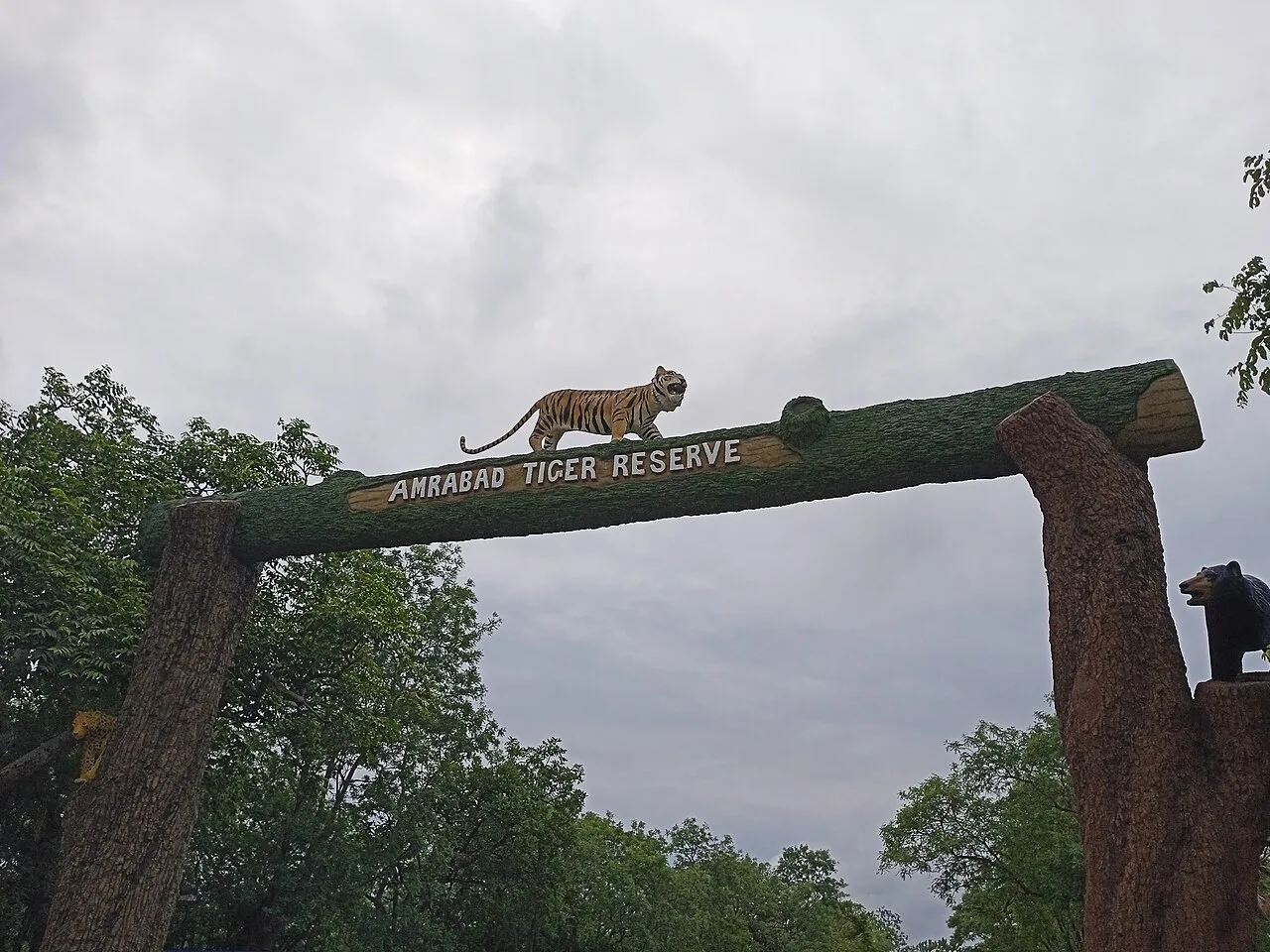
Nagarkurnool, in southern Telangana, is a landscape of dry plateau, farmland and the forested Nallamala hills. The district includes much of Amrabad Tiger Reserve, where wooded slopes and wildlife habitat give way to settlements and cultivated land. Mallela Theertham waterfall and the forested surroundings are among its best-known natural attractions; the Krishna basin also shapes the region’s geography. The area has long-standing temple and pilgrimage traditions, including at Uma Maheshwaram. Chenchu communities have deep ties to the Nallamala forest. Nagarkurnool became a separate district in 2016, but its character reflects the older cultural and rural landscape of southern Telangana, as well as the importance of forest and farming to local life.
Nagarkurnool lies in southern Telangana, where settled towns meet the forested Nallamala hills. It is a useful base for travellers interested in the region’s dryland landscapes and protected forests, rather than a district of large urban attractions. The published destinations here include Mallela Theertham, a waterfall in the Nallamala Forest, and Amrabad Tiger Reserve, which spans parts of Nagarkurnool and neighbouring Nalgonda district. Together, they offer opportunities to experience a forest setting and see how conservation shapes travel in this part of Telangana. The district is best approached at an unhurried pace, with advance checks on forest access and local transport.
Nagarkurnool is part of the wider Deccan region, whose political history includes successive powers such as the Satavahanas, Kakatiyas, Bahmani rulers and Qutb Shahis. Their influence extended across different parts of the region; it should not be assumed that every dynasty controlled the present district in the same way. The area later formed part of the Hyderabad State under the Asaf Jahi Nizams. Hyderabad was a princely state under British paramountcy rather than a province directly governed by the British. After Hyderabad State became part of India in 1948, the region was included in Andhra Pradesh from 1956. Telangana became a separate state in 2014. Nagarkurnool district was created in 2016 from the former Mahabubnagar district as part of Telangana’s administrative reorganisation. Today, its identity reflects both the history of the wider Deccan and the Nallamala forest landscape.
2 destination guides
Amrabad Tiger Reserve
Amrabad Tiger Reserve is a protected area in southern Telangana, designated India’s 45th tiger reserve in 2015. Visitors come to experience its extensive landscape and tiger-reserve setting.
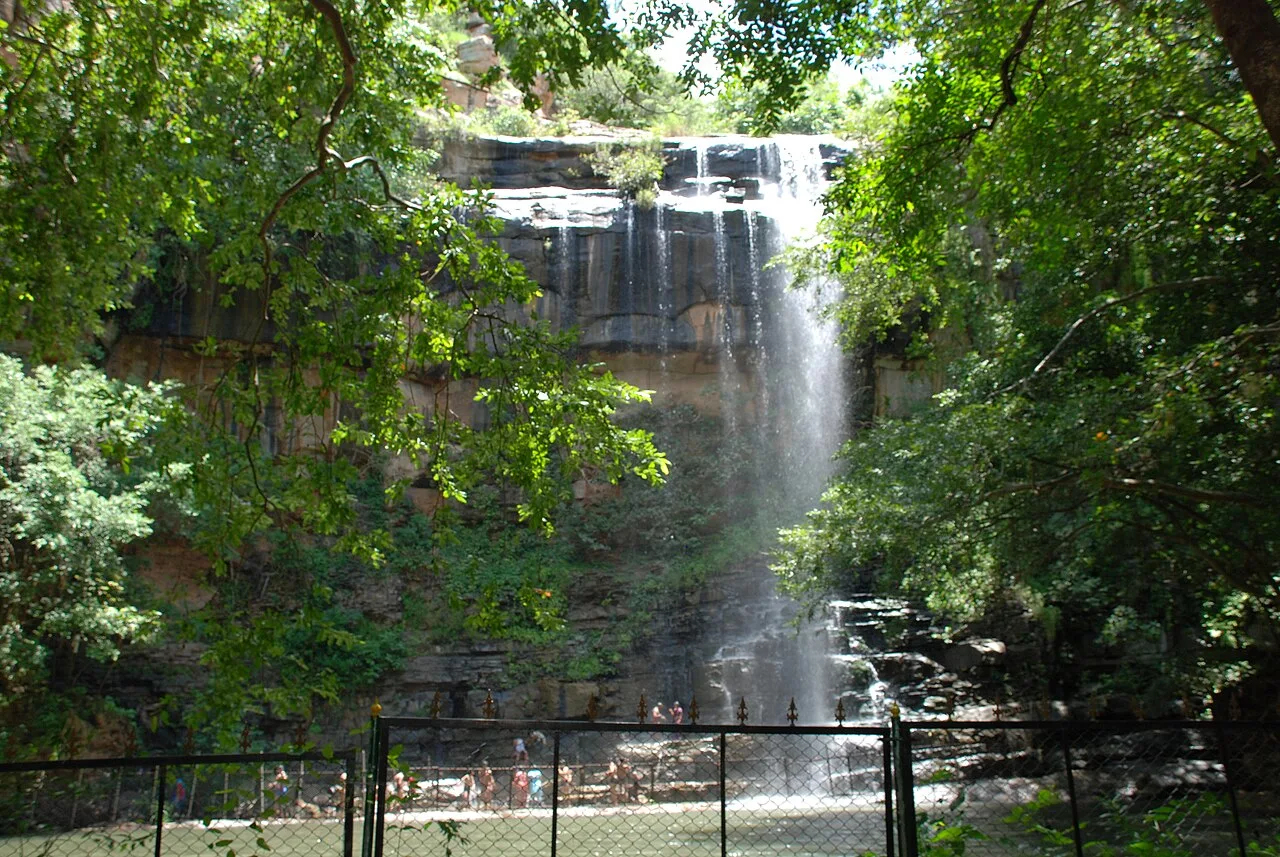
Mallela Theertham
Mallela Theertham is a waterfall in Telangana’s Nagarkurnool district, within the Nallamala Forest. Visitors come to see the falls in their forest setting.
Food in Nagarkurnool reflects the wider Telangana tradition, with rice and millet-based meals, spicy chutneys and seasonal home cooking. Jonna rotte with pachadi and sarva pindi are regional dishes worth looking for; some local menus may also include country-chicken curry. Small-town eateries often serve a limited daily selection, so asking what is freshly prepared can be useful. Hyderabadi dum biryani, haleem during Ramzan, mirchi ka salan and Irani chai belong to the broader Telangana food scene, but are more strongly associated with Hyderabad than with Nagarkurnool district.
No single craft is widely established as a signature of Nagarkurnool district. In the broader Telangana region, visitors may encounter handloom traditions, including Pochampally ikat and Gadwal sarees, as well as Cheriyal scroll painting; these are associated with particular places elsewhere in the state rather than being specific to Nagarkurnool. Rural markets may offer everyday handmade goods, but availability varies. For a sense of local craft practice, ask at markets or community events about work made nearby, and distinguish it from Telangana crafts brought in from other districts.
Telangana festivals such as Bathukamma, Dasara, Sankranti and Bonalu are observed in towns and villages, with local customs varying by community. Bathukamma is associated with the autumn festival season, Bonalu is generally celebrated during the monsoon period, and Sankranti falls in midwinter. Religious gatherings and village fairs may also take place locally, but dates and scale differ from year to year. These occasions can make town centres busier and reduce room availability, especially where events draw visitors from surrounding areas. Check locally before travelling if you need a specific base or plan to visit during a major celebration.
The district includes open agricultural and dryland areas as well as the forested Nallamala hills in the south. Mallela Theertham lies within this forest landscape, while Amrabad Tiger Reserve covers a broad area of rugged, wooded terrain. The Krishna River forms part of the wider southern Telangana landscape, though it is not a convenient route between the district’s sights. Forest roads and access points can be remote, and journeys may take longer than town-to-town travel suggests. Plan around daylight, road conditions and any current restrictions on entering protected areas.
Nagarkurnool has hot summers, a monsoon season and generally milder, drier winters. Summer travel can be tiring, especially on exposed roads and forest walks. Monsoon rain may make routes slippery or affect access to the hills and waterfall, so check conditions before setting out. The cooler months, broadly from late autumn through winter, are usually the most comfortable period for visiting outdoor sights. Pack sun protection, a hat and water in hot weather; during the monsoon, bring rain protection and footwear with good grip. A light layer can be useful on cooler winter mornings and evenings.
Rajiv Gandhi International Airport in Hyderabad is the main air gateway for Nagarkurnool. Mahabubnagar railway station is a practical rail connection for onward road travel; Hyderabad’s major stations offer a wider choice of services. By road, Nagarkurnool is reached from Hyderabad via the southern Telangana highway network, with Kalwakurthy among the towns on common routes; buses and private vehicles connect the district’s towns. For forest attractions such as Mallela Theertham and Amrabad, a hired vehicle can make local travel easier, and access may be subject to forest conditions. Check current services locally before travelling.
Road travel is the practical way to move between Nagarkurnool’s towns and its forest attractions. Buses and other public services connect the district’s main towns, but they may not reach trailheads or remote access points conveniently. Shared jeeps and autos can help with shorter local journeys where available; for Mallela Theertham and parts of Amrabad Tiger Reserve, arranging a vehicle and driver in advance is prudent. Local transport availability can be limited outside town centres. Confirm the route, road condition and forest access arrangements before leaving, and avoid relying on mobile navigation alone in remote areas.
2 days: Day 1: Mallela Theertham; sleep in Achampet if suitable lodging is available, or Nagarkurnool. Day 2: Amrabad Tiger Reserve; return to Nagarkurnool or continue onward. 3 days: Day 1: Amrabad Tiger Reserve; sleep in Nagarkurnool. Day 2: Mallela Theertham; sleep in Achampet or Nagarkurnool. Day 3: Allow a flexible return or travel day; sleep in Nagarkurnool if needed.
Nagarkurnool is the most practical general base for road connections and everyday services. Achampet may suit a visit to Mallela Theertham, but check in advance whether suitable accommodation is available for your dates. In the district, expect town-based hotels and guesthouses rather than a wide choice of stays close to forest attractions; options can be limited in smaller settlements. Homestays or government accommodation may be available in some places, but availability should be confirmed directly. Do not assume that lodging is permitted inside protected forest areas.
Forest roads can be uneven, remote and slow to travel; check recent conditions and aim to complete journeys in daylight. At Mallela Theertham, take care on wet or steep ground and do not enter unsafe water. In Amrabad Tiger Reserve, keep to authorised areas, follow staff instructions and never approach or feed wildlife. Carry drinking water and essential medicines, and use treated or sealed water where its safety is uncertain. Mobile coverage may be patchy in forest areas, so share your route and expected return. Forest entry and visitor rules can change; confirm current access or permit requirements with reserve or forest authorities before travelling.
- Palnadu · Andhra Pradeshabout 56 km
- Nalgondaabout 56 km
- Wanaparthyabout 84 km
- Jogulamba Gadwalabout 98 km
- Suryapetabout 108 km
- Kurnool · Andhra Pradeshabout 108 km
- Yadadri Bhuvanagiriabout 111 km
- Hyderabadabout 112 km
Straight-line distance between the centres of each district's destinations; road distance is longer.
All districts of Telangana
- Adilabad
- Bhadradri Kothagudem
- Hanamkonda
- Hyderabad
- Jagtial
- Jangaon
- Jayashankar Bhupalpally
- Jogulamba Gadwal
- Kamareddy
- Karimnagar
- Khammam
- Kumuram Bheem Asifabad
- Mahabubabad
- Mahabubnagar
- Mancherial
- Medak
- Medchal–Malkajgiri
- Mulugu
- Nalgonda
- Narayanpet
- Nirmal
- Nizamabad
- Rajanna Sircilla
- Ranga Reddy
- Sangareddy
- Siddipet
- Suryapet
- Wanaparthy
- Warangal
- Yadadri Bhuvanagiri
Q: How many days should I spend in Nagarkurnool? A: Two days can cover the two listed destinations at a measured pace; allow three days for a more flexible trip and road travel. Q: When is the best time to visit? A: The cooler, drier months from late autumn through winter are generally most comfortable for outdoor visits. Q: Where is the best base? A: Nagarkurnool is the practical general base; Achampet may be convenient for Mallela Theertham if suitable accommodation is available. Q: How do I get to the district and its sights? A: Travel to the district by road from larger Telangana centres, then use a private vehicle or locally arranged transport for forest attractions. Check connections and access conditions before setting out. Q: Are the sights suitable for families or elderly travellers? A: Town travel may be manageable, but the waterfall approach and remote forest roads can involve uneven ground and limited facilities. Assess mobility needs, avoid slippery routes and check access conditions beforehand.
This page draws on our 2 destination guides for Nagarkurnool and is updated as our team checks it.
Be the first to share photos, stories, advice or a helpful contact for Nagarkurnool.
Loading…