
District · Telangana
Wanaparthy
Wanaparthy offers a quieter way to explore southern Telangana, where the Deccan plateau’s cultivated countryside and village tanks sit alongside the history of a former samasthan, or landed principality, within Hyderabad state.
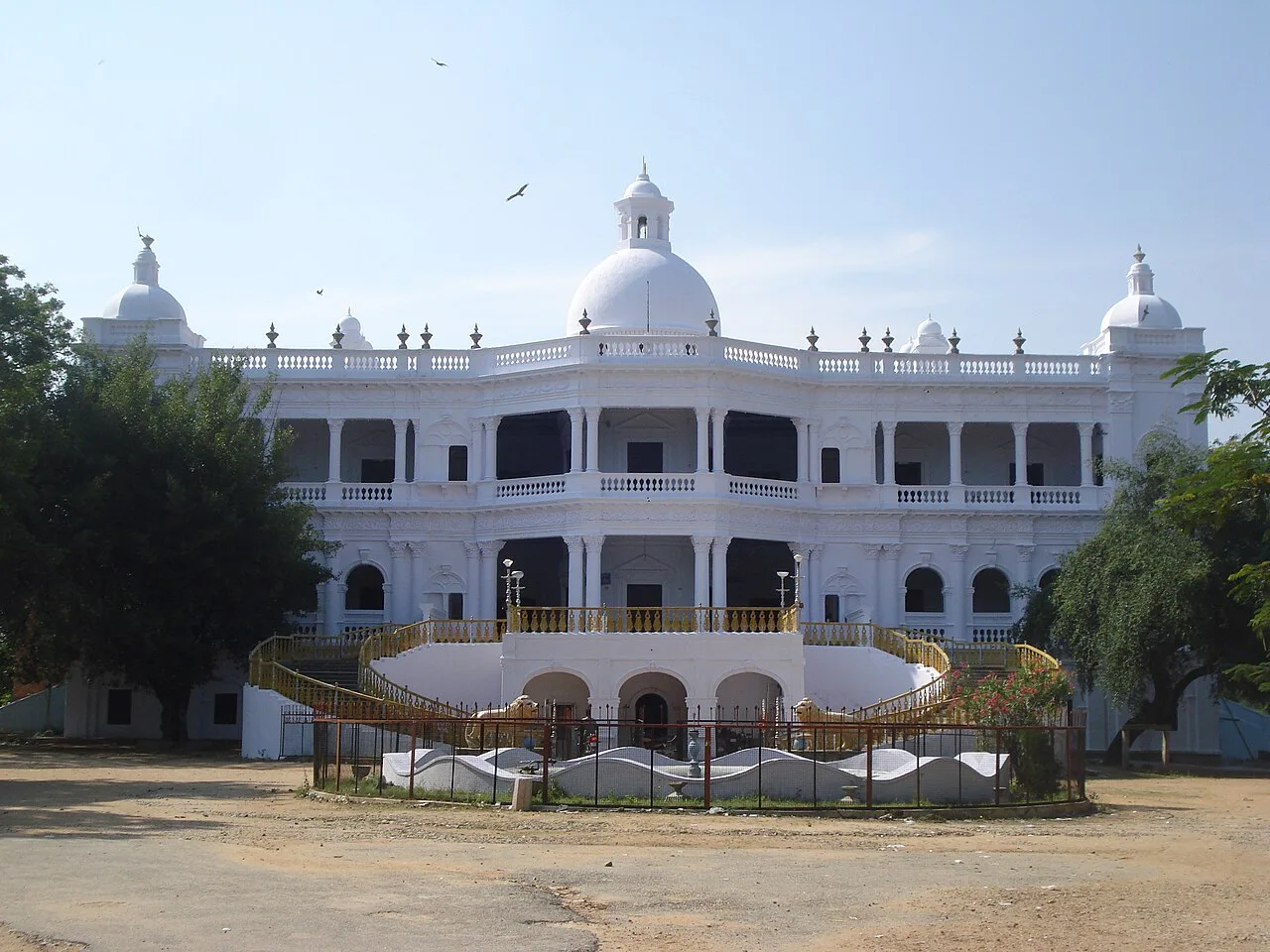
Wanaparthy district lies in southern Telangana, where the Deccan plateau gives the countryside a gently undulating profile of rocky ground, cultivated fields and village tanks. Agriculture and small-town commerce shape everyday life, with the landscape changing noticeably between the dry months and the monsoon. Wanaparthy town, the district headquarters, is associated with the former Wanaparthy samasthan, a landed principality under the Hyderabad state. Its palace is the principal reminder of that ruling family's influence and provides a starting point for understanding the town's history. The district's appeal is relatively understated: palace heritage, rural settlements and the rhythms of southern Telangana rather than a dense circuit of major tourist attractions.
Wanaparthy offers a quieter way to explore southern Telangana, where the Deccan plateau’s cultivated countryside and village tanks sit alongside the history of a former samasthan, or landed principality, within Hyderabad state. Wanaparthy town is the district’s main heritage stop, and its palace is the clearest reminder of the ruling family’s influence. The district is best suited to travellers interested in regional history, small-town life and rural landscapes rather than a packed sightseeing itinerary. Its position in southern Telangana also makes it a possible road stop between Hyderabad and places farther south, though onward connections should be checked before planning a multi-stop trip.
The Wanaparthy region has been part of the wider Deccan, a region shaped over centuries by successive powers. The broader area came under the Kakatiyas and later Deccan sultanates, including the Qutb Shahis, before Mughal authority and then the Asaf Jahi Nizams extended across Hyderabad state. Wanaparthy became known for its samasthan: a hereditary landed estate whose rulers held local influence under the Nizams, rather than an independent kingdom. The palace in Wanaparthy town recalls this period and is the district’s principal visible link with that ruling family. During British rule, the area remained within the princely state of Hyderabad, which was governed by the Nizams rather than administered as part of British India. Hyderabad state joined the Indian Union in 1948, and the region later formed part of Andhra Pradesh. Telangana became a separate state in 2014. Wanaparthy district was created in 2016 from the former Mahabubnagar district as part of Telangana’s administrative reorganisation.
Food in Wanaparthy belongs to the wider Telangana tradition rather than a separately documented district cuisine. Look for jonna rotte, or sorghum flatbread, with spicy pachadi, and ask whether country-chicken curry is available. Sarva pindi, a savoury rice-flour pancake, and sakinalu, a crunchy snack associated with Sankranti, are regional specialities, though not necessarily everyday restaurant offerings. Hyderabad-style biryani, Irani chai and sweets such as double ka meetha belong to the broader regional food culture; availability varies locally. Small eateries may prepare only a limited daily menu, so asking what has been freshly cooked is often the best approach.
For craft context, place Wanaparthy within southern Telangana's wider handloom landscape. Gadwal and Narayanpet, both outside Wanaparthy district, are established weaving centres whose saris are associated with distinctive borders and traditional designs. Gadwal is especially known for cotton-bodied saris with silk borders and pallus, while Narayanpet weaving includes checked patterns and contrasting borders. These are regional connections, not crafts unique to Wanaparthy. If shopping in town, ask where a piece was woven and whether it is handloom; do not assume that textiles sold locally were produced within the district.
Bathukamma, celebrated in the weeks before Dasara, is an important Telangana festival, with women gathering for songs and flower arrangements. Dasara, Sankranti in midwinter and regional observances of Bonalu are also part of the local calendar. Muslim communities mark Ramadan and Eid, while village jatara celebrations may be tied to local temples and vary by place. These occasions are chiefly community events rather than large visitor festivals, but they can make town centres and roads busier. Accommodation choices are limited compared with major cities, so booking ahead is sensible during popular holiday periods.
Wanaparthy lies on the Deccan plateau, with gently undulating ground, rocky outcrops, cultivated fields and settlements linked by rural roads. Tanks and seasonal streams are part of the agricultural landscape; conditions around them change with the monsoon and dry season. The district is within the wider Krishna river basin, though visitors should not assume that river access is a convenient local attraction. There is no dense sightseeing circuit of high mountains or extensive forests. Travel is mostly across open countryside and between towns and villages, so road journeys and the availability of local transport shape what can be seen in a day.
Summer, broadly from March into the early monsoon period, is hot and can make midday outdoor visits tiring. The monsoon usually brings rain from around June into the following months; showers can affect rural road conditions and make tank-side ground muddy. Winter, roughly from November to February, is generally more comfortable for walking and road travel. These cooler months are usually the best time to visit, especially for a short heritage-focused stay. Pack light, breathable clothing, sun protection and water for warmer days, along with a light layer for winter evenings. In the rainy season, bring a rain jacket and footwear with good grip, and allow flexibility for journeys.
Hyderabad's Rajiv Gandhi International Airport is the main practical air gateway for a Wanaparthy visit. Kurnool Airport is geographically closer, but its usefulness depends on available flights and onward transport. Gadwal is a nearby principal railway station; compare onward road connections before choosing your arrival point. Wanaparthy is reached by road from Hyderabad and neighbouring towns, with access from the Hyderabad–Bengaluru highway corridor. Buses connect the town with regional centres, while auto-rickshaws and hired cars are useful for local journeys and countryside visits. Allow extra time for transfers rather than relying on straight-line map estimates. Check current services locally.
Road travel is the practical way to move around Wanaparthy district. Wanaparthy town is the natural starting point for the palace and for arranging visits to nearby countryside. Regional buses connect the town with neighbouring centres, but service frequency and onward links can vary, so check locally before relying on a tight schedule. Auto-rickshaws are useful for short town journeys; a hired car is more convenient for village visits or combining several stops. Shared vehicles may operate on some local routes, but availability is not assured. There are no visitor boat services to plan around. Allow extra time for rural roads and transfers.
2 days: Wanaparthy Palace and Town; sleep night 1 in Wanaparthy town. 3 days: Wanaparthy Palace and Town; sleep nights 1 and 2 in Wanaparthy town, allowing a slower visit and time for nearby countryside.
Wanaparthy town is the most practical base for the district’s listed destination and for arranging local road transport. Visitors will generally find simple hotels and guesthouse-style accommodation rather than a wide range of resort stays. Homestays or government accommodation may be available in the wider region, but options can be limited and should be confirmed in advance. A day trip from a larger city is possible in principle, though it leaves less time for the town and countryside. For a short visit, staying overnight in Wanaparthy reduces the pressure of same-day transfers.
Carry drinking water and sun protection, and avoid long outdoor walks during the hottest part of the day. After monsoon rain, rural roads and tank edges may be slippery or affected by local conditions; check the route before setting out. Use caution around water and uneven rocky ground. Wildlife is not generally a central concern on the usual town visit, but do not approach animals encountered in the countryside. Mobile connectivity can be weaker outside towns, so arrange transport and meeting points in advance. Keep valuables secure in crowded festival areas. No special visitor permit is generally associated with the listed town destination; confirm officially if your plans include any restricted site.
- Jogulamba Gadwalabout 54 km
- Kurnool · Andhra Pradeshabout 67 km
- Narayanpetabout 74 km
- Raichur · Karnatakaabout 76 km
- Nagarkurnoolabout 84 km
- Ranga Reddyabout 109 km
- Nandyal · Andhra Pradeshabout 116 km
- Hyderabadabout 121 km
Straight-line distance between the centres of each district's destinations; road distance is longer.
All districts of Telangana
- Adilabad
- Bhadradri Kothagudem
- Hanamkonda
- Hyderabad
- Jagtial
- Jangaon
- Jayashankar Bhupalpally
- Jogulamba Gadwal
- Kamareddy
- Karimnagar
- Khammam
- Kumuram Bheem Asifabad
- Mahabubabad
- Mahabubnagar
- Mancherial
- Medak
- Medchal–Malkajgiri
- Mulugu
- Nagarkurnool
- Nalgonda
- Narayanpet
- Nirmal
- Nizamabad
- Rajanna Sircilla
- Ranga Reddy
- Sangareddy
- Siddipet
- Suryapet
- Warangal
- Yadadri Bhuvanagiri
Q: How many days should I spend in Wanaparthy district? A: One or two nights is a reasonable plan for Wanaparthy town and a relaxed look at nearby countryside. Q: When is the best time to visit? A: November to February is usually more comfortable for outdoor visits and road travel. Q: Where is the best base? A: Wanaparthy town is the most practical base for the palace and local transport. Q: How do I get to Wanaparthy? A: Travel by road from Hyderabad or neighbouring regional centres; compare current bus, rail and onward road connections before choosing a route. Q: Is Wanaparthy suitable for families or elderly travellers? A: Yes, for a calm, short town visit, though uneven ground, heat and the need for road transfers may require extra planning.
This page draws on our 1 destination guides for Wanaparthy and is updated as our team checks it.
Be the first to share photos, stories, advice or a helpful contact for Wanaparthy.
Loading…