
District · Telangana
Nalgonda
Nalgonda lies in southern Telangana, between the state’s interior plateau and the Krishna River–Nagarjuna Sagar region.
Nalgonda district lies in southern Telangana, where rocky hills, dry plateau country and cultivated plains lead towards the Krishna River and Nagarjuna Sagar reservoir. Its appeal combines temple heritage, fortified landscapes and places connected with the region’s Buddhist past. Near Nalgonda city, Panagal, also called Panagallu or Panugallu, preserves important medieval temples and offers an accessible introduction to local history. Devarakonda brings a different perspective through its hill fort and surrounding town. At Nagarjuna Sagar, Buddhavanam is a modern tourism project interpreting Buddhist heritage rather than an ancient monastic site. Together, these destinations reveal a district best explored through separate outings, with time for village landscapes and everyday Telangana life between the principal sights.
Nalgonda lies in southern Telangana, between the state’s interior plateau and the Krishna River–Nagarjuna Sagar region. Travellers come for a mix of medieval temple architecture, hill-fort heritage and places that interpret the area’s Buddhist past. Panagal, near Nalgonda city, is known for historic temples, while Devarakonda offers a fort set among rocky hills. At Nagarjuna Sagar, Buddhavanam presents Buddhist heritage through a modern tourism project, rather than an ancient monastery. The sights are spread across the district, making Nalgonda a good choice for travellers who enjoy separate road outings, historic sites and glimpses of everyday life in Telangana’s towns and villages.
Nalgonda’s history reflects the changing powers of the Deccan and the importance of routes and settlements between the plateau and the Krishna basin. The wider region has archaeological and Buddhist associations, including the Ikshvaku period of the early centuries CE; Buddhavanam at Nagarjuna Sagar is a modern project interpreting this heritage. Panagal’s temples preserve evidence of medieval religious and architectural life, while Devarakonda Fort is associated with the Recherla Padmanayaka rulers, who held power in parts of the region during the later medieval period. The area subsequently came under the influence of the Qutb Shahi kingdom and, later, the Asaf Jahi rulers of Hyderabad. After Hyderabad State joined the Indian Union in 1948, Nalgonda became part of the reorganised state of Andhra Pradesh in 1956. It became part of Telangana when the state was formed in 2014. District boundaries have since changed through administrative reorganisation, including the creation of Suryapet and Yadadri Bhuvanagiri districts from parts of the former district.
3 destination guides
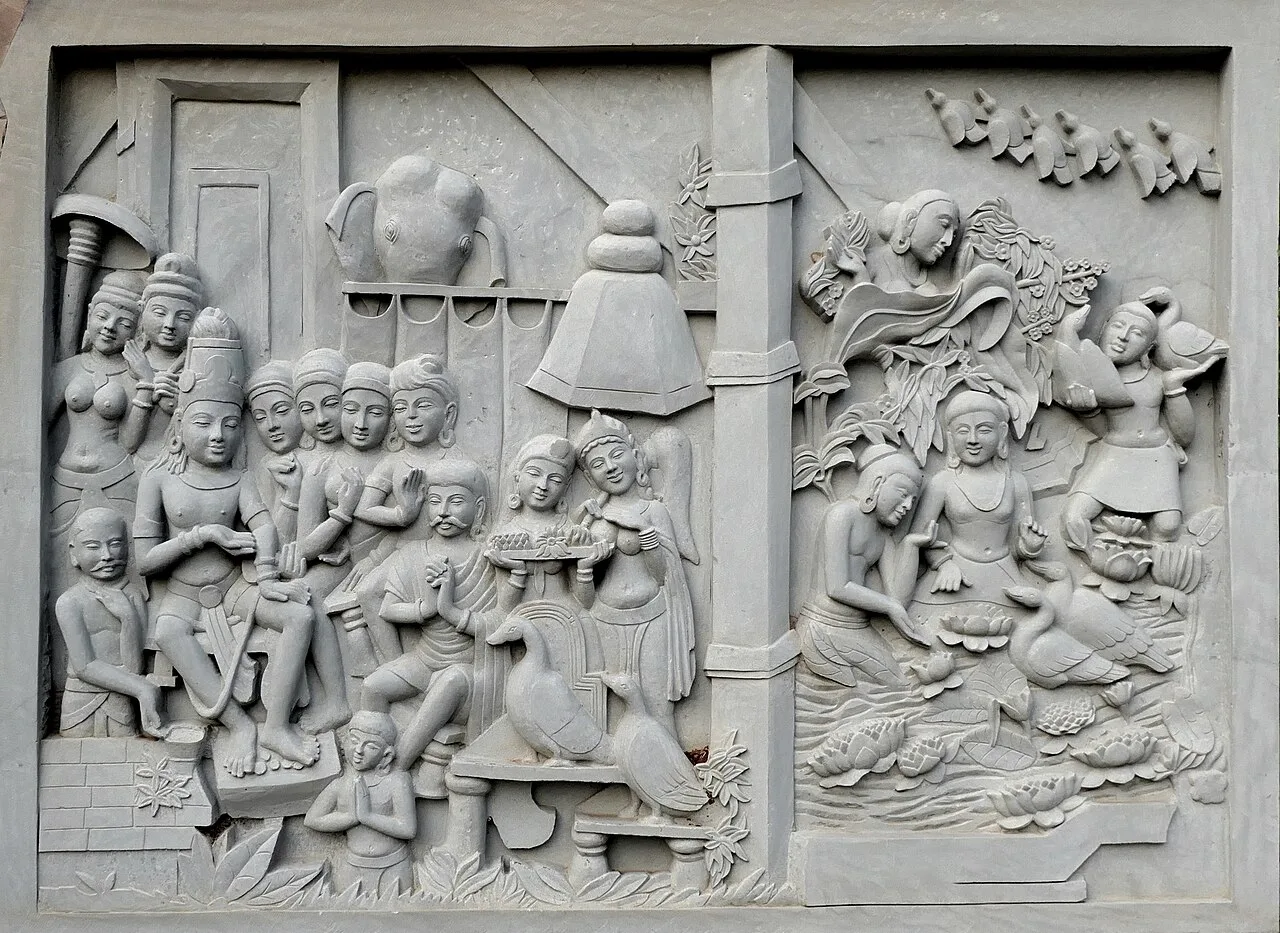
Buddhavanam
Buddhavanam is a tourism project at Nagarjuna Sagar in Telangana, developed to bring visitors to the Lower Krishna valley Buddhist circuit, particularly from South-East Asia.
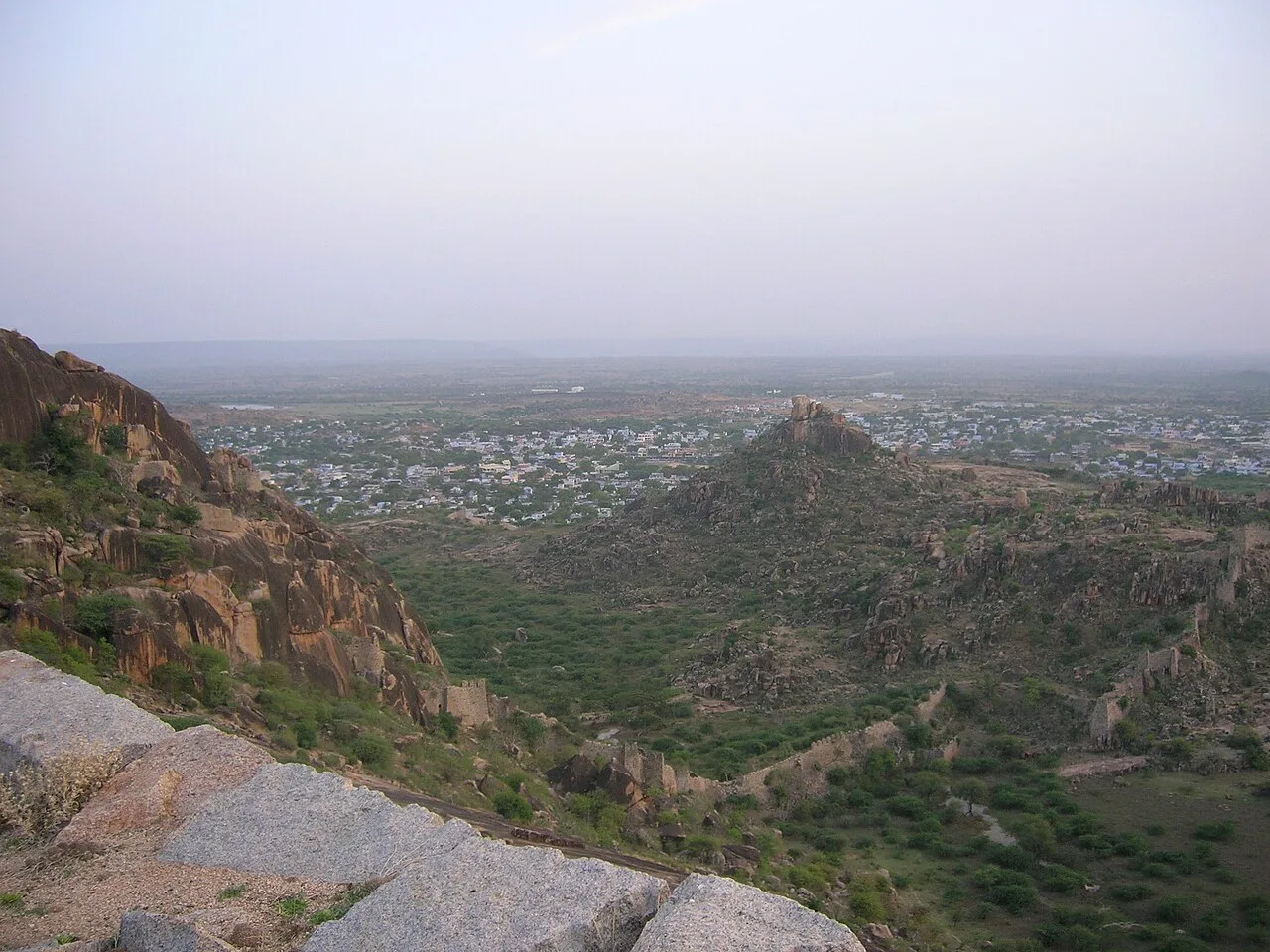
Devarakonda Fort and Town
Devarakonda is a municipal town in Telangana’s Nalgonda district. Visitors come to see Devarakonda Fort and explore the settlement that shares its name.
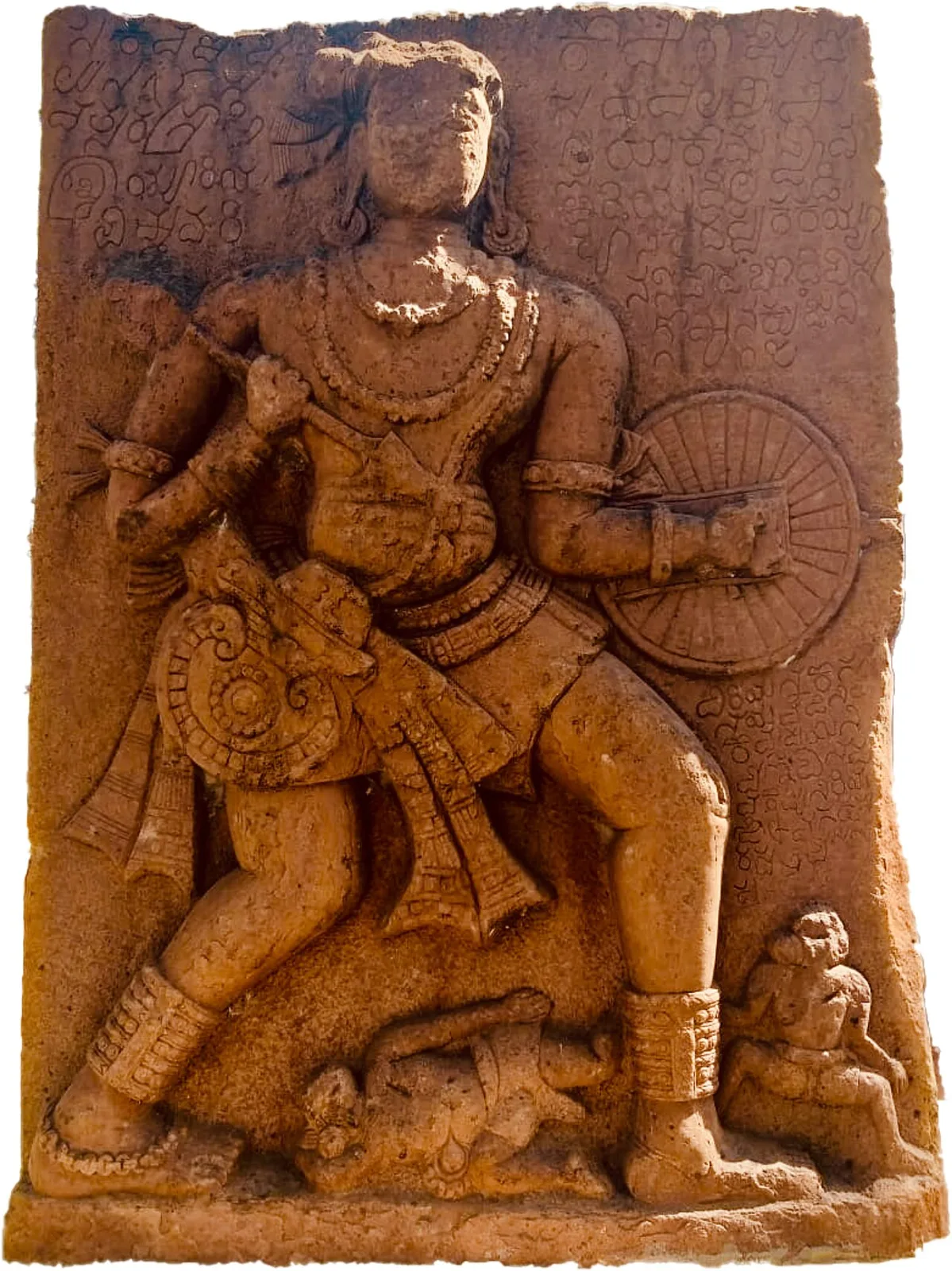
Panagal Temples
Panagal Temples are historic shrines in Panagal, Telangana, close to Nalgonda. Visitors explore the surviving temples and the town’s links to several dynasties and its earlier role as a centre of power.
Food in Nalgonda belongs to the wider Telangana tradition, with rice, millets, pulses and spicy accompaniments forming familiar everyday combinations. Look for jonna rotte, or sorghum flatbread, served with pachadi, and ask about sarva pindi, a savoury rice-flour pancake. Natu kodi, or country-chicken curry, is another regional option where available. Sakinalu are especially associated with Sankranti celebrations. Hyderabadi biryani, Irani chai and sweets such as double ka meetha belong to the broader regional food culture rather than being Nalgonda specialities. Small eateries may prepare only a limited daily menu, so ask what has been freshly cooked.
Handloom weaving is an important tradition in the wider region historically associated with undivided Nalgonda. Pochampally ikat is its best-known example, but Pochampally now lies in neighbouring Yadadri Bhuvanagiri district, not present-day Nalgonda. Its patterned textiles are made by resist-dyeing yarn before weaving, producing characteristic geometric designs in saris and other fabrics. Visitors interested in this tradition should distinguish a regional weaving excursion from a Nalgonda district attraction. Within the district, Panagal’s temple stonework offers another way to appreciate regional craftsmanship through architectural carving and sculptural detail.
Bathukamma, celebrated in the run-up to Dasara, is a prominent Telangana festival, and Sankranti is observed in winter. Bonalu and Maha Shivaratri are also celebrated in the wider region, with local temple observances varying by town. Festivals can bring additional visitors to temples and town centres, and accommodation may be busier around major celebrations or local fairs. Dates follow the Hindu calendar and vary each year, so check locally if a festival visit is central to your plans.
The district’s terrain shifts from rocky, dry plateau country and low hills to cultivated plains and the Krishna River basin. Devarakonda’s fort rises among rugged hills, while the Nagarjuna Sagar reservoir creates a broad waterside landscape. Settlements and attractions are spread across this varied terrain, so visits generally work better as road trips than as walks between sights. Conditions around the reservoir and on hill paths can be exposed to sun, and access to some rural locations may depend on local roads.
Nalgonda has hot summers, a monsoon season and comparatively mild, drier winters. Summer heat can make exposed forts and temple visits tiring, especially in the middle of the day. Monsoon rains may affect rural roads and make rocky paths slippery. The cooler months, broadly from October to February, are usually the most comfortable for sightseeing. Pack light, breathable clothing, sun protection and sturdy footwear; carry rain protection during the monsoon and a light layer for cooler evenings in winter. Check local conditions before setting out, particularly for reservoir-side and hill visits.
Rajiv Gandhi International Airport in Hyderabad is the main air gateway for Nalgonda district. Nalgonda railway station is a useful arrival point for the city and nearby Panagal; check onward road connections separately for Devarakonda and Nagarjuna Sagar. Hyderabad provides road access to the district, with buses and hired vehicles offering practical options for reaching its principal towns. Auto-rickshaws are useful for short local journeys, while a taxi can simplify visits to dispersed attractions. Do not treat map-based straight-line distances as driving distances, particularly when planning reservoir-side trips. Check current services locally.
Road travel is the practical way to connect Nalgonda city with Panagal, Devarakonda and Nagarjuna Sagar. Local buses serve towns and some larger settlements, but services may not suit a multi-stop sightseeing day. Auto-rickshaws are useful for short trips in town; taxis or a hired vehicle offer more flexibility for dispersed attractions. Shared vehicles may operate on local routes, but availability varies. Boat services at Nagarjuna Sagar can change with operating conditions, so confirm locally rather than relying on them as a connection. Allow extra time for rural roads and check onward transport before leaving a town.
2 days: Panagal Temples → Devarakonda Fort and Town; sleep in Nalgonda on night 1 and in Devarakonda on night 2. 3 days: Panagal Temples → Devarakonda Fort and Town → Buddhavanam; sleep in Nalgonda on night 1, Devarakonda on night 2 and Nagarjuna Sagar on night 3.
Nalgonda city is the most practical base for Panagal and has the broadest choice of ordinary hotels and guest accommodation. Devarakonda can suit visitors spending more time at the fort, though lodging options may be more limited. For Buddhavanam and the reservoir area, look for accommodation around Nagarjuna Sagar; availability and services can vary. Simple guesthouses, government or tourism accommodation, and dharamshalas may be found in some towns, but facilities are not uniform. Confirm current availability and transport before building a multi-town itinerary.
Carry drinking water and sun protection, and avoid strenuous outdoor visits during the hottest part of the day. Fort paths and rocky ground can be uneven, steep or slippery after rain; wear secure footwear and take care near reservoir edges. Snakes and other wildlife may be present in rural or scrubby areas, so keep to paths and do not approach animals. Check road and weather conditions before longer drives, and allow for weaker mobile connectivity outside towns. Use safe, treated or sealed drinking water. No special permit is generally associated with these listed visitor sites, but confirm access rules with the relevant local authorities before travel.
- Palnadu · Andhra Pradeshabout 20 km
- Suryapetabout 52 km
- Nagarkurnoolabout 56 km
- Yadadri Bhuvanagiriabout 93 km
- Khammamabout 101 km
- Hyderabadabout 115 km
- Guntur · Andhra Pradeshabout 115 km
- Mahabubabadabout 119 km
Straight-line distance between the centres of each district's destinations; road distance is longer.
All districts of Telangana
- Adilabad
- Bhadradri Kothagudem
- Hanamkonda
- Hyderabad
- Jagtial
- Jangaon
- Jayashankar Bhupalpally
- Jogulamba Gadwal
- Kamareddy
- Karimnagar
- Khammam
- Kumuram Bheem Asifabad
- Mahabubabad
- Mahabubnagar
- Mancherial
- Medak
- Medchal–Malkajgiri
- Mulugu
- Nagarkurnool
- Narayanpet
- Nirmal
- Nizamabad
- Rajanna Sircilla
- Ranga Reddy
- Sangareddy
- Siddipet
- Suryapet
- Wanaparthy
- Warangal
- Yadadri Bhuvanagiri
Q: How many days should I spend in Nalgonda district? A: Two days can cover a focused visit to Panagal and Devarakonda; allow three days to include Buddhavanam and the Nagarjuna Sagar area. Q: When is the best time to visit? A: October to February is generally more comfortable for sightseeing. Summer is hot, while monsoon rain can affect outdoor visits and roads. Q: Where is the best base? A: Nalgonda city is convenient for Panagal; consider Devarakonda or Nagarjuna Sagar for visits focused on those areas. Q: How do I get to the district? A: Hyderabad is the main air gateway, and Nalgonda railway station serves the city. Road travel is needed to reach the district’s separate attractions; check current onward connections. Q: Is Nalgonda suitable for families or elderly travellers? A: Yes, with planning. Towns and temple visits can suit families, but the fort’s uneven, steep paths may be challenging for some elderly visitors or anyone with limited mobility.
This page draws on our 3 destination guides for Nalgonda and is updated as our team checks it.
Be the first to share photos, stories, advice or a helpful contact for Nalgonda.
Loading…