Ghumoopedia — Explore, Discover, Experience
Sign in
Tulja Bhavani Temple, near Akkalkot

City guide · Maharashtra

Akkalkot

Akkalkot is a small city in southeastern Solapur district, close to the Karnataka border. Its strongest identity is as a pilgrimage centre associated with Shri Swami Samarth, the 19th-century saint whom devotees regard as an incarnation of Dattatreya.

Famous for

  • Swami Samarth pilgrimage
  • Vatavruksh Mandir
  • Bhonsale princely heritage
  • New Palace armoury
  • Deccan market town

Why Akkalkot matters

Akkalkot is a small city in southeastern Solapur district, close to the Karnataka border. Its strongest identity is as a pilgrimage centre associated with Shri Swami Samarth, the 19th-century saint whom devotees regard as an incarnation of Dattatreya. Visitors come to pray at Vatavruksh Mandir, a shrine complex linked to the years he spent in the town, and to visit places connected with his life and followers.

Akkalkot also preserves the memory of a former princely state ruled by the Bhonsale dynasty. The New Palace and its Royal Armory Museum offer a different perspective on the town’s past. Today, Akkalkot serves the surrounding rural taluka as a local centre for worship, trade and everyday services. Its setting in the Deccan, near the Maharashtra–Karnataka boundary, gives it a regional character shaped by Marathi and neighbouring Kannada influences. The town is a worthwhile stop for pilgrims and for travellers interested in religious traditions and princely-era history.
Famous for: crafts, trade & products

Akkalkot is best known for its religious heritage rather than for a distinctive textile, handicraft or GI-tagged product. The town’s most visible visitor trade serves pilgrims: shops near the temple precinct sell पूजा essentials, devotional items, flowers and everyday offerings. These are convenient places to browse for small mementos, though they should not be confused with a documented local craft tradition.

The wider taluka is agricultural, with jowar, bajra and pulses among its main crops. These crops shape local food and rural commerce, and seasonal produce can be found through ordinary town shops and markets. Akkalkot’s central bazaar is the practical place to look for groceries, household goods and locally used provisions; availability varies by season. The New Palace’s Royal Armory Museum is a notable cultural institution, displaying arms collected by Fattehsing Bhosle, who ruled Akkalkot from 1894 to 1923. Travellers seeking specialist handicrafts or established branded products may find a broader selection in larger regional cities.

History

Akkalkot developed as the seat of a princely state governed by the Bhonsale royal family. During British rule, it was a non-salute princely state within the Deccan States Agency, situated between Hyderabad State and the Bombay Presidency. Its political history is reflected in the New Palace, whose Royal Armory Museum preserves a collection assembled by ruler Fattehsing Bhosle during his reign from 1894 to 1923.

The town also acquired lasting religious importance through Swami Samarth, who lived in Akkalkot for more than two decades in the 19th century. He spent much of that time at the home of his disciple Cholappa; the associated samadhi and shrine remain central to pilgrimage. The banyan tree connected with his teachings gives Vatavruksh Mandir its name and place in local memory.

After independence, princely administration ended and Akkalkot became part of modern Maharashtra. It is now a municipal town in Solapur district and a service and market centre for surrounding villages.

Food, festivals & culture

Everyday cooking reflects the dry Deccan countryside and nearby Maharashtra–Karnataka border. Jowar bhakri, millet preparations, pithla and dishes made with pulses are familiar regional foods; local eateries and household menus vary, so Akkalkot is not especially known for one signature dish or sweet. Visitors can find simple Maharashtrian meals and snacks around the town centre and temple area.

The devotional calendar is central to public life. Swami Samarth worship, bhajans and kirtan draw devotees throughout the year, with larger gatherings around religious observances associated with the saint. Ganesh Chaturthi, usually in August or September, Navratri in September or October, and Diwali in October or November are also widely observed. Dates shift with the lunar calendar, and temple activity can be especially lively on festival days.

Marathi is the main language, while Kannada and Hindi are also heard in this border region. The principal place of worship for visitors is Vatavruksh Mandir, with shrines associated with Swami Samarth and Cholappa forming part of the town’s devotional landscape.

Visiting the city

October to February is generally the most comfortable time to visit, with cooler conditions than the hot summer months. The nearest airport is Solapur Airport, though scheduled services may be limited; check current connections before planning. Akkalkot Road railway station is the main rail station serving the town and lies outside the central area. Local buses, auto-rickshaws and hired vehicles can help with onward travel.

Begin around Vatavruksh Mandir and the nearby devotional precinct, allowing time for worship and the surrounding shops. The New Palace and Royal Armory Museum offer a change of focus for visitors interested in princely history. The town’s central bazaar is useful for everyday food and local shopping. For short distances in the centre, walking is practical; use local transport for sites farther apart.

Trips from the city

Nearest places to visit from Akkalkot

Our closest destination guides, by straight-line distance.

Tulja Bhavani Temple

55 km away · Dharashiv district

Tulja Bhavani Temple

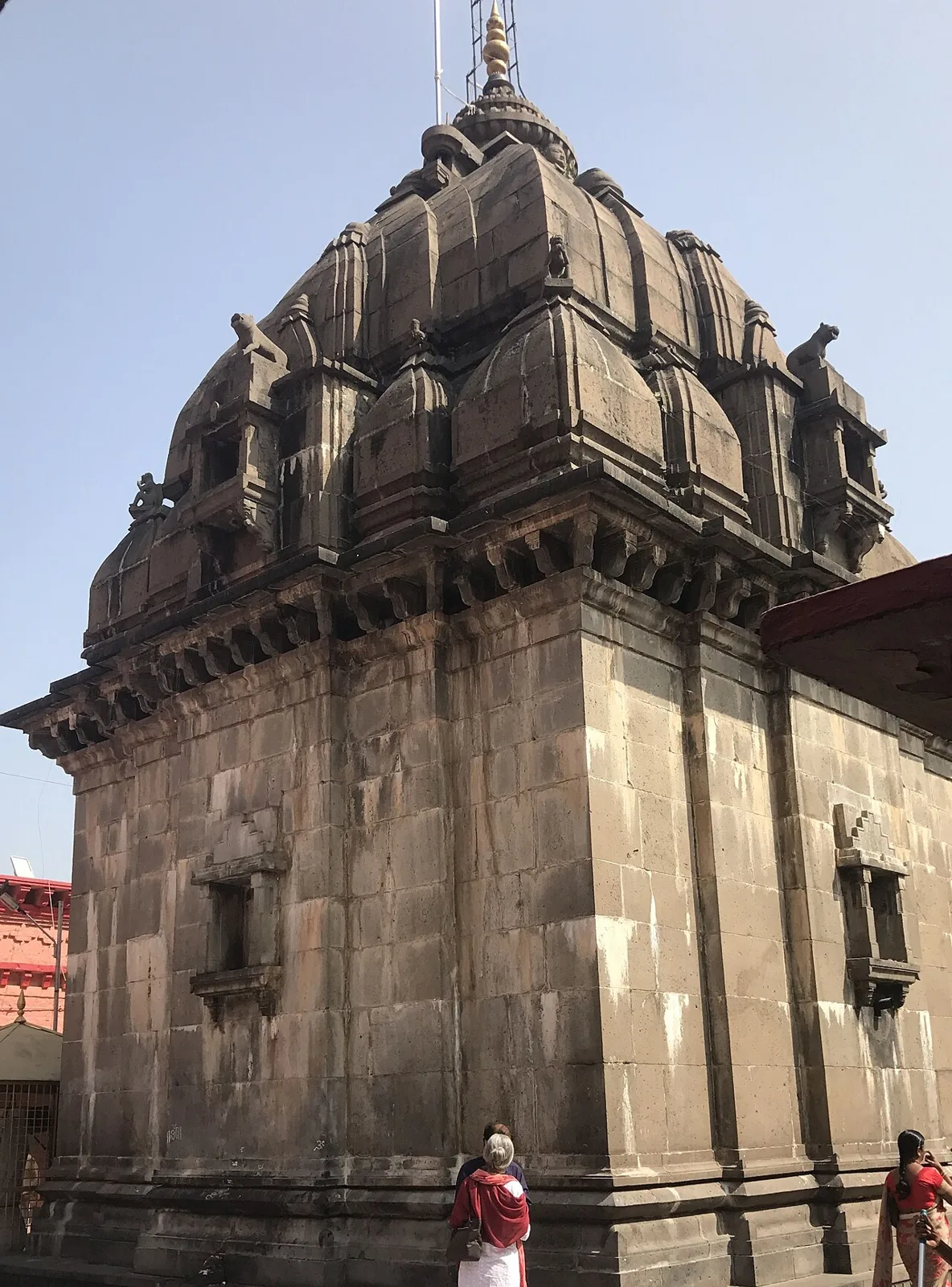
Tulja Bhavani Temple is a 12th-century shrine to goddess Bhavani in Tuljapur, Maharashtra. It is counted among India’s 51 Shakti Pithas and the state’s four major Shakti shrines.

Vithoba Temple

94 km away · Solapur district

Vithoba Temple

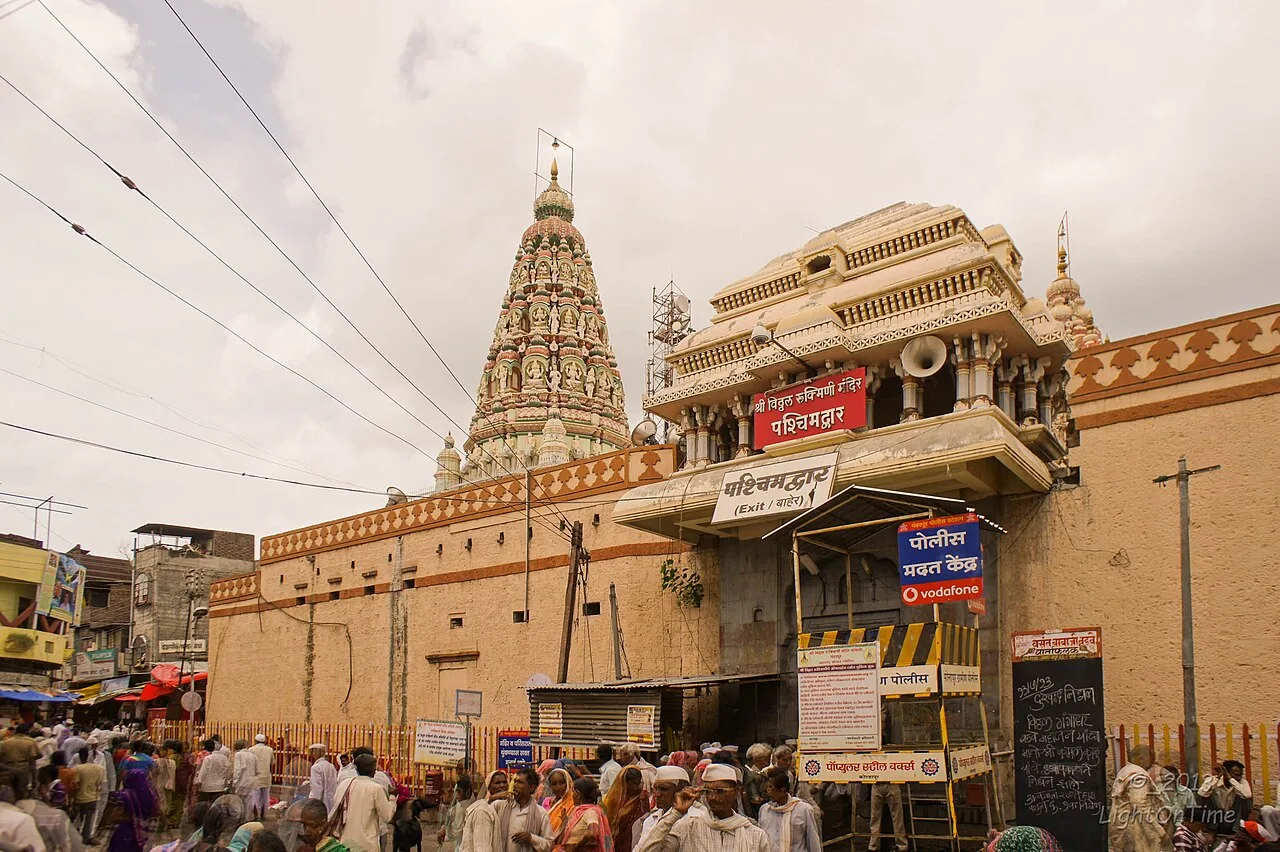
The Vithoba Temple, also called Shri Vitthal-Rukmini Mandir, is a Hindu shrine in Pandharpur, Maharashtra. Devotees visit to worship Vithoba and Rakhumai and join major Warkari pilgrimages.

Shri Vaijnath Temple

151 km away · Beed district

Shri Vaijnath Temple

Shri Vaijnath Temple is a Shiva shrine at Parli Vaijnath in Maharashtra’s Beed district. Worshippers visit to perform abhishekam, and the temple is regarded as the fifth of Shiva’s twelve Jyotirlingas.

Hazur Sahib

216 km away · Nanded district

Hazur Sahib

Takht Sachkhand Sri Hazur Abchalnagar Sahib is one of Sikhism’s five takhts, in Nanded, Maharashtra. Visitors come to worship and remember Guru Gobind Singh at the site associated with his death and cremation.

Mahalakshmi Temple, Kolhapur

229 km away · Kolhapur district

Mahalakshmi Temple, Kolhapur

The Mahalakshmi Temple, also called Ambabai Mandir, is a shrine in Kolhapur district, Maharashtra, dedicated to Goddess Mahalakshmi and visited as part of Hindu pilgrimage.

Jyotiba Temple

230 km away · Kolhapur district

Jyotiba Temple

Near Wadi Ratnagiri in Maharashtra’s Kolhapur district, Jyotiba Temple is a Hindu place of worship. People visit the shrine and its annual fair, held at full moon in Chaitra and Vaishakha.

Ahmednagar Fort

232 km away · Ahilyanagar district

Ahmednagar Fort

Ahmednagar Fort, in Maharashtra, is a historic stronghold associated with the Ahmednagar Sultanate, the 1803 Anglo-Maratha conflict and imprisonment under British rule, making it a point of historical interest.

Jejuri

232 km away · Pune district

Jejuri

Jejuri, a city with a municipal council in Pune district, Maharashtra, is known for the Khandoba Mandir, an important Hindu pilgrimage site for communities across the state.

Map

Akkalkot on the map

  1. 1Tulja Bhavani Temple
  2. 2Vithoba Temple
  3. 3Shri Vaijnath Temple
  4. 4Hazur Sahib
  5. 5Mahalakshmi Temple, Kolhapur
  6. 6Jyotiba Temple
  7. 7Ahmednagar Fort
  8. 8Jejuri

Maharashtra

Other cities to explore