
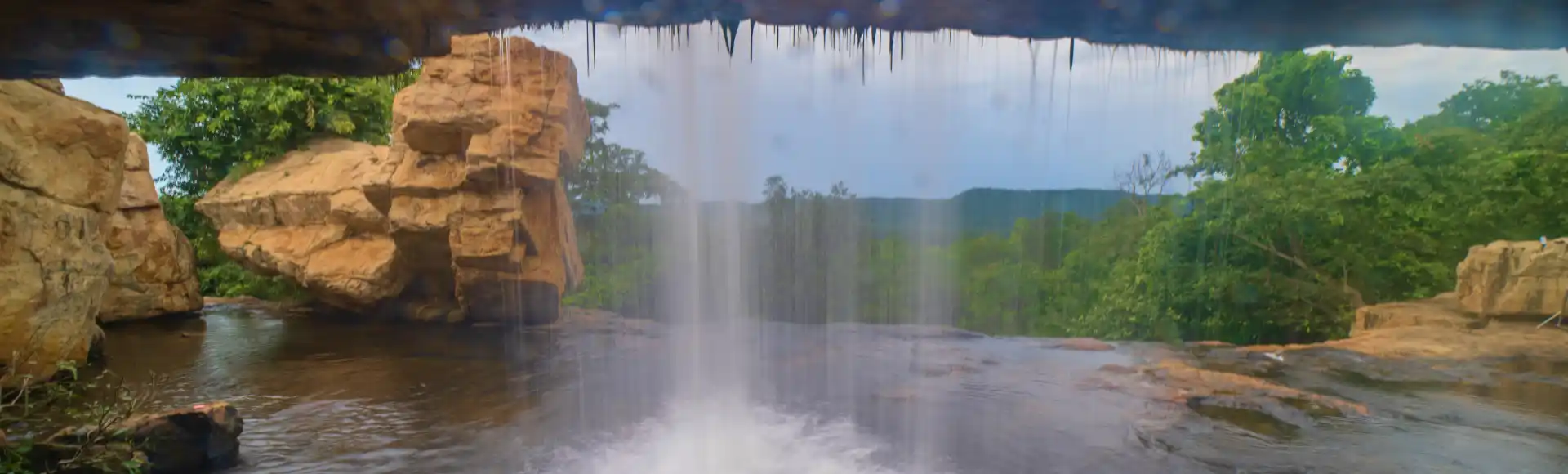
District · Odisha
Bargarh
Bargarh is a western Odisha district where farming plains meet wooded hills and the reservoir country of Debrigarh.
Bargarh, in western Odisha, combines cultivated plains with wooded hills and the reservoir landscapes around Debrigarh Wildlife Sanctuary. Agriculture shapes much of its everyday character, while weaving and performance traditions give the district a strong cultural identity. Debrigarh overlooks the Hirakud Reservoir, and Bara Bakhra Caves, near the sanctuary’s fringes, bring together rocky scenery and historical interest. On the northern slopes of the Gandhamardan hills, Nrusinghanath Temple anchors a landscape of pilgrimage and forested terrain. Bargarh town is also known for Dhanu Yatra, a large open-air dramatic festival drawing on the story of Krishna and Kansa. Together, these places offer a mix of nature, sacred heritage and living regional culture.
Bargarh is a western Odisha district where farming plains meet wooded hills and the reservoir country of Debrigarh. It offers a useful view of the region’s everyday life as well as its cultural traditions: the district is associated with Sambalpuri weaving and with Dhanu Yatra, the open-air festival staged in Bargarh town. Visitors can pair Debrigarh Wildlife Sanctuary and the Hirakud Reservoir landscape with the forested Gandhamardan foothills and Nrusinghanath Temple. The district suits travellers interested in nature, pilgrimage and regional performance, though its attractions are spread out and are best explored with journeys planned in advance.
Bargarh lies in western Odisha, a region associated with the historical territory of Dakshina Kosala. Its wider political history includes the Chauhan kingdom of Sambalpur, established in the 16th century; the Bargarh area formed part of the broader western Odisha landscape shaped by that kingdom and neighbouring powers. British control expanded in the region during the 19th century, following the annexation of Sambalpur in 1849. Agriculture, local markets, religious centres and textile traditions have long influenced settlement and community life. The Gandhamardan hills and the sacred site at Nrusinghanath also carry layered religious associations, though specific origin stories should be treated as local tradition rather than settled chronology. In modern administration, Bargarh was part of Sambalpur district until it became a separate district in 1993. Today, its identity reflects both that regional past and contemporary rural livelihoods, with Bargarh town serving as an important cultural and commercial centre.
4 destination guides
Bara Bakhra Caves
Bara Bakhra Caves, in Burla, Baragada, lie near Debrigarh Wildlife Sanctuary and are known for their link to Veer Surendra Sai’s resistance and their forest surroundings.
Barpali
Barpali, in Odisha’s Bargarh district, is a town and block administrative centre governed by a Notified Area Council. People visit for its literary associations, woven textiles, crafts and religious sites.
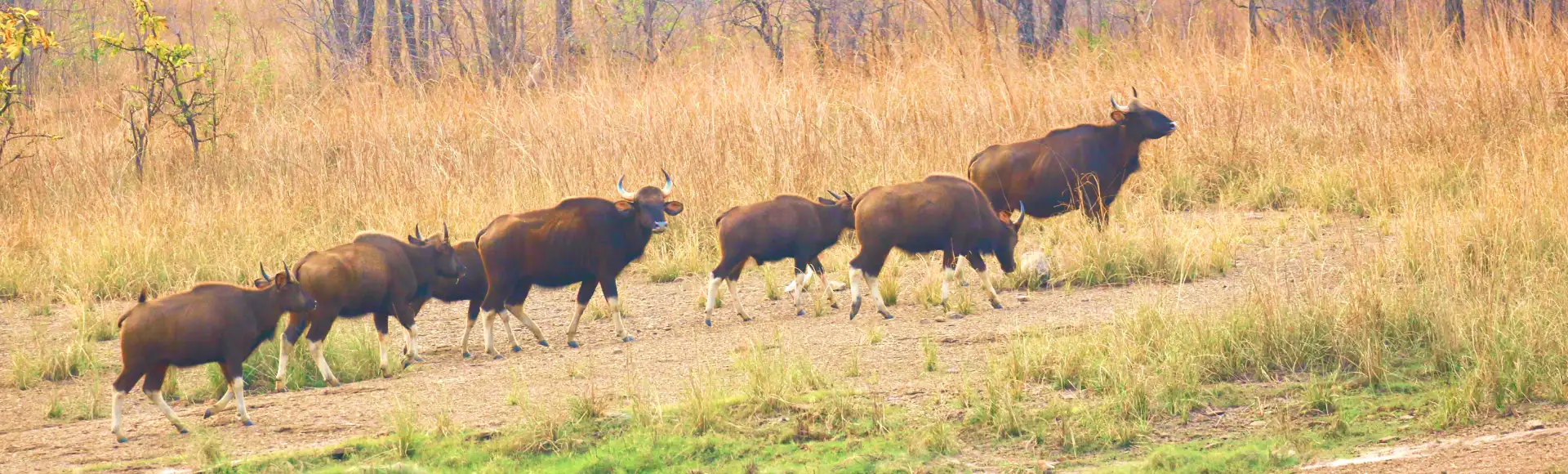
Debrigarh Wildlife Sanctuary
Set beside the Hirakud Reservoir in western Odisha, Debrigarh Wildlife Sanctuary draws visitors for its varied landscapes, wildlife and outdoor activities, including safaris, walks and boating.
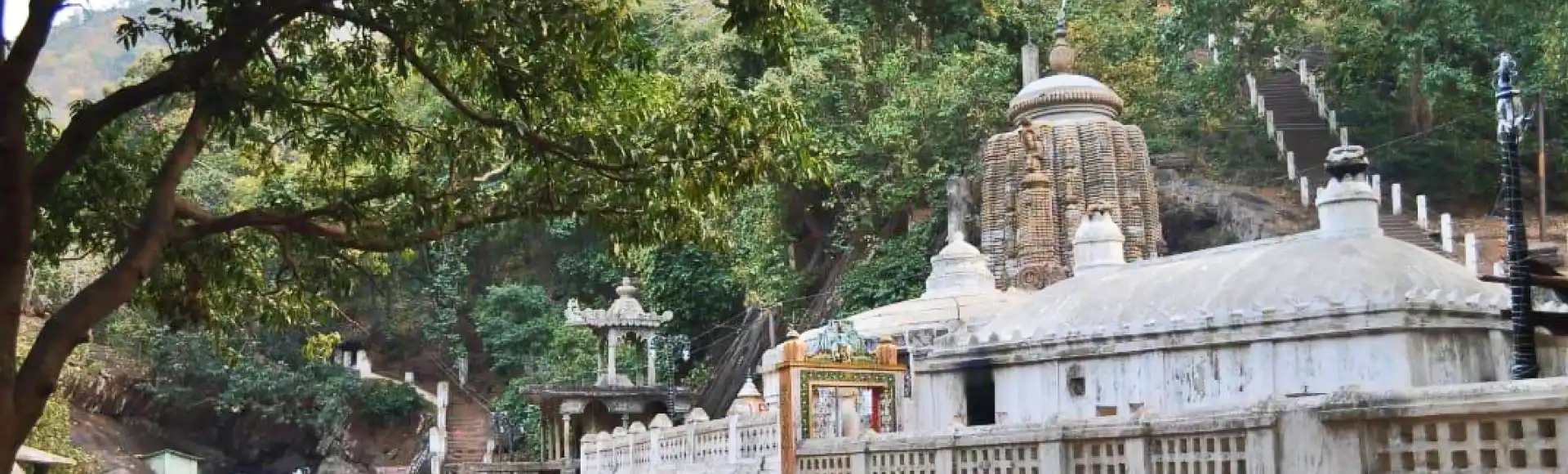
Nrusinghanath Temple
Nrusinghanath Temple is a shrine to Lord Nrusingha in Paikmal, Odisha, set among the Gandhamardan hills. Visitors come for its religious importance, natural surroundings and links to Ramayana legends.
Food in Bargarh belongs broadly to western Odisha’s rice-centred culinary traditions. Everyday meals commonly pair rice with dal, seasonal vegetables and saag, or leafy greens. Pakhala, rice served with water and sometimes fermented, is enjoyed across Odisha, particularly in hot weather. Dalma, combining pulses and vegetables, and sweets such as chhena poda are wider Odishan favourites rather than district-exclusive specialities. Rice-based pitha preparations feature in household and festive cooking, while Nuakhai, western Odisha’s new-rice harvest festival, highlights the bond between food and farming. Around remote attractions, carry drinking water and confirm meal arrangements beforehand.
Bargarh is an important centre of western Odisha’s Sambalpuri handloom tradition, with weaving communities in places such as Barpali and Bhatli. Its best-known textile technique is bandha, a form of resist-dyed yarn weaving often described as ikat: yarns are tied and dyed before weaving to create patterned cloth. Saris, dress materials and household textiles may feature geometric, floral and other traditional motifs. This heritage extends beyond Bargarh across the wider region. Buying from established cooperatives or directly from weavers can help visitors understand the workmanship and distinguish handloom cloth from printed imitations.
Dhanu Yatra, held in Bargarh town during the winter, turns parts of the town into settings for episodes from the Krishna and Kansa story. It draws large audiences and can make rooms and local transport busier, so arrange accommodation early. Nuakhai, the harvest festival observed across western Odisha around the late monsoon or early autumn, is an important family and community occasion; travel services may be less convenient during celebrations. Makar Sankranti and local temple fairs also bring visitors to religious sites, including the Gandhamardan foothills. Festival schedules vary by year, so check locally before travelling.
Elsewhere in Odisha
Much of Bargarh is cultivated plain, crossed by streams, irrigation channels and roads linking its towns and villages. The terrain rises towards the forested Gandhamardan hills in the north, where Nrusinghanath lies, while Debrigarh’s wooded slopes meet the broad waters of the Hirakud Reservoir. The sanctuary and reservoir create a landscape of forest, rocky ground and shoreline rather than a single compact sightseeing area. Journeys between the hills, Bargarh town and Debrigarh take planning; roads can be slower near forested or rural stretches, especially in wet weather.
Bargarh has hot summers, a monsoon season and a comparatively cooler winter. Summer heat can make midday outdoor visits tiring, while monsoon rain may affect rural roads, trails and access around forest or reservoir areas. The cooler months, broadly from October to February, are generally the most comfortable for combining town visits, temple stops and time outdoors. Pack light, breathable clothing for warm days, a warmer layer for winter evenings, sun protection and sturdy footwear for uneven ground. In the rainy season, bring rain protection and check local road and sanctuary conditions before setting out.
Veer Surendra Sai Airport at Jharsuguda is a practical air gateway for Bargarh district. Bargarh Road railway station serves Bargarh town, while Sambalpur is another useful rail gateway, particularly for Debrigarh. Road connections link Bargarh with Sambalpur and other western Odisha towns; Nrusinghanath is approached via Padampur. Choose your base according to the attractions you plan to visit, as the sanctuary and Gandhamardan foothills require separate onward journeys. Buses serve principal towns, while hired cars and locally available auto-rickshaws can cover onward travel. Arrange return transport for remote stops and check current services locally.
Bargarh town is the main local base, with road links to Padampur and other district towns; Sambalpur is also useful for journeys towards Debrigarh. Buses connect principal towns, but services may be less frequent for remote sites. Autos are useful for short trips within towns, while a hired car or taxi offers more flexibility between the sanctuary, caves and Gandhamardan foothills. Confirm return transport before visiting outlying places, and do not assume an auto or bus will be readily available late in the day. Check current access arrangements locally for travel inside Debrigarh.
2 days: Debrigarh Wildlife Sanctuary, then Bara Bakhra Caves; sleep in Bargarh after day 1. 3 days: Nrusinghanath Temple, then Debrigarh Wildlife Sanctuary, then Bara Bakhra Caves; sleep in or near Padampur after day 1 and in Bargarh after day 2.
Bargarh town is the most practical base for district services and an overnight stay before or after visiting the sights. Padampur is useful for Nrusinghanath Temple, though accommodation choices may be more limited. For Debrigarh, some travellers use Bargarh or Sambalpur as a base; check the journey and return plan before choosing. Expect hotels and simple guesthouses in larger towns, with fewer options in smaller settlements. Temple-area dharamshalas or local lodgings may be available, but facilities and booking arrangements vary. Confirm any forest-area accommodation directly with its official manager.
Carry water and sun protection, and take extra care in summer heat. At Debrigarh, follow sanctuary staff instructions, keep a safe distance from wildlife and use only authorised routes or activities. Check official sources for current entry rules and whether any permits or advance arrangements apply; confirm requirements before travel. Avoid entering caves or uneven forest terrain without suitable footwear and local guidance. Monsoon rain can make rural roads slippery or slow, and mobile coverage may be limited outside towns. Keep drinking water sealed or treated, and plan return transport before visiting remote sites. During major festivals, allow for crowds and busy roads.
- Sambalpurabout 35 km
- Raigarh · Chhattisgarhabout 49 km
- Balangirabout 112 km
- Mahasamund · Chhattisgarhabout 130 km
- Angulabout 156 km
- Sundargarhabout 161 km
- Bilaspur · Chhattisgarhabout 174 km
- Korba · Chhattisgarhabout 186 km
Straight-line distance between the centres of each district's destinations; road distance is longer.
Q: How many days should I spend in Bargarh? A: Two days can cover a short visit to the sanctuary and caves; allow three days if you also want to visit Nrusinghanath Temple. Q: When is the best time to visit? A: October to February is generally more comfortable for sightseeing. Festival visitors should check local schedules and book accommodation ahead. Q: What is the best base for exploring? A: Bargarh town is the most practical general base. Padampur can suit a visit focused on Nrusinghanath Temple, while Sambalpur is another option for Debrigarh. Q: How do I get to Bargarh? A: Veer Surendra Sai Airport at Jharsuguda is a practical air gateway. Bargarh Road station serves the town; road connections and onward transport link the district’s sights. Q: Is Bargarh suitable for families or elderly travellers? A: Yes, with planning. Town visits and temple stops can suit many travellers, but forest roads, uneven ground, heat and long drives may require a slower itinerary and assistance.
This page draws on our 4 destination guides for Bargarh and is updated as our team checks it.
Be the first to share photos, stories, advice or a helpful contact for Bargarh.
Loading…