
District · Odisha
Keonjhar
Keonjhar, also called Kendujhar, offers a varied introduction to northern Odisha: forested hills, river valleys, waterfalls and important mineral-bearing areas sit alongside a living Adivasi cultural landscape.
Keonjhar, also known as Kendujhar, is a northern Odisha district of forested uplands, rocky hills, river valleys and waterfalls. Places such as Sanaghagara and Bada Ghagara give parts of the landscape a distinctly green, water-rich character, while mining and mineral extraction are also important features of the district. The area has a long history: Sitabinji is known for archaeological remains and ancient paintings, and Keonjhar was once a princely state. Adivasi communities contribute to the district’s cultural life. Around the district headquarters, town facilities and road connections meet quieter rural areas, where journeys to natural and heritage sites can take more planning.
Keonjhar, also called Kendujhar, offers a varied introduction to northern Odisha: forested hills, river valleys, waterfalls and important mineral-bearing areas sit alongside a living Adivasi cultural landscape. Visitors come for natural sites such as Sanaghagara and Bada Ghagara, the Maa Tarini Temple at Ghatgaon, and the archaeological remains at Sitabinji. The district was once a princely state, adding historical interest to journeys beyond the headquarters. Keonjhar town is a useful service and transport centre, while reaching rural attractions often calls for advance planning and a road transfer.
Keonjhar’s history is shaped by its Adivasi communities, regional kingdoms and forested interior. The area was ruled by the Bhanja dynasty, whose rulers established and governed the former princely state of Keonjhar. Its historical record includes Sitabinji, an archaeological site known for ancient paintings, inscriptions and sculptures; the paintings are commonly associated with the Gupta period, though the site’s interpretation and dating are matters for specialists. Under British rule, Keonjhar remained a princely state rather than a directly administered district, with its rulers retaining authority under colonial paramountcy. After India became independent, the princely state merged with Odisha on 1 January 1948. Its territory was then administered as part of the state, and Keonjhar developed as a district centred on Kendujhar town. The district’s later history has also been shaped by mining and mineral extraction, alongside continued rural and Adivasi life.
7 destination guides · 6 on the map
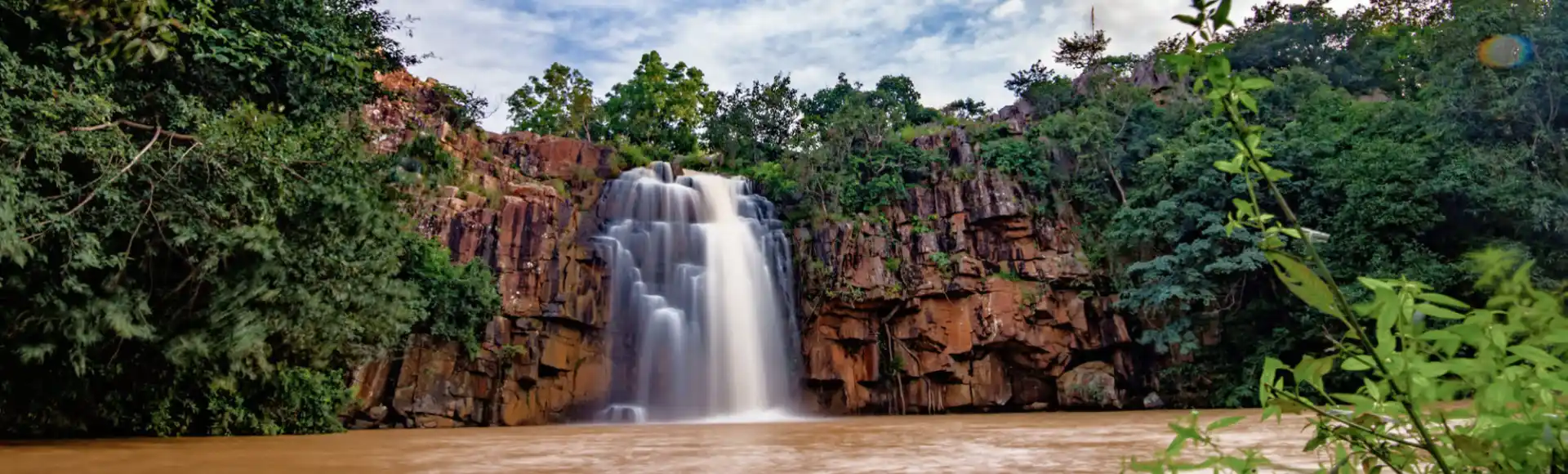
Bada Ghagara Waterfall
Located in Kendujhar, Odisha, Bada Ghagara is a perennial waterfall that drops almost 60 metres into a rocky gorge, drawing visitors for forest walks, photography and picnics.
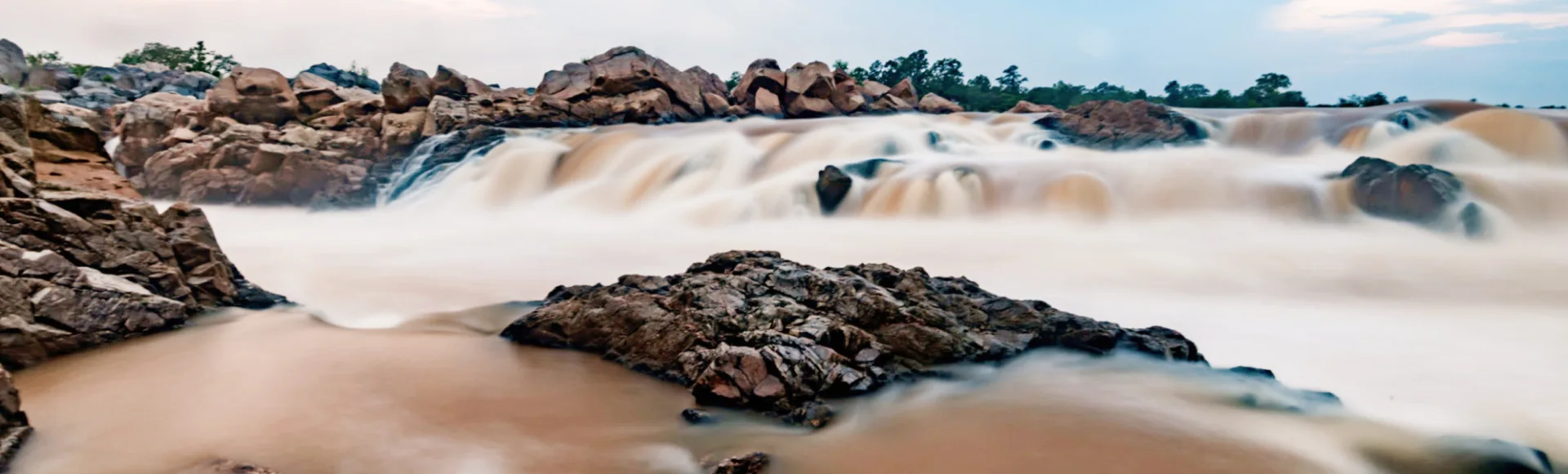
Bhimkund Waterfall
Bhimkund is a Baitarani River waterfall in Odisha, between Kendujhar and Mayurbhanj; people visit for its pools, woodland views, Mahabharata associations and Makar Festival bathing rituals.
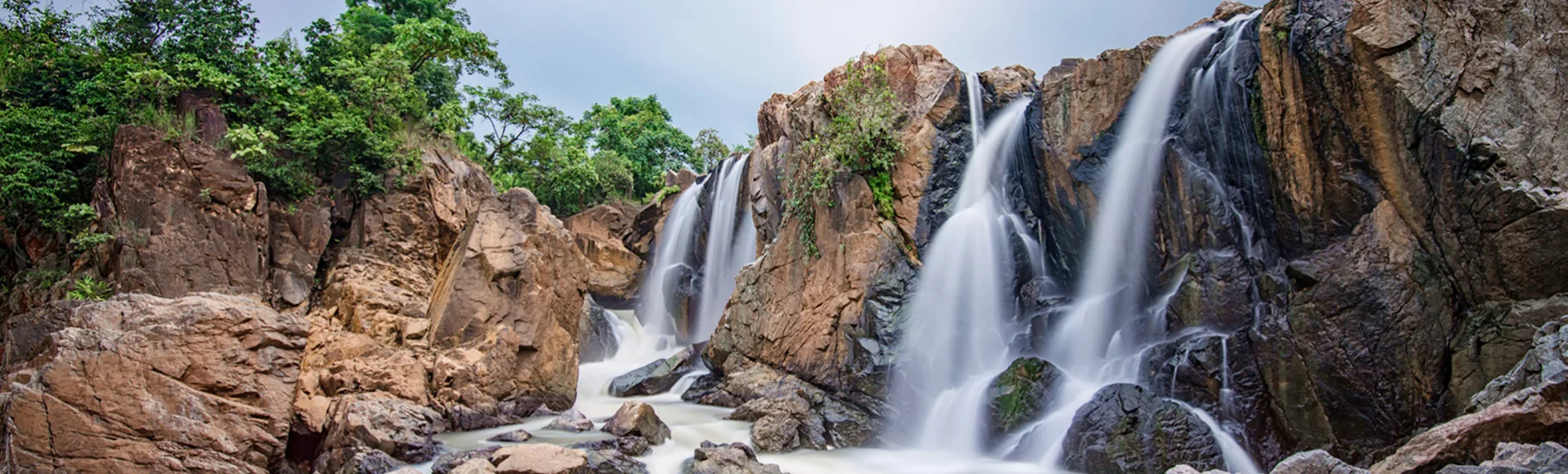
Gundicha Ghagi Waterfall
In Odisha’s Keonjhar district, Gundicha Ghagi Waterfall is a natural cascade included in Odisha Tourism’s catalogue of tourist places. People visit to see the waterfall, although local confirmation of site details is still pending.
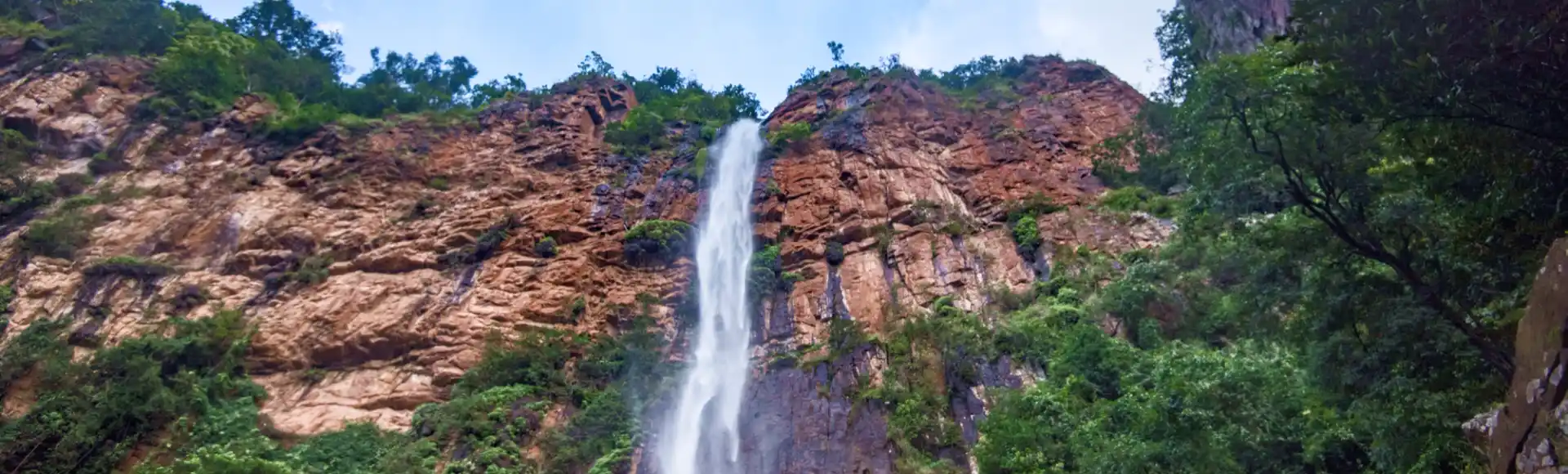
Khandadhar (Kendujhar)
Khandadhar is a waterfall in Kendujhar, Odisha, with a tall, sword-shaped cascade. People visit to experience its forested surroundings, see the falling water and enjoy outdoor activities.
Maa Tarini Temple
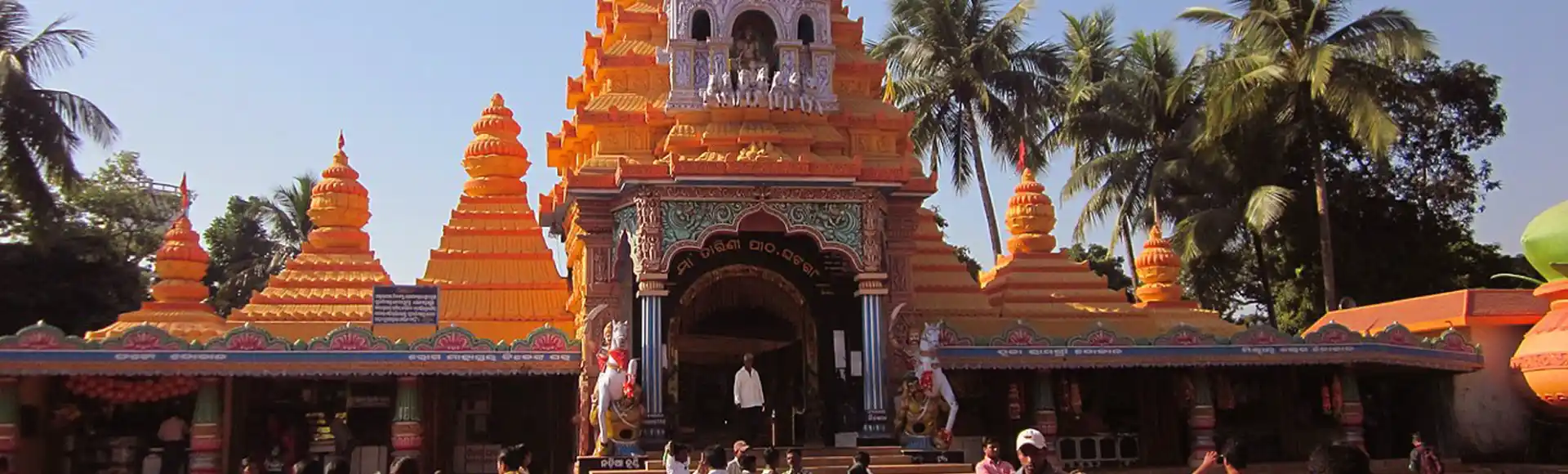
Located in Ghatgaon, Kendujhar, Maa Tarini Temple is a Shakti shrine honouring Goddess Tarini. Pilgrims visit to pray, offer coconuts and seek the fulfilment of their wishes.
Sanaghagara Waterfall
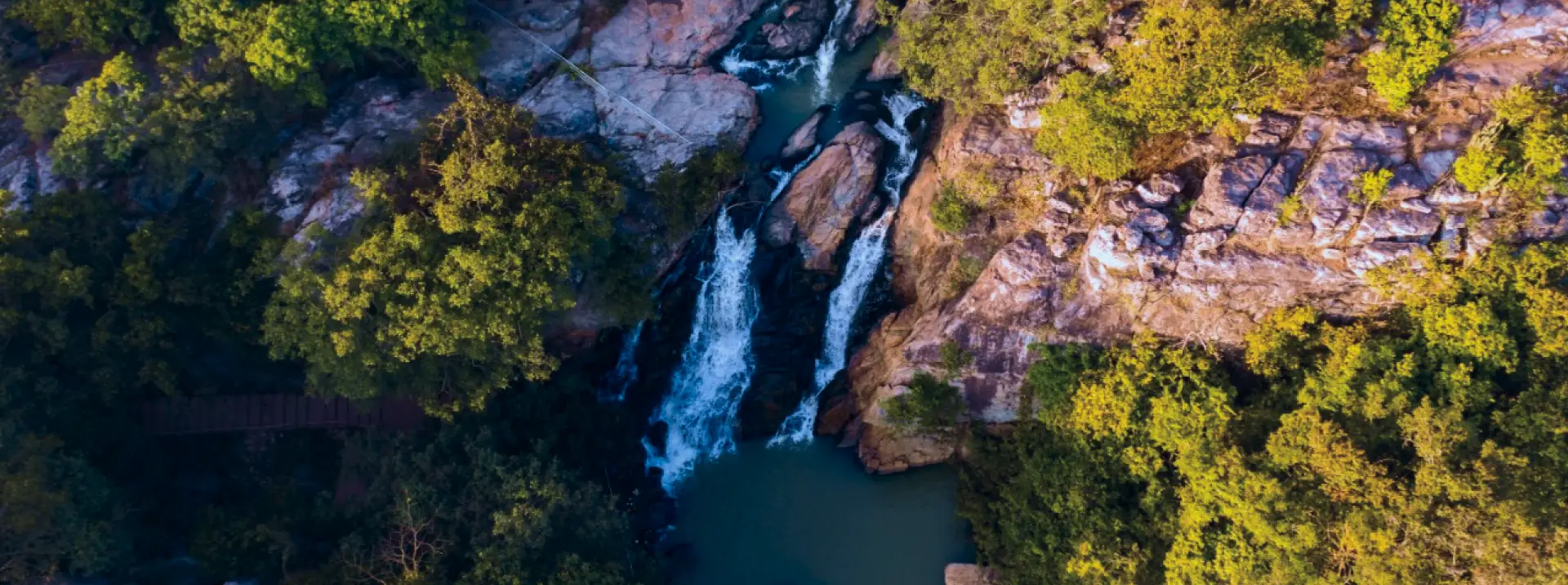
Near Kendujhar town in Odisha, Sanaghagara Waterfall is a modest cascade set among rocky ground and green slopes, drawing visitors for relaxed walks, views and photography.
Sitabinji Fresco Painting
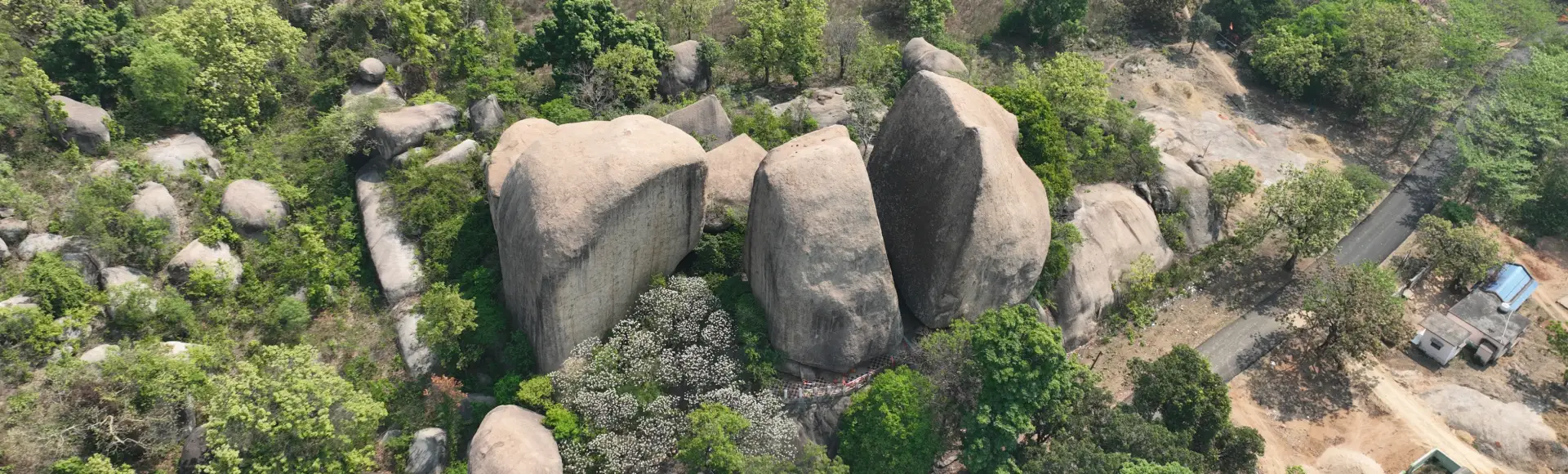
In Kendujhar, Odisha, Sitabinji is an archaeological site known for Gupta-period paintings and other remains. Visitors come to encounter its heritage amid wooded hills by the Sita River.
Rice is central to everyday eating in Keonjhar and across Odisha. Meals may include dal, vegetable dishes and dalma, a preparation of lentils and vegetables; pakhala, fermented rice served with accompaniments, is another familiar regional food, especially in warm weather. Chhena poda, a baked cheese sweet associated with Odisha, is worth looking for, though its availability varies. Food options can be limited near waterfalls and other outlying attractions, so plan meals around a town or larger settlement. Ask what is freshly prepared, and mention dietary needs before ordering.
Keonjhar’s craft offerings should not be confused with Odisha’s better-known specialist centres. Across the state, handloom weaving includes ikat traditions, while palm-leaf engraving, Pattachitra painting and silver filigree are also recognised art forms; these are regional or statewide traditions, not crafts to assume are made locally in Keonjhar. Adivasi communities have their own material and artistic traditions, which vary between communities. Visitors interested in locally made work can ask in Keonjhar town about current artisan activity and where items are produced, rather than assuming a particular craft is available at every attraction.
Rath Yatra, Durga Puja and Makar Sankranti are observed in Keonjhar and the wider Odisha region, while local temple celebrations and Adivasi festivals reflect the district’s varied communities. Maa Tarini Temple at Ghatgaon draws devotees throughout the year, with especially active periods around major religious observances and the Chaitra season. Festival days can bring heavier road traffic and larger crowds at temples and market areas. Accommodation in and around Ghatgaon and Keonjhar town may be more in demand at these times, so arranging a room ahead is sensible.
Elsewhere in Odisha
Keonjhar is an inland district of uplands, rocky hills, forest patches and river valleys, with waterfalls among its best-known natural features. The terrain is varied: town roads and settled areas give way to more rural routes, slopes and forested surroundings near some attractions. Watercourses and seasonal flows shape the appearance and accessibility of waterfall sites, particularly during and after the monsoon. There is no coastline. Distances between attractions and the condition of smaller roads can make a private or pre-arranged road transfer useful, especially when combining sites in one day.
Keonjhar has a tropical seasonal climate. Summers, broadly from March into June, can be hot, so plan outdoor visits for cooler parts of the day and carry drinking water and sun protection. The southwest monsoon usually brings rain from around June to September; waterfalls may be fuller, but wet roads, slippery paths and changing access can complicate outings. The cooler, generally drier months from October to February are often the most comfortable for sightseeing. For most visitors, October to February is a practical period to plan a trip. Pack light breathable clothing, a rain layer in the wet season, sturdy footwear and warmer layers for winter evenings.
For Keonjhar town, the nearest airport with regular commercial services is Biju Patnaik International Airport in Bhubaneswar. Kendujhargarh railway station serves the district headquarters; check connections for your travel dates before choosing rail. Keonjhar is linked by road with Bhubaneswar and other towns in Odisha, and buses and private vehicles are practical options for reaching the district. Within Keonjhar, local buses, auto-rickshaws and hired vehicles can help with town journeys. Waterfalls and other sites outside town may require a planned road transfer, so arrange transport in advance. Check current services locally.
Keonjhar town is the main local hub, with road connections to Ghatgaon and other towns and rural areas. Local buses serve some routes, but services may be less convenient for reaching several attractions in one day. Auto-rickshaws are useful for short town journeys; hired cars or other private vehicles are often more practical for waterfalls, Sitabinji and multi-stop trips. Shared vehicles may operate on selected routes, though availability and return options can vary. There are no routine sightseeing boat journeys needed for the listed destinations. Confirm transport locally and arrange a return journey before heading to remote sites.
2 days: Sanaghagara Waterfall → Bada Ghagara Waterfall; sleep both nights in Keonjhar town. Day 2: Sitabinji Fresco Painting. 3 days: Maa Tarini Temple → Sanaghagara Waterfall → Sitabinji Fresco Painting; sleep in Ghatgaon on night 1 and Keonjhar town on nights 2 and 3. Day 3: Bada Ghagara Waterfall. 4 days: Maa Tarini Temple → Sanaghagara Waterfall → Sitabinji Fresco Painting → Bada Ghagara Waterfall → Gundicha Ghagi Waterfall → Bhimkund Waterfall → Khandadhar (Kendujhar); sleep in Ghatgaon on night 1 and Keonjhar town on nights 2 and 3, then choose an overnight stop based on confirmed road access for night 4.
Keonjhar town is the most practical base for the district headquarters, Sanaghagara and road trips to several listed sites; accommodation generally includes hotels and simple guesthouses. Ghatgaon can suit visitors focusing on Maa Tarini Temple, though choices may be more limited than in town. In smaller settlements, basic lodgings, homestays or community and religious accommodation may be available, but should not be assumed at every stop. Government lodges and dharamshalas may serve some locations; confirm availability and suitability directly before relying on them, especially for a multi-day route.
Waterfall paths and rocky ground can be slippery, especially during the monsoon; keep back from edges and follow local barriers or instructions. Use reliable drinking water and carry supplies on rural outings. Check road conditions before setting out, allow for slower travel on smaller roads, and avoid driving unfamiliar forest routes after dark. Wildlife may be present around forested areas, so do not approach or feed animals. Mobile connectivity can be patchy outside towns. Crowds can build at temples during festivals. No general visitor permit requirement is established for the listed sites; confirm any current access rules with local authorities before travel.
- Mayurbhanjabout 96 km
- Dhenkanalabout 101 km
- West Singhbhum · Jharkhandabout 106 km
- Sundargarhabout 107 km
- Angulabout 119 km
- Cuttackabout 125 km
- Jajpurabout 130 km
- Balasoreabout 137 km
Straight-line distance between the centres of each district's destinations; road distance is longer.
Q: How many days should I spend in Keonjhar? A: Two days can cover a few nearby highlights; allow three or four days for a broader trip that includes more distant sites and road time. Q: When is the best time to visit? A: October to February is generally comfortable for sightseeing. Monsoon brings greener scenery and stronger waterfall flows, but can make access more difficult. Q: What is the best base for visiting the district? A: Keonjhar town is the most practical general base. Ghatgaon is useful for Maa Tarini Temple, subject to available accommodation. Q: How do I get to Keonjhar? A: Kendujhargarh railway station serves the town, and road travel connects it with Bhubaneswar and other Odisha towns. Bhubaneswar is the nearest airport with regular commercial services; check current connections before travelling. Q: Is Keonjhar suitable for families or elderly travellers? A: Keonjhar town and the temple can suit many visitors, but waterfall paths and rural sites may involve uneven ground, steps or longer road journeys. Check access conditions and choose stops according to individual mobility.
This page draws on our 7 destination guides for Keonjhar and is updated as our team checks it.
Be the first to share photos, stories, advice or a helpful contact for Keonjhar.
Loading…