
Ghumoopedia — Explore, Discover, Experience
Sign in
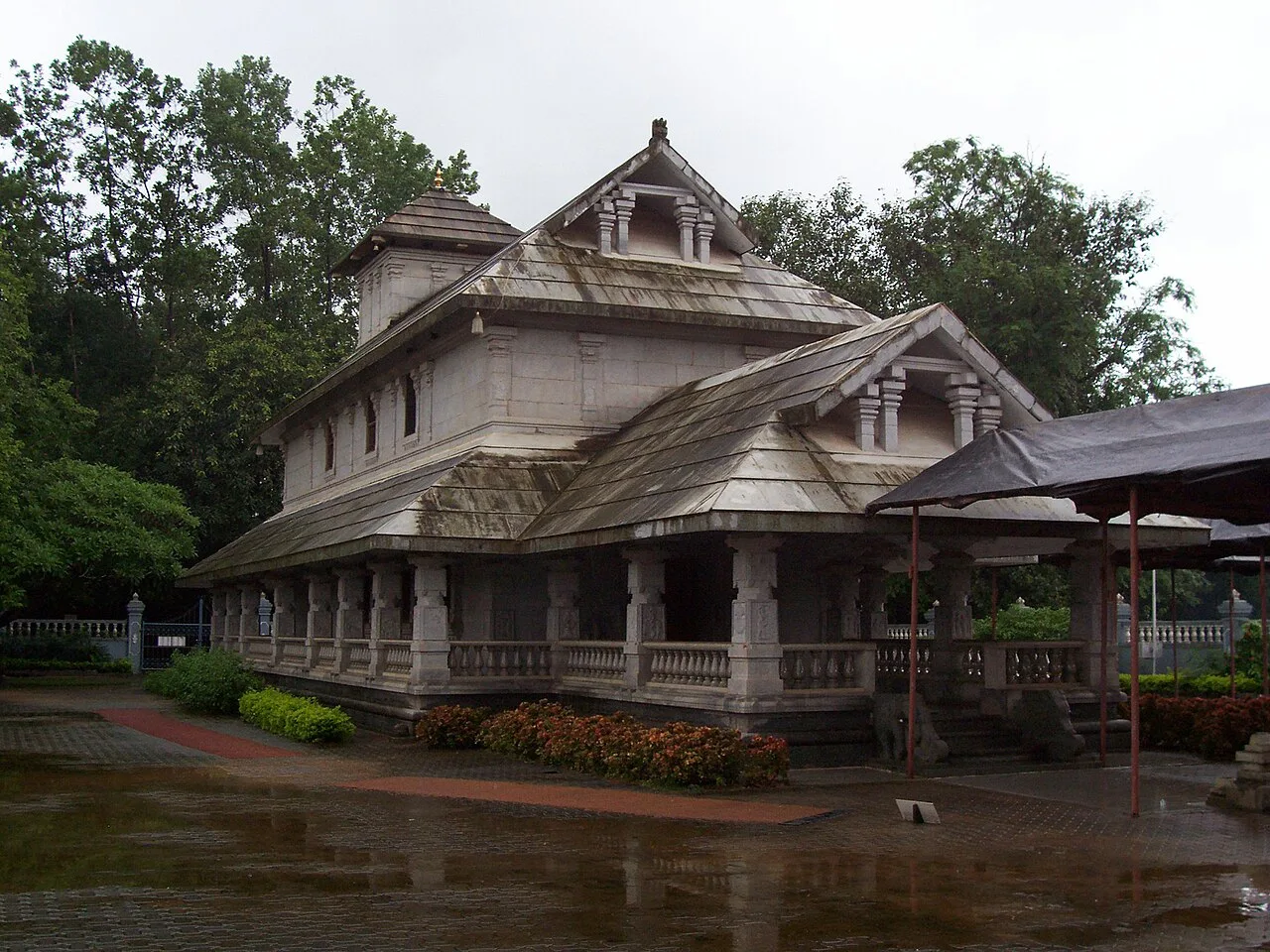
Dharmasthala Temple, near Dharmasthala

City guide · Karnataka

Dharmasthala

Dharmasthala is a temple town in Belthangady taluk, Dakshina Kannada district, set beside the Nethravathi River at the meeting point of Karnataka’s coastal lowlands and the foothills of the Western Ghats. Its centuries-old Manjunatha Temple draws pilgrims from across the region and beyond.

Famous for

  • Manjunatha Temple
  • Bahubali monolithic statue
  • Manjusha Museum
  • Sarva Dharma Sammelana
  • Temple mass weddings
In the city
1
Nearby
1
Districts
Dakshina Kannada, Chikkamagaluru

Why Dharmasthala matters

Dharmasthala is a temple town in Belthangady taluk, Dakshina Kannada district, set beside the Nethravathi River at the meeting point of Karnataka’s coastal lowlands and the foothills of the Western Ghats. Its centuries-old Manjunatha Temple draws pilgrims from across the region and beyond. The town is distinctive for its religious traditions: a Jain family administers the temple, while Hindu priests conduct its worship. Shrines to Ammanavaru, Chandranath and the Dharma Daivas add to its significance as a place of worship.

Visitors also come to see the hilltop Bahubali statue and explore the Manjusha Museum and its collection of historic objects. Dharmasthala’s role extends beyond pilgrimage through cultural preservation, temple renovation and social initiatives, including annual mass weddings. The town hosts a yearly Sarva Dharma Sammelana, bringing together religious leaders from different traditions. Together, its temple, charitable work and cultural institutions make Dharmasthala an important spiritual and community centre in coastal Karnataka.

Famous for: crafts, trade & products

Dharmasthala is best known for its religious institutions rather than for large textile markets or a major manufacturing industry. The Manjunatha Temple is the town’s central landmark, while the Manjusha Museum displays antique objects and the car museum presents a collection of vintage vehicles. The Sri Manjunatheshwara Cultural and Research Foundation works to preserve manuscripts and paintings, making the town a place to encounter regional heritage as well as worship.

Cultural initiatives associated with Dharmasthala have supported traditional arts such as Yakshagana and the revival of crafts including Navalgund carpets and Kasturi embroidery. These crafts are associated with wider Karnataka traditions, not necessarily produced in the town itself; visitors can ask at local cultural institutions or craft outlets about current displays and availability. The Dharmasthala Manjunatheshwara Dharmothana Trust also supports the renovation of temples across Karnataka. The town’s annual Sarva Dharma Sammelana is another notable institution-led event, reflecting its emphasis on dialogue among faiths. Visitors looking for crafts should treat Dharmasthala primarily as a heritage and pilgrimage centre, rather than a dedicated shopping destination.

History

Dharmasthala was earlier known as Kuduma and grew around a longstanding centre of worship beside the Nethravathi River. Its Manjunatha Temple has a centuries-old history and remains the focus of the town. A distinctive feature of its development is the partnership between Jain administration and Hindu worship: the temple is managed by a Jain family, while Vaishnava Hindu priests conduct the rituals. This arrangement has shaped Dharmasthala’s identity as a place where different religious traditions meet.

In modern times, the town’s influence has expanded through education, charitable work and cultural preservation associated with the temple committee and its institutions. Free mass weddings began in 1972 as a response to dowry and the expense of wedding ceremonies. A monolithic Bahubali statue, carved from a single rock, was installed on a low hill in 1973. Museums and manuscript-preservation work have further strengthened Dharmasthala’s role as a centre for heritage as well as pilgrimage. Its growth has been closely tied to these religious and community institutions.

Food, festivals & culture

Kannada and Tulu are widely used in the surrounding region, with Kannada serving as the main language for many visitors and institutions. Temple life shapes the town’s daily rhythm, and the Manjunatha Temple is its principal place of worship. Other shrines honour Ammanavaru, Chandranath and the Dharma Daivas. The temple’s vegetarian meals and prasada are an important part of the pilgrimage experience. Regional cooking draws on rice, coconut and other ingredients common to coastal Karnataka; Dharmasthala is not especially known for a signature sweet or a distinct food market.

Yakshagana, the region’s celebrated dance-drama tradition, is among the folk arts supported by local cultural initiatives. The annual Sarva Dharma Sammelana brings spiritual leaders from different faiths and schools together for dialogue. Temple celebrations and pilgrim gatherings are central to the local calendar, while free mass weddings are usually held in April. Dates for religious events can vary from year to year, so visitors may wish to check locally before planning around a particular celebration.

Visiting the city

The cooler, drier months, generally from October to March, are comfortable for temple visits and exploring the surrounding hills. Monsoon months bring heavy rain to the Western Ghats region and can make road travel slower. The nearest airport is Mangaluru International Airport; Mangaluru Junction is a principal railway station for onward road journeys. Dharmasthala is about 75 km east of Mangaluru and is commonly reached by bus or taxi. Local autos and taxis can help with short trips, while the temple precinct is best explored on foot.

Begin around the Manjunatha Temple, then visit the Bahubali statue on the nearby hill and the Manjusha Museum. The riverbank and the roads through the foothills offer a quieter sense of the landscape. Belthangady is the nearest larger town for services and onward connections. Dress modestly at places of worship and allow extra time during busy pilgrimage periods.

Attractions

Places to visit in Dharmasthala

Sights within about 12 km of each other, even when they fall in different districts.

Short trips

Around Dharmasthala

Within about 40 km — easy half-day or day trips from the city.

Map

Dharmasthala on the map

  1. 1Dharmasthala Temple
  2. 2Kudremukha

Karnataka

Other cities to explore