
Ghumoopedia — Explore, Discover, Experience
Sign in
Chanderi Town, near Chanderi

City guide · Madhya Pradesh

Chanderi

Chanderi is a historic town in Madhya Pradesh, visited for monuments linked to regional dynasties and its ancient Jain temples, amid hills, lakes and forests.

Famous for

  • Chanderi handloom sarees
  • Historic hilltop fort
  • Malwa-era monuments
  • Bundela architecture
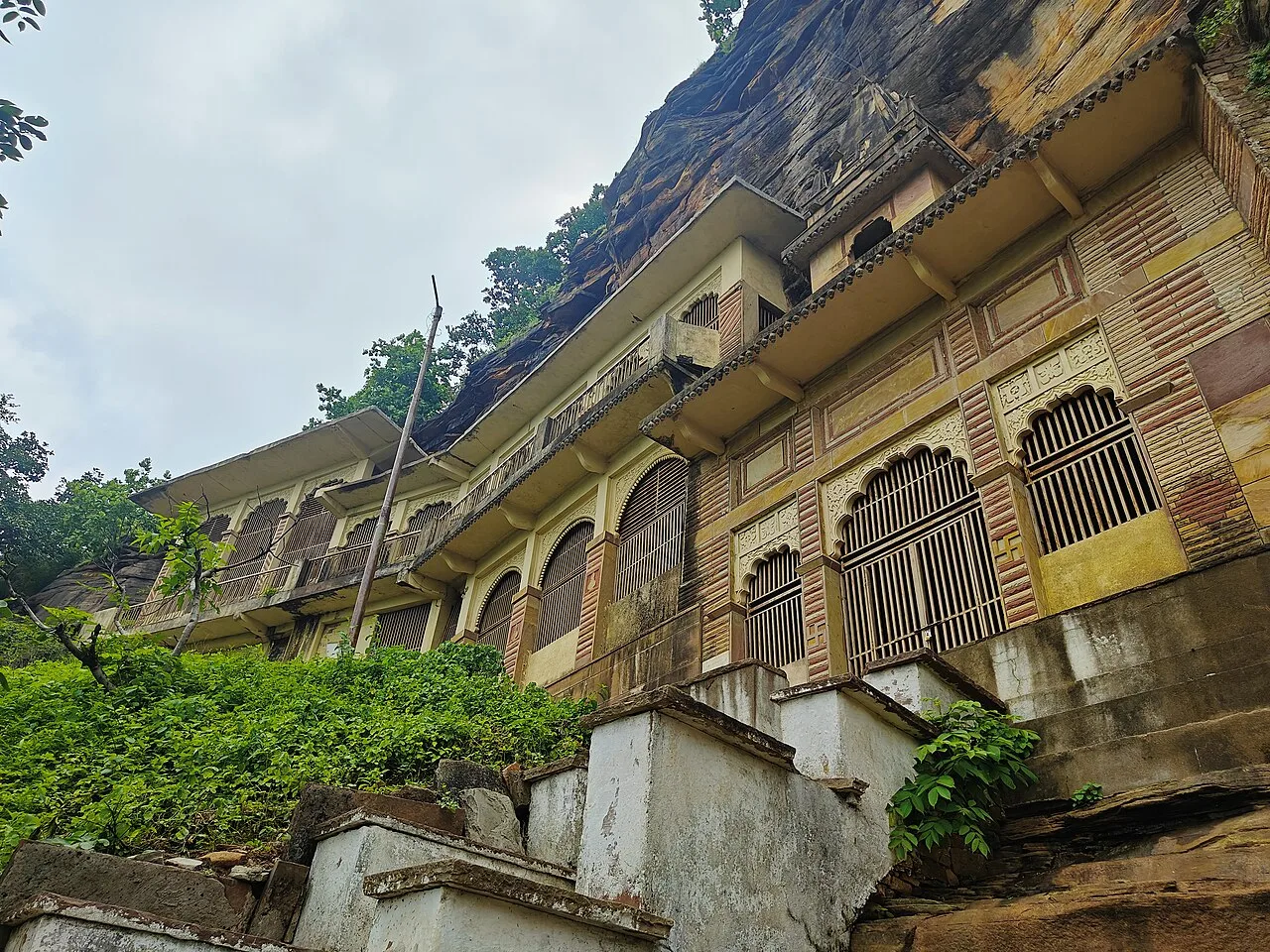
  • Ancient Jain temples
In the city
1
District
Chanderi

Why Chanderi matters

Chanderi is a historic town in Ashoknagar district, where the Vindhyan hills, lakes and forested surroundings frame a rich built heritage. Its position in the wider Bundelkhand–Malwa region and its layers of Rajput, Sultanate and Mughal history make it a rewarding destination for travellers interested in central India’s past. The hilltop fort and monuments such as Koshak Mahal and Badal Mahal Gate are among its best-known sights, while old streets and places of worship reveal the town’s varied communities and traditions.

Chanderi is also a living centre of handloom weaving. Its light, finely patterned sarees are known across India, and visitors can see how this textile tradition remains part of everyday local work. Jain temples add another important dimension to the town’s heritage. Together, the monuments, weaving neighbourhoods and surrounding landscape make Chanderi more than a day’s stop between larger cities: it is a place to explore at an unhurried pace, with history and craft closely woven into present-day life.

Famous for: crafts, trade & products

Chanderi is best known for its handwoven sarees, made in silk, cotton or blends and often finished with zari borders and delicate motifs. The fabric is valued for its light feel and distinctive sheen. Chanderi sarees have a Geographical Indication (GI) tag, and weaving remains an important local livelihood as well as a major reason visitors come to town.

To browse or buy, look for handloom shops and weavers’ outlets in the town, where visitors may find sarees, dress materials, dupattas and other fabric. Asking about the weave, fibre and care instructions can help distinguish handloom pieces from other textiles. Some workshops and weaving spaces offer a chance to see the craft at close range, though visits depend on local arrangements. Chanderi is not primarily an industrial or large-scale trading centre; its reputation rests on the skill of its weavers and the continuing market for its textiles. Beyond sarees, the town’s old stone buildings and carved architectural details are part of its heritage, but its signature product remains the Chanderi handloom.

History

Chanderi’s strategic position drew successive rulers. It was under later Pratiharas in the eleventh and twelfth centuries, and the scholar Alberuni mentioned it in 1030. Delhi Sultanate forces took the town in 1251. Sultan Mahmud I of Malwa captured it in 1438; later, Rana Sanga placed it under Medini Rai, who made Chanderi the centre of his kingdom. Mughal emperor Babur captured the fort from Medini Rai, and the town changed hands again, including to Puran Mal in 1529 and Sher Shah Suri in 1542. Under Akbar, Chanderi became an administrative centre in the Malwa province.

Bundela rulers took control in 1586. In 1811, the Maratha ruler Daulat Rao Scindia’s forces annexed the town; it passed to the British in 1844. After changing hands during the 1857 uprising, it returned to Scindia rule in 1861. Following independence, the former Gwalior state became part of Madhya Bharat, which merged into Madhya Pradesh in 1956.

Food, festivals & culture

Daily life in Chanderi brings together its textile tradition, historic neighbourhoods and a mix of Hindu, Jain and Muslim communities. Hindi is widely used, alongside Bundeli and Urdu. Visitors will find familiar central Indian fare, including poha, lentil dishes and seasonal snacks; sweets such as jalebi are common across the region. Menus and food choices vary, so local eateries are the best guide to what is available during a visit.

Holi, Diwali and Dussehra are observed in their usual spring and autumn seasons, while Eid brings its own community celebrations. Jain observances, including Mahavir Jayanti and Paryushan, are also important to local worshippers. The town’s ancient Jain temples, Hindu shrines and mosques reflect this religious variety. Bundeli folk music and dance traditions belong to the wider cultural landscape, though performances are more likely around festivals or special events than on a regular visitor schedule. Respectful dress and quiet conduct are appropriate at places of worship.

Visiting the city

The cooler months from October to March are generally the most comfortable for exploring; summers can be hot, while monsoon rains bring greener surroundings. The nearest practical airport is Gwalior Airport, with Bhopal’s Raja Bhoj Airport another option for onward road travel. Lalitpur railway station is a useful railhead; Chanderi itself has no railway station.

Road travel is the main way to reach and explore the town. Auto-rickshaws and locally arranged cars can help with longer distances, while the old centre is best explored on foot. Allow time for the fort and its surrounding historic precinct, the lanes with handloom shops and workshops, and the town’s Jain temples. Lakes and monuments outside the central streets make a hired vehicle useful for a broader visit. Roads connect Chanderi with nearby towns including Lalitpur and Ashoknagar.

Attractions

Places to visit in Chanderi

Sights within about 12 km of each other, even when they fall in different districts.

Map

Chanderi on the map

  1. 1Chanderi Town

Madhya Pradesh

Other cities to explore