
Ghumoopedia — Explore, Discover, Experience
Sign in
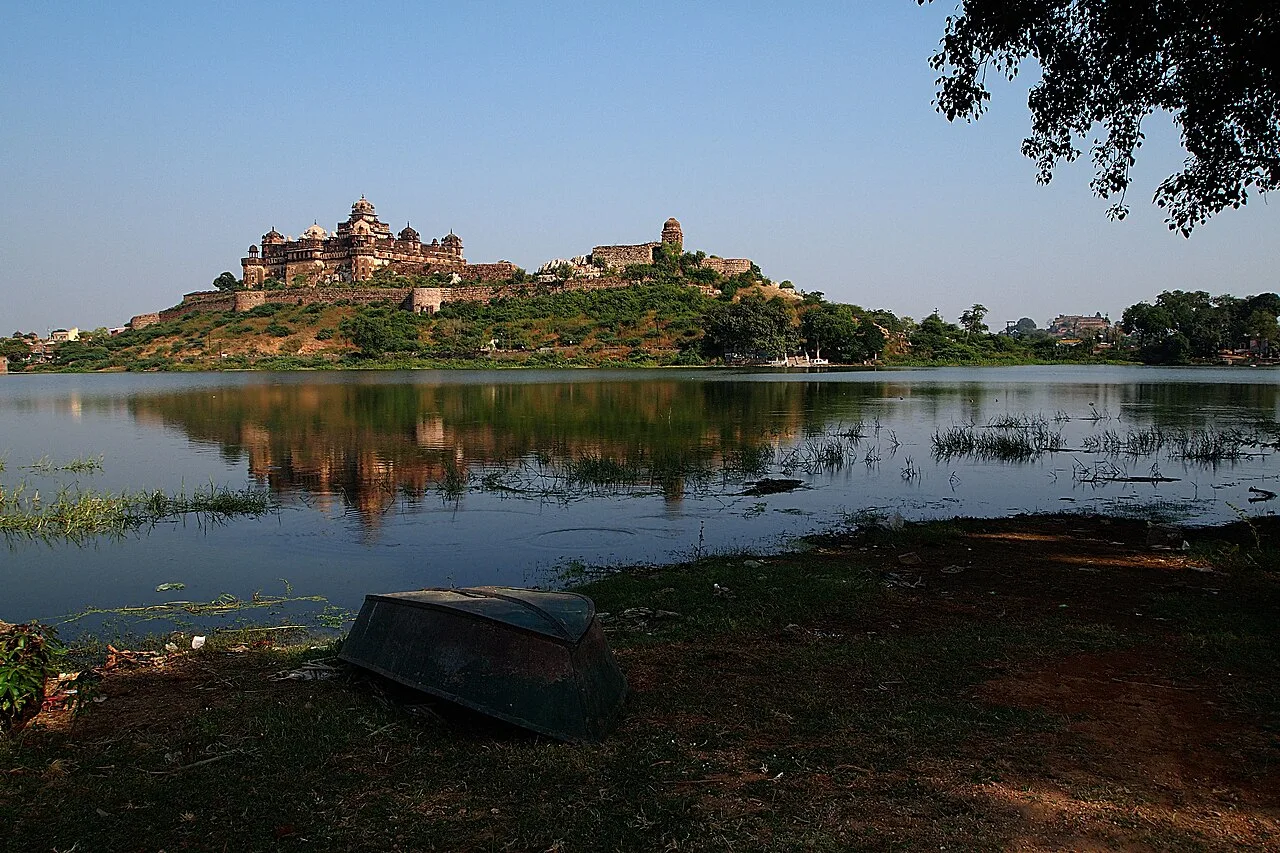
Datia Palace, near Datia

City guide · Madhya Pradesh

Datia

Datia is a district headquarters in north Madhya Pradesh, close to Gwalior and the Uttar Pradesh border. Its importance today rests on a blend of pilgrimage, regional history and local trade.

Famous for

  • Pitambara Peeth
  • Baglamukhi worship
  • Bir Singh Palace
  • Bundeli handloom weaving
  • Sonagiri Jain pilgrimage
In the city
1
District
Datia

Why Datia matters

Datia is a district headquarters in north Madhya Pradesh, close to Gwalior and the Uttar Pradesh border. Its importance today rests on a blend of pilgrimage, regional history and local trade. The city is best known for Pitambara Peeth, a major Shakta pilgrimage centre where devotees worship Goddess Baglamukhi. Its temples draw visitors throughout the year, with especially strong crowds during religious observances.

Datia’s old town, once enclosed by a stone wall, has a distinctive historic setting. The seven-storey Bir Singh Palace, also known as Bir Singh Deo Palace, is a striking example of Bundela-era architecture shaped by Rajput and Mughal influences. Around 13 km away, Sonagiri’s Jain temples make a rewarding excursion. Datia also serves as a trading centre for grain and cotton products, while handloom weaving remains part of its local economy. Together, its sacred sites, palace heritage and position on a regional travel corridor give the city significance beyond its role as an administrative centre.

Famous for: crafts, trade & products

Datia’s best-documented local production is handloom weaving, alongside trade in grain and cotton products. The city is not especially associated with a nationally recognised saree style or a widely known GI-tagged product; visitors should look for locally made woven goods rather than expect a specialised textile district. Small shops and general markets in the town centre are the most practical places to ask about available handloom fabrics and cotton goods.

Grain and cotton trading reflect Datia’s role as a service and market centre for surrounding settlements. Everyday retail is concentrated around the central town and transport hubs, where visitors can also find household goods and regional provisions. There is no single celebrated handicraft market or signature craft institution to plan a visit around. For a sense of the city’s older commercial fabric, explore the streets within and around the historic walled town, then browse local shops for products made or traded in the area. Ask shopkeepers about the origin of woven items, since stock and availability can vary.

History

The town’s past is associated with Bundela rulers and traditions that link the region to ancient epic history. Datia’s princely state was established in 1626, when Rao Bhagwan Rao received Datia and Baroni from his father, the ruler of Orchha. An earlier landmark is Bir Singh Deo’s palace, begun in 1614 and associated with his friendship with the Mughal emperor Jahangir. Its monumental form reflects the architectural exchange of the period.

After the Second Anglo-Maratha War, Datia came under British control through the Treaty of Bassein in 1802. The princely state retained its rulers under British paramountcy, and the ruling family’s hereditary title was formally recognised as Maharaja in the nineteenth century. The state acceded to India after independence and became part of Vindhya Pradesh in 1950. In 1956, it was incorporated into the newly reorganised state of Madhya Pradesh. Datia subsequently developed as a district headquarters and regional trading centre.

Food, festivals & culture

Religious life is central to Datia’s public culture. Pitambara Peeth, dedicated to Baglamukhi, is its best-known place of worship; the Dhumavati shrine and Vankhandeshwar Shiva temple are also important. Navratri, observed in spring and autumn, brings particular devotional activity, while Diwali and Holi are widely celebrated. Nearby Sonagiri is a major Jain pilgrimage destination and adds to the area’s varied religious character.

Hindi is widely used, and Bundeli is also spoken in the region. Local cultural traditions connect with Bundelkhand’s folk music and performance, including Alha ballad singing and Rai dance. Food is broadly Bundeli and central Indian in character: meals commonly include wheat or millet breads, lentils, seasonal vegetables and simple preparations suited to the local climate. Visitors can look for familiar regional snacks and sweets at town eateries and sweet shops, though Datia is not particularly known for one defining dish. During temple visits, follow local customs, dress respectfully and check whether photography is permitted.

Visiting the city

The cooler months, roughly October to March, are generally the most comfortable time to explore Datia. Summers can be very hot, while the monsoon brings rain and greener surroundings. The nearest major airport is Gwalior Airport, also known as Rajmata Vijaya Raje Scindia Air Terminal. Datia Railway Station serves the city on the main rail corridor between Delhi and Chennai.

Auto-rickshaws and local taxis are useful for getting between the station, bus stand, temples and palace; confirm transport availability for longer outings. Begin in the old town, visit Bir Singh Palace and Pitambara Peeth, and consider a separate trip to Sonagiri, about 13 km away. Orchha is another regional excursion. The central area is convenient for shops and everyday services, while the historic town is best explored at a measured pace, allowing for narrow streets and active places of worship.

Attractions

Places to visit in Datia

Sights within about 12 km of each other, even when they fall in different districts.

Map

Datia on the map

  1. 1Datia Palace

Madhya Pradesh

Other cities to explore