Ghumoopedia — Explore, Discover, Experience
Sign in
Madhugiri Fort, near Pavagada

City guide · Karnataka

Pavagada

Pavagada is a border town and taluk headquarters in Tumakuru district, in eastern Karnataka. Though it is geographically linked with neighbouring Chitradurga district and lies close to Andhra Pradesh, it is administered as part of Tumakuru.

Famous for

  • Pavagada hill fort
  • Kote Anjaneya Temple
  • Sri Shani Mahatma Temple
  • Pavagada Solar Park
  • Kannada–Telugu border culture

Why Pavagada matters

Pavagada is a border town and taluk headquarters in Tumakuru district, in eastern Karnataka. Though it is geographically linked with neighbouring Chitradurga district and lies close to Andhra Pradesh, it is administered as part of Tumakuru. Its position gives the town a distinctive Kannada–Telugu character, heard in everyday conversation and seen in local customs. Bengaluru is about 158 km away by road, making Pavagada a regional centre for nearby villages as well as a stop for travellers exploring this less-visited part of the state.

Visitors come for the hilltop fort and the temples at its foot and in town, especially Kote Anjaneya and Sri Shani Mahatma. The area has also gained national attention for Pavagada Solar Park near Thirumani, a large solar-energy development with a stated capacity of 2 gigawatts. The surrounding taluk is known for dryland farming and a history of peanut cultivation, though recurring drought has affected livelihoods. Together, its borderland culture, religious sites and role in renewable energy give Pavagada significance beyond its modest town centre.

Famous for: crafts, trade & products

Pavagada is not widely identified with a particular textile, handicraft or GI-tagged product. Its better-known local associations are the hill fort, its temples, dryland agriculture and the solar-energy project near Thirumani. Peanut has traditionally been an important crop in the taluk, alongside other farming suited to a drought-prone landscape, but harvests vary with rainfall. The solar park has brought a large-scale energy industry to the area; it is an operational landscape rather than a conventional shopping attraction, and visitors should not assume that its facilities are open to the public.

For everyday goods and locally made items, look around the town’s bazaar and market streets, where shops serve residents from Pavagada and surrounding villages. These are practical places to find groceries, household necessities and seasonal farm produce, rather than specialist craft outlets. The town’s temples are its most recognisable visitor landmarks, but they are places of worship, not craft markets. Travellers seeking Karnataka’s established handloom centres, dedicated craft clusters or well-known regional food products will generally find a wider selection in larger cities. In Pavagada, the appeal lies more in local life and its border-region setting than in a distinct commercial product.

History

Pavagada’s history is closely connected with its hill fort and its position on the eastern edge of the Mysore region. The town was historically part of the Mysore kingdom, while its location near present-day Andhra Pradesh has long placed it within a Kannada–Telugu cultural contact zone. The fort remains a prominent reminder of the area’s strategic past, although details of its construction and successive rulers should not be assumed from the site alone.

During the colonial period, the wider region was associated with the princely state of Mysore rather than directly administered as part of British India. After independence and the reorganisation of states, Pavagada remained in Karnataka and became part of Tumakuru district, despite its close geographic connections with neighbouring districts and Andhra Pradesh. In modern times, the town has served as a taluk centre for surrounding settlements. Agriculture, especially peanut cultivation, shaped local livelihoods, while recurrent drought contributed to migration for work. More recently, the solar park near Thirumani has made the taluk notable in India’s renewable-energy development.

Food, festivals & culture

Pavagada’s everyday culture reflects its position near the Karnataka–Andhra Pradesh border. Kannada and Telugu are both widely spoken, and some residents use both languages. Meals draw on the staples common across this part of southern India: ragi and other grains, rice, lentils, vegetables and spicy accompaniments. Ragi mudde and regional rotti dishes are familiar across the broader area, though menus vary between homes and eateries; Pavagada is not especially known for a signature sweet or food product.

The town’s religious life centres on its temples, including Kote Anjaneya at the fort’s foothills and the Sri Shani Mahatma temple. Ugadi, usually in spring, and Deepavali, generally in autumn, are observed alongside Sankranti in January and Navaratri in the autumn season. Temple occasions bring devotional singing and local gatherings. Kannada and Telugu film songs, bhajans and folk performance traditions are part of the wider cultural setting, though large organised music or dance events are not a defining attraction of the town. Visitors should dress respectfully at places of worship and follow local guidance during services and festivals.

Visiting the city

October to February is generally the most comfortable period to visit, with cooler conditions for exploring the fort and temples. Pavagada is about 158 km from Bengaluru; Kempegowda International Airport in Bengaluru is the nearest major airport. For rail travel, Hindupur railway station in Andhra Pradesh is a nearby option; confirm onward road connections when planning, as Pavagada itself is not a major rail hub. Buses and hired road transport connect the town with surrounding settlements and larger centres.

Within Pavagada, local autos or a hired vehicle are useful for reaching the hill fort and temples. Start around the town centre and bazaar, then visit Kote Anjaneya at the fort’s foothills and allow time for the uphill approach to the fort. Sri Shani Mahatma temple is another key stop. Thirumani, where the solar park is located, is outside the town; access to energy facilities may be restricted, so check locally before making a special trip.

Trips from the city

Nearest places to visit from Pavagada

Our closest destination guides, by straight-line distance.

Madhugiri Fort

49 km away · Tumakuru district

Madhugiri Fort

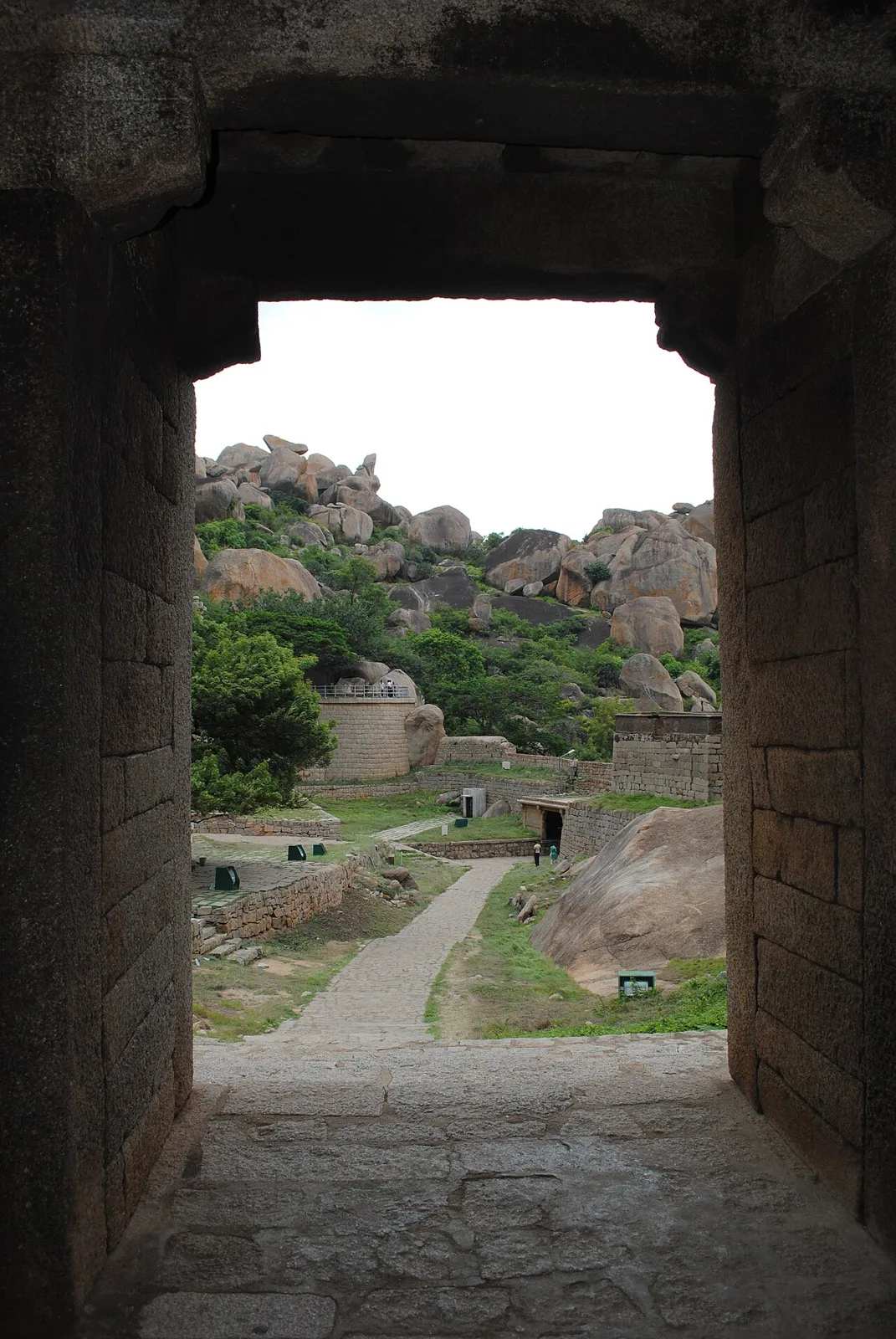
Madhugiri Fort lies in Tumakuru district, Karnataka. Visitors come to see the fort, while Madhugiri’s name reflects Madhu-giri, a hillock to the south.

Devarayanadurga

81 km away · Tumakuru district

Devarayanadurga

Devarayanadurga is a hill settlement in Tumakuru district, Karnataka, where forested rocky slopes and hilltop shrines draw visitors. Its temples include Yoganarasimha and Bhoganarasimha.

Skandagiri

87 km away · Chikkaballapur district

Skandagiri

Skandagiri is a Karnataka hill fort known for its historic remains and views towards nearby landmarks. Visitors come to explore its military past and elevated setting.

Bhoganandishwara Temple

91 km away · Chikkaballapur district

Bhoganandishwara Temple

The Bhoganandiswara and Arunachaleswara temples make up a historic Shiva complex in Nandi village, visited for its Dravidian architecture, detailed carvings, inscriptions and varied religious imagery.

Nandi Hills

91 km away · Chikkaballapur district

Nandi Hills

Nandi Hills is a historic hill fort in Karnataka’s Chikkaballapur district, visited for sunrise views and its river origins; it also hosted the second SAARC summit in 1986.

94 km away · Chitradurga district

Molakalmuru

Molakalmuru is a taluk in Karnataka’s Chitradurga district, near Andhra Pradesh. People visit the town for its locally produced Molakalmuru sarees and its traditional story explaining the place-name.

Chitradurga Fort

96 km away · Chitradurga district

Chitradurga Fort

Chitradurga Fort is a historic hilltop stronghold in Karnataka, known for its layered defences, temples and long history of regional rule. Visitors come to explore its fortifications and historic buildings.

Chandravalli Caves

97 km away · Chitradurga district

Chandravalli Caves

Chandravalli is an archaeological site in Karnataka’s Chitradurga district. Visitors are drawn by discoveries there, including pottery and coins linked to Indian, Roman and Chinese history.

Map

Pavagada on the map

  1. 1Madhugiri Fort
  2. 2Devarayanadurga
  3. 3Skandagiri
  4. 4Bhoganandishwara Temple
  5. 5Nandi Hills
  6. 6Molakalmuru
  7. 7Chitradurga Fort
  8. 8Chandravalli Caves

Karnataka

Other cities to explore