Ghumoopedia — Explore, Discover, Experience
Sign in

City guide · Madhya Pradesh

Bhawani Mandi

Bhawani Mandi is a market town in Jhalawar district, Rajasthan, close to the Madhya Pradesh border. Although it is sometimes associated with Madhya Pradesh because of its unusual railway station, the town itself is in Rajasthan.

Famous for

  • Orange-growing region
  • Orange wholesale trade
  • Border-spanning railway station
  • Jhalawar-era market town

Why Bhawani Mandi matters

Bhawani Mandi is a market town in Jhalawar district, Rajasthan, close to the Madhya Pradesh border. Although it is sometimes associated with Madhya Pradesh because of its unusual railway station, the town itself is in Rajasthan. The station platform extends across the state boundary: its northern part lies in Madhya Pradesh and its southern part in Rajasthan.

The town is best known for orange cultivation and trade, earning it the nickname “Orange City of Rajasthan.” Its wholesale market serves growers and buyers from the surrounding agricultural region, making Bhawani Mandi an important commercial centre in south-eastern Rajasthan. The railway connection and border location also give the town a distinctive role in local travel and trade. Visitors are generally drawn by the orange market, the station’s unusual position and the experience of a busy regional town rather than by a large collection of tourist attractions. Bhawani Mandi is a useful base for exploring this border area, while nearby Jhalawar offers additional regional heritage and sightseeing.
Famous for: crafts, trade & products

Bhawani Mandi’s best-known trade is oranges. The town is a collection and wholesale point for citrus grown in the surrounding belt, and its produce market is central to the local economy. The nickname “Orange City of Rajasthan” reflects this association. Visitors interested in the trade can look around the town’s market area, where availability and activity vary with the agricultural season; purchases and transport arrangements are best discussed with local sellers.

The railway station is another distinctive local institution: its platform crosses the Rajasthan–Madhya Pradesh boundary. The surrounding shops and town bazaar offer everyday goods and a glimpse of regional commerce. Bhawani Mandi is not widely associated with a particular textile tradition, handicraft or GI-tagged product, so visitors should not expect a specialised craft-shopping district. Rather, its identity rests on agricultural trade, especially oranges, and its position on a state border. Local shops are the practical places to browse for snacks and daily-use goods, while the produce market is the place to ask about locally traded fruit.

History

Bhawani Mandi developed under the rulers of the former princely state of Jhalawar. The town was established in 1911 by Maharaja Bhawani Singh, as the railway extended through the state. It grew from an older garrison settlement into a market town after merchant families were encouraged to settle there. Rail access helped connect local agriculture and commerce with wider regional markets, and Bhawani Mandi became an important trading centre in south-eastern Jhalawar.

During the colonial period, Jhalawar remained a princely state under British paramountcy. The town’s growth was shaped less by monumental urban development than by its railway link, agricultural hinterland and location near the boundary with neighbouring territories. After India’s independence and the integration of princely states, Jhalawar became part of Rajasthan. The railway line still makes the border unusually visible: part of Bhawani Mandi station lies in Madhya Pradesh, even though the town is in Rajasthan. Its modern identity continues to centre on transport and produce trade.

Food, festivals & culture

Everyday food reflects the wider south-eastern Rajasthan and Malwa border region. Visitors may find familiar regional dishes such as dal-baati, gatte ki sabzi, kachori and seasonal sweets, though these are not exclusive to Bhawani Mandi. Small eateries and market-side shops are the easiest places to sample everyday meals and snacks; oranges and other seasonal fruit are closely associated with the local agricultural economy.

Hindi is widely used, alongside regional speech influenced by Hadoti and Malwi. Religious and family life follows the calendars common across the region: Holi falls in spring, while Navratri and Diwali are observed in autumn; Eid is also marked by Muslim residents. Local temples and mosques serve as neighbourhood gathering places. Folk songs, devotional music and dance traditions shared with the surrounding regions are part of community celebrations, rather than a single performance tradition unique to the town. Festival events and market activity can make the town livelier, but the scale and programme vary from year to year.

Visiting the city

Winter, from roughly November to February, is generally the most comfortable season for exploring Bhawani Mandi. Summer can be very hot, while the monsoon brings rain and greener surroundings. The town is served by Bhawani Mandi railway station, whose platform crosses the Rajasthan–Madhya Pradesh boundary. For scheduled air travel, Devi Ahilya Bai Holkar Airport in Indore is a major option; onward travel is by road or rail.

Auto-rickshaws and local taxis can help with short journeys, and the compact town centre is practical to explore on foot. Spend time around the station to see its unusual state-border layout, then walk through the bazaar and market area to experience local trade. Visitors interested in oranges should ask locally about seasonal availability. Bhawani Mandi is a working town rather than a resort, so travellers seeking heritage attractions can also consider continuing to Jhalawar.

Trips from the city

Nearest places to visit from Bhawani Mandi

Our closest destination guides, by straight-line distance.

Kal Bhairav Temple

133 km away · Ujjain district

Kal Bhairav Temple

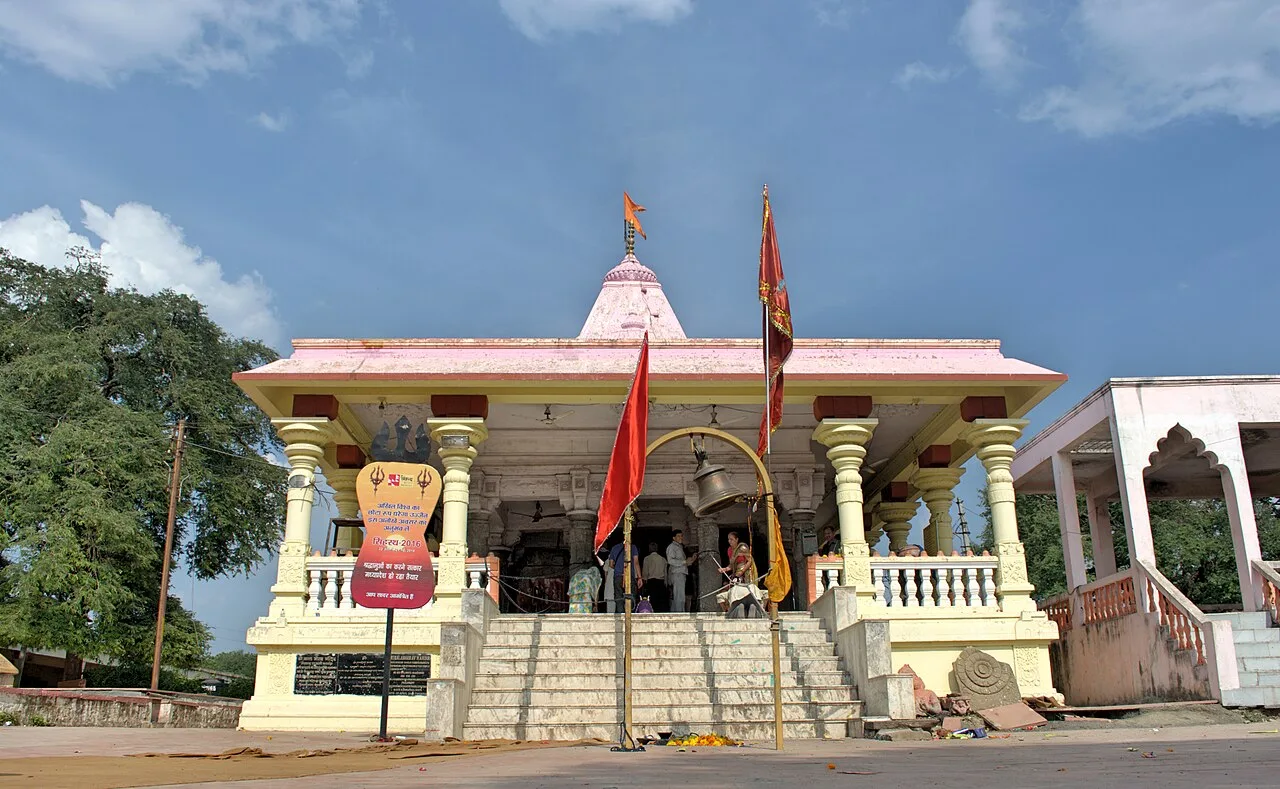
A Hindu shrine in Ujjain, Madhya Pradesh, Kal Bhairav Temple honours the city’s guardian deity. Worshippers visit its setting by the Shipra River, and liquor is among the offerings made there.

Mahakaleshwar Jyotirlinga

137 km away · Ujjain district

Mahakaleshwar Jyotirlinga

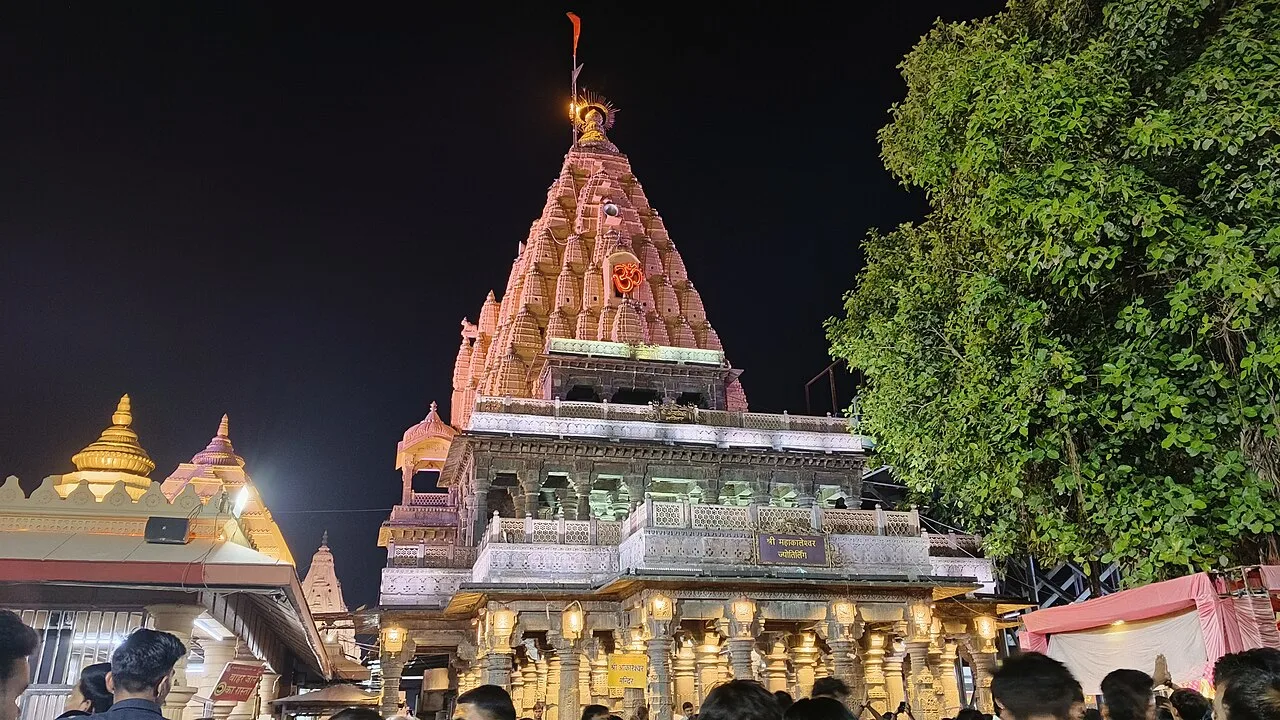
Mahakaleshwar Jyotirlinga is a Shiva temple in Ujjain, revered as one of twelve especially sacred Jyotirlinga shrines. Visitors come to worship its lingam, which is believed to be Swayambhu.

Kanch Mandir

186 km away · Indore district

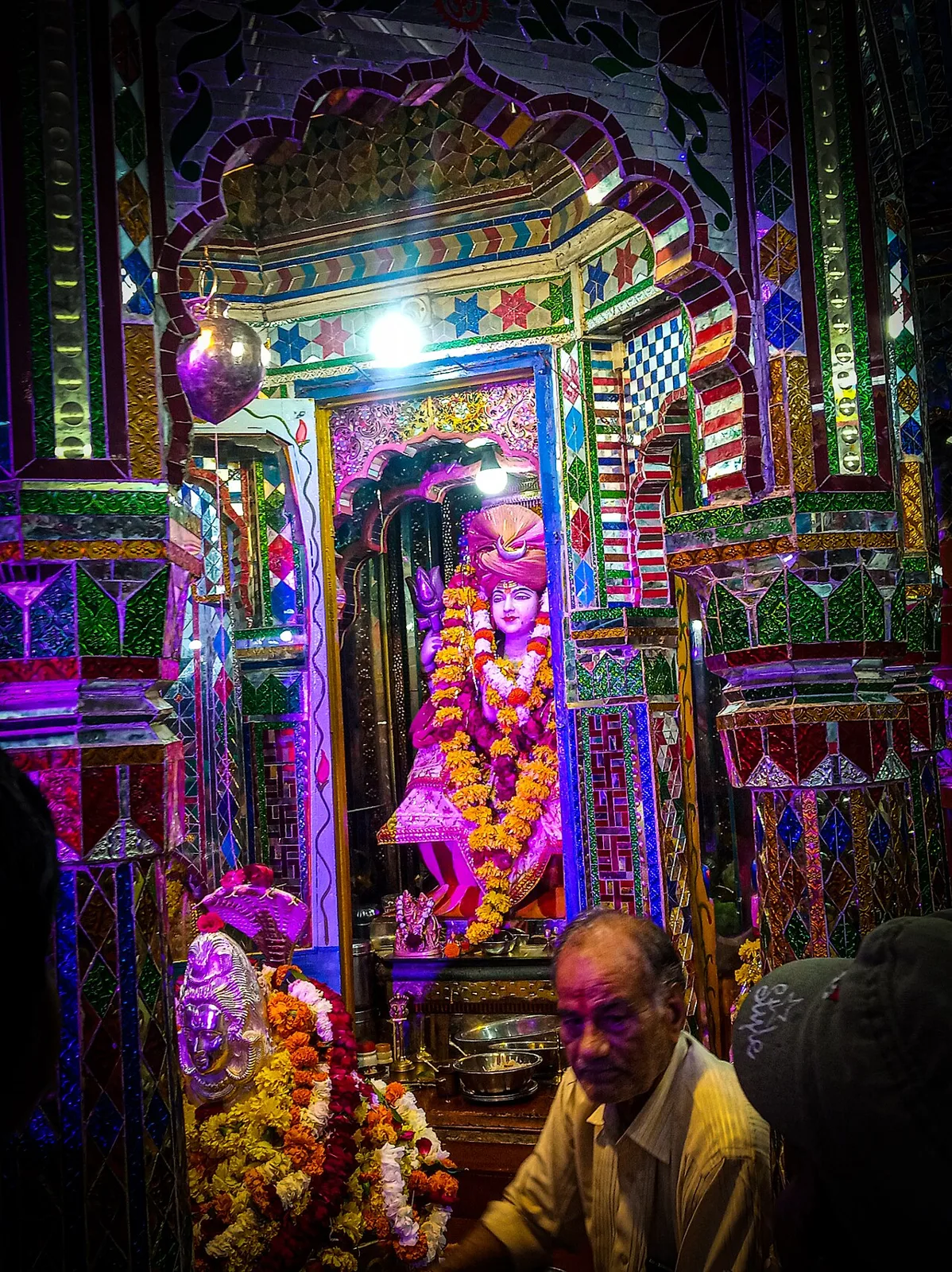
Kanch Mandir

Kanch Mandir is a well-known Jain temple in Indore, built by Sir Seth Hukumchand Jain. Visitors come to see the place of worship whose name means Temple of Glass.

Rajwada

189 km away · Indore district

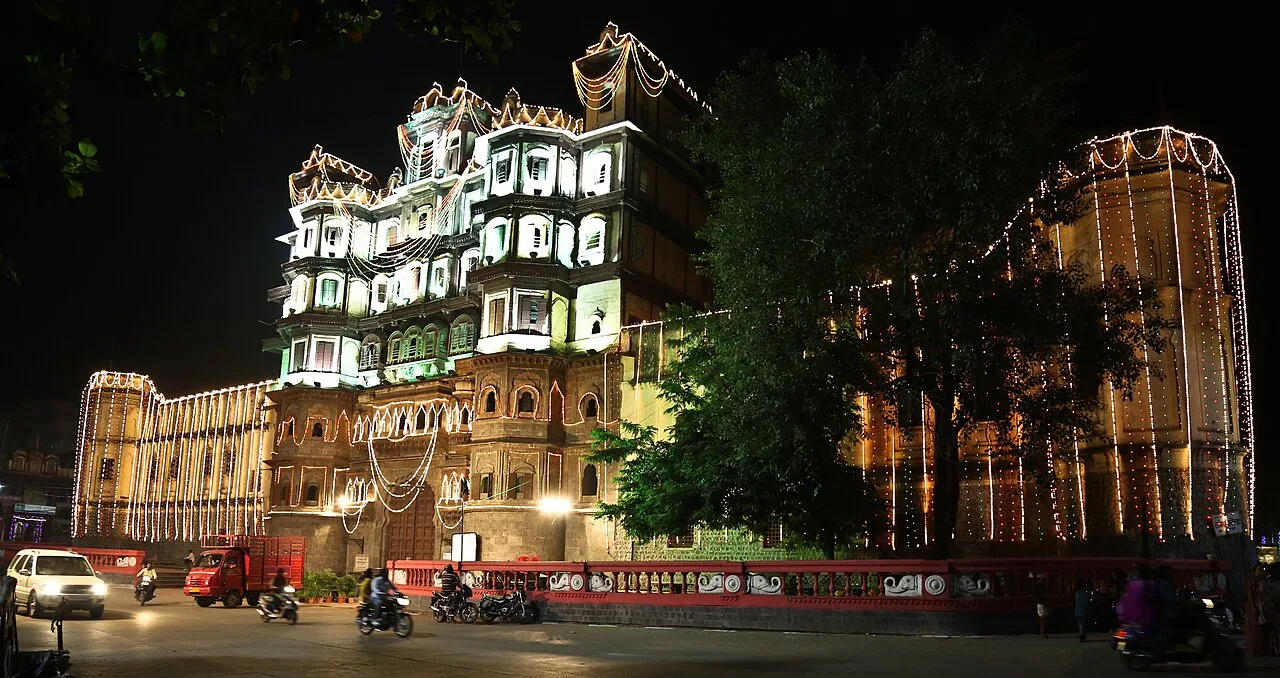
Rajwada

Rajwada is a historic, seven-storey Holkar residence in Indore. Visitors come for its period architecture, dynastic history and the garden with fountains and a waterfall.

Sarafa Bazaar

189 km away · Indore district

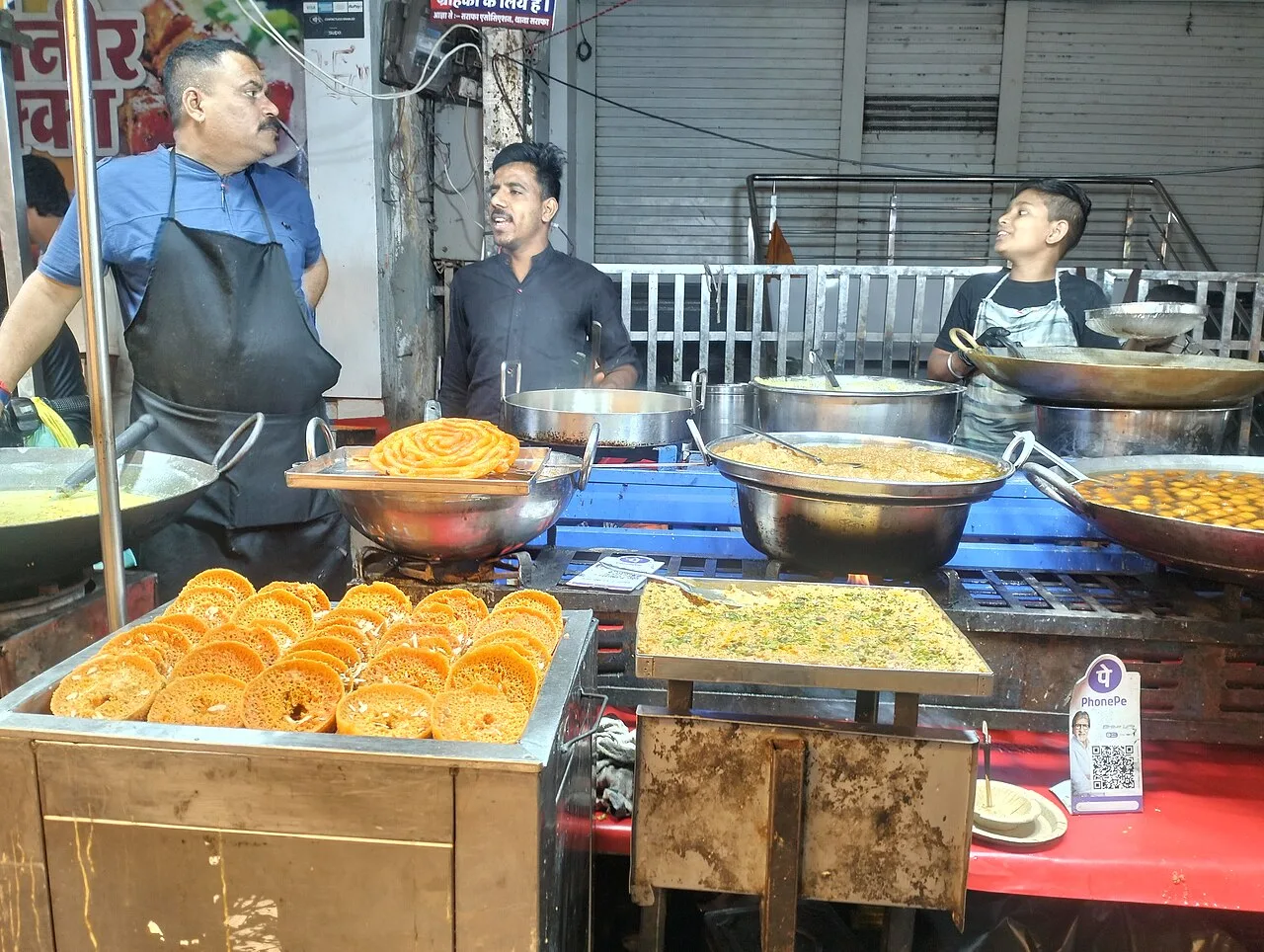
Sarafa Bazaar

In central Indore, Sarafa Bazaar is a jewellery-trading area by day that becomes a street-food destination at night, drawing visitors for its varied cuisine and evening atmosphere.

Ralamandal Wildlife Sanctuary

197 km away · Indore district

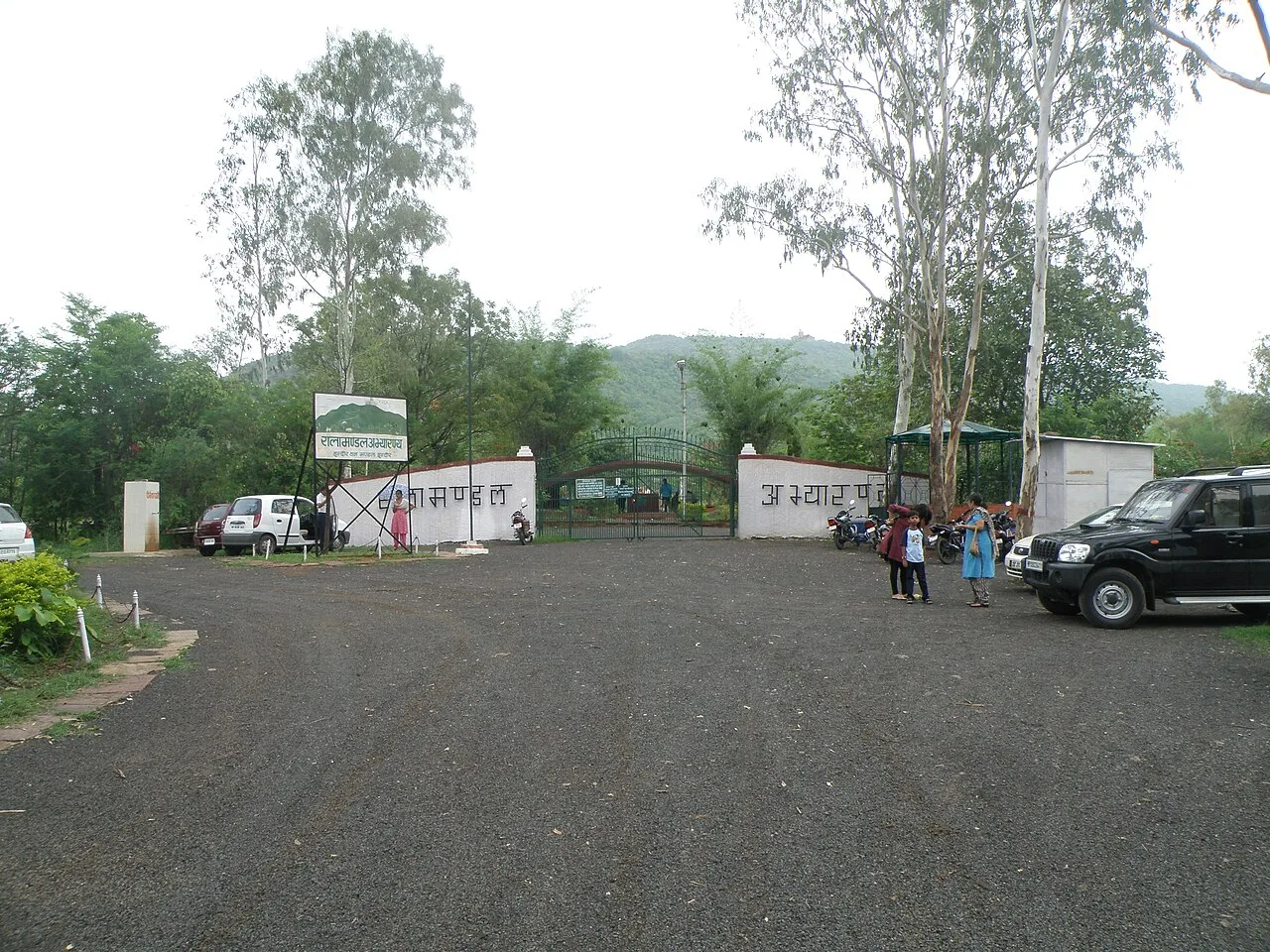
Ralamandal Wildlife Sanctuary

Established in 1989, Ralamandal Wildlife Sanctuary is a five-square-kilometre protected area in Indore district, Madhya Pradesh. Visitors come to see its birds, other wildlife and old hunting lodge.

Islamnagar

199 km away · Bhopal district

Islamnagar

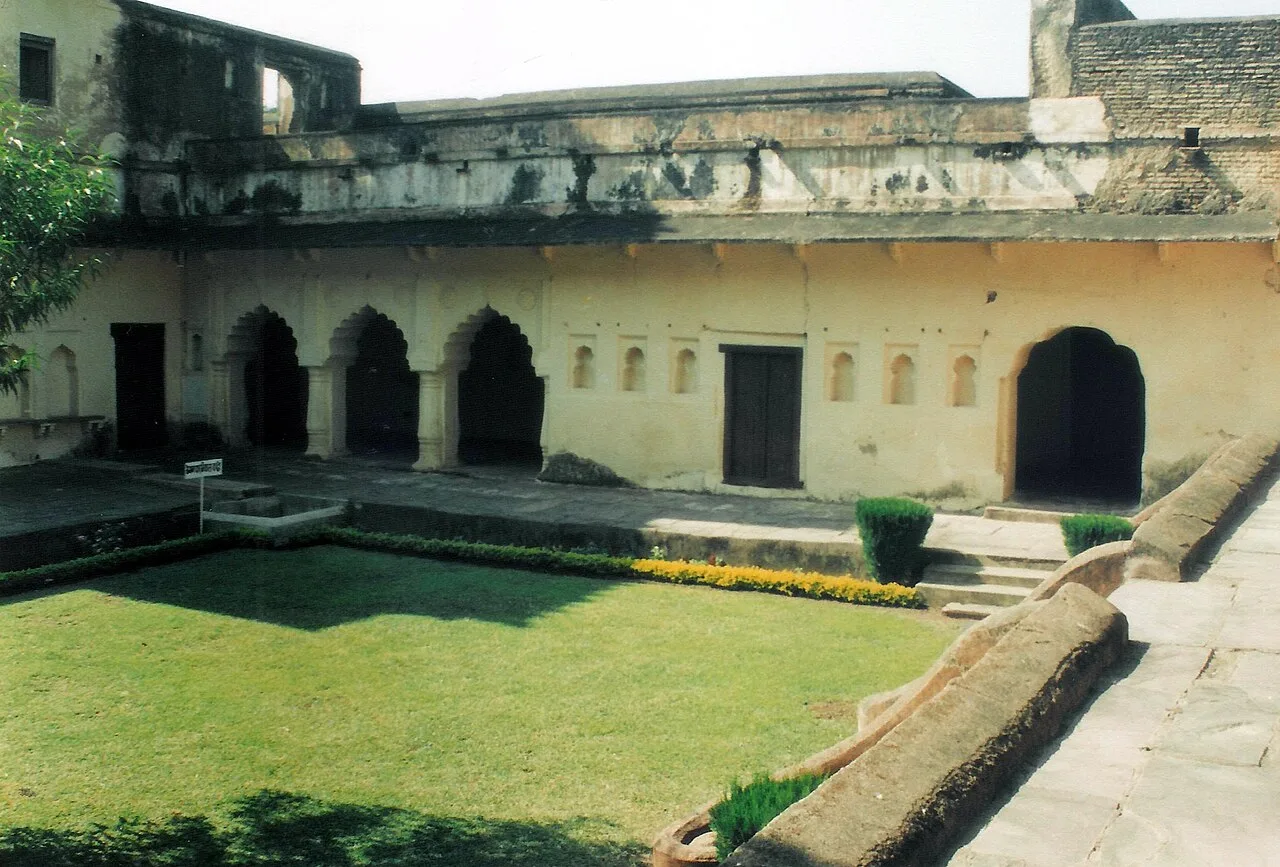
Islamnagar, officially Jagdishpur since February 2023, is a panchayat village in Bhopal district, Madhya Pradesh, visited for the ruined palaces built by Bhopal’s founder.

Bhoj Wetland, Bhopal

201 km away · Sehore district

Bhoj Wetland, Bhopal

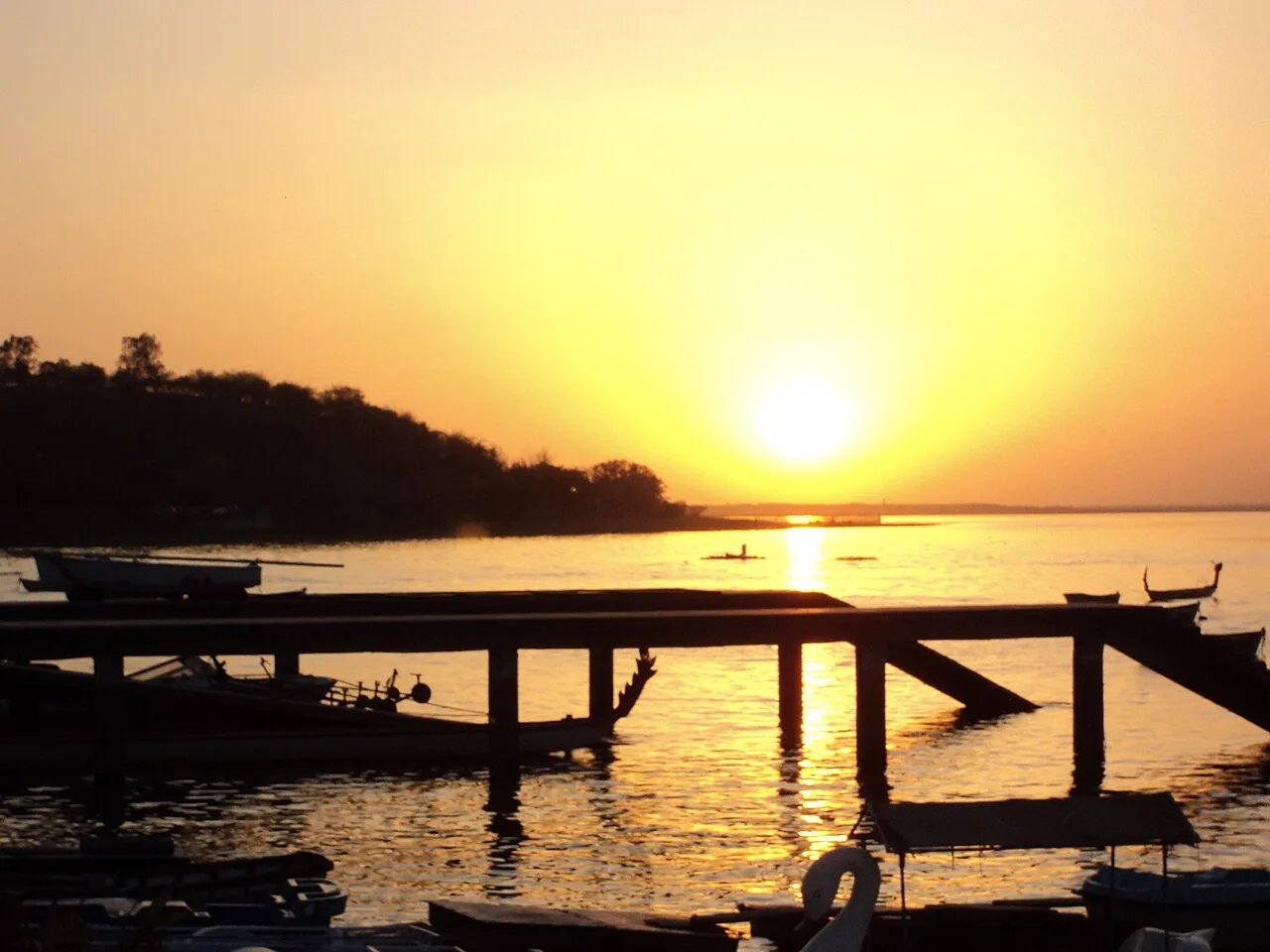
Bhoj Wetland is a two-lake complex in Bhopal, Madhya Pradesh. Visitors are drawn to its wetland habitats, varied wildlife and waterbirds.

Map

Bhawani Mandi on the map

  1. 1Kal Bhairav Temple
  2. 2Mahakaleshwar Jyotirlinga
  3. 3Kanch Mandir
  4. 4Rajwada
  5. 5Sarafa Bazaar
  6. 6Ralamandal Wildlife Sanctuary
  7. 7Islamnagar
  8. 8Bhoj Wetland, Bhopal

Madhya Pradesh

Other cities to explore