Ghumoopedia — Explore, Discover, Experience
Sign in
Chitradurga Fort, near Challakere

City guide · Karnataka

Challakere

Challakere is a municipality and taluk headquarters in Chitradurga district, in Karnataka’s dry central plateau. Its importance is practical and regional: it serves nearby villages with markets, transport links and everyday services, while agriculture and food processing contribute to the local economy.

Famous for

  • Challakere khova
  • Edible-oil mills
  • Dryland agriculture
  • Regional market town
  • Nearby research campuses

Why Challakere matters

Challakere is a municipality and taluk headquarters in Chitradurga district, in Karnataka’s dry central plateau. Its importance is practical and regional: it serves nearby villages with markets, transport links and everyday services, while agriculture and food processing contribute to the local economy. The town is also associated with khova, a thickened-milk sweet sold by local dairy and sweet shops, and with edible-oil processing.

The wider Challakere area has attracted attention for a cluster of major research and science facilities associated with institutions including DRDO, ISRO, BARC and IISc. These campuses are not ordinary tourist attractions, and access may be restricted, but their presence has given the region a profile beyond its role as an agricultural service centre. Visitors are more likely to come for local food, a look at life in a smaller Karnataka town, or as part of a journey through Chitradurga district. Challakere is best approached as a working regional town rather than a destination built around a single monument or established sightseeing circuit.
Famous for: crafts, trade & products

Challakere is especially associated with khova, also called khoa or mawa: milk slowly reduced to a dense, rich solid and used in sweets. Local sweet shops and dairy outlets in the town centre and market area are the most practical places to look for it. Recipes and availability can vary, so ask locally for freshly prepared khova or sweets made with it. The surrounding countryside supports dryland farming, and the town’s markets serve agricultural communities. Edible-oil processing is another part of the local economy, though mills are workplaces rather than assured visitor attractions.

Challakere is not widely established as a major handloom, handicraft or GI-tagged-product centre, so visitors should not expect a dedicated craft bazaar or a signature textile tradition. Its more distinctive contemporary association is with research infrastructure in the wider area, linked to institutions such as DRDO, ISRO, BARC and IISc. These facilities are generally not open for casual visits; check with the relevant institution before planning a visit. For everyday local goods, food and produce, explore the town’s central market streets and shops around the main commercial areas.

History

Challakere’s growth reflects its position in the Chitradurga region, a plateau landscape shaped by farming, routes between settlements and the needs of rural administration. The town serves as a taluk centre, but a single, well-documented founding event or defining royal monument is not central to its known story. Its history is best understood alongside that of the wider district, where the Chitradurga Nayakas were influential before the area came under the Mysore kingdom in the late eighteenth century. British rule followed the defeat of Tipu Sultan’s kingdom in 1799, bringing the region into colonial-era administrative systems.

In the modern period, improved road and rail connections, growth in local commerce and food processing, and the needs of surrounding agricultural communities helped strengthen Challakere’s role as a service town. More recently, plans and facilities for national research institutions in the wider area have added a new dimension to its identity. This development has brought national attention, while the town itself continues to function primarily as a local administrative and market centre.

Food, festivals & culture

Everyday food reflects the dry interior of Karnataka: ragi mudde with saaru, rice dishes, idli and dosa, and, in some homes and eateries, jolada rotti. Khova and sweets made with it are a local speciality to ask about at sweet shops. Menus vary from place to place, and simple meals are often the best way to sample familiar regional cooking. Kannada is the principal language; Telugu is also heard in parts of the wider region, alongside other languages used by residents and visitors.

Ugadi, usually in March or April, marks the Kannada New Year, while Dasara and Deepavali are observed in autumn and Sankranti in January. Ganesh Chaturthi is also celebrated, with dates shifting according to the lunar calendar. Local observances are centred on homes and places of worship rather than a large visitor-focused festival circuit. Hindu temples and Muslim places of worship serve the town’s communities; visitors should dress respectfully and follow local customs. Folk performance and devotional music belong to the broader cultural life of the region, though scheduled performances are not guaranteed for visitors.

Visiting the city

The cooler, drier months from about November to February are generally the most comfortable for a visit. Summers can be hot, while monsoon showers are most likely from roughly June to September. The nearest airport with commercial services may depend on current flight availability; Jindal Vijaynagar Airport near Toranagallu is a regional option, while Kempegowda International Airport in Bengaluru offers a broader range of connections and requires a longer onward journey. Check current routes before setting out. Challakere Railway Station serves the town, and buses connect it with nearby centres.

Within town, auto-rickshaws and local taxis are useful for short trips; buses and hired vehicles can help with journeys to surrounding settlements. Explore the central market streets for shops and food, and ask locally about nearby temples or other places of interest. The research campuses in the wider area are not general tourist sites, so confirm access in advance. Challakere also works well as a stop on a wider trip through Chitradurga district.

Trips from the city

Nearest places to visit from Challakere

Our closest destination guides, by straight-line distance.

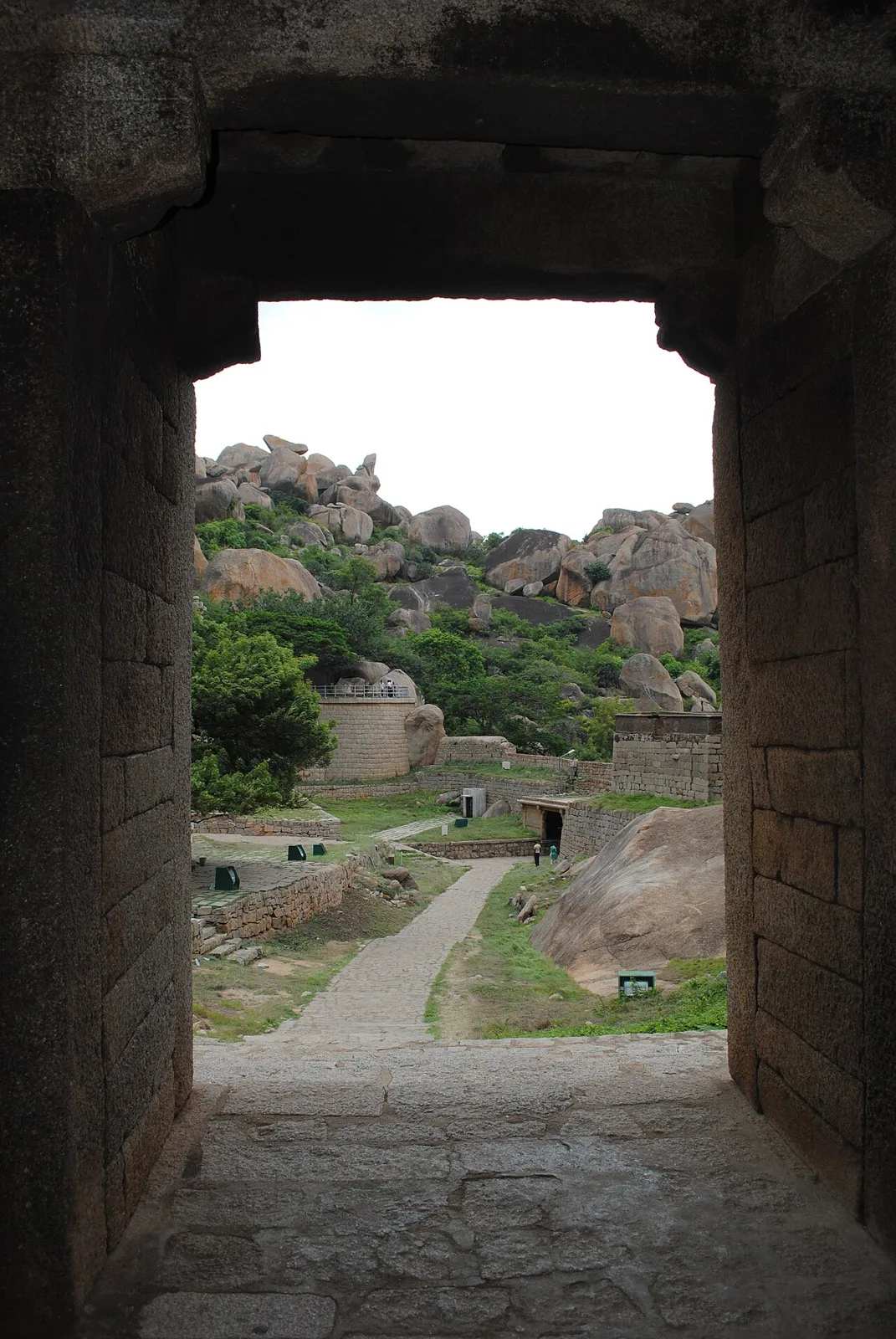
Chitradurga Fort

30 km away · Chitradurga district

Chitradurga Fort

Chitradurga Fort is a historic hilltop stronghold in Karnataka, known for its layered defences, temples and long history of regional rule. Visitors come to explore its fortifications and historic buildings.

Chandravalli Caves

31 km away · Chitradurga district

Chandravalli Caves

Chandravalli is an archaeological site in Karnataka’s Chitradurga district. Visitors are drawn by discoveries there, including pottery and coins linked to Indian, Roman and Chinese history.

47 km away · Chitradurga district

Molakalmuru

Molakalmuru is a taluk in Karnataka’s Chitradurga district, near Andhra Pradesh. People visit the town for its locally produced Molakalmuru sarees and its traditional story explaining the place-name.

Madhugiri Fort

95 km away · Tumakuru district

Madhugiri Fort

Madhugiri Fort lies in Tumakuru district, Karnataka. Visitors come to see the fort, while Madhugiri’s name reflects Madhu-giri, a hillock to the south.

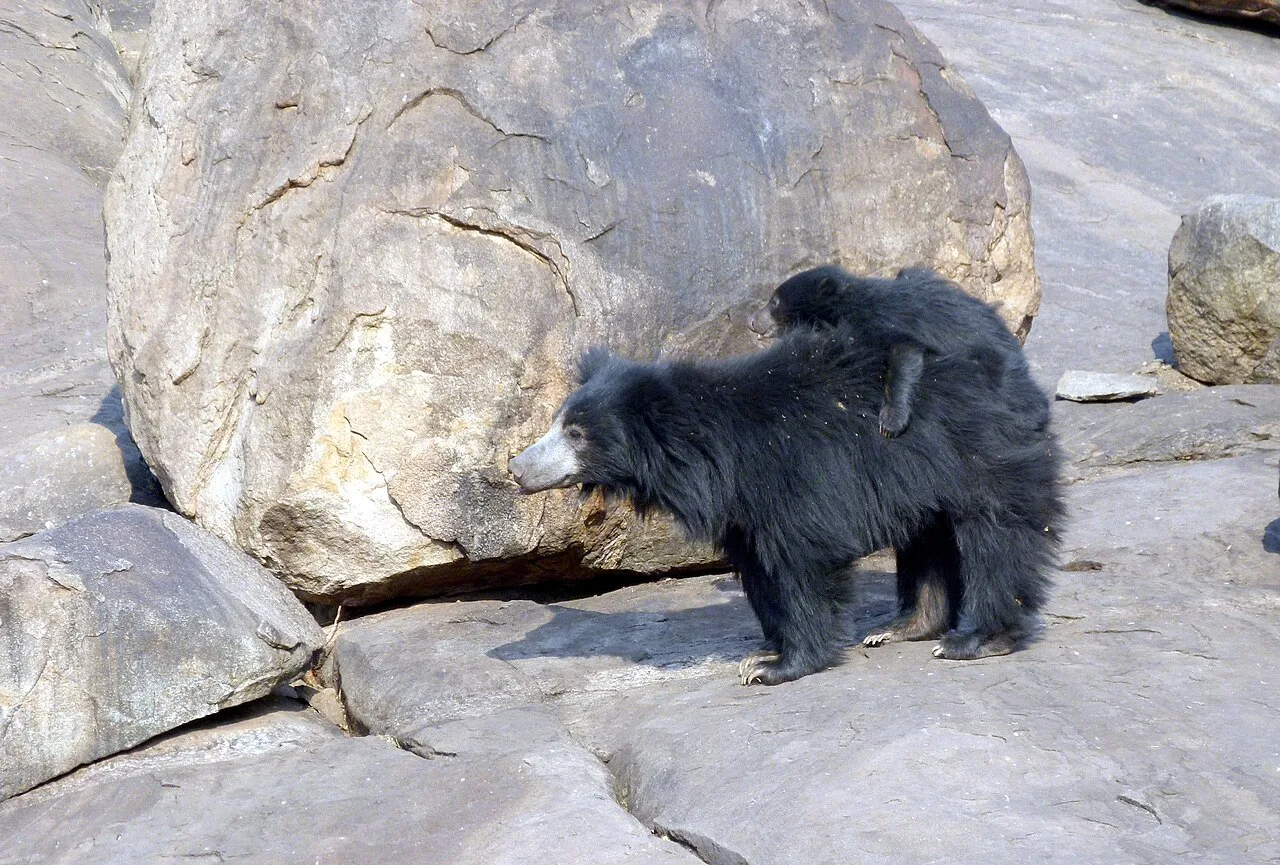
Daroji Sloth Bear Sanctuary

103 km away · Vijayanagara district

Daroji Sloth Bear Sanctuary

Daroji Sloth Bear Sanctuary in Karnataka protects sloth bears across a landscape near Ballari and Hampi. Visitors come to see bears, particularly as they descend the hillocks in the evening.

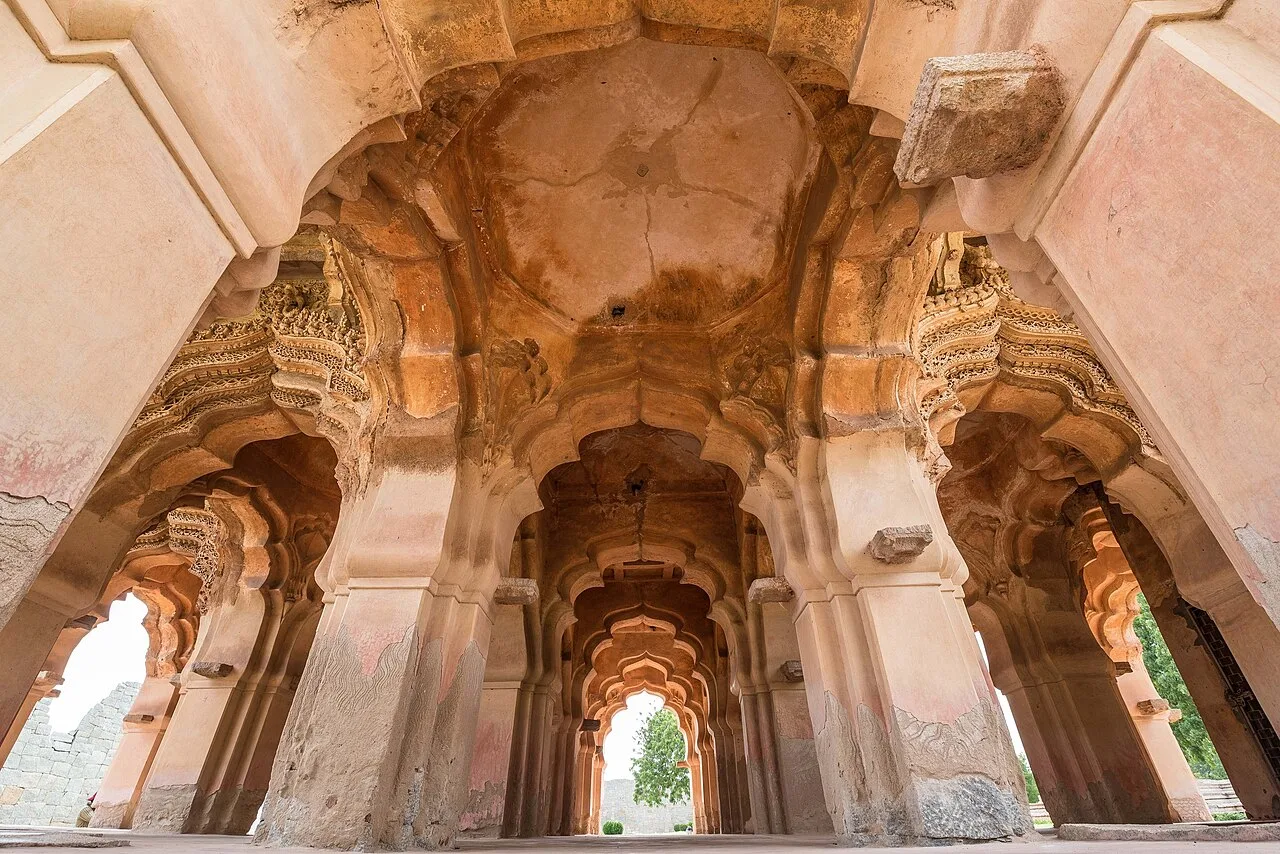
Lotus Mahal

113 km away · Vijayanagara district

Lotus Mahal

Lotus Mahal, also known as Chitrangini Mahal, is a secular building in Hampi, Karnataka. Visitors come to see its two-storey design, which reflects the architectural tradition of the Vijayanagara Empire.

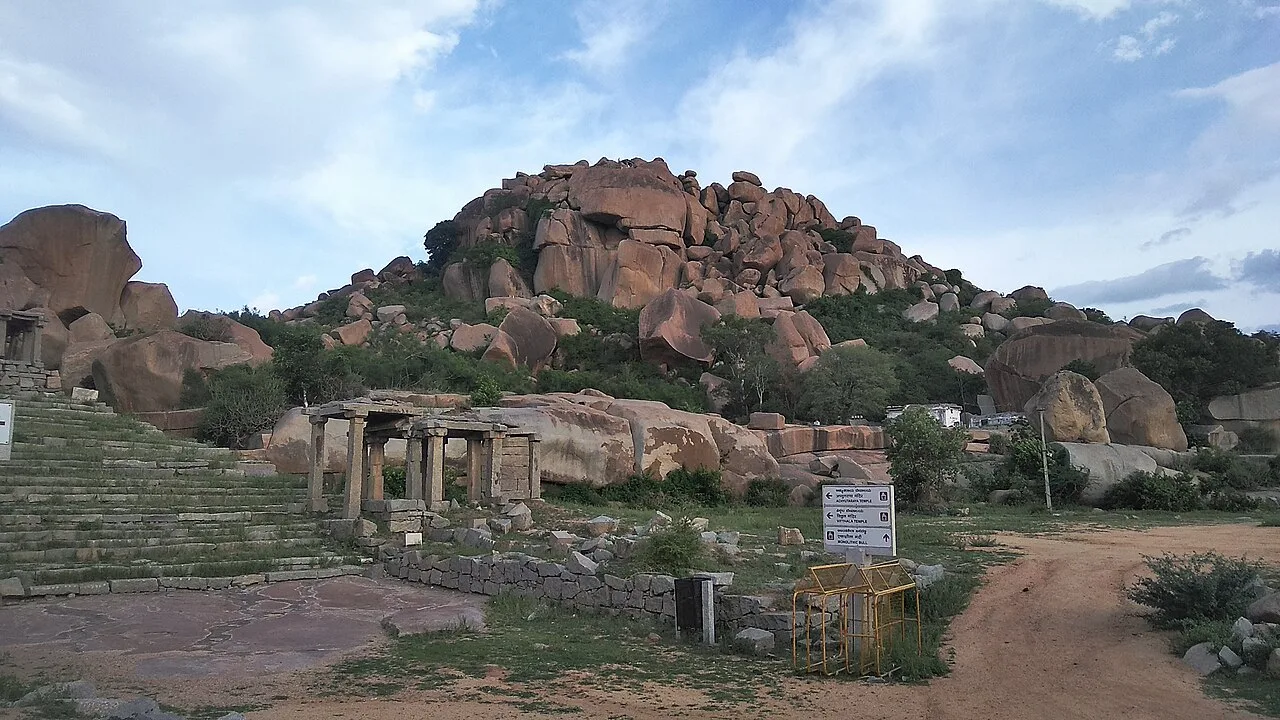
Matanga Hill

113 km away · Vijayanagara district

Matanga Hill

In Hampi, Karnataka’s Vijayanagara district, Matanga Hill is a rocky rise associated with the Ramayana and the former Vijayanagara capital. Visitors explore its religious associations and place in the region’s history.

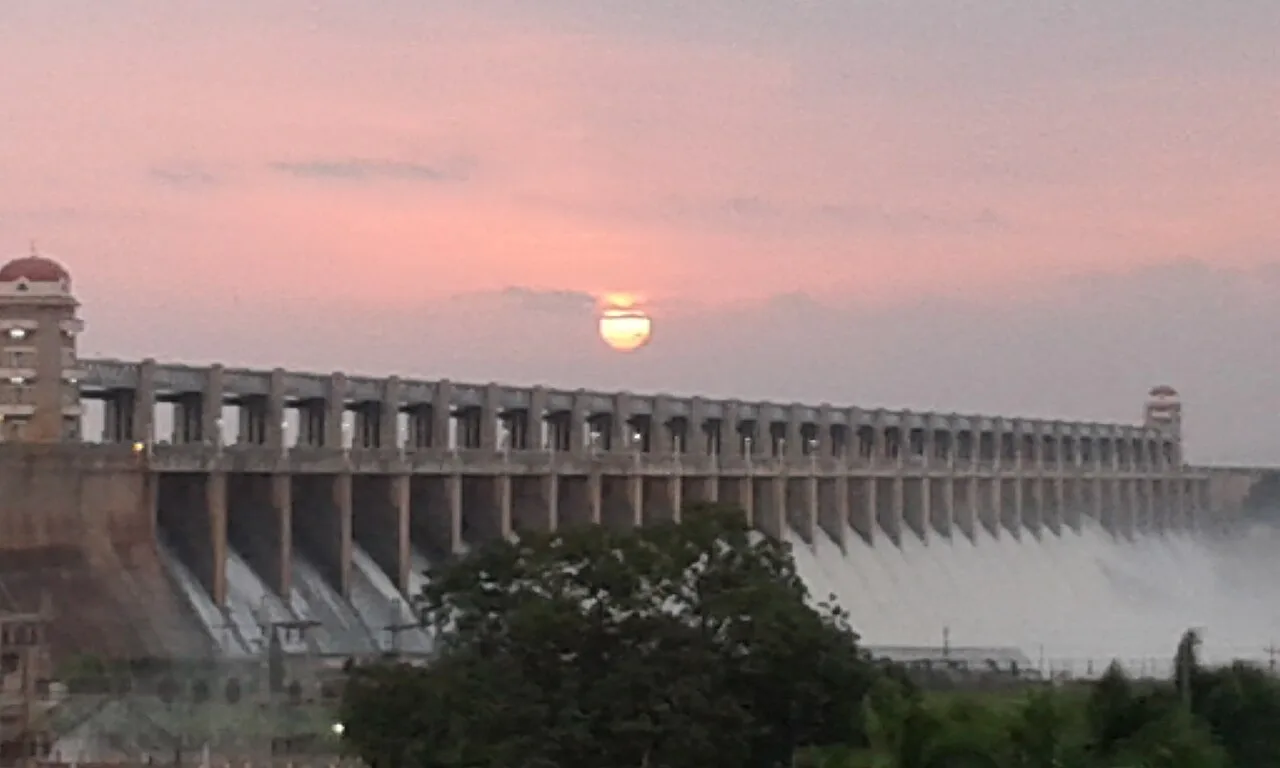
Tungabhadra Dam

114 km away · Vijayanagara district

Tungabhadra Dam

Tungabhadra Dam, also known as Pampa Sagar, is a multipurpose reservoir on Karnataka’s Tungabhadra River. Visitors interested in water infrastructure come to see its stone-masonry construction and its role in irrigation, electricity generation and flood management.

Map

Challakere on the map

  1. 1Chitradurga Fort
  2. 2Chandravalli Caves
  3. 3Molakalmuru
  4. 4Madhugiri Fort
  5. 5Daroji Sloth Bear Sanctuary
  6. 6Lotus Mahal
  7. 7Matanga Hill
  8. 8Tungabhadra Dam

Karnataka

Other cities to explore