
Ghumoopedia — Explore, Discover, Experience
Sign in
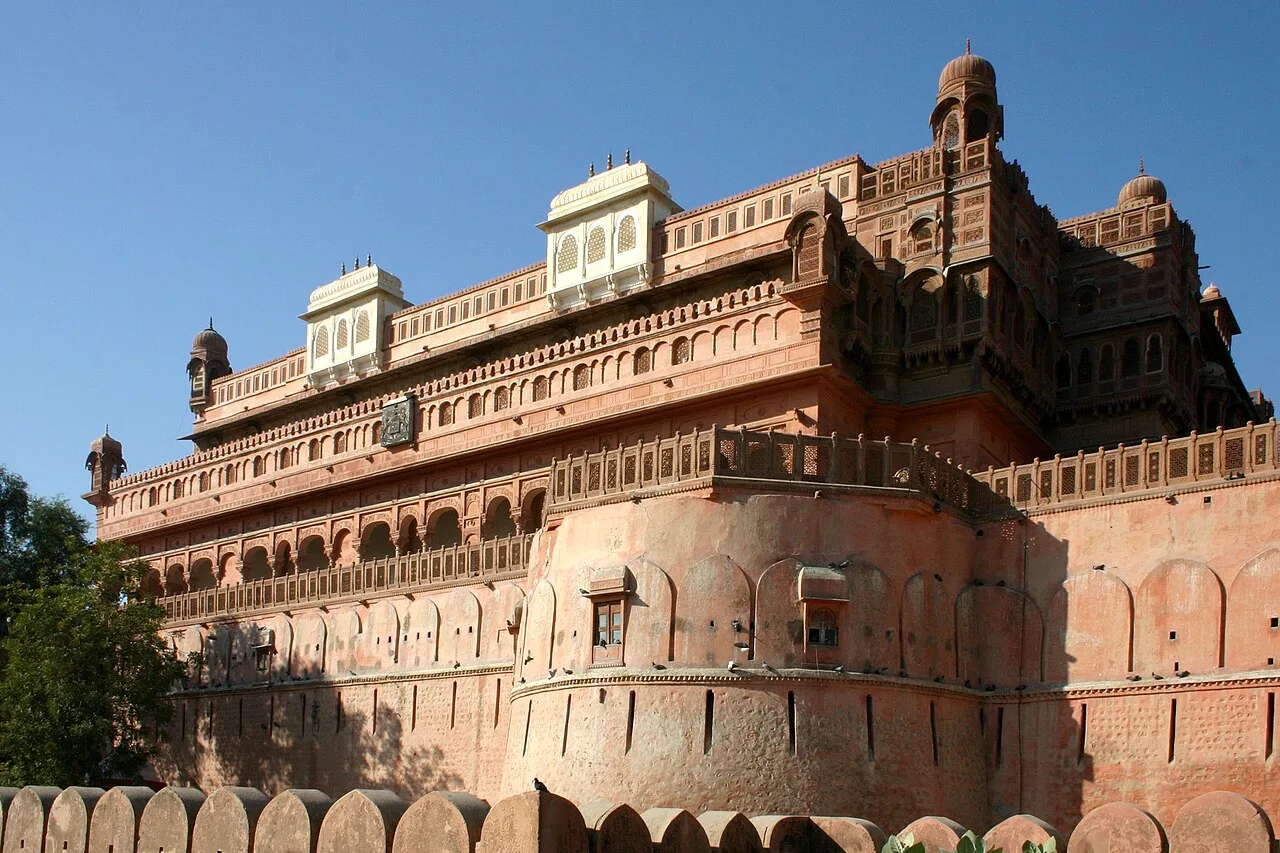
Junagarh Fort, near Bikaner

City guide · Rajasthan

Bikaner

Bikaner is a major urban and administrative centre in western Rajasthan, set amid the arid landscapes of the Thar Desert. Founded by Rao Bika in 1488, it grew from a fortified settlement into the former capital of a princely state and a centre of regional trade.

Famous for

  • Bikaneri bhujia
  • Junagarh Fort
  • Usta gold artwork
  • Bikaneri rasgulla
  • Camel Festival
  • Deshnok Karni Mata Temple
In the city
2
Nearby
1
District
Bikaner

Why Bikaner matters

Bikaner is a major urban and administrative centre in western Rajasthan, set amid the arid landscapes of the Thar Desert. Founded by Rao Bika in 1488, it grew from a fortified settlement into the former capital of a princely state and a centre of regional trade. Its historic core, with Junagarh Fort, ornate havelis and old-city temples, gives visitors a vivid sense of its royal and mercantile past.

Today, travellers come for the city’s architecture, distinctive desert cuisine and crafts, especially Bikaneri bhujia and Usta artwork. The National Research Centre on Camel reflects the importance of camel husbandry to the region, while Gajner Wildlife Sanctuary offers a contrast to the built-up city. Bikaner also serves as a useful base for visiting the Karni Mata Temple at Deshnok and exploring the desert towns and landscapes of northern Rajasthan. Canal development helped support the city and its surrounding region, while its food-processing, handicraft and wool-related trades continue to shape its economy.
Famous for: crafts, trade & products

Bikaner’s best-known food product is Bikaneri bhujia, a crisp gram-flour snack made by local producers and sold across the city. The product has a geographical indication (GI) tag. Bikaner is also associated with rasgulla and other sweets, papad, and savoury snacks. Shops around Kote Gate, Station Road and the old city are convenient places to browse packaged foods and traditional treats.

The city’s distinctive craft is Usta kala: intricate raised gold work and painted decoration on surfaces such as wood, camel hide and other materials. Look for decorated boxes, panels and souvenirs in the old city and craft shops; Bikaner Usta Kala Craft has GI recognition. Local artisans also make leather goods, footwear and camel-wool products. Bikaner is not chiefly a saree-weaving centre, but markets carry Rajasthani printed and tie-dyed fabrics, including bandhani and leheriya styles. Kote Gate and nearby bazaars are lively shopping areas for textiles, jewellery, handicrafts and everyday goods. Food processing, wool and animal-related industries are also part of the local economy, supported by institutions such as the National Research Centre on Camel.

History

Before the mid-15th century, the region was known as Jangladesh, a sparsely settled, arid tract. Rao Bika, son of Jodhpur’s founder Rao Jodha, established Bikaner in 1488 and built a fortified settlement that became the centre of his kingdom. Its position on desert trade routes and access to spring water helped it develop as a regional oasis and trading town.

Under Raja Rai Singh, who ruled from 1571 to 1611, Bikaner prospered through service to the Mughal emperors. He built Junagarh Fort, later expanded with palaces and audience halls by successive rulers. In 1818, the state came under British paramountcy. Maharaja Ganga Singh, who ruled from 1887 to 1943, oversaw further public works and palace development, including Lalgarh Palace. The Ganga Canal, completed in 1928, and the Indira Gandhi Canal, completed in 1987, supported development in this dry region. Bikaner joined the Union of India in 1949 and is now the headquarters of Bikaner district and division.

Food, festivals & culture

Bikaner’s food is a highlight: try its crisp bhujia, savoury kachoris, papad and local sweets, especially rasgulla and ghevar. Many shops sell snacks to eat on the spot or take home. The city’s desert-region cooking also features pulses, gram flour and preserved ingredients suited to a dry climate.

The Bikaner Camel Festival, usually held in January, celebrates the camel through decorated-animal displays, performances and competitions. Gangaur is observed in spring, while Teej comes during the monsoon season; Diwali and Holi are widely celebrated too. Hindi and Rajasthani, particularly Marwari, are commonly heard. Regional folk music and dance, including Ghoomar, form part of celebrations and cultural events.

Places of worship include the Jain temples and Lakshminath Temple in the city, as well as the revered Karni Mata Temple at Deshnok, south of Bikaner. Junagarh Fort and the old city’s havelis also offer a window onto the courtly and merchant traditions that shaped local life.

Visiting the city

October to March is generally the most comfortable season to visit, with cooler days than the very hot summer months. Bikaner Airport, also known as Nal Airport, is the nearest airport; services can be limited, so some visitors consider Jodhpur Airport and continue by road or rail. Bikaner Junction is the city’s main railway station.

Auto-rickshaws, taxis and app-based cabs, where available, are useful for getting around; arrange a vehicle for sites farther from the centre. Explore Junagarh Fort, the old city’s havelis and temples, and the busy bazaars around Kote Gate and Station Road. Lalgarh Palace and the National Research Centre on Camel are further stops. Deshnok’s Karni Mata Temple makes a popular excursion, while Gajner lies outside the city to the west.

Attractions

Places to visit in Bikaner

Sights within about 12 km of each other, even when they fall in different districts.

Short trips

Around Bikaner

Within about 40 km — easy half-day or day trips from the city.

Map

Bikaner on the map

  1. 1Junagarh Fort
  2. 2Lalgarh Palace
  3. 3Gajner Palace

Rajasthan

Other cities to explore