Ghumoopedia — Explore, Discover, Experience
Sign in
Aina Mahal, near Anjar

City guide · Gujarat

Anjar

Anjar is a historic town in Kachchh, Gujarat, with a distinctive place in the region’s story and a growing role in its economy. Its temples and shrines draw visitors interested in local religious traditions, while the Jesal-Toral memorial connects the town with a well-known Kachchhi folk tale later adapted for Gujarati cinema.

Famous for

  • Jesal-Toral shrines
  • Historic Vaishnav temples
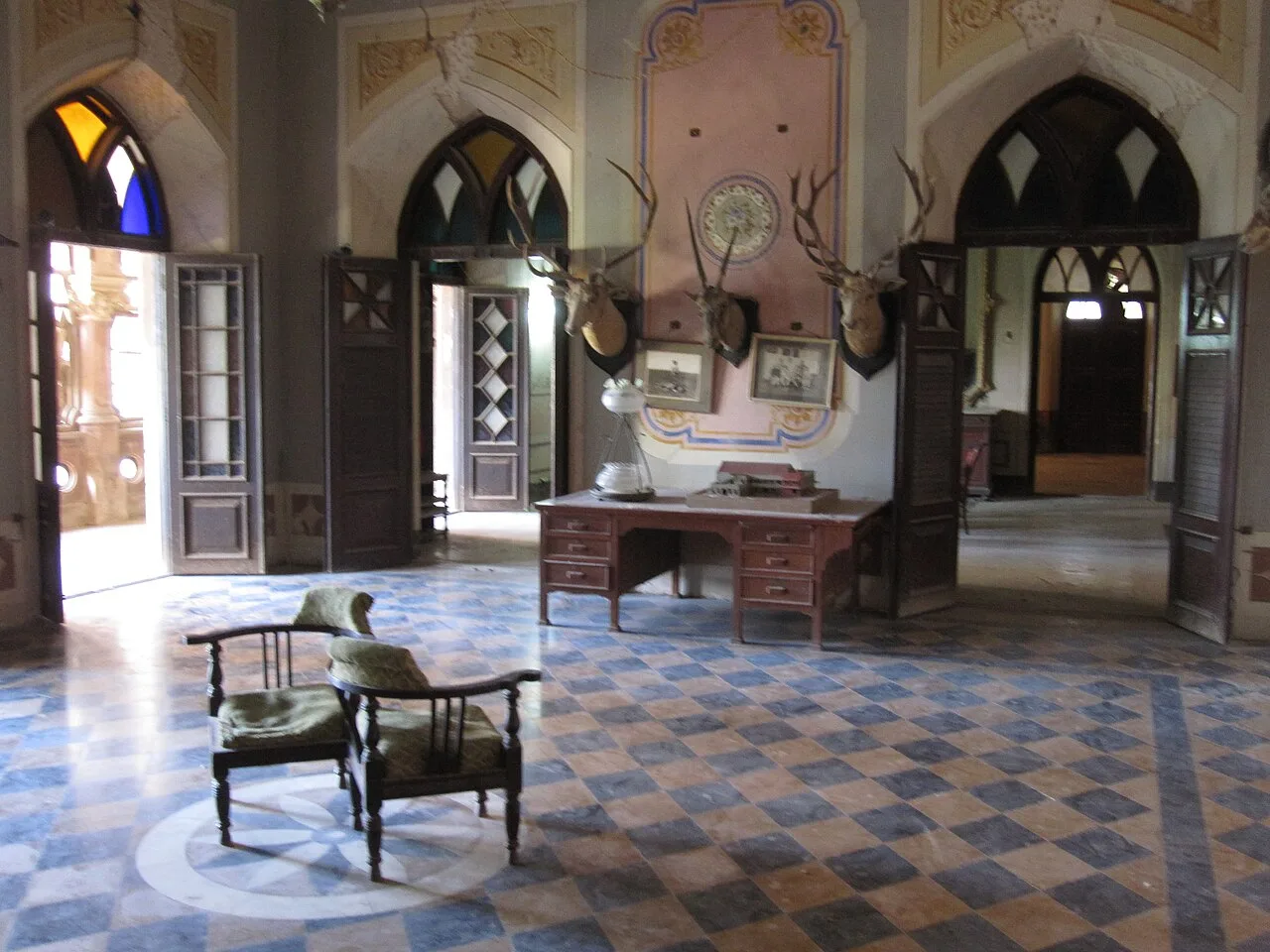
  • MacMurdo’s bungalow
  • Kachchh manufacturing hub

Why Anjar matters

Anjar is a historic town in Kachchh, Gujarat, with a distinctive place in the region’s story and a growing role in its economy. Its temples and shrines draw visitors interested in local religious traditions, while the Jesal-Toral memorial connects the town with a well-known Kachchhi folk tale later adapted for Gujarati cinema. Other places of interest include Vaishnav temples and MacMurdo’s bungalow, whose interior paintings depict scenes from the lives of Krishna and Rama.

Anjar’s identity also reflects the resilience of a town repeatedly affected by earthquakes. The 1819 and 2001 disasters transformed its built environment, and the old town was extensively redeveloped after the latter. Today, Anjar serves as a local centre for surrounding settlements and has become a hub for manufacturing. It offers a quieter complement to Kachchh’s better-known visitor destinations: a place to explore regional history, places of worship and everyday town life, rather than a resort or a single-attraction destination.
Famous for: crafts, trade & products

Anjar is known more broadly for manufacturing than for a signature textile, craft or GI-tagged product. Industrial activity forms an important part of the town’s modern economy, though the specific goods vary among businesses. Visitors looking for products can browse the town’s local markets for everyday shopping and ask locally about makers and outlets; there is no single established visitor market or named product district to rely on.

Kachchh as a whole is celebrated for crafts such as embroidery, bandhani tie-dye and Ajrakh block printing, but these traditions are associated with multiple communities and places across the district. They should not automatically be presented as products made in Anjar. Travellers hoping to buy them can seek out specialist craft shops or artisan centres elsewhere in Kachchh and check where an item was made. In Anjar, the temples, historic quarters and religious shrines are more distinctive visitor interests than a particular shopping speciality. The town’s industrial profile is best understood as part of its contemporary regional role, rather than as a craft-tourism brand.

History

Anjar’s early history is uncertain. Local tradition links its founding to Ajepal Chauhan, said to have arrived in the seventh century, while historical accounts place the fort’s establishment later. The town passed through the hands of several ruling dynasties before the Jadejas consolidated control in Kachchh. In 1545, Khengarji I made Anjar the kingdom’s capital; its fortifications were strengthened in later centuries.

In 1815, British East India Company forces occupied Anjar and nearby Tuna. The town returned to Jadeja rule in 1822, and its damaged fortifications were rebuilt soon afterwards. The 1819 earthquake caused extensive destruction. Further severe earthquakes, notably in 1956 and 2001, profoundly affected the town. The 2001 disaster destroyed much of the old-town district and led to large-scale redevelopment. Anjar has since grown as a manufacturing centre while retaining temples, shrines and other reminders of its past.

Food, festivals & culture

Gujarati and Kutchi are widely used in Anjar, with Hindi also understood by many residents. Food reflects the wider Kachchhi and Gujarati region: meals may include millet rotla, lentils, khichdi, kadhi and chutneys, while sweets and savoury snacks are common in local shops. Specific dishes and preparations vary between households, so the town is better approached through its everyday eateries and markets than through a single signature dish.

Navratri, usually in autumn, brings devotional celebrations and garba dancing; Diwali and Janmashtami are also observed. Temples are central to local religious life. Visitors can see Vaishnav shrines such as Madhavrai’s and Mohanrai’s temples, the Swaminarayan temple, and Ajepal’s shrine outside the old town walls. The Jesal-Toral memorial is especially associated with local storytelling and devotional memory. Bhajans and folk songs form part of the region’s cultural traditions, though performances and celebrations depend on the season and local calendar.

Visiting the city

The cooler months, roughly October to February, are generally the most comfortable time to visit. Summer can be intensely hot, while rainfall is concentrated in the monsoon season. Bhuj Airport is the nearest airport; Anjar has its own railway station, and Gandhidham Junction is a nearby major rail hub. Check current connections before travelling.

Auto-rickshaws and local taxis are useful for moving around town; confirm availability locally, particularly for visits beyond the centre. Explore the historic core for temples and older streets, then visit the Jesal-Toral memorial and Ajepal’s shrine on the eastern side of town. MacMurdo’s bungalow is another point of interest, but visitors should check local access arrangements. Anjar also works as a base for practical trips around Kachchh, though distances between destinations can be substantial.

Trips from the city

Nearest places to visit from Anjar

Our closest destination guides, by straight-line distance.

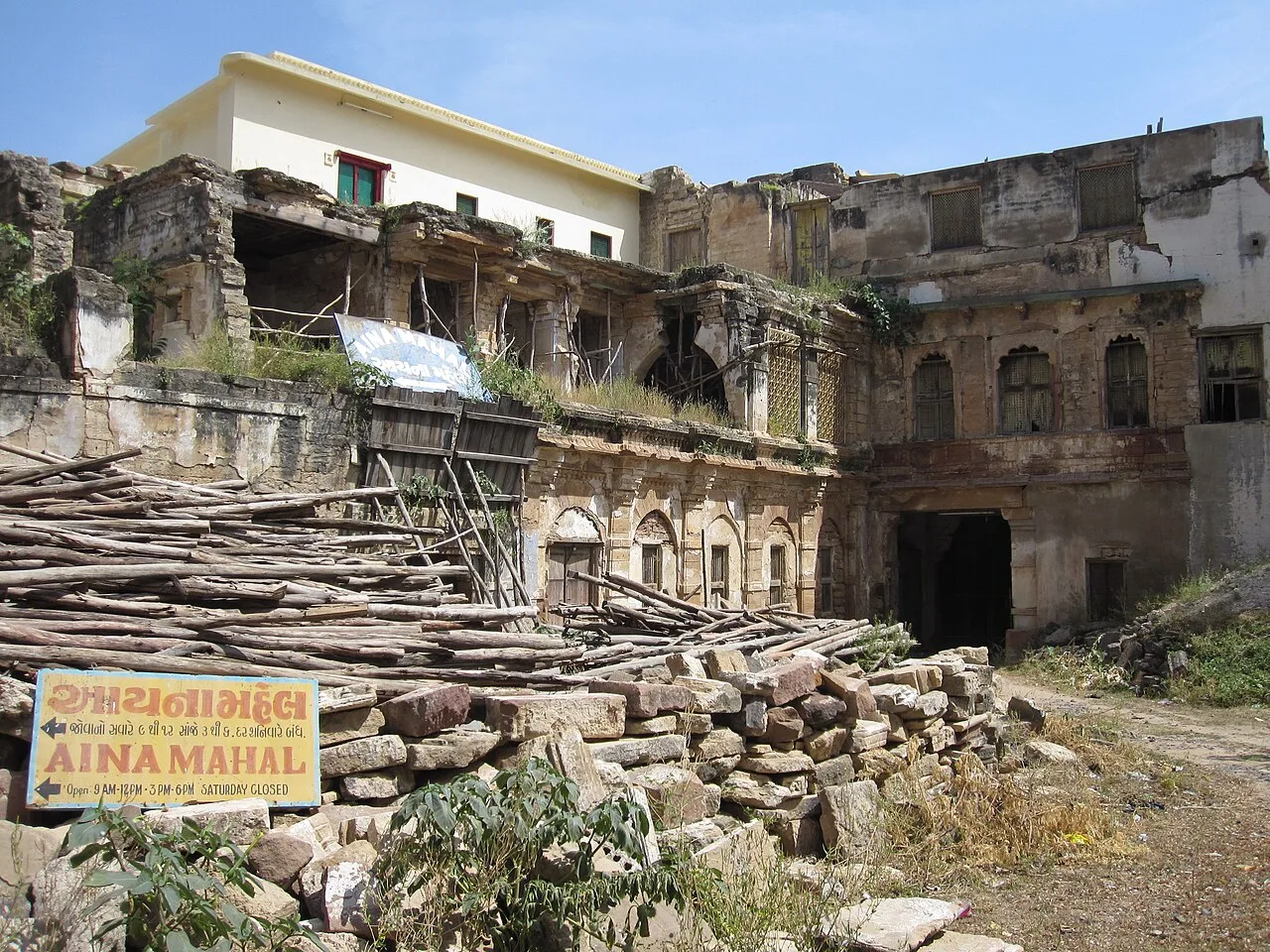
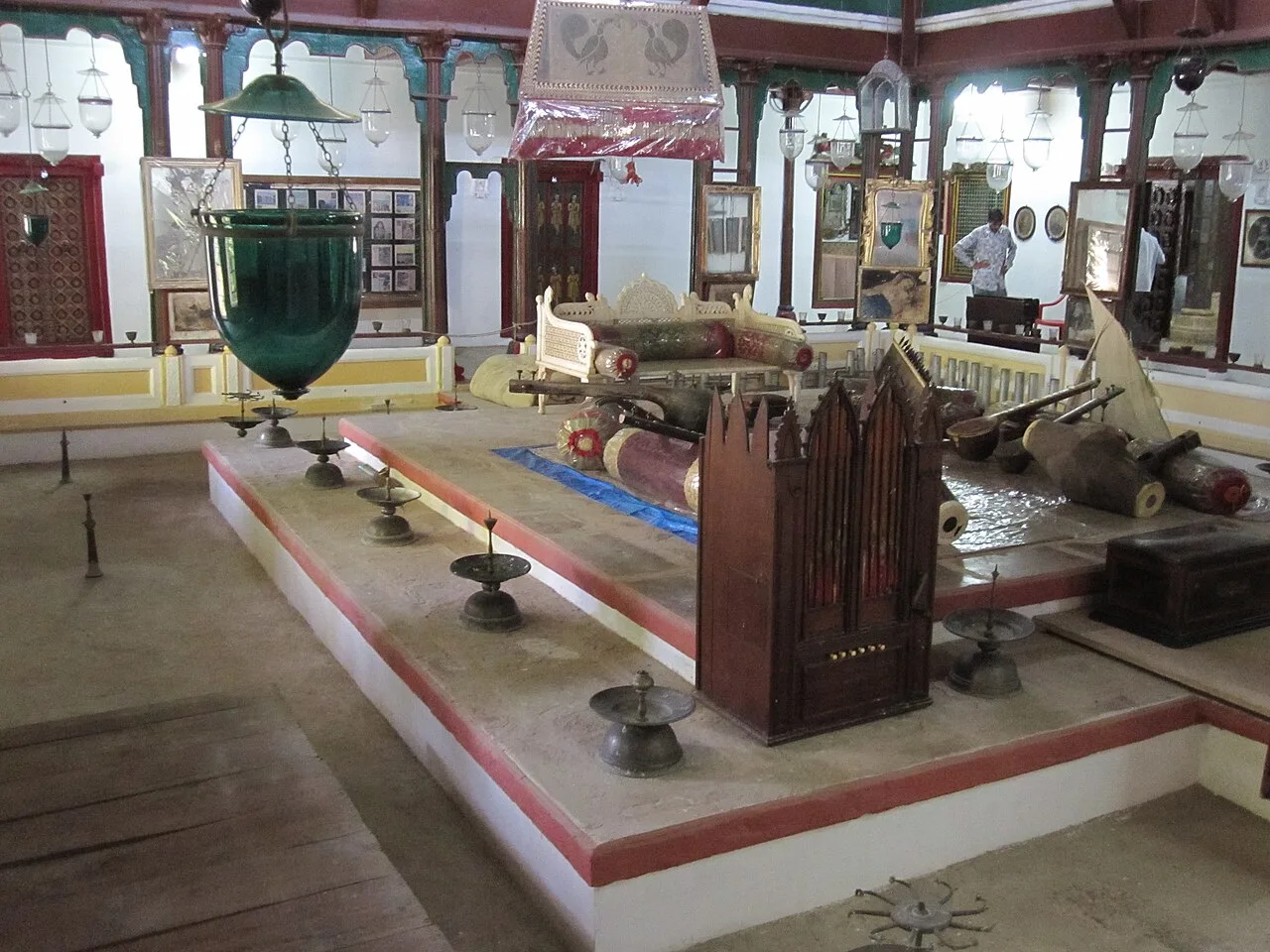
Aina Mahal

40 km away · Kutch district

Aina Mahal

Aina Mahal is an eighteenth-century palace beside Prag Mahal in Bhuj, Gujarat. Visitors explore its historic interiors and museum collection, which includes clocks, mechanical toys and paintings.

Bhuj

40 km away · Kutch district

Bhuj

Bhuj is a city and administrative centre in Gujarat’s Kutch district. Visitors interested in Kutch’s past may come to learn about its former role as the capital of Kutch State.

Prag Mahal

40 km away · Kutch district

Prag Mahal

Prag Mahal is a nineteenth-century palace in Bhuj, in Gujarat’s Kutch district, adjoining Aina Mahal. Visitors can see the palace and its position beside its neighbour.

Lakhota Lake

72 km away · Jamnagar district

Lakhota Lake

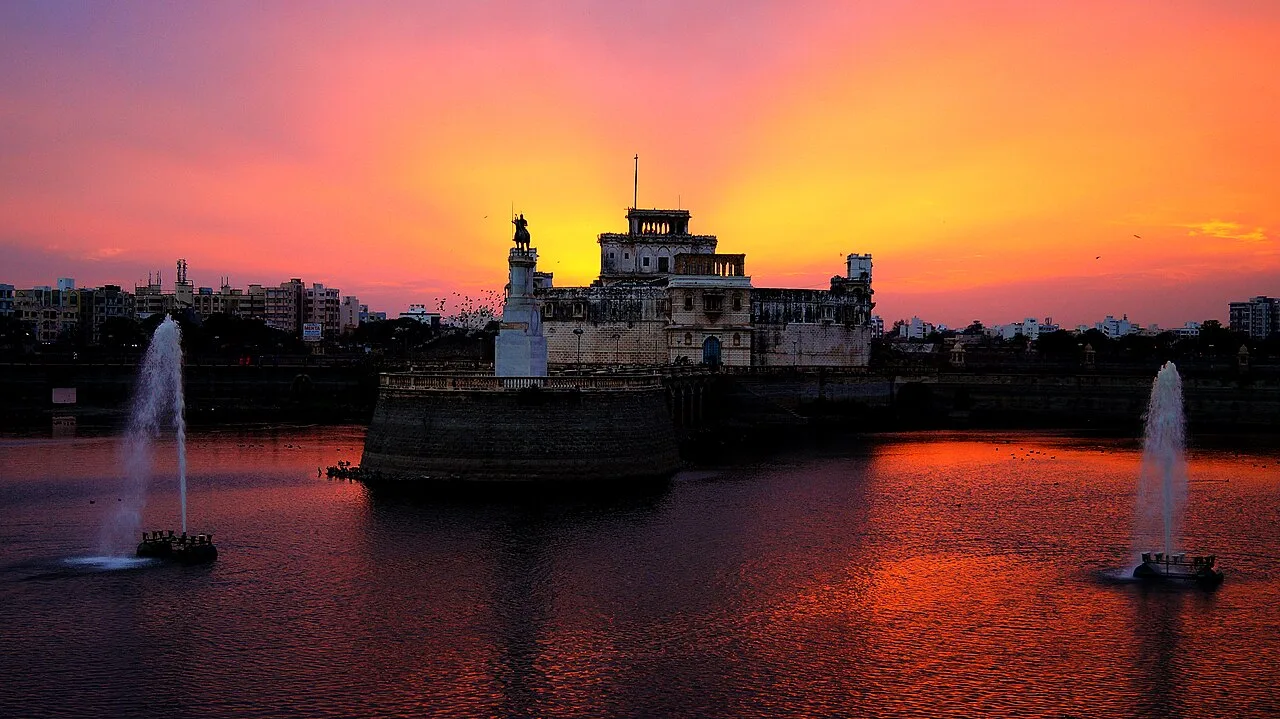
Lakhota Lake is an artificial lake in central Jamnagar, Gujarat, also known as Lakhota Talav and Ranmal Lake. Visitors come to see Lakhota Fort, which stands on an island in the water.

75 km away · Kutch district

Hodka

Hodka is a village in Gujarat’s Kutch district, about 63 kilometres from Bhuj. Visitors come to see its traditionally decorated mud homes and attend evening folk performances.

Mandvi

75 km away · Kutch district

Mandvi

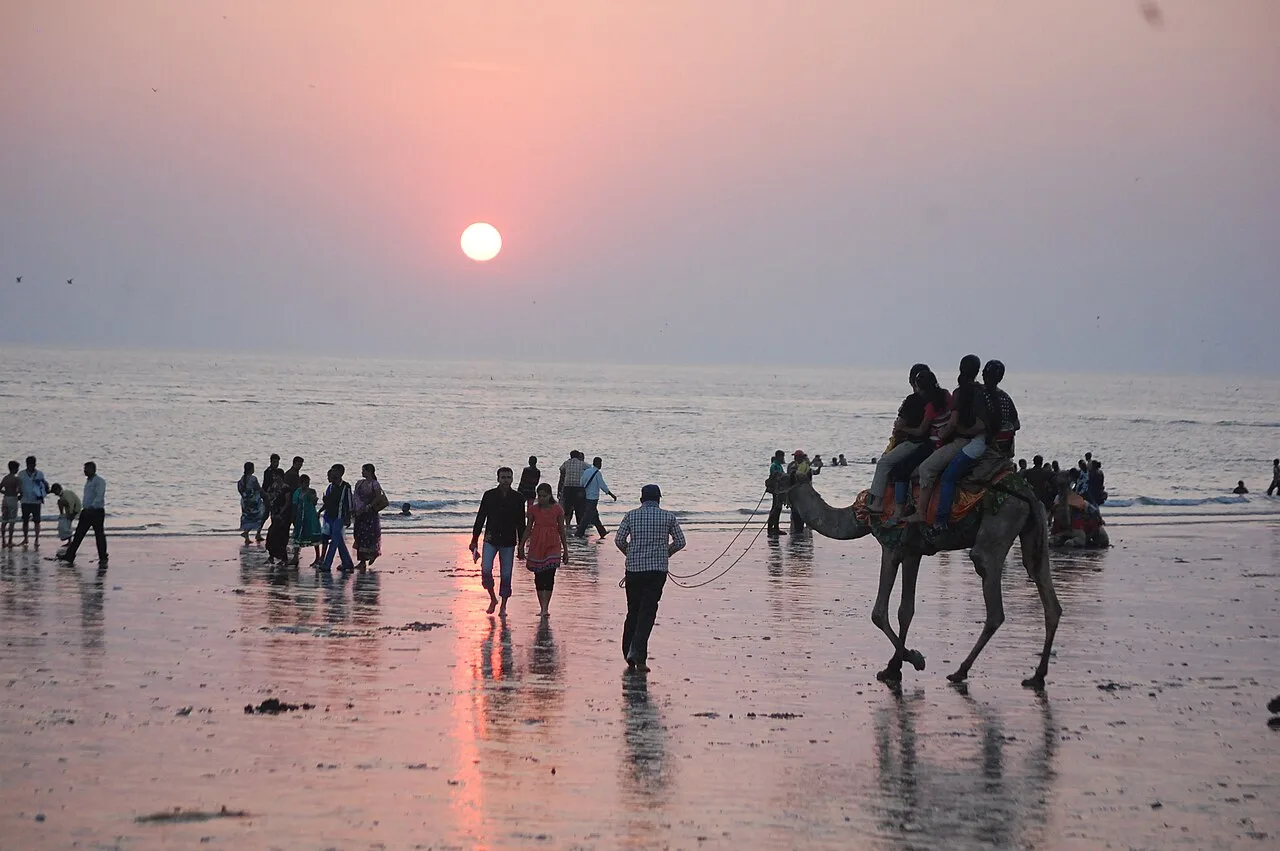
Mandvi is a coastal municipal town in Gujarat’s Kachchh district, drawing visitors for its beach, remains of old fortifications and centuries-old shipbuilding tradition.

Vijaya Vilas Palace

82 km away · Kutch district

Vijaya Vilas Palace

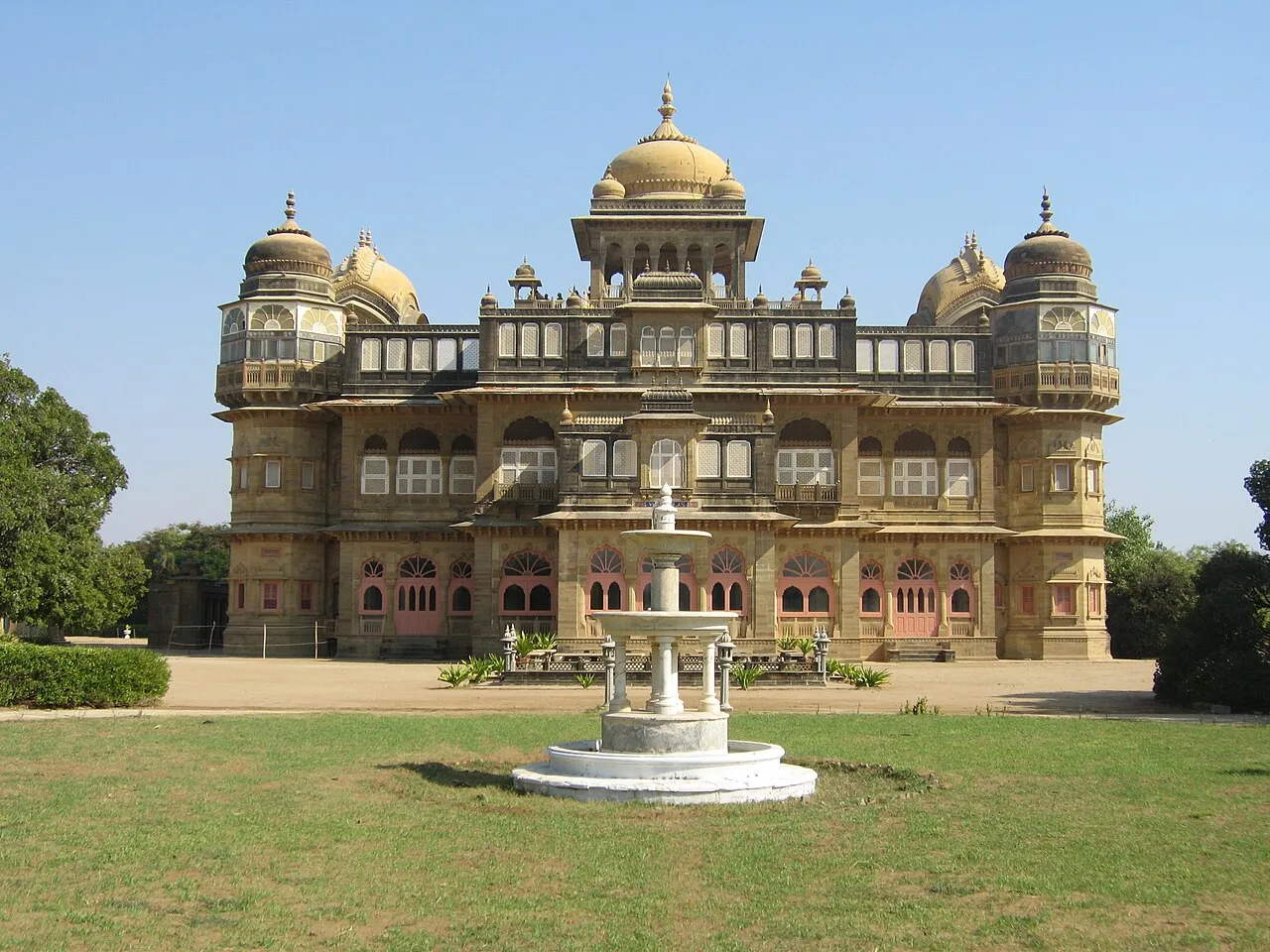
Vijaya Vilas Palace served as the Maharao of Kutch’s summer residence. Set beside the beach at Mandvi, Gujarat, it draws visitors interested in the palace and its seaside setting.

Marine National Park

83 km away · Jamnagar district

Marine National Park

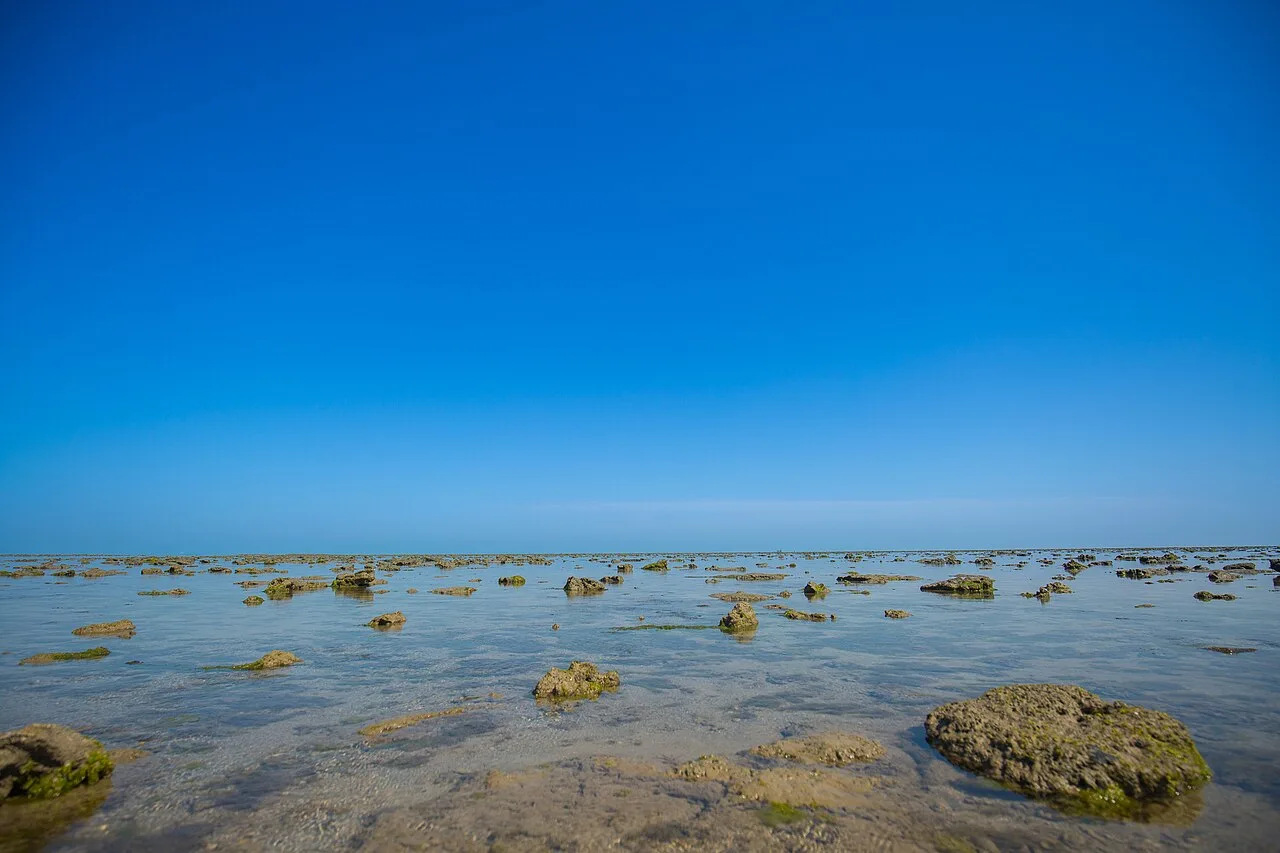
The Marine National Park is a protected marine area in Gujarat’s Gulf of Kutch. Visitors come to encounter its reef-fringed islands and the coral and mangrove environments it conserves.

Map

Anjar on the map

  1. 1Aina Mahal
  2. 2Bhuj
  3. 3Prag Mahal
  4. 4Lakhota Lake
  5. 5Hodka
  6. 6Mandvi
  7. 7Vijaya Vilas Palace
  8. 8Marine National Park

Gujarat

Other cities to explore