
Ghumoopedia — Explore, Discover, Experience
Sign in
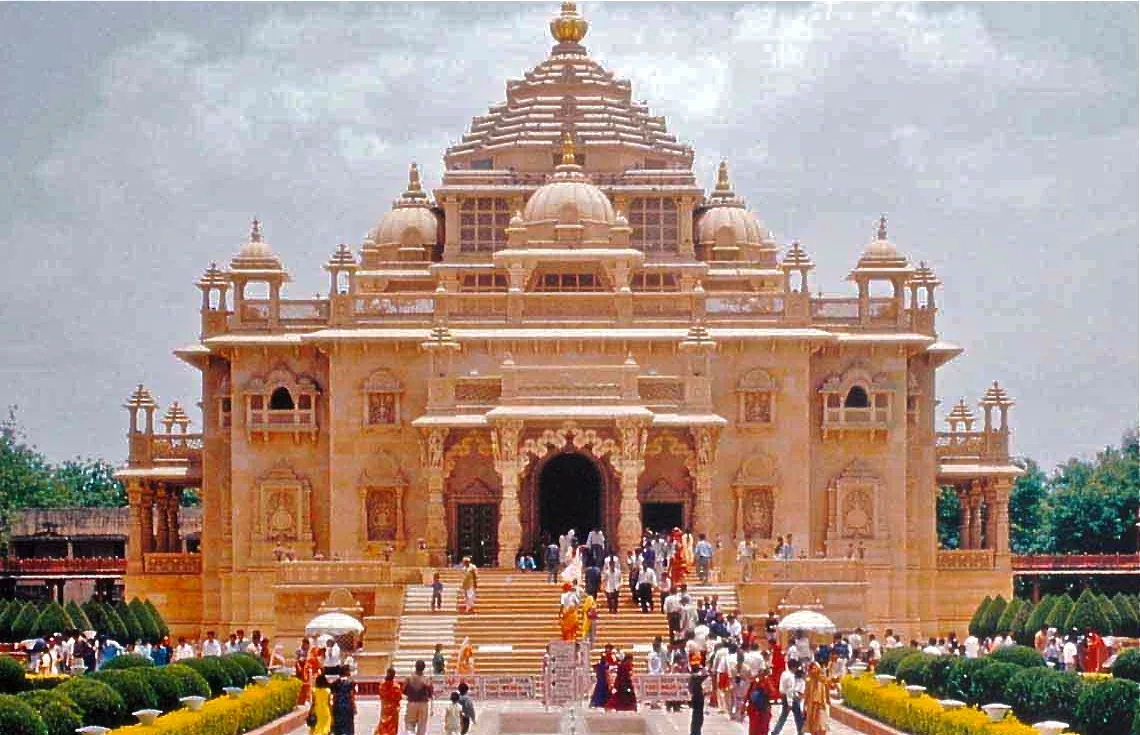
Swaminarayan Akshardham, near Gandhinagar

City guide · Gujarat

Gandhinagar

Gandhinagar is the capital of Gujarat and the administrative centre of Gandhinagar district. Set on the west bank of the Sabarmati River, about 23 kilometres north of Ahmedabad, it links the state’s government institutions with a growing economy of finance, technology and education.

Famous for

  • Akshardham temple
  • Planned state capital
  • GIFT City finance hub
  • Mahatma Mandir
  • Indroda Nature Park
In the city
1
District
Gandhinagar

Why Gandhinagar matters

Gandhinagar is the capital of Gujarat and the administrative centre of Gandhinagar district. Set on the west bank of the Sabarmati River, about 23 kilometres north of Ahmedabad, it links the state’s government institutions with a growing economy of finance, technology and education. Its broad roads, tree-lined sectors and carefully planned layout give it a different feel from the dense, older urban core of nearby Ahmedabad.

Visitors come for the Swaminarayan Akshardham temple complex, whose architecture and exhibitions make it one of the city’s best-known attractions. Mahatma Mandir, a convention and exhibition venue, reflects Gandhinagar’s role as a centre for state events, while Indroda Nature Park offers a change of pace with its botanical and natural-history attractions. GIFT City, the international financial and technology district, represents the capital’s newer commercial ambitions. The city is named for Mahatma Gandhi, who was born in Gujarat, and its planned form was intended to express an Indian approach to a modern state capital.

Famous for: crafts, trade & products

Gandhinagar is better known for government, education and newer service industries than for a signature textile or handicraft made within the city. GIFT City is its prominent finance and technology district; Infocity and institutions such as Gujarat National Law University and Pandit Deendayal Energy University add to its professional and educational base. State offices and Mahatma Mandir also make the city an important venue for administration, conferences and exhibitions.

Local markets and shopping centres serve residents and visitors with clothing, household goods, snacks and everyday needs. They are also useful places to look for Gujarati-made souvenirs, though many distinctive crafts come from elsewhere in the state. Patan patola silk, bandhani tie-dye, Kutch embroidery and Ahmedabad’s Mata ni Pachedi are examples of regional traditions rather than Gandhinagar specialties. Visitors can ask shopkeepers about a product’s place of origin, or browse larger retail areas for packaged foods and craft items brought in from across Gujarat. Gandhinagar’s principal identity is therefore as a planned administrative and institutional city, with retail and business districts rather than a historic craft bazaar.

History

Before Gandhinagar was built, the site was a largely rural area in north-central Gujarat. Its earlier past belongs to the wider history of the region, shaped by successive local powers and princely administrations, followed by British-era rule. The city itself, however, is a modern creation rather than an old royal or colonial capital.

Gujarat became a separate state in 1960, and a new capital was planned to serve its government. The project was led by chief architect H. K. Mewada, with Prakash M. Apte as his assistant. Both had trained in the tradition of modern town planning associated with Chandigarh, but Gandhinagar’s planners aimed to create an Indian capital for Gujarat. Development began during the 1960s, with a sector-based plan, broad roads and substantial tree cover. Named for Mahatma Gandhi, the city took over as the state capital from Ahmedabad in 1970. Since then, government offices, educational campuses and newer commercial districts have expanded its role while the planned sectors remain central to its layout.

Food, festivals & culture

Gujarati is the principal local language; Hindi and English are also widely used, particularly in government, education and business. The food reflects the state’s varied vegetarian traditions. Gujarati thalis, dhokla, khandvi and thepla are common choices, while fafda with jalebi is popular at festive times. Sweets such as shrikhand and basundi appear in restaurants and sweet shops, alongside snacks and meals from other parts of India.

Navratri, usually in autumn, brings garba and dandiya-raas dancing, with community celebrations and music across the city. Uttarayan, the January kite festival, and Diwali in autumn are also widely observed; Holi marks the arrival of spring. Folk rhythms and devotional songs are part of seasonal gatherings, while contemporary Gujarati music is heard at events and performances. The Swaminarayan Akshardham complex is the city’s most prominent place of worship and a major visitor destination. Neighbourhood temples and other faith communities reflect the everyday religious life of the capital.

Visiting the city

October to March is generally the most comfortable period to visit, with cooler weather than the hot summer months. The nearest airport is Sardar Vallabhbhai Patel International Airport in Ahmedabad. Gandhinagar Capital railway station serves the city; Ahmedabad Junction is another major rail option for travel across the region.

The city’s sectors are spread out, so taxis, app-based cabs and auto-rickshaws are useful for reaching attractions. Local buses connect several areas, though visitors may find point-to-point transport more convenient. Explore the Akshardham area, the planned central sectors around government institutions and Mahatma Mandir, and Indroda Nature Park. Sector 21 and nearby commercial areas are practical stops for shopping and food. GIFT City offers a contrasting look at Gandhinagar’s modern business district.

Attractions

Places to visit in Gandhinagar

Sights within about 12 km of each other, even when they fall in different districts.

Map

Gandhinagar on the map

  1. 1Swaminarayan Akshardham

Gujarat

Other cities to explore